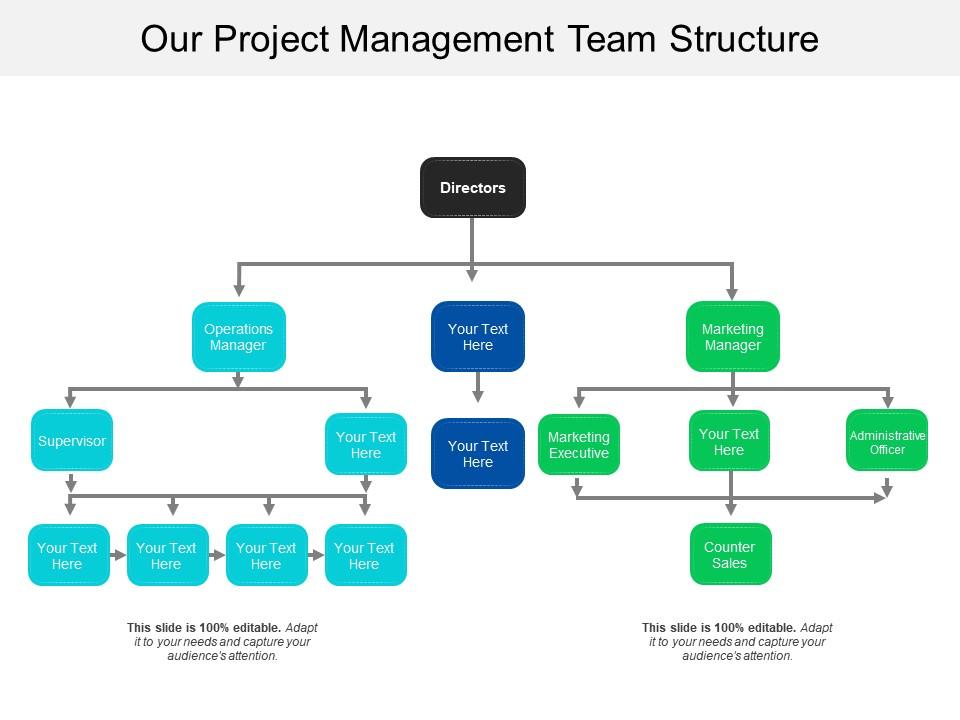
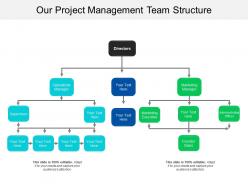
Our project management team structure
Try Before you Buy Download Free Sample Product
Audience
Editable
of Time
The structure of any project team very much depends on the nature of the project itself. The leadership management also changes with the change in the core of the project. Keeping the facts in mind the experts sitting at Slide Team have crafted for you all our project management team structure. Make use of this aesthetically designed and visually impressive project management team structure to showcase your presentation skills flawlessly. Talk about the team, its structure, role of its members and the activities to be performed by them with the help of our project management team structure PPT presentation slide design background. This is a very professional presentation. Keep your team abreast with all the changes in the team structure over a period of time thru this project management structure team PPT slide design example. Let the audience behold your gems. Exhibit their brilliance with our Our Project Management Team Structure.
People who downloaded this PowerPoint presentation also viewed the following :
Our project management team structure with all 5 slides:
Create better attitudes with our Our Project Management Team Structure. They encourage agreeable feelings.
FAQs for Our project
So you'll need a Project Manager for timelines and budget stuff. Business Analyst is super important too - they translate what the business wants into tech speak (honestly BA's save everyone's ass but never get credit). Technical Lead handles the dev work and big architecture choices. QA makes sure nothing breaks when you ship it. Oh, and depending on size you might want a Scrum Master or UX person. I'd figure out what roles you absolutely can't live without first, then add others if budget allows.
Honestly, team structure can totally make or break everything. Clear roles mean people actually know what they're doing and decisions happen fast. But when it's messy? God, you'll watch deadlines fly by while everyone duplicates work or fights over territory. Quick pivots become impossible too - learned that one the hard way on my last project. Short sentences work better here. Before starting anything big, just sketch out who's responsible for what and the reporting chain. Sounds boring but trust me, it'll save you from so many stupid fights later. Worth the upfront time.
Honestly, cross-functional teams are a game changer. Different skill sets in one room means problems get solved way faster - no more waiting around for other departments to weigh in. Communication gets so much better too since everyone's actually talking instead of sending passive-aggressive emails (you know what I mean). Your team members pick up skills from other areas, which is huge for their careers. The speed thing is probably the biggest benefit though - you can change direction quickly without going through management hell. Oh, and way less office politics. Start by grabbing one person from each key department and get them involved from the beginning.
Honestly? Keep it small. Most projects work best with 5-9 people max - enough to cover the skills you need without turning into a total communication nightmare. I've watched so many teams crash because they had like 15 people and nobody knew what anyone was doing. Amazon has this "two-pizza rule" which sounds dumb but actually makes sense - if two pizzas can't feed your whole team, you're probably too big. Start with fewer people and only add more when you're genuinely stuck, not just because you think extra bodies will speed things up. That usually backfires anyway.
Honestly, start with one weekly meeting where everyone just shares what they're working on. Sounds super basic but people work in silos way more than they realize. Get a shared project board going so everyone sees how stuff connects - I swear this alone fixes like half the communication issues. Maybe rotate who runs the meetings too? Different people bring up different things. The trick is making it feel normal, not like some corporate mandate. Once people actually see how their work affects everyone else's, they'll start talking more naturally. Don't go crazy with it though - just one sync to start.
Deal with conflicts fast - don't let them fester. Get everyone together (even if it's just a video call) and have each person share their side without getting interrupted. Honestly, half the time these things are just miscommunication or people not knowing who's supposed to do what. Keep the focus on project goals instead of personal drama. Work together to find solutions that actually help the team move forward. Sometimes you'll have to make the tough call yourself. Just be upfront about why you decided what you did, then check back later to make sure it's actually working.
Think of your project sponsor as that one executive who actually has your back. They've got the political juice to clear roadblocks when people start being annoying about everything. Budget approvals? That's their call. Major decisions when stuff goes sideways? Also them. Without a sponsor, you're basically trying to change how the whole company works but with zero actual power - good luck with that nightmare. Find yours early and keep them in the loop. Oh, and don't just tell them the good news. They need to know about the messy parts too.
Honestly, clear communication channels are a game changer because they stop that whole "who do I even ask about this?" mess. Your team knows exactly where to go for approvals, updates, whatever. I've watched projects completely fall apart when someone got stuck waiting for the wrong person to respond - so frustrating! Information actually moves when people know the process. Decisions get made faster, priorities stay straight. Oh and definitely map this stuff out early, then actually walk people through it. Otherwise they'll just default to bugging you directly about everything.
So I'd definitely check out Asana, Monday.com, or ClickUp - they're solid for mapping out team roles and keeping track of who does what. Slack works great too for organizing conversations by project. Oh, and RACI matrices are surprisingly helpful if your team's into that kind of structure. Honestly though, the biggest thing is just committing to whatever you pick instead of switching tools every few weeks (we've all been there). I'd sketch out your current setup on paper first, then find something that actually fits how your team operates day-to-day.
Oh man, cultural stuff can absolutely wreck international teams if you're not careful. Some people are crazy direct while others drop hints - total recipe for confusion. Plus time means different things to everyone. What feels urgent to you might seem pushy to someone who needs to build relationships first, you know? Decision-making gets weird too. Half your team wants the boss to decide, the other half expects everyone to agree together. I swear I've watched projects die for weeks over this stuff! Set communication rules early and - this sounds boring but trust me - budget extra time upfront for everyone to actually get each other.
Oh man, the communication thing will drive you nuts - everything takes forever without those random desk drop-bys. Time zones are a nightmare too. People get stuck on problems but you can't tell since you're not there to notice. Trust builds way slower over Zoom calls, which is weird but true. Cultural stuff becomes more obvious and awkward somehow? The accountability piece is tricky - hard to know if someone's drowning or just quiet. I'd say blow up their phones with updates rather than going radio silent. Also do regular check-ins to catch drama before it explodes.
So Agile basically tosses out those rigid hierarchies you're used to. You'll get Product Owners, Scrum Masters, and dev team members instead of the usual "business analyst" boxes. Everyone talks directly to each other - no more going through three managers to ask a simple question, thank god. Teams become way more autonomous about deciding how to tackle their work. Roles get more flexible too, shifting based on what each sprint actually needs. Honestly? Look at your current team and figure out who'd naturally fit these new roles. Then start moving toward shared accountability rather than the old blame game.
Honestly, I'd focus on both the delivery stuff and how your team's actually doing. Sprint velocity and cycle time are solid starting points - plus obviously budget and timeline tracking. But here's the thing: team happiness surveys and retention rates tell you way more than people realize. Nobody talks about this enough, but collaboration patterns matter too. Are people actually working together or just stuck in their own bubbles? Oh, and definitely watch defect rates. Start small though - maybe 3-4 metrics so you don't go crazy with data overload. You can always add more later once you've got a rhythm going.
Look, your leadership style makes or breaks team performance - I've watched this play out so many times. Micromanage and you'll crush creativity plus bog down decisions. Go too hands-off though? People lose track of what matters and miss deadlines. What actually works is reading the situation. Crisis mode calls for being directive, but when you need fresh ideas or team buy-in, collaborate instead. I swear some PMs just can't gauge what their team needs in the moment. Keep communication flowing and adjust your approach based on what's happening right then.
Give them a buddy right away - someone who actually knows where stuff is and how things work around there. Make a checklist covering all the basics: tools, processes, who to bug when something breaks. Honestly, team meetings are the worst way to meet people, so do individual intros instead. Check in with them weekly that first month before small problems turn into big ones. Oh, and give them a real project early on (nothing huge) so they feel useful instead of just sitting through training videos all day. Trust me, they'll appreciate feeling productive way more than another PowerPoint about company values.
No Reviews