


Patient education and counseling ppt powerpoint presentation inspiration rules




Try Before you Buy Download Free Sample Product
 Impress Your
 Audience
 100%
100% Editable
 Save Hours
 of Time


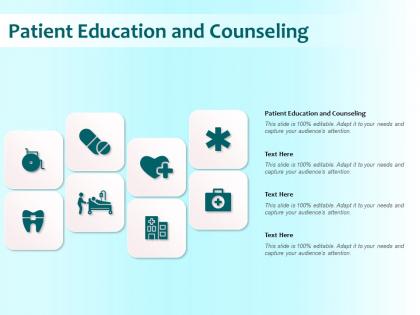
The following is a completely editable Medical Powerpoint Template Slide that discusses the topic Patient Education And Counseling. It is designed for medical professionals to discuss Patient Education And Counseling and can be completely customized to suit their needs. Add more items to this list and include this in your deck to impress your audience.
People who downloaded this PowerPoint presentation also viewed the following :
Patient education and counseling ppt powerpoint presentation inspiration rules with all 2 slides:
Use our Patient Education And Counseling Ppt Powerpoint Presentation Inspiration Rules to effectively help you save your valuable time. They are readymade to fit into any presentation structure.

FAQs for Patient education and counseling ppt powerpoint
Honestly, visual stuff works best - draw diagrams or use models while you're explaining things. People remember way more when they see it too, not just hear it. But here's the game changer: ask them to repeat back what you said in their own words. I swear this catches so many misunderstandings that would otherwise slip through. Break everything down into smaller chunks and use simple language. Oh, and ask for questions constantly - like multiple times during the conversation. Try the repeat-back thing next time you're with a patient. You'll be shocked how often people seem to get it but actually don't.
First thing - figure out how they actually want to get info. Some people need every detail, others just want the basics. Don't use family as translators either, get a real interpreter (trust me on this one). Their cultural views on health matter way more than you'd think for whether they'll actually follow through. Oh and visual stuff is a lifesaver with patients who struggle with reading. Honestly, those first couple minutes figuring out where they're coming from will save you so much headache later. Just match whatever style works for them.
Honestly, tech makes patient education so much better. Apps and patient portals let you give people personalized stuff they can actually use. Patients love being able to check things at 2am or rewatch videos when they forget what you said. Video calls are perfect for showing techniques - way better than trying to explain with just words. I'd probably start with something simple that your patients would actually want, like a med reminder app. Oh, and those interactive tools are pretty neat too, though I haven't used them as much. The key is picking something that won't overwhelm people but still helps them stay on top of their health.
Honestly, don't just measure if people enjoyed your sessions - that's pretty useless. Track what they actually learned with pre/post tests, then dig into the real stuff: are they taking meds correctly? Better A1C numbers? Fewer readmissions? Patient surveys can help, though people lie on those sometimes. The tricky part is waiting long enough to see changes - some outcomes take forever, like 6+ months. I'd pick maybe 2-3 specific things you can actually measure that connect to what you're teaching. Then just track consistently and be patient with the data.
Honestly, the biggest issues are health literacy and medical jargon - patients just nod along while having zero clue what you mean. My mom once thought "acute" meant her condition was cute, which still cracks me up. Emotional overwhelm is huge too, plus cultural barriers. When people are stressed, they can't absorb info anyway. I'd suggest using plain English first, then doing teach-back to check if they actually got it. Visual aids help tons. Also, don't ask "Do you understand?" Ask "What questions do you have?" Way better results. Sometimes slowing down makes all the difference.
Honestly, teach-back is your best bet - just have them explain what you covered in their own words. Works way better than asking "do you understand?" because people will lie to your face about that lol. For hands-on stuff, get them to actually show you the skill. Like if it's insulin injections or whatever, watch them do it. Pay attention to their body language too. Blank stares mean they're lost but won't admit it. Oh, and ditch the yes/no questions - those are useless. Open-ended ones force them to actually think through what you said. I try to work teach-back into every session now, even quick ones.
Ask them what scares them first - that's where I always start. Then have them explain back what you just taught in their own words. Works way better than just lecturing at people. Break stuff down into small pieces and use pictures when you can. Honestly, the grandkids angle gets people motivated faster than any medical explanation ever will. Figure out how they learn best too - some people need to see it, others just want the straight facts. Oh, and ditch the medical speak completely. Connect their health goals to what they actually give a damn about.
Honestly, the biggest thing is just talking to people like they're actual humans, not medical textbooks. Skip the fancy doctor words and use stuff they'd say at home. I always do this "teach-back" thing where I ask them to explain it back to me - sounds weird but it totally works. Figure out what they already know first, then build on that. Visual aids help too, especially with older patients (my experience anyway). Give them written stuff they can actually read - like 6th grade level works for most people. And yeah, cultural background matters way more than docs usually think about.
Okay so motivational interviewing is basically flipping the script - you're not lecturing anymore, you're helping them figure out their own reasons to change. Ask open questions instead of telling them what to do. Like start with "What worries you most about..." rather than "You need to quit smoking because..." Trust me, patients actually talk when they don't feel judged! The reflective listening thing works too - just repeat back what they're saying so they feel heard. Honestly it's way less draining than fighting their resistance all day. Oh and exploring their mixed feelings about change? Game changer.
Look, respecting patient autonomy is huge - even when they're making choices that make you want to bang your head against the wall. You've gotta give them accurate info without pushing your own agenda. Check if they actually understand what you're saying, but don't talk down to them. Cultural stuff matters too - their beliefs might totally clash with standard medical advice. Language barriers are real. Some patients have zero health literacy, others are basically Dr. Google. Oh, and informed consent isn't just checking a box. Document everything you discussed because, well, you know how that goes.
Honestly, cultural stuff makes a huge difference in how patients take in health info. Language barriers are obvious, but there's so much more. Some families want the grandma making all decisions, others it's totally individual. Eye contact can be respectful or rude depending on background. Religious beliefs sometimes clash with treatments - that gets tricky. Health beliefs vary wildly too, like whether they think illness comes from bad luck or lifestyle choices. Direct communication works for some cultures, but others need you to be way more indirect. I always just ask upfront what approach works for their family.
Oh totally get them involved if the patient's cool with it! Family members are honestly your secret weapon - they'll actually remember the discharge instructions when your patient forgets everything five minutes later. I've seen it a million times where patients nod along but their spouse is the one really listening. Teach them what warning signs to watch for at home. They're also great at medication reminders since, let's face it, half our patients forget to take their pills anyway. Plus they'll ask all those questions during appointments that patients are too embarrassed to bring up themselves.
Honestly, visuals are total game-changers for patient education. Some medical stuff is just way easier to understand when people can actually see what you're talking about, you know? Like, I can explain anatomy all day, but show someone a diagram and suddenly it clicks. Videos work great too. The thing is, not everyone learns by listening - some folks are super visual learners. Oh, and here's the bonus: patients can look back at handouts or sketches later when they're home trying to remember what you said. I always try to pair whatever I'm explaining with some kind of visual, even if it's just a crappy drawing on scrap paper.
So chatbots are everywhere now - patients can ask questions anytime without calling your office. VR for pain management is actually pretty cool, helps people learn relaxation stuff in virtual spaces. Sounds weird but it works. Interactive videos are solid too, especially for common questions. Mobile apps sync with fitness trackers now so patients see their progress in real time. Oh, and some platforms adjust based on how health-literate someone is, which is smart. Honestly I'd start with simple videos for your FAQ stuff - they're not hard to set up and people actually watch them.
Okay so first thing - get your physical setup right. Private rooms, comfy chairs, zero interruptions (seriously, nothing kills the mood like a printer going off). Train everyone on active listening and don't rush appointments. I learned this the hard way - patients clam up when they feel hurried. Have your team ask patients to repeat back important stuff to make sure it clicked. Simple materials help too. But honestly? The biggest game-changer is creating that judgment-free vibe where people aren't embarrassed to ask questions.
No Reviews