


Periodic table of elements chemistry powerpoint slides and ppt templates db





Try Before you Buy Download Free Sample Product
 Impress Your
 Audience
 100%
100% Editable
 Save Hours
 of Time


Cast a line with our Periodic Table Of Elements Chemistry Powerpoint Slides And Ppt Templates DB. Your team will start nibbling at your brains.
People who downloaded this PowerPoint presentation also viewed the following :
Periodic table of elements chemistry powerpoint slides and ppt templates db with all 17 slides:
Chill out with our Periodic Table Of Elements Chemistry Powerpoint Slides And Ppt Templates DB. They will help you meet the toughest deadlines.
FAQs for Periodic table of elements chemistry powerpoint slides and
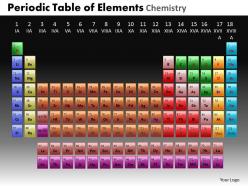
So basically the periodic table works because elements follow these weird but predictable patterns. Mendeleev was kinda brilliant - he figured this out way before anyone understood electrons or atomic structure. Rows show how properties gradually change, while columns group elements that act super similar. Like sodium and potassium are in the same column, so they both go crazy when they hit water. Pretty wild how you can just look at where an element sits and predict what it'll do. Makes chemistry way less random than it seems at first.
So the periodic table groups elements by atomic structure, which tells you how they'll behave. Elements in the same column have identical outer electrons - that's why sodium and potassium both go crazy when they hit water. Rows show what happens as you pile on more electrons and protons. Mendeleev was honestly a genius for cracking this before anyone knew electrons existed. You can predict reactivity, bonding, even physical stuff just from an element's spot. Wild how organized chemistry actually is. Check their positions if you're ever wondering how two elements might react.
So atomic size gets smaller when you go left to right across a period because you're adding more protons. Those protons yank the electrons in tighter. But going down a group? Totally different story - atoms get bigger since you're stacking on more electron shells. Picture a building getting taller with more floors versus a really strong magnet pulling everything closer together. That analogy helped me so much in gen chem lol. When you need to predict size, just think about whether you're moving across (smaller) or down (bigger). The proton thing always confused me at first but it clicks once you get it.
Yeah so basically both electronegativity and ionization energy follow the same pattern on the periodic table. Left to right across a period? They both go up because the nucleus gets more pull while electrons stay in the same shell. Down a group they decrease since electrons are way farther out. Fluorine's literally the most electronegative at 4.0 - that thing just hoards electrons like crazy. Once you get the trends down, you can predict bond types without having to memorize a million numbers. The whole thing comes down to atomic size and how hard the nucleus yanks on electrons.
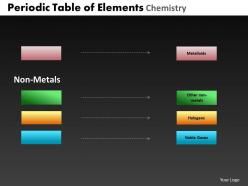
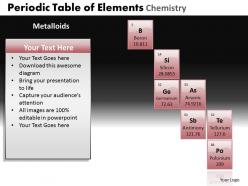
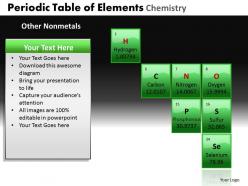
So basically metals are on the left and they love giving up electrons plus conduct electricity really well. Nonmetals hang out on the right side - total opposite, they hog electrons and don't conduct much. Then you've got metalloids stuck in between along that weird zigzag line, acting like they can't decide what they want to be. Honestly it's pretty genius though because once you know which group something's in, you can guess if it'll be shiny, bendy, or brittle before you even look it up. Makes chemistry way less random.
Dude, the periodic table is like your secret weapon for chemistry. Just look at where an element sits and you'll know its electron setup - basically tells you if it wants to grab, dump, or share electrons. Same column = similar vibes, which is why all those Group 1 metals go crazy and ditch one electron. Honestly, once you get this it makes everything click. You can figure out what bonds will form, predict reaction products, even guess which stuff's more reactive. My old chem teacher hammered this into us and she was totally right. When you're lost on mechanisms, just check those periodic trends first.
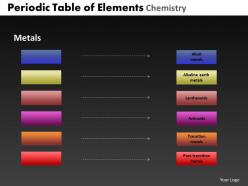
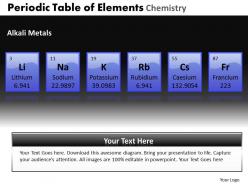
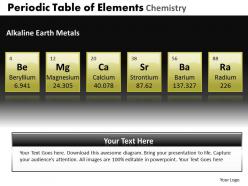
So alkali metals (Group 1) have just one valence electron and they're crazy reactive with water - sodium literally explodes! They get MORE reactive as you go down the periodic table, which is kinda wild. Super soft and shiny too. Alkaline earth metals (Group 2) are their calmer cousins with two valence electrons. Still reactive, just not as dramatic. They're actually harder than Group 1 metals. Both groups love forming ionic compounds, but Group 2 needs more energy to ditch their electrons. Oh, and definitely keep both away from water in lab unless you want fireworks!
Oh yeah, so Mendeleev actually used atomic mass first when he made the periodic table in 1869 - worked pretty well too! But here's the weird thing: sometimes it puts elements in the wrong spots. Like tellurium weighs more than iodine but still comes before it on the table. That's why we switched to atomic number instead. Atomic mass still matters though, especially for isotopes and figuring out how elements behave. Honestly, both numbers together give you the full picture of what's going on.
So basically, Mendeleev sorted elements by weight, but we use atomic number now (how many protons). Way more accurate - fixed weird placements like iodine and tellurium being backwards. The guy literally left blank spaces for elements that hadn't been discovered yet. Pretty genius move, honestly. Our current table has 118 elements compared to his 63, plus all those lanthanides and actinides at the bottom that he couldn't have known about. Both tables still group similar elements together though - that's the main thing your students need to get.
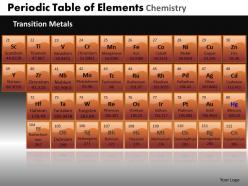
Okay so transition metals are basically the wild cards of chemistry. They don't play by the same rules as regular elements in groups 1, 2, or 13-18. Main group elements are pretty predictable - you can guess their behavior from their group number. But transition metals? They'll surprise you with multiple oxidation states and those crazy colorful compounds. Plus they're excellent catalysts. The secret is their partially filled d-orbitals, which honestly sounds way cooler than it probably is. They're also tougher, melt at higher temps, and conduct electricity better than most elements.
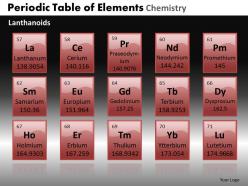
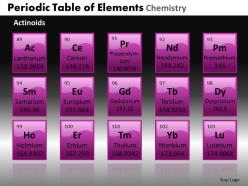
So basically, those elements at the bottom? They're lanthanides (57-71) and actinides (89-103). The periodic table would be absolutely massive if they put them where they actually belong - between groups 3 and 4 in periods 6 and 7. They're called f-block elements since they're filling up inner f orbitals instead of outer ones. That's why elements in each series act pretty similar to each other. Honestly just a design hack to keep chemistry textbooks from being enormous. But yeah, now you know why they look randomly stuck down there when they're not really separate from everything else.
So isotopes don't mess with where elements sit on the periodic table - each element still gets one spot based on protons. But here's the thing: that atomic mass you see? It's actually a weighted average of all the naturally occurring isotopes. That's why carbon shows up as 12.011 instead of a clean 12! Pretty weird when you think about it. Your periodic table is basically showing the "average atom" for each element based on what's common in nature. When you're doing calculations, just know that mass number represents a mix of different isotope masses.
Dude, the periodic table is like your secret weapon for materials stuff. Look at electron configs and you can predict how elements will play together before wasting time in lab. Want stronger alloys? Check bonding patterns. Need better conductors? Map out the atomic properties first. I swear it's the best shortcut for designing new semiconductors and composites - way better than just throwing random elements together and hoping something works. Start any materials project by figuring out where your elements sit on the table and what they're naturally gonna do.
So the periodic table is basically a cheat sheet for bonding! Elements on the right side are electron hogs - they've got high electronegativity and really want those electrons. Left side? Total opposite. They'll give up electrons without much of a fight since their ionization energy is way lower. Going down columns makes atoms bigger and lazier about holding onto electrons. That's why you get ionic bonds when metals meet nonmetals - it's like opposites attract, but with electrons. Similar electronegativity means they'll just share instead. Honestly, once you memorize where stuff sits, predicting bonds gets pretty straightforward.
Dude, it's literally everywhere! Your phone's got lithium in the battery, plus all these weird rare earth metals for the screen. Silicon runs the whole processor too. Engineers pick materials based on this stuff - like aluminum's perfect for cars because it's super light. Even table salt is just sodium and chlorine hanging out together. Your vitamins are basically chemistry in a bottle (iron helps your blood, calcium does bones). I swear, once you start noticing which elements are actually doing the work around you, chemistry gets way less boring than it was in high school. Makes me wish I'd paid more attention back then honestly.
-
Unique and attractive product design.
-
Presentation Design is very nice, good work with the content as well.