


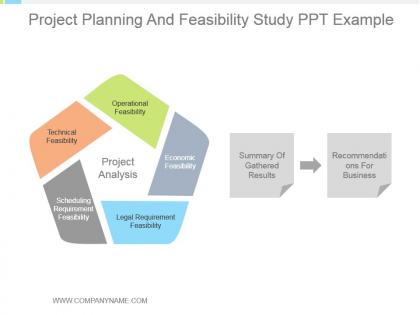
Project planning and feasibility study ppt example




Try Before you Buy Download Free Sample Product
 Impress Your
 Audience
 100%
100% Editable
 Save Hours
 of Time


Display a hardy approach with our Project Planning And Feasibility Study Ppt Example. Convince them you have great endurance.
People who downloaded this PowerPoint presentation also viewed the following :
Project planning and feasibility study ppt example with all 5 slides:
Conjure up grand ideas with our magical Project Planning And Feasibility Study Ppt Example. Leave everyone awestruck by the end of your presentation.
FAQs for Project planning and feasibility
Key components of an effective project planning template include project scope definition, timeline with milestones, resource allocation, risk assessment, and stakeholder communication frameworks. These elements work together by establishing clear objectives, tracking progress systematically, and managing dependencies, with many organizations finding that comprehensive templates streamline execution, reduce delays, and ultimately deliver projects on time and within budget.
Gantt charts enhance project timeline management by providing visual clarity of task dependencies, resource allocation, and milestone tracking across project phases. Through interactive scheduling capabilities, project managers can identify bottlenecks, adjust timelines dynamically, and communicate progress effectively to stakeholders, ultimately delivering improved coordination and reduced project delays.
Stakeholder analysis identifies key individuals and groups who influence or are affected by the project, assessing their interests, power levels, and potential impact on project success. This strategic process enables project managers to develop targeted communication strategies, anticipate resistance or support, and allocate resources effectively, with many organizations finding that thorough stakeholder mapping significantly reduces project delays and enhances overall outcomes.
Project scope determination involves defining deliverables, establishing boundaries, identifying stakeholders, conducting requirements analysis, and creating detailed work breakdown structures. Through stakeholder interviews, feasibility studies, and constraint analysis, project managers in sectors like construction, software development, and manufacturing can minimize scope creep while ensuring clear expectations, ultimately delivering projects on time and within budget.
Common project planning pitfalls include unrealistic timelines, inadequate resource allocation, poor stakeholder communication, insufficient risk assessment, and scope creep management failures. These challenges often derail initiatives across industries, with many organizations finding that thorough upfront planning, regular milestone reviews, and proactive communication ultimately streamline execution and enhance project success rates.
Risk management integrates into project planning through comprehensive risk assessment, mitigation strategy development, contingency planning, and continuous monitoring protocols. Organizations across industries, from construction to software development, embed these practices early in project timelines, enabling proactive problem-solving, resource optimization, and deadline protection, ultimately delivering more predictable outcomes and competitive advantage.
Effective resource allocation techniques include resource leveling, critical path analysis, capacity planning, skill-based matching, and priority matrix frameworks. These methods streamline project delivery by optimizing team utilization, minimizing bottlenecks, and ensuring critical tasks receive adequate support, with many organizations finding that strategic resource allocation reduces project timelines while enhancing overall efficiency.
Agile project planning emphasizes iterative development, continuous feedback, and adaptive planning cycles, unlike traditional waterfall methods that rely on fixed timelines and sequential phases. Through shorter sprints and regular stakeholder collaboration, teams in software development, marketing, and product design achieve faster delivery, enhanced flexibility, and improved responsiveness to changing requirements, ultimately delivering greater customer value.
Project planning tools include Gantt charts, Kanban boards, resource allocation software, timeline templates, and collaborative platforms like Asana or Monday.com. These technologies streamline workflows by centralizing communication, automating task assignments, and providing real-time progress visibility, with many organizations finding that integrated planning tools reduce project delays by 30% while enhancing team coordination.
Project planning significantly influences team engagement and productivity by establishing clear objectives, defining individual responsibilities, setting realistic timelines, and creating structured communication channels. Through comprehensive planning, teams experience reduced ambiguity and enhanced collaboration, with many organizations finding that well-planned projects deliver 25% higher productivity rates, improved morale, and ultimately stronger project outcomes across departments.
Project planning success metrics include schedule adherence, budget variance, scope completion, resource utilization rates, and stakeholder satisfaction scores. These measurements enable organizations to identify bottlenecks, optimize resource allocation, and enhance future project outcomes, with many companies finding that consistent tracking across these areas delivers improved operational efficiency and competitive advantage.
Balancing flexibility and structure requires establishing core project milestones, deliverables, and timelines while building in buffer periods, regular review checkpoints, and adaptable resource allocation methods. Successful organizations use agile frameworks, phased approaches, and scenario planning to maintain project momentum while accommodating changes, ultimately delivering strategic outcomes without compromising quality or deadlines.
Mind maps in project planning offer visual clarity, enhanced brainstorming, improved task organization, better team collaboration, and streamlined communication across project phases. These visual tools enable project managers to identify dependencies, allocate resources more effectively, and track progress seamlessly, with many organizations finding that mind mapping reduces planning time while delivering clearer project outcomes and stakeholder alignment.
A well-structured presentation enhances project planning communication by clearly defining timelines, deliverables, resource requirements, and stakeholder responsibilities, while ensuring all team members understand their roles and project objectives. Through visual frameworks and organized content flow, project managers can streamline alignment processes, minimize miscommunication, and accelerate decision-making, ultimately delivering improved collaboration and project success rates.
Best practices for involving team input include conducting collaborative brainstorming sessions, implementing structured feedback mechanisms, establishing clear communication channels, creating cross-functional planning committees, and utilizing digital collaboration platforms. These approaches enhance project accuracy and team buy-in by leveraging diverse expertise, identifying potential risks early, and fostering ownership, with many organizations finding that inclusive planning delivers higher success rates and stronger stakeholder commitment.
-
Qualitative and comprehensive slides.
-
Excellent design and quick turnaround.