


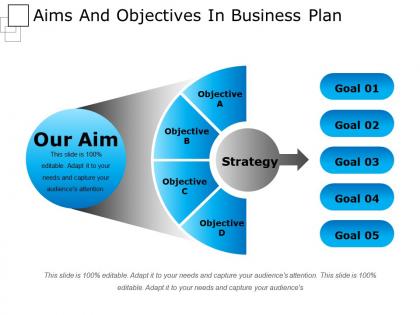
Aims and objectives in business plan good ppt example




Try Before you Buy Download Free Sample Product
 Impress Your
 Audience
 100%
100% Editable
 Save Hours
 of Time


Expose errors in their argument with our Aims And Objectives In Business Plan Good Ppt Example. It helps handle foolish demands.
People who downloaded this PowerPoint presentation also viewed the following :
Aims and objectives in business plan good ppt example with all 5 slides:
Enhance camaraderie with our Aims And Objectives In Business Plan Good Ppt Example. Give a boost to feelings of amity.

FAQs for Aims and objectives in business plan
Start with your mission and vision - what you do now versus where you're headed. Then get specific with SMART goals that actually have numbers attached. Like "hit $100K revenue by December" instead of some fluffy "grow the business" nonsense. Your value prop is huge too - why should customers pick you over the other guy? I'd probably sketch these out first before diving into the full business plan. You can always tweak them later, but at least you'll have something solid to work with. Numbers and deadlines are your best friends here.
Look, you gotta know WHO you're selling to before setting any business goals. Age, income, where they live, how they shop - this stuff directly impacts what revenue targets make sense and which marketing actually works. Otherwise you're just throwing darts in the dark, which is expensive and dumb. Your goals get way more focused too. Instead of vague "boost sales" nonsense, you'll target something like "grab 15% of millennial pet owners in cities." Honestly, I'd spend time really understanding your ideal customer first - then write objectives that actually matter to those people.
Look, forecasting is basically your sanity check when setting business goals. Can't just say "we'll triple revenue!" without actual numbers backing it up, you know? Start with realistic projections first, then build your targets around what your cash flow and resources can actually handle. I learned this the hard way tbh - my first business plan was pure fantasy. Conservative forecasts are your friend here. Otherwise you're just making wishes instead of real strategy. Think of it like planning a road trip - you need to know how much gas money you have before deciding where you're going.
Honestly, most companies just pick objectives that sound impressive but don't actually connect to anything. Work backwards instead - start with your big vision and break it down into stuff you can actually measure quarterly. Each goal should either support how you operate (your mission) or get you closer to where you're going (vision). Don't assume the connection is obvious though. I'd literally map each objective back to your mission/vision statements to double-check. It's kind of tedious but you'll catch the random goals that don't belong.
Pick metrics that actually match what you're trying to achieve. Revenue goals? Track monthly revenue jumps, not random website visits. Focus on the financial stuff - profit margins, cash flow, customer acquisition costs. That's where the real insights are. Don't go overboard though, or you'll be swimming in spreadsheets (been there). Customer satisfaction and employee retention matter too, depending on your goals. Honestly, 2-3 solid metrics per objective is plenty. Just make sure you can measure them consistently. Oh, and start tracking from day one - you'll need that baseline data later.
Look, a SWOT analysis is basically your reality check before setting business goals. You'll know what you're actually good at, what needs work, plus any opportunities out there. Then you can set aims that make sense instead of just random stuff that sounds impressive. Honestly, most people skip this step and wonder why their plans fall flat. Use your strengths to go after bigger opportunities. Set specific goals to fix your weak spots. And definitely plan around any threats you spotted - better safe than sorry, right? Just pick 2-3 aims that directly connect to your biggest findings.
You need both short and long-term goals - trust me on this one. Short-term stuff (like 3-12 months) keeps you hitting quick wins and managing cash flow. But don't forget the bigger picture either. Long-term goals help you think 2-5 years out so you're not just scrambling to pay bills every month. I've watched way too many business owners get stuck in survival mode because they never planned beyond next quarter. The short wins keep your team pumped, but those bigger objectives? That's what drives smart decisions. Start with 3-5 goals for each timeframe and you'll be solid.
Look, you gotta know what's actually out there before you start making big plans. Research shows you the real gaps you can jump into, plus how everyone else is playing the game. I always tell people - check out 3-5 competitors first, then talk to maybe 20 potential customers. Sounds like a lot of work, but it beats launching something nobody wants! This stuff helps you figure out realistic money goals and what actually makes you different. Without it? You're basically just hoping really hard that your idea works. The market's brutal like that.
Honestly, tweaking your business plan is pretty normal - I do it all the time. Your target market might shift (like going from retail to B2B if that's where the money is), or you'll need to adjust revenue goals based on reality. Timeline changes happen too. Sometimes you have to move resources around or change up your marketing completely. Product features might need tweaking for new customers - it's just part of the game. I'd say check your objectives every few months and make small adjustments instead of waiting for everything to fall apart. Just don't lose sight of your main mission, you know?
Don't make risks a separate afterthought section - that's what kills investor interest. Instead, bake them right into your main objectives. Planning to expand into new markets? Say upfront how you'll test the waters with pilot programs first. Revenue goals need backup plans too, not just rosy projections. Honestly, the best business plans I've read answer "what if this goes sideways?" for every major goal. Pick your top 5 risks and connect each one to actual mitigation steps in your objectives. Makes the whole thing way more credible.
Skip the boring business plan nobody reads anyway. Try pitch decks and visual stuff instead - way better for keeping people interested. Infographics work great for showing your numbers and timelines without putting everyone to sleep. I've seen video pitches crush it too, especially when you want people to feel your energy about the project. Interactive dashboards are cool if your audience likes clicking around data. Just match what you're doing to who you're talking to, you know? Investors want the detailed financial stuff, but your team probably needs something simpler that actually connects to what they do every day.
Honestly, good collaboration is like having superpowers for your business plan. You get way faster problem-solving when everyone's bouncing ideas off each other. Different perspectives help you catch stuff you'd totally miss on your own - risks, opportunities, whatever. People actually care more about hitting targets when they feel like they're part of the team instead of just getting orders from above. Innovation happens naturally too. Oh, and you'll stop doing the same work twice, which is such a waste of time. Just make sure you're actually talking to each other regularly - that's where it all comes together.
Honestly, customer feedback will save you from making expensive mistakes. You think you know what people want, but you're probably wrong about half of it - I've watched so many founders (myself included) get a reality check from actual users. Their input shows you where your assumptions are off base. Maybe your pricing is weird, or that feature you love isn't actually useful. The smart move? Start asking for feedback super early, even when your product feels rough. Then actually listen to what they tell you. It's humbling but way better than building something nobody wants.
Here's the thing - make your sustainability goals super specific and tie them directly to money. Like "cut packaging waste by 30% in 18 months" instead of vague "be greener" nonsense. Pick maybe 2-3 targets that actually make sense for your business model. Honestly, investors eat this stuff up now, so it's not just feel-good fluff anymore. Each goal should connect to real outcomes - cost savings, standing out from competitors, whatever works. I'd start small though, don't try to save the world overnight. Focus on what'll actually move the needle for your bottom line.
Honestly, you can't just write a business plan like it's 2010 anymore. Tech moves too fast now - AI, automation, all that stuff is constantly changing what customers want and what's even possible. Five-year goals? Good luck with that when startups pop up overnight and disrupt everything. I learned this the hard way watching companies scramble. You've got to bake flexibility right into your objectives now. Focus on digital adoption and data strategy, sure, but also build in room to pivot. Because when the next big disruption hits (and it will), you want to be ready instead of playing catch-up with everyone else.
-
Presentation Design is very nice, good work with the content as well.
-
Editable templates with innovative design and color combination.