


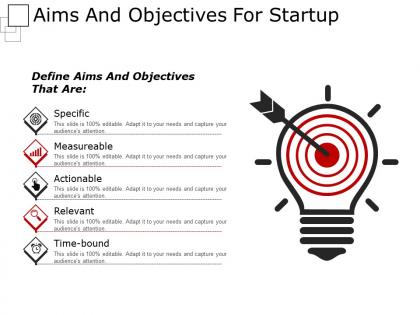
Aims and objectives for startup example of ppt presentation




Try Before you Buy Download Free Sample Product
 Impress Your
 Audience
 100%
100% Editable
 Save Hours
 of Time


Our Aims And Objectives For Startup Example Of Ppt Presentation enable effective introspection. It allows you to honestly assess your ideas.
People who downloaded this PowerPoint presentation also viewed the following :
Aims and objectives for startup example of ppt presentation with all 5 slides:
Remove any discord with our Aims And Objectives For Startup Example Of Ppt Presentation. Create greater harmony amongst your team.



FAQs for Aims and objectives for startup example
Honestly, just focus on the stuff that actually matters - can you get people to pay for your thing? Start there. Product-market fit and your first real customers are way more important than whatever fancy metrics look good on paper. Most founders I know waste months obsessing over user counts when they should be figuring out how to reach customers consistently. Get your core team locked down early too. Oh, and don't wait until December to check if things are working - do monthly reviews so you can pivot fast if needed. Better to change direction quickly than ride a sinking ship for a whole year, you know?
Pick 3-5 metrics that actually matter for your business - revenue growth, customer acquisition cost, retention rates, whatever. Most startups get obsessed with vanity metrics that look cool but don't mean anything. You want leading indicators that predict what's coming, not just stuff that tells you what already happened. We do weekly reviews with our team to stay on top of the numbers. Honestly, consistency is everything here - you'll miss important trends if you're not checking regularly. That's how you catch problems early and pivot before it's too late.
Dude, customer feedback is like your startup's GPS - without it you're just driving blind hoping you'll hit the right destination. People will tell you what they actually need versus what you think they want, and trust me, those are usually completely different things. I've watched founders do complete 180s after talking to users for like a week straight. Surveys, interviews, watching how people use your product - all of it matters. You gotta bake this into your process from the start though, not just when things start going sideways. Listen to what comes back and don't get defensive about it.
Here's what I'd do - list everything you want to tackle, then be brutal about what actually matters right now. Revenue, keeping customers from leaving, and proving your product works. That's it. Everything else is just shiny object syndrome (trust me, I've been there). Ask yourself: does this help us make money or keep people happy? No clear answer? Push it off. I know it sounds harsh, but when you're burning cash, you can't afford to chase nice-to-have features. Rank stuff by impact vs how much work it'll take. The boring revenue stuff usually wins, even though it's way less fun than building cool features.
Google Analytics is your starting point for web stuff and conversions. For financials, QuickBooks or Xero work great to track revenue. Honestly, OKR platforms like Weekdone or Monday.com are game-changers for goal tracking - keeps everyone actually doing what they said they'd do. Customer metrics matter too: NPS scores, churn rates, acquisition costs. Mixpanel or Amplitude handle that well. Here's the thing though - pick maybe 3-5 metrics that actually matter for where you're at right now. Check them weekly, not obsessively. I've seen too many people get buried in data they never use.
So here's what works for me - make sure every goal actually connects to your mission statement. Like, if it doesn't push forward what you're really trying to build, why is it there? Your vision becomes this filter for prioritizing when money gets tight (which, let's be honest, it always does). Every quarter I literally draw lines between my big goals and mission statement. Sounds nerdy but it works. Can't connect them? Either ditch the goal or maybe your mission isn't actually what you're building. Sometimes you discover your mission statement is just fancy words that don't match reality.
Oh man, don't try to tackle like 15 goals at once - I've seen so many startups do this and it's a total mess. Your team just gets pulled in every direction. Also? Making goals super vague is basically useless. Like saying "grow revenue" means nothing without actual numbers. The worst part is when founders set these big flashy targets but have zero clue how to actually hit them. Pick maybe 2-3 specific goals tops and actually think through the steps. Way more boring but it works.
Dude, pivoting is huge for startups. The market will smack you with reality checks you never saw coming - your original business plan means nothing once real customers start talking. Too many founders I know just dig in their heels instead of adapting (classic mistake). But here's the thing - don't pivot every time growth stalls for like two weeks. You need actual data backing it up. Track specific metrics beforehand and decide what would trigger a real pivot. That way you're not just freaking out and changing everything because you hit a rough patch.
Honestly, talk to your team more - like actually talk. Weekly meetings where you share the real stuff, not just "everything's great" bullshit. Set up clear goals everyone can see and show how their daily work connects to the big picture. So many startups have people working hard but they're totally lost on why it matters. Use dashboards or whatever to track progress visually. When things change (they always do), explain why immediately. People hate being kept in the dark. Oh and do a goal alignment session ASAP - next week if you can swing it.
Here's my take: think of your short-term goals as stepping stones to your bigger picture, not just random stuff to hit monthly numbers. Like if you want to dominate your market in 5 years, every quarterly milestone should build toward that. I get it though - it's super easy to fall into survival mode. Been there. But honestly? Always ask yourself if this quick win actually moves you closer to your 3-5 year vision. If not, maybe pivot your focus. The day-to-day grind can totally blind you to what really matters long-term.
Honestly, public commitments work best. When you have to report your progress out loud to your team every week or two, you'll actually follow through - it's weirdly motivating. Find an accountability partner too, maybe another founder dealing with the same stuff. Some people post their quarterly goals right on the office wall or track everything on Notion boards where everyone can see. I know it sounds obvious, but making your progress visible to people who'll actually ask about it? That's what gets shit done. The fear of looking lazy is real motivation.
Honestly, data is like a reality check for all your startup assumptions. Track user behavior and conversions from day one - you'll be shocked how wrong your initial hunches were. I've seen so many founders discover users obsess over some random side feature while completely ignoring the "main" product. Monthly metric reviews help you spot these patterns early. Sometimes the data screams "pivot NOW" and other times it's like "double down on this specific thing." Either way, beats guessing what customers actually want. Way better than building in the dark and hoping for the best.
Honestly, you've gotta be realistic about this stuff. Look at your current cash situation and burn rate first - that's your reality check. Too many founders I know set these insane targets that just crush team morale when they inevitably miss them. Pick metrics that actually make sense for where you are right now. Pre-revenue? Focus on customer acquisition costs. Already scaling? Unit economics and MRR growth are your friends. Quarterly goals work way better than annual ones - you can pivot faster that way. And be specific! "20% QoQ revenue growth" is infinitely better than vague nonsense like "boost sales significantly."
So here's the deal - your startup's culture totally shapes how you set goals. Move-fast cultures? They go for aggressive short-term targets and pivot constantly. Collaborative teams get everyone involved in the process and want consensus on everything (which honestly can slow things down sometimes). Risk-averse cultures stick to safer, incremental goals. But culture also decides if your team actually cares about those goals or just pretends to. If your goal-setting doesn't match your actual values, people will either push back or just phone it in. You can't fake alignment.
Honestly, I'd say every three months is the sweet spot for reassessing your startup goals. Markets change so damn fast now - like what worked in January could be totally dead by spring. Do proper quarterly deep-dives into your metrics and customer feedback. But also check in monthly for any major red flags or opportunities. Just don't pivot every other week because that's how you lose your mind and confuse everyone. The trick is staying flexible without being all over the place. Oh and actually put those quarterly reviews in your calendar right now or you'll forget.
-
Qualitative and comprehensive slides.
-
Attractive design and informative presentation.