Technology stack for project 7 steps

Rating:
90%
Technology stack for project 7 steps
Slide 1 of 5
Favourites Favourites

Try Before you Buy Download Free Sample Product

Audience Impress Your
Audience
Editable 100%
Editable
Time Save Hours
of Time
The Biggest Sale is ending soon in
0
0
:
0
0
:
0
0
Rating:
90%
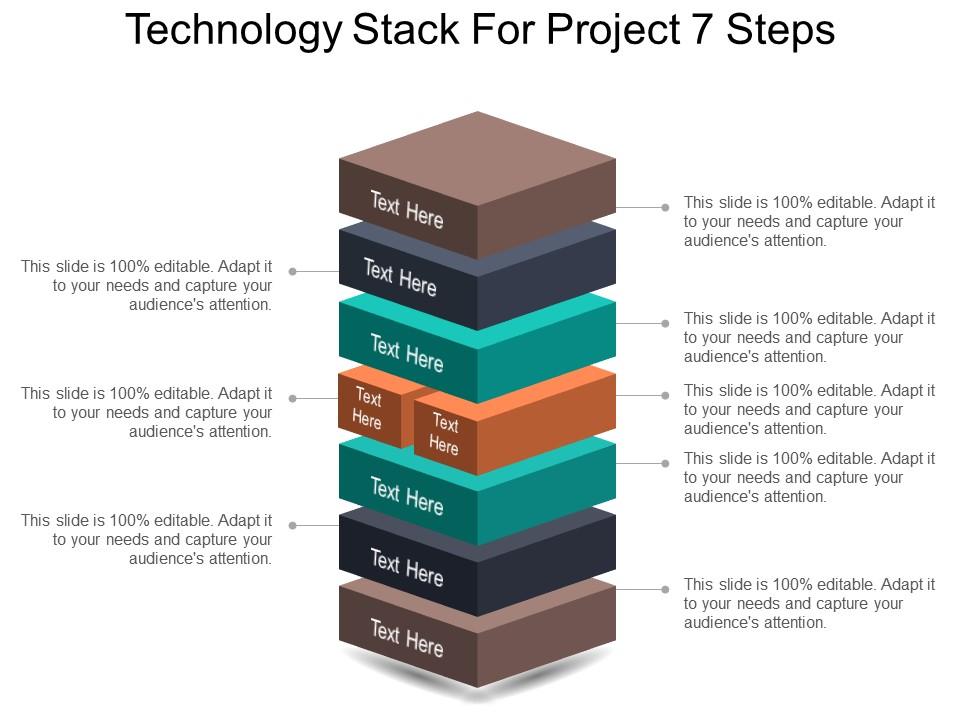
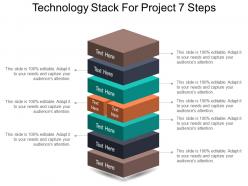
Presenting technology stack for project 7 steps. This is a technology stack for project 7 steps. This is a seven stage process. The stages in this process are technology stack, software stack, software application.

FAQs for Technology stack for

Modern technology stacks include frontend frameworks, backend services, databases, cloud infrastructure, and DevOps tools. These components work together by enabling scalable application development, streamlined deployment processes, and efficient data management, with organizations across retail, healthcare, and financial services finding that integrated stacks deliver faster time-to-market and reduced operational costs.

Technology stack choices significantly impact software scalability through architecture decisions, database selection, framework capabilities, and infrastructure compatibility that determine growth potential. Strategic combinations like microservices architectures, cloud-native databases, and containerization technologies enable organizations to handle increased user loads, data volumes, and feature complexity seamlessly, ultimately delivering competitive advantage and operational efficiency.

Startup technology stack selection requires evaluating scalability potential, development team expertise, budget constraints, time-to-market requirements, and long-term maintenance costs. These factors collectively determine operational efficiency, with many successful startups finding that strategic technology choices enable faster development cycles, reduce operational overhead, and deliver competitive advantages in increasingly dynamic markets.

Frontend technology stacks handle user-facing interfaces through HTML, CSS, JavaScript, and frameworks like React or Angular, while backend stacks manage server-side operations using languages like Python, Java, databases, and cloud infrastructure. This separation enables organizations to optimize user experiences and operational efficiency simultaneously, with many businesses finding that strategic frontend-backend integration streamlines development cycles and enhances scalability.

Cloud infrastructure serves as the foundational backbone of modern technology stacks, providing scalable computing resources, storage solutions, networking capabilities, and deployment platforms that eliminate traditional hardware constraints. Through cloud services, organizations streamline operations, reduce infrastructure costs, and enhance scalability, with many businesses finding that cloud-first approaches ultimately deliver greater agility and competitive advantage.

APIs integrate with different layers of a technology stack by serving as communication bridges between the presentation layer, application logic, data storage, and infrastructure components. Through RESTful or GraphQL interfaces, APIs enable seamless data exchange across microservices, databases, and third-party systems, ultimately delivering scalable architectures and enhanced operational efficiency for organizations.

Best practices for maintaining and updating a technology stack include regular security patches, performance monitoring, dependency management, automated testing protocols, and phased upgrade strategies. Through systematic maintenance schedules and continuous integration pipelines, organizations streamline operations, minimize security vulnerabilities, and ensure scalability, with many enterprises finding that proactive stack management ultimately delivers enhanced system reliability and competitive advantage.

The technology stack significantly influences development lifecycle phases by determining architecture decisions, development speed, and maintenance requirements throughout planning, coding, testing, and deployment stages. A well-chosen stack streamlines workflows through compatible frameworks, automated testing tools, and seamless integration capabilities, while misaligned technologies can create bottlenecks, ultimately affecting project timelines and scalability.

Open-source technologies significantly transform technology stacks by reducing licensing costs, accelerating development cycles, and fostering innovation through community collaboration. Organizations across industries, from financial services to healthcare, leverage these solutions to enhance operational flexibility, minimize vendor lock-in, and access cutting-edge capabilities, ultimately delivering competitive advantage and scalable growth opportunities.

Businesses assess technology stack performance through monitoring system uptime, response times, resource utilization, security vulnerabilities, and scalability metrics. Through comprehensive analytics tools, organizations track application performance, database efficiency, and user experience indicators, while conducting regular audits and benchmarking against industry standards, ultimately identifying bottlenecks and optimization opportunities for competitive advantage.

Emerging technology stack trends for 2024 include AI-native development platforms, serverless-first architectures, edge computing integration, low-code/no-code expansion, and enhanced cybersecurity frameworks. These technologies streamline development cycles, reduce infrastructure costs, and enable faster deployment, with many organizations finding that strategic stack modernization delivers significant competitive advantages and operational efficiency.

Companies should approach technology stack documentation by creating comprehensive inventories of all systems, dependencies, and integrations, alongside detailed architecture diagrams and version control records. This systematic documentation enables faster onboarding, streamlined troubleshooting, and strategic planning, with many organizations finding that well-maintained documentation reduces development time and enhances operational efficiency across teams.

Monolithic stacks present integration challenges, single points of failure, scaling limitations, and slower deployment cycles, while microservices introduce complexity in service coordination, data consistency, network latency, and operational overhead. Many organizations find that monolithic architectures offer simpler initial development and debugging, whereas microservices enable greater flexibility and independent scaling, ultimately delivering competitive advantage through faster innovation cycles.

The choice of a tech stack significantly affects team productivity by determining development speed, learning curves, and collaboration efficiency. Teams familiar with modern, well-documented technologies like React or Python frameworks can deliver faster results, streamline debugging processes, and reduce onboarding time, while mismatched stacks often lead to slower development cycles and increased technical debt, ultimately impacting competitive advantage.

Project-specific technology stack evaluation should consider scalability requirements, integration capabilities, development team expertise, security protocols, maintenance costs, and performance benchmarks. These criteria enable organizations to balance technical feasibility with business objectives, with many companies finding that aligning stack choices with long-term strategic goals ultimately delivers faster development cycles and reduced operational overhead.

Ratings and Reviews

90% of 100
Review Form
Write a review
Most Relevant Reviews
  1. 80%

    by Dwayne Matthews

    Qualitative and comprehensive slides.
  2. 100%

    by David Snyder

    The Designed Graphic are very professional and classic.

2 Item(s)

per page: