


Phased approach system implementation powerpoint slide deck





Try Before you Buy Download Free Sample Product
 Impress Your
 Audience
 100%
100% Editable
 Save Hours
 of Time


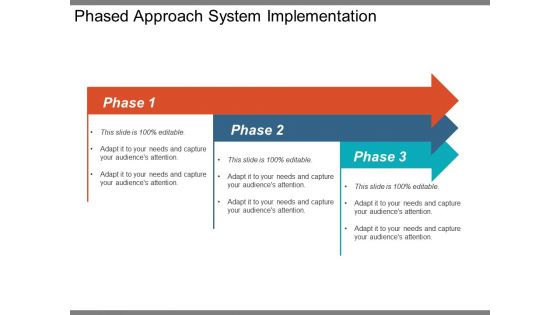
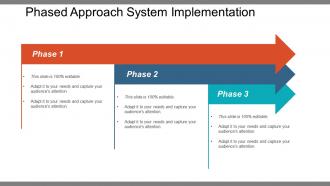
Dividing your work into phases to give your it a complete structure and make it easier to understand for the audience. Our three phases presentation template can be used to deliver a presentation on project management, business development, career progression etc. This PPT layout has been designed with the purpose which is to add value to the presentation. You can easily portray the information related to development with the use of this phased approach PowerPoint slide. Project Management is the most vital aspect of business growth as there are many stages included to initiate and complete the work in the effective manner such as project initiation, planning, execution, monitoring and control and then closure. Now to let your team understand these metrics and how to implement them, this presentation visual makes it possible for you. You just have to download the design, insert it in your already working on new presentation and then show it to anyone. Phased approach makes the work easier as it ensures better work management. Download it to let your team understand its value in the long run. Flag mark the road ahead with our Phased Approach System Implementation Powerpoint Slide Deck. They will unfurl your brilliant plans to your audience.
People who downloaded this PowerPoint presentation also viewed the following :
Phased approach system implementation powerpoint slide deck with all 5 slides:
Convince folks you are fully in charge with our Phased Approach System Implementation Powerpoint Slide Deck. It helps you hold the baton firmly.


FAQs for Phased approach system implementation
Honestly, the biggest win is catching problems early before they blow up your budget. Risk reduction is huge. You'll get faster feedback too, which keeps everyone sane - including your stakeholders who actually see progress happening. Your team can pivot between phases instead of pretending they'll nail everything perfectly from day one (which, let's be real, never works). Oh, and staffing becomes way less of a nightmare since you're not trying to hire everyone at once. My advice? Figure out your must-have features first - that's usually where you'll see the biggest impact.
Look at three things before jumping to the next phase: can your team actually handle it, is your infrastructure ready, and do stakeholders genuinely support this? Make basic checklists covering tech requirements, resources, and skill gaps. Most companies skip this step and kick themselves later - don't be them. Run small pilot tests first to check if your assumptions are right. Ask your team how confident they feel and dig into their concerns early. Aim for 80% readiness. Perfect doesn't exist, but 80% means you can roll with whatever curveballs come up.
Honestly, communication breakdowns are the worst part. Someone forgets what you decided in phase one, or suddenly they're like "oh wait, can we add this tiny thing?" Handoffs between teams are brutal too - design passes stuff to dev and half the details vanish. I've watched projects sit there for weeks over this mess. Document everything at each phase (I know, boring but necessary). Make people actually sign off before moving to the next step. And don't let scope creep happen without going through proper change control - trust me on this one.
Honestly, you've gotta nail down your success metrics before jumping in - that's huge. I made this mistake last project and it was a mess lol. Pick stuff you can actually measure like adoption rates or performance numbers that make sense for each phase. Check in with your stakeholders regularly, don't just wing it. Document everything - what bombed, what worked, all of it. Then you can tweak the next phase based on real data. Oh and don't wait till the end to measure things! Track continuously so you can pivot if something's going sideways.
Honestly, start with mapping out your phases first - that's the foundation for everything else. Jira or Monday.com are solid for tracking dependencies and keeping things organized. Gantt charts make timelines way easier to visualize. I'd also set up a risk register because something *will* go sideways (it always does). Slack keeps everyone updated without endless email chains. Oh, and don't skip pilot testing - getting user feedback early saves you from disasters later. Pick tools that actually fit how your team works instead of cramming some fancy system nobody wants to use.
Your stakeholder game totally changes as you roll this thing out. Early on, you're doing big picture stuff - town halls, surveys, getting everyone excited about the change. Mid-phase gets way more hands-on with your core team and key users testing everything. This part can get really messy if you don't stay on top of it. Later you're focused on training the actual users and helping them adapt to the new system. My advice? Figure out who needs to be involved when, right from the start. Trust me, it'll save you so many headaches down the road.
Dude, communication literally makes or breaks these rollouts. I can't stress this enough - you've got to keep everyone looped in on timelines, scope changes, all that stuff. Teams will start doing their own thing if they're not aligned, and stakeholders get totally lost about what's actually being delivered. Set up regular check-ins and document everything, even the obvious stuff. Trust me, I've watched projects completely fall apart because someone thought "everyone obviously knows the plan." They didn't. Over-communicate rather than leaving people guessing - you'll actually hit your phase two deadline that way.
Look, breaking your project into phases is honestly a lifesaver. When things go sideways in phase one, you can fix it without your whole timeline imploding. Much better than finding out everything's broken at the end, right? Each phase gives you actual feedback from real people using your stuff. You can pivot if needed instead of just hoping for the best. Oh and identify where your project naturally breaks apart - like major milestones or deliverables. That's where you'll want to split things up. Trust me, your future self will thank you.
Phased rollouts are perfect for risky projects or when you're introducing tech your team hasn't used before. Nobody wants to be the one who breaks everything on launch day, right? It's also clutch when stakeholders aren't fully convinced yet - you can show quick wins to build support. Complex integrations definitely need this approach too. I'd go phased if resources are limited or you're coordinating across departments that work at totally different speeds. The best part? You catch problems early instead of dealing with a massive cleanup later. Figure out what could go wrong first, then test those scary assumptions right away.
Track the stuff that actually matters - milestone completion, budget variance, and how happy your stakeholders are. Timeline slippage will kill you, especially early on (trust me on this one). User adoption rates are gold too. Pick maybe 3-5 metrics per phase though, otherwise you'll drown in spreadsheets. Honestly, I'd rather have fewer metrics that I actually look at than a dashboard full of stuff nobody checks. Set up something simple and review it weekly with the team. Quality metrics and risk indicators matter too, depending on what kind of project you're running.
Just bake feedback sessions into every phase - like weekly check-ins with users and your team. Retrospectives work great, or user testing sessions. Honestly doesn't matter what you call them as long as they actually happen (which is half the battle lol). Grab specific data on what's broken vs. what's clicking. Then tweak your next phase based on what you learned. That's the whole point of doing phases anyway - you're not stuck with your original plan. I'd start with weekly feedback early on, then maybe spread it out more once things are running smoother.
Look at Microsoft's Office 365 rollout - they went department by department instead of doing everything at once. Smart move because they caught problems early and could pivot. Coca-Cola did something similar with Salesforce, rolling it out to sales first, then marketing and customer service. Most ERP projects work this way too, honestly. Going all-in from day one is asking for trouble. These companies always start with either their most tech-savvy people or the processes that won't break everything if something goes wrong. Oh, and they're really careful about change management at each step - that part's huge.
Honestly, breaking it into phases is a lifesaver for your budget. Instead of dropping everything upfront, you can spread costs over time - finance people love this btw. Start with the must-haves: core features, key team members. Then build from there as each phase works out. The cool part? You can shift money around based on what actually happens. Phase one goes over budget? Just trim phase two a bit. I'd definitely map out what each phase needs beforehand though, or you'll be stressed later trying to figure it out on the fly.
Honestly, those quiet periods between phases will kill your project if you're not careful. Celebrate the small wins - like, actually make a big deal about hitting minor milestones. Share updates constantly so people see stuff's happening. I always do little demos or feedback sessions to keep stakeholders feeling involved. Quick wins are everything here! If you're losing momentum, don't be stubborn about timelines - adjust them. Oh, and use that downtime to prep for what's coming next (your future self will love you for it). Trust me, I've watched too many good projects just... die during those lulls.
You really need those formal review sessions between phases - don't just rely on random conversations in the hallway. Do proper retrospectives where everyone says what worked and what bombed. Then actually write it down! Seriously, most teams skip this part when they're rushing ahead. Make a basic template for lessons learned and get someone to update your playbook with real insights. Otherwise the next team just gets vague advice from whoever's still around. I learned this the hard way on my last project - we kept making the same mistakes because nobody documented anything useful.
-
Wonderful templates design to use in business meetings.
-
Graphics are very appealing to eyes.