

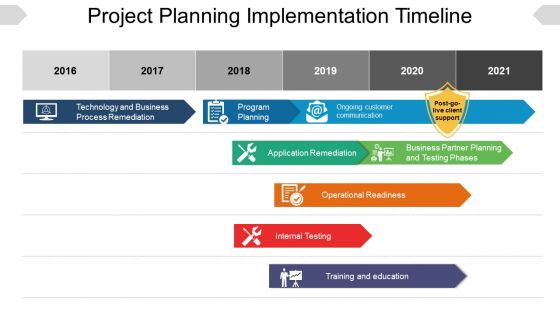
Project planning implementation timeline roadmap powerpoint layout





Try Before you Buy Download Free Sample Product
 Impress Your
 Audience
 100%
100% Editable
 Save Hours
 of Time


Planning is very important function for any business organization. So, to demonstrate this you can utilize our project planning implementation timeline roadmap PPT Template layout slide. This visually appealing Presentation slide has been crafted for you to highlight the project development and its various phases to your team. This PowerPoint Slideshow will clarify and help you in describing the dedicated timeframe within each project. If your managers are looking for ways to track the progress of each ongoing and future project, then they can insert this remarkable project planning implementation timeline roadmap design in their business presentations. Our slide design is a fantastic way to work out the delay in timing and logistics as you can visualize the tasks or events. You can easily edit and change the colors, font size, font style and background of this Slide design as the slide is fully amendable. By incorporating our graphic you can make your presentation catchy and eye pleasing. Your stakeholders and project managers can make great use of our PPT slide. So, just browse through our wide range of business slide templates and incorporate these into your presentations. Errors come to a halt with our Project Planning Implementation Timeline Powerpoint Layout. Every flaw becomes apparent.
People who downloaded this PowerPoint presentation also viewed the following :
Project planning implementation timeline roadmap powerpoint layout with all 5 slides:
Engrave your ideas in the minds of your audience. Chisel them in with our Project Planning Implementation Timeline Powerpoint Layout.
FAQs for Project planning implementation timeline
Okay so first thing - nail down what you're actually trying to accomplish and when. Map out your big milestones in order, then break those into smaller chunks with realistic deadlines. Most people totally bomb this part tbh. Figure out which tasks depend on others finishing first, then assign your people and resources. Always add buffer time because stuff WILL go wrong. Set up regular check-ins too. The whole thing needs to be detailed enough so everyone knows their next move, but flexible when things inevitably get messy. Oh and don't make your timelines too aggressive - learned that one the hard way!
So here's what I'd do - map each roadmap milestone to a specific business goal or KPI. That way there's a clear line from your daily tasks to actual company results. Those stakeholder check-ins? They're annoying but super necessary. I learned this the hard way when priorities shifted and nobody told our team for weeks. Build in quarterly reviews too since things change constantly. Oh, and make it visual - charts or whatever work. People need to see how their work connects to business outcomes. Start by grabbing your current roadmap and figure out which business objective each deliverable actually supports.
For visual roadmaps, **Roadmunk** and **ProductPlan** are solid picks - they're built specifically for timelines and super intuitive. **Monday.com** and **Asana** have decent roadmap views too, plus you get the whole project management side covered. If your team's design-heavy, **Miro** or **Figma** give you way more creative freedom. Sometimes the simple route is better anyway. Honestly though, I'd check what you're already using first. Most project tools have roadmap features now, and adding another app to your stack can get messy fast. What's your team currently working with?
Honestly, monthly works for most projects, but it really depends on your situation. Weekly makes way more sense if you're dealing with crazy deadlines or everything keeps shifting around. I've watched teams completely ignore their roadmaps for months and then wonder why nothing's on track - super frustrating to watch. Build in regular check-ins where you can move things around, tackle whatever's blocking progress, and adjust timelines. Just put a recurring meeting on your calendar now and actually show up to it. Otherwise you'll keep putting it off.
Dude, get your stakeholders involved ASAP - they're the ones who actually know what matters and what'll work in the real world. Start with them to nail down scope and priorities, because honestly, you don't want to build something nobody asked for. They'll catch constraints you'd never think of (learned that one the expensive way lol). Don't just grab the obvious people though - sometimes the best insights come from weird places. Get their input organized so you're not dealing with total chaos. Document everything they tell you upfront. Trust me, you'll thank yourself later when timelines actually make sense.
Don't treat risk management like some separate thing you tack on later - weave it straight into your roadmap from day one. When you're planning, spot the risks early and assign owners plus mitigation plans to actual milestones. Too many projects I've watched just... implode because someone had risks listed in a random Excel file nobody checked. Set up monthly review points (or whatever makes sense for your timeline). Track probability and impact, obviously, but also prep your backup plans ahead of time. Trust me, when stuff hits the fan - and it will - you'll be so glad you thought this through beforehand.
Look at your critical stuff first - anything that'll blow up the whole project if it gets delayed. I use this simple high/medium/low impact vs effort grid because honestly, it saves so much overthinking time. Hit those high-impact, easy wins early to get some momentum going. Then move on to your must-haves that actually matter for your key metrics. Oh, and don't forget your team's bandwidth and what they're actually good at when you're planning the order. Here's the thing though - if you call everything priority one, you've basically got no priorities at all. Pick what matters most and explain why to everyone.
So basically, your methodology completely changes how you build your roadmap. Waterfall means you're doing everything step by step - requirements first, then design, dev, testing, all in order. Agile's the opposite though. Way more flexible with sprints and features that change based on what users actually want. I swear I've watched teams try cramming Agile into Waterfall formats and it never works. Hybrid's pretty smart if you ask me - plan your big milestones but leave wiggle room for changes. Just pick whatever matches how unpredictable your project's gonna be.
Track your delivery stuff first - milestone completion, timeline hits, budget variance. That's the basics. But the softer metrics matter too, like stakeholder satisfaction and team velocity. Those tell you if things are actually working day-to-day. Resource utilization helps catch bottlenecks early. Oh, and definitely measure scope creep frequency - that's where most roadmaps go to die honestly. Weekly dashboard reviews keep everyone honest. I probably obsess too much over the metrics, but better than flying blind and realizing your roadmap's broken three months later.
You need everyone looking at the same timeline, trust me. A roadmap kills those awkward "wait, what's due when?" moments in meetings. Plus it helps spot problems before they blow up - like when Sarah's team needs something that Tom's group hasn't even started yet. I'd put it somewhere everyone can actually find it (not buried in some random folder). Short sentences work better than walls of text. Update it during your regular check-ins so it doesn't become one of those dusty documents nobody looks at.
Dude, the classic mistake is being way too optimistic with timelines. Build in buffer time because stuff always takes longer than you think. Also? Don't go crazy with details upfront - I've watched teams waste weeks on perfect plans that got scrapped after one sprint lol. Map out your dependencies clearly since missed handoffs are momentum killers. Actually get your team involved instead of planning solo. Oh, and treat it like a Google doc, not the Ten Commandments - you'll be updating it constantly anyway.
Definitely dig into your old projects when planning new ones. What kept going sideways? Scope creep, timeline issues, not enough people? Build those lessons into your next roadmap. Same with the wins - figure out why stuff worked and do it again. Most teams skip this part entirely, which is honestly crazy to me. Just keep a running doc of what you learned and actually look at it before starting something new. I've saved myself so much headache by doing this. Way better than making the same mistakes twice.
Honestly, timelines are everything - they show your team what needs to happen when and how tasks connect to each other. Otherwise you're just guessing at dates and people will definitely miss stuff. For your roadmap, throw in a Gantt chart or at least some milestone dates. Color-coding different work streams is clutch (learned this the hard way). Always add buffer time because trust me, something will break. Show both the detailed task timing and the bigger project phases so everyone gets it. Your stakeholders need to see the forest AND the trees, you know?
Dude, color coding is a game changer - use it for different phases or teams so people can instantly spot what's relevant to them. Icons work great for milestones and risks too. I swear, nothing kills engagement like a wall of text that nobody wants to read. Progress bars give you that quick status check, and swimlanes help organize everything by workstream. You could throw in some simple charts for resource stuff if you're feeling fancy. Start small with just one visual element though. Your team will actually pay attention to it instead of ignoring another boring document.
Get people involved from the start instead of just showing them the finished thing. Figure out what actually matters to each person first - money, deadlines, whatever's stressing them out. When you present stuff, connect your project directly to their concerns. Ask for input early and actually use it. Sounds obvious but most people skip this step. Everyone backs things they helped create. Speak their language too - execs want to see ROI numbers, engineers care if it'll actually work, users just want to know what's in it for them. Oh and set up regular check-ins so nobody gets surprised when things change.
-
Thanks for all your great templates they have saved me lots of time and accelerate my presentations. Great product, keep them up!
-
Really like the color and design of the presentation.