


Porter Five Forces Analysis On Starbucks Coffee Business Company Profile CP SS V




Try Before you Buy Download Free Sample Product
 Impress Your
 Audience
 100%
100% Editable
 Save Hours
 of Time


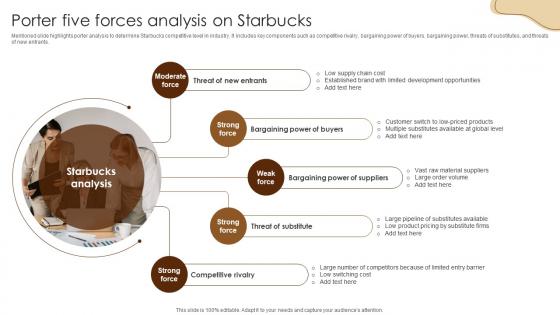
Mentioned slide highlights porter analysis to determine Starbucks competitive level in industry. It includes key components such as competitive rivalry, bargaining power of buyers, bargaining power, threats of substitutes, and threats of new entrants.
People who downloaded this PowerPoint presentation also viewed the following :
Porter Five Forces Analysis On Starbucks Coffee Business Company Profile CP SS V with all 9 slides:
Use our Porter Five Forces Analysis On Starbucks Coffee Business Company Profile CP SS V to effectively help you save your valuable time. They are readymade to fit into any presentation structure.








FAQs for Porter Five Forces Analysis On Starbucks Coffee Business Company Profile
So basically it helps you figure out if an industry is worth getting into before you waste time and money. You look at five different competitive forces - like whether suppliers can screw you over on pricing, how easily customers can jump ship to competitors, stuff like that. It's honestly pretty smart. New competitors entering the market is another big one to watch. The whole point is spotting what could go right or wrong, then you can actually plan around those realities. Don't make big moves without running this first - you'll just be guessing otherwise.
So Porter's five forces are like this whole ecosystem that decides if your industry makes money or not. High supplier power? They'll squeeze your margins hard. Buyers with leverage push for lower prices. Then you've got crazy competition - airlines are the worst example, always cutting each other's throats. Substitutes put a ceiling on what you can charge, and if anyone can waltz into your market, you're screwed. Here's the kicker though - these forces feed off each other. New competitors make rivalry worse, which gives buyers more power. You gotta map out how they all connect in your specific space to find where the real money gets lost.
Look, figuring out how easily new competitors can jump into your market is huge for planning your next moves. Low barriers? You better start locking down customers fast - build loyalty programs, grab exclusive deals, make it expensive for people to switch. High barriers give you more breathing room to think long-term instead of panicking. Honestly, I've seen too many companies get blindsided because they didn't realize how vulnerable they were. The whole point is matching your strategy to reality. If your market's about to get flooded, move quick and secure your spot before everyone else shows up.
Basically if suppliers have tons of power, they'll jack up your input costs and you're stuck. You either eat the extra cost and kill your profits, or bump up your prices. Remember the whole car thing with chip shortages? Perfect example right there. Limited supplier options plus something you absolutely need equals you're screwed on pricing. Short sentences suck but that's reality. Diversifying suppliers helps when you can swing it, plus building decent relationships gives you more room to negotiate when contracts come up for renewal. Not always possible though.
So when buyers have crazy bargaining power, they can totally squeeze your profit margins - demanding lower prices, better terms, all that fun stuff. Look at how Walmart treats suppliers. Brutal, right? Your customers will push margins down if they've got tons of alternatives or buy huge volumes. You're stuck choosing between keeping prices high (bye bye sales) or cutting them (hello, tiny profits). Honestly, the whole thing sucks unless you can make your product stand out somehow. Or maybe find ways to make switching to competitors a real pain for them.
Oh totally, substitutes can absolutely kill your demand. Streaming basically destroyed cable, right? Customers will bail fast if they find something cheaper or easier that does the same job. You've gotta think about what problem you're actually solving for people, then look around for other ways someone might solve it. Sometimes the biggest threat doesn't even look like competition at first - like how Uber wasn't really competing with taxis initially, but ride-sharing ended up crushing them anyway. New tech especially sneaks up on you. I'd watch adjacent industries too, that's where the surprises usually come from.
When there's tons of competition, growing becomes a real pain. Everyone's fighting over the same customers, so prices drop and your profits get crushed. You end up burning cash on marketing just to keep up - honestly, it's exhausting. Plus whatever cool thing you do, competitors will just copy it anyway. The whole thing reminds me of those Black Friday sales where people are literally trampling each other. Your best bet? Find some corner of the market that isn't completely saturated, or figure out what makes you actually different from everyone else.
Porter's Five Forces can help you find weak spots in your industry to attack. High supplier power? Try vertical integration or spread out your supplier base. Strong buyer power means you need better differentiation or ways to make switching harder for customers. Honestly, most companies do this analysis once and forget about it - total waste. The real magic happens when you track how these forces change over time. That's where you actually adapt your strategy. Oh, and look for industries where entry barriers are getting higher or substitute threats are shrinking. Those are goldmines if you can double down there.
Look at market concentration ratios and how many direct competitors you're dealing with. Price wars are the biggest red flag - when everyone's racing to the bottom, margins go to hell fast. Check industry growth rates and switching costs too. Fixed costs matter a ton because companies will fight like crazy for market share when they need to spread those expenses. Product differentiation and exit barriers tell you a lot as well. Honestly, I'd start by mapping your top 5-10 competitors and their market shares, then dive into pricing trends from the last couple years. That'll give you the real picture of how brutal things actually are out there.
So basically, outside stuff can totally flip Porter's Five Forces on its head. Economic crashes make buyers way pickier about price. New tech either makes it easier for competitors to jump in or creates products that replace yours entirely. Remember when iPhones killed off like half the electronics industry? That's substitute threats going crazy. Government rules can mess with supplier power too - sometimes overnight. Here's the thing though: you can't just do this analysis once and call it done. Major changes mean you gotta look at it again because your competitive advantages from last year might be worthless now.
Porter's Five Forces is actually pretty useful for this - just map out each force in your market first. Hunt for spots where suppliers aren't controlling everything, customers have unmet needs, and there aren't tons of alternatives already. The big players are usually distracted by their own stuff anyway. Short sentences work here. Find that sweet spot where you won't get immediately destroyed as a newcomer. I'd say the most important part is testing your idea with real people fast, before the established companies wake up and decide they want your slice too. Sometimes the best opportunities are hiding in plain sight.
Honestly, the biggest mistake is doing it once and calling it done. Your competitors aren't sitting still, so why should your analysis? Also, don't be too narrow with who you think you're competing against - Netflix learned this the hard way when they realized they weren't just fighting Blockbuster but all entertainment options. Teams often rush through it without asking sales or operations what they're seeing on the ground. Those guys spot threats you'll miss from your desk. Oh, and don't rely on old data or oversimplify how these forces actually interact. Revisit it every quarter if you can.
Dude, you gotta figure out where the industry is in its lifecycle before analyzing those five forces - it totally changes everything. New industries? Buyers have zero power since there's barely any alternatives, but suppliers can really squeeze you if they've got specialized stuff. Growth stage gets crazy competitive as everyone scrambles for market share. Mature industries flip the script - buyers know all their options and have way more leverage, suppliers get commoditized. And declining industries? Pure bloodbath on pricing as companies fight to stay alive. Honestly the lifecycle context matters more than most people realize.
Looking back at past data shows you patterns you'd totally miss otherwise. Like, maybe supplier power shifts every few years, or new competitors always jump in during certain seasons. Honestly, it's way more useful than just guessing from what's happening right now. You can actually time your moves better - say, if competition usually dies down in Q3, that's when you make your play. I've seen companies completely miss these cycles and get burned. Track how customer bargaining changes over time too. It's basically pattern recognition for business strategy.
Honestly, you've got to run Porter's Five Forces way more often in fast-moving industries. Quarterly beats annually every time. Netflix killed Blockbuster basically overnight - that's the speed we're talking about. Don't just analyze current competitors either. Who could disrupt you next quarter? That's the real question. Supplier power shifts constantly when new tech drops, and digital platforms can flip customer bargaining power in a heartbeat. I learned this the hard way watching companies get blindsided. Keep updating it like a living doc and always think about potential threats, not just obvious ones.
-
I was confident and well prepared for my presentation for the first time ever. With SlideTeam’s templates, I could deliver one of my best presentations. Will be coming back for more!
-
Wonderful ideas and visuals. I'm really pleased with the templates, which are unique and up to date.