


Positive and negative balance seesaw good ppt example





Try Before you Buy Download Free Sample Product
 Impress Your
 Audience
 100%
100% Editable
 Save Hours
 of Time


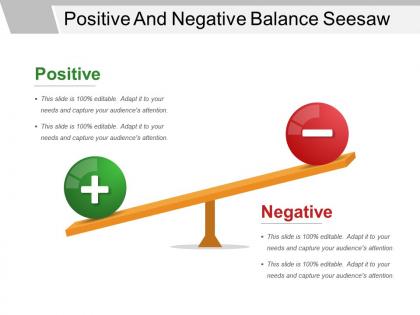
Get this Positive And Negative Balance Seesaw Good PPT template and depict the advantages and disadvantages of any topic. The pros and cons related to any concept can be easily illustrated using this PPT slide. You can also incorporate this readily available PowerPoint to evaluate the risks and benefits associated with a project. Analyze it properly and make a wise decision after evaluating it with your teammates with the assistance of this professionally designed positive and negative PPT slide. Also, you can easily depict the do’s and don’ts of an organization. Not only this, you can also showcase the profits and losses of a particular period. This seesaw PPT slide can also work as a motivational tool. Depict the names of hardworking employees on one side and the names of the employees who do not work on the other side. This will act as a positive and negative motivation for them which will help in improving organizational effectiveness.
People who downloaded this PowerPoint presentation also viewed the following :
Positive and negative balance seesaw good ppt example with all 5 slides:
Attain desired goals with our Positive And Negative Balance Seesaw Good Ppt Example. They are a great help in chasing your dreams.

FAQs for Positive and negative balance seesaw
Okay so here's what I've figured out - aim for like 70% content, 30% interactive stuff. Don't just dump information on people or they'll zone out completely (trust me, I've been there). Mix in polls or quick discussions after your heavy slides. Your pacing matters too. Slow way down when you hit complex stuff, then pick up speed when covering basics they already know. But honestly? The biggest thing is just watching your audience. If people start scrolling their phones, immediately throw them a question or something. Reading the room beats any perfect plan you had going in.
So picture a seesaw, right? Content depth on one side, delivery energy on the other. Pack too much detailed info and you'll sound like you're reading a grocery list. But amazing charisma with zero substance? Your audience goes home entertained but basically learned nothing. You want both sides pretty balanced. Some presentations can lean one way depending on who you're talking to, but if it's super lopsided, you're screwed. I'd figure out your content-to-delivery mix before you even start practicing. Then just keep tweaking until they're working together instead of fighting each other.
Think of it like a seesaw - dump too much info and people zone out, too little and they're lost. Lead with your main point first. Then add details bit by bit. I always stick to three key points max because honestly, people can't handle more than that. I've watched so many presentations bomb when someone just vomits everything at once! Check if they're following along - ask questions or do quick polls. Oh, and break up the heavy stuff with stories or visuals. You want them curious but not completely fried, you know?
Think of visuals as your safety net when explaining tricky stuff. Charts and images give people something concrete to grab onto while you're talking through abstract concepts. We've all zoned out during those dreaded wall-of-text presentations, haven't we? The trick is making sure your visuals actually back up your words instead of fighting against them. Short sentences work great sometimes. For each major point, just ask yourself - would a picture or graph make this clearer? Don't just slap visuals on slides because they look pretty. They should earn their spot by genuinely helping your audience follow along.
Dude, think of your body language as backing up what you're saying - like when they're in sync, people actually believe you. But if you're talking confidently while slouching or whatever, it's just... weird and throws everyone off. You want to stand solid, move your hands with purpose, and match your energy to what you're actually saying. Oh, and definitely practice in front of a mirror or record yourself - you'll catch those awkward habits way faster than you'd expect. It's honestly like a seesaw thing where everything needs to balance out.
You'll want to use verbal bridges and pause between topics so people can catch up mentally. Say stuff like "Now let's move to..." instead of just diving in. I totally bombed a presentation last year by not doing this! Try connecting your points logically when you can - makes everything flow better. People follow along easier when they get why you're jumping from A to B. Oh, and practice those transitions out loud beforehand. Trust me, they sound way more awkward in your head than you think they will.
Ugh honestly I used to be SO bad at this - constantly checking messages all day like some kind of social media zombie! What saved me was batching everything into specific time blocks. I'll do 30 minutes around 9am, then lunch, then before I'm done for the day. That's it. Tell people upfront when they can expect replies, like "I'll respond to comments by end of day." Templates are your friend for repetitive questions too. The whole trick is being proactive about when you engage instead of just reacting to every ping. Once you set those boundaries, actually stick to them or people will walk all over you.
Dude, you've gotta match your energy to the room and what you're talking about. I bombed this data presentation last month - put half the audience to sleep with my monotone voice, it was brutal. Mix up your pace though! Slow down when you hit the heavy stuff, then pick it up during transitions. Your tone should be chill but confident. It's like... you wouldn't play sad songs at a party all night, right? Record yourself practicing and you'll catch where you're rushing or dragging. Mark those spots in your notes so you don't forget.
Ugh, the worst thing you can do is dump way too much info in one part then speed through everything else. I always do this when I'm nervous - like I'll spend 10 minutes on boring background stuff then have 2 minutes left for my actual point. Makes zero sense. Your audience just gets lost when sections feel completely unbalanced. What works for me now: I literally time myself during practice runs. Sounds nerdy but whatever, it works. Give each section rough time limits beforehand and actually stick to them. Short sections can be punchy, longer ones need real substance. Don't wing the timing part.
Get feedback to catch when you're doing weird stuff with timing - like droning on about background info but then blazing through your actual point in two seconds. Have people tell you what dragged or where they zoned out. Honestly, it stings when someone calls out your random tangents, but you need to hear it! They should flag if your time spent matches what actually matters. Then go restructure - dump the heavy technical junk in an appendix and give more space to what your audience cares about. You want your next run-through to feel natural, not like you're reading a textbook.
Oh man, this is so much harder than it looks! Different cultures expect totally different things from presentations. Japanese audiences want slower pacing while Germans are all about the data - like, way more than you think you need. What works for Americans might bomb elsewhere. I'd honestly test it with people from different backgrounds first if you can. Build in extra visuals for some cultures, have backup slides ready with more details, and maybe switch up your pace throughout. It's kinda like... you're juggling different expectations at once.
Lead with your big findings, then sprinkle in just enough story to make it memorable. Data dumps are painful - I've sat through way too many. Mix in quick examples or real situations to back up your main points, but don't go overboard with the storytelling. For technical people, I'd say about 70% hard data, 30% narrative stuff. The story bits should highlight your insights, not bury them. Oh, and always tie it back to what it actually means for your team. People need to walk away knowing what to do next, you know?
Okay so the rule of thirds is clutch here - picture your slide as a tic-tac-toe grid and put important stuff on those lines or where they cross. Try squinting at your slide (I know it sounds weird but trust me) and see what catches your eye first. Don't pile everything on one side - you want to balance your text with images and give things room to breathe. White space isn't wasted space, it's actually doing work. PowerPoint has these alignment guides that'll help you line things up without going crazy. I always start with my main point first, then figure out where everything else should go around it.
Just be yourself, but like the version of you who actually knows what they're talking about. Share your stories and experiences - people love that stuff. Don't try to sound like some perfect guru though, that's weird. When something's complicated, just say "this part gets tricky" or whatever. I've found that laughing at my own mistakes actually makes people trust me more? Anyway, think of it this way: you want them thinking "damn, she's smart" but also "I could hang out with her." Maybe start your next talk with something everyone can relate to before you get into the heavy stuff.
Try doing vocal warm-ups that go from high to low pitches, then practice speeding up and slowing down different parts of your presentation. There's this thing called the "metronome method" - sounds totally weird but it actually works. You practice your main points while keeping a steady beat, then throw in natural pauses. Record yourself giving the same content three ways: low energy, medium, and high energy. You'll find that sweet spot where you're engaging without being too much. Oh, and don't overthink the rhythm part - once you practice these variations enough, balanced delivery just starts feeling normal instead of forced.
-
Commendable slides with attractive designs. Extremely pleased with the fact that they are easy to modify. Great work!
-
Excellent products for quick understanding.