


Powerpoint template and background with drought plant nature




Try Before you Buy Download Free Sample Product
 Impress Your
 Audience
 100%
100% Editable
 Save Hours
 of Time


The following Powerpoint Image slide titled Powerpoint Template And Background With Drought Plant Nature is an editable Powerpoint template available in Standard as well as Widescreen size. This slide has an image pasted strategically on a slide with sections for text that you can fill in. You can move and edit any element and paste your own image in place of this provided image if required.
People who downloaded this PowerPoint presentation also viewed the following :
Content of this Powerpoint Presentation
Description:
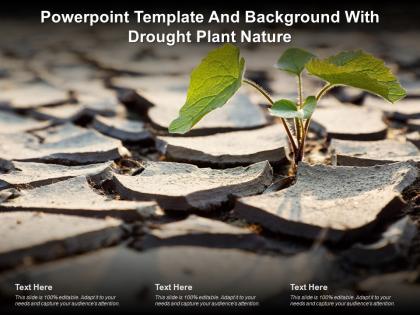
The image displayed is a PowerPoint template that features a background of a drought-impacted environment with visible cracks in the dry soil, but with a small green plant sprouting through, symbolizing hope and resilience. This powerful visual metaphor can be utilized to convey messages of overcoming adversity, persistence, new beginnings, sustainability, or environmental change.
Text elements include a prominent title "Powerpoint Template And Background With Drought Plant Nature," which is placed at the top against a slightly darkened area of the photo to ensure readability. The template also provides three placeholders with the words "Text Here," suggesting areas where the presenter can add their own content.
Use Cases:
Here are seven industries where this slide could be effectively applied:
1. Environmental Conservation:
Use: To discuss restoration efforts in damaged ecosystems.
Presenter: Environmental scientist.
Audience: Policy makers, environmentalists, students.
2. Agriculture:
Use: Addressing the challenges and solutions for farming in arid conditions.
Presenter: Agronomist or agriculture expert.
Audience: Farmers, agricultural students, agribusiness professionals.
3. Water Resource Management:
Use: Presenting strategies for coping with water scarcity.
Presenter: Water resource manager.
Audience: Government officials, NGOs, community leaders.
4. Motivational Speaking:
Use: Illustrating themes of perseverance and overcoming obstacles.
Presenter: Motivational speaker.
Audience: General public, corporate employees, self-help groups.
5. Climate Change Advocacy:
Use: Showcasing the impacts of climate change on land and the hope for positive change.
Presenter: Climate change advocate.
Audience: Activists, students, the general public.
6. Urban Planning:
Use: Discussing sustainable development and green space integration in cities.
Presenter: Urban planner.
Audience: City officials, urban developers, community planners.
7. Renewable Energy:
Use: Highlighting the necessity for renewable solutions in light of environmental degradation.
Presenter: Renewable energy expert.
Audience: Energy sector professionals, investors, policymakers.
Powerpoint template and background with drought plant nature with all 2 slides:
Use our Powerpoint Template And Background With Drought Plant Nature to effectively help you save your valuable time. They are readymade to fit into any presentation structure.

FAQs for Powerpoint template and background with
So drought-resistant plants are basically water hoarders with good survival tactics! They've got thick, waxy leaves that lock moisture in, plus deep root systems that can reach water way down below. Succulents are the obvious ones - they literally store water in their chunky leaves. Some plants go with tiny leaves or that silvery-gray color to bounce heat away. Oh, and pine needles work the same way as thick leaves, just shaped different. When you're plant shopping, look for these features if you want something that won't die on you during dry spells.
So drought-resistant plants are basically water hoarders with some cool tricks. Succulents store water in their thick leaves and stems - you've probably seen those chunky little guys everywhere lately. They also have waxy coatings to stop evaporation and crazy root systems that suck up every bit of moisture. Oh, and some actually open their pores at night instead of day to avoid losing water. Smart, right? If you're dealing with dry spots in your yard, look for anything labeled xerophytic or native to desert areas. Way easier than constantly watering stuff.
So basically plants with deep roots can reach groundwater that other plants can't touch. Your average garden stuff only goes down like a foot or two, but drought-resistant plants? Totally different story. Mesquite trees will dig down 15+ feet if they have to - honestly it's kind of crazy how determined they are. When everything at the surface dries up, they're still pulling water from way down below. If you're trying to do that whole water-wise garden thing, definitely go for plants with deep taproots instead of the shallow root systems.
Mediterranean spots are crushing it right now - southwestern US, parts of Australia, southern Africa, Middle East areas. Basically anywhere water's already sketchy or getting worse with climate change. Those Mediterranean regions make total sense since they're naturally dry in summer anyway. Even regular temperate places are jumping on board now that rainfall's so unpredictable. Honestly, if you're dealing with longer dry spells or water restrictions where you live, definitely look into native drought-tolerant plants. Way easier than fighting it.
Dude, drought-resistant plants are seriously worth looking into if you're thinking agriculture. They use way less water but still give you decent yields - which is huge for your water bill and the environment. These things are basically bulletproof when weather gets weird. Fewer crop failures, more consistent harvests. Honestly, I'd be shocked if anyone doing farming these days wasn't at least considering them. Oh, and definitely check what varieties work best in your specific area first - that part actually matters a lot. Could save you tons of headaches down the road.
You can't go wrong with lavender and succulents like agave - they're literally everywhere now! Mediterranean herbs are solid too, rosemary and thyme smell amazing and barely need water. Oh, and ornamental grasses look really modern. But honestly? Start with native plants first. They're already used to whatever crazy weather your area throws at them. Desert folks should definitely go for cacti, while purple coneflowers and black-eyed Susans are perfect if you're in a temperate zone. Once they're established, you'll barely have to think about them.
Honestly, I'd start with whatever grows naturally around you - those plants already know how to handle your weather and soil. Your local extension office has great lists, or just walk around the neighborhood and see what looks good without sprinklers running constantly. Succulents are the obvious pick, but Mediterranean herbs are amazing too. Ornamental grasses look so elegant and need basically nothing. Oh, and tons of perennials actually prefer dry conditions once they're established. I'd swap out your water-hungry plants first - find drought-tolerant ones in similar heights and colors so you don't lose the whole look.
Oh nice question! So these plants are basically water-hoarding masters. Succulents stuff water into their chunky leaves and stems. Most have waxy coatings or little hairs that stop moisture from escaping - pretty smart actually. You'll notice they've got tiny leaves or just spines instead, which cuts down on water loss big time. Their roots either go super deep or spread out everywhere to grab whatever water they can find. They even "hold their breath" by closing their pores when it's scorching hot. Honestly perfect for lazy gardeners like me!
Yeah, drought-resistant plants are actually amazing for local ecosystems! They give wildlife reliable spots to hang out during dry periods. Native ones especially - they're like cafeterias for local pollinators and birds. You'll save water and skip the fertilizers too, which is nice for your wallet. Just stick with native species though, not random drought-tolerant stuff that could take over. I learned this the hard way with some Mediterranean plants that went crazy in my yard. Your extension office probably has lists of what works best locally - they're surprisingly helpful with this stuff.
Honestly, most drought plants are super forgiving to propagate. Succulents are basically impossible to kill - just snap off a piece, let it sit for a few days until it gets that little scab thing, then stick it in dirt. For stuff like lavender or rosemary, I always take cuttings in the morning when they're not all wilted and sad. Seeds from native plants usually need that cold treatment over winter, which is kind of a pain but whatever. Division works well too, especially with grasses - just do it when they're dormant. If you're just starting out though, definitely go with cuttings first.
Oh totally, climate change is making everyone obsessed with drought-resistant plants. Like, even places that used to get decent rain are dealing with water restrictions now - it's wild. Homeowners don't want their gardens dying every summer, so they're all scrambling for succulents and native grasses. The demand is crazy high, especially in areas that never had to worry about this stuff before. My neighbor just ripped out half her lawn for xeriscaping. If you're thinking about getting into the plant business, water-wise varieties are where the money is right now.
Honestly, the water savings alone make it worth it - you're looking at cutting irrigation by 60-80% once everything's established. Your city's water bills will drop big time. Native plants just handle heat better than regular grass and flowers, so you won't have those ugly brown patches during summer. Maintenance crews love this stuff too since they're not constantly watering and replanting. I'd start with ditching those annual flower beds (such a money pit) and go with native perennials instead. You'll probably see the savings by next year.
Dude, biotech is crushing it with drought-resistant crops right now. CRISPR lets scientists basically edit plant DNA to get better root systems and water retention - it's pretty wild honestly. They're also taking genes from naturally tough plants and putting them into corn, soybeans, whatever. Way quicker than old-school breeding methods that take forever. Some GM varieties are already out there for farmers to buy. Your local extension office would know what's available in your area if you're actually thinking about this stuff. The whole gene transfer thing still sounds like sci-fi to me but apparently it works.
honestly just start with a demo plot this season - people need to see this stuff working. when your neighbor's succulents are thriving while everyone else is watering their brown grass twice a day, that's when they finally get it. organize some workshops where the garden veterans can show off their favorite drought-tolerant varieties (they love doing this btw). seed swaps work great too - focus on the hardy stuff that actually survives your summers. throw up some basic signs so people know what they're looking at and how much water each plant needs. seeing really is believing with gardening.
Water bills drop like crazy - we're talking 30-50% less than regular crops. That's the big money saver right there. During dry spells, you won't lose as much yield either, so income stays steadier. Government sometimes throws incentives your way too since you're lower risk. Seeds cost a bit more upfront, but honestly? The water savings cover that in year one, maybe sooner. Insurance companies dig it too - they'll cut you deals. I'd test a small section first though, just to see your actual numbers. Way less stressful than watching everything shrivel up when it gets hot.
-
I discovered this website through a google search, the services matched my needs perfectly and the pricing was very reasonable. I was thrilled with the product and the customer service. I will definitely use their slides again for my presentations and recommend them to other colleagues.