


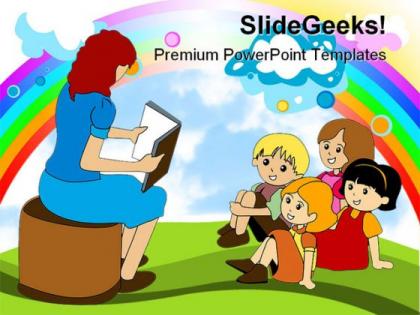
Preschool education powerpoint backgrounds and templates 1210




Try Before you Buy Download Free Sample Product
 Impress Your
 Audience
 100%
100% Editable
 Save Hours
 of Time


Our Preschool Education PowerPoint Backgrounds And Templates 1210 will use pictures to tell the story. That is what good presentations are all about; storytelling.
People who downloaded this PowerPoint presentation also viewed the following :
Preschool education powerpoint backgrounds and templates 1210 with all 3 slides:
Our Preschool Education PowerPoint Backgrounds And Templates 1210 can bear the brunt. Whatever the load they can take it.
FAQs for Preschool education powerpoint backgrounds
So preschoolers basically explode with new skills! They go from choppy sentences to telling actual stories. Sharing and making friends becomes way easier too. Physically? They're suddenly running everywhere, jumping like crazy, and can finally handle scissors without you panicking lol. Writing letters and shoe-tying happen around this time - honestly the fine motor stuff amazes me. They'll follow multi-step directions, start getting basic math, and recognize letters/sounds. The emotional growth is huge - fewer meltdowns, more "I'm frustrated because..." Just watch where your kid's at so you can challenge them without making them feel defeated.
Play-based learning is seriously amazing for little kids. When they're building with blocks or playing pretend, they're actually developing problem-solving skills and memory without even realizing it. My nephew does this thing where he'll spend forever figuring out how to make his tower taller - it's like watching his brain work in real time! Plus they learn social stuff too: sharing, taking turns, managing their emotions when things don't go their way. The trick is picking activities that have learning goals but don't feel like "school" to them. Kids are way smarter than we give them credit for.
Honestly, tech can be great for preschoolers if you're smart about it. Interactive apps teaching letters and numbers keep kids way more engaged than flashcards ever did. My nephew picked up counting so fast with this tablet game - it's wild how quickly they learn! Educational content also hits different learning styles better than just books and worksheets. But don't let it become a babysitter, you know? I'd stick to maybe 10-15 minutes at a time, then switch to hands-on stuff. Mix it with real activities and you're golden.
Skip formal testing completely - just watch what they're actually doing during play and activities. I keep quick notes on language, social stuff, problem-solving, motor skills. Portfolios are honestly your best friend here. Take random photos throughout the day, especially during free play when they're not performing for adults (that's when you see the real magic). Simple checklists help track milestones without being overwhelming. Loop parents in by sharing what you notice - they love that. Even jotting down 2-3 quick observations per kid daily adds up fast. Way more useful than any formal assessment anyway.
Honestly, you're already their first teacher so don't forget that once they hit preschool. Read together every single day - it's like the magic bullet for everything else. Talk to their teachers regularly because kids do way better when home and school are on the same page. My sister learned this the hard way lol. Ask about their day, practice counting random stuff around the house, work on letters. Oh and playdates aren't just fun - they're actually teaching social skills. Follow what gets them excited though. Some kids are all about numbers, others just want stories.
Honestly, skip the whole "multicultural week" thing and just mix it into everything you're already doing. Survey your families first - you'll be surprised how much diversity is already there! Throw in books and music from different cultures during regular story time. Food activities are huge hits with kids, obviously. Ask parents to share traditions when it comes up naturally. Your dramatic play corner? Perfect spot for different cultural perspectives. The trick is making it feel organic, not like some forced lesson plan. Start small and build from what families actually want to share.
Honestly, just rotate through different stuff so you hit everyone. Visual kids need charts and colorful books - manipulatives they can actually touch and sort work great too. Songs and rhymes are magic for auditory learners (seriously, why does everything stick better with music?). Movement kids need dance breaks and hands-on activities like playdough or those sensory bins. What works for me is planning each lesson with one visual thing, one auditory piece, and something that gets them moving around. That way nobody gets left out and you're not scrambling to figure out why half the class looks bored.
Honestly, routines are a game-changer with preschoolers! Kids thrive when they know what's coming next - way fewer tantrums that way. My friend swears by this too. It's wild how much calmer they get when there's some predictability. They actually start getting themselves ready for transitions without you having to drag them along. You know how crazy your own day feels without structure? Same thing for them, just with more crying involved lol. Don't go overboard though - pick maybe 3 main things to keep consistent and leave room for life to happen. You'll notice the difference pretty quick.
Honestly, the hardest part is giving each kid what they need while managing the whole group. Some need way more attention, others have totally different ways of communicating or acting out. Planning activities that actually work for everyone? Takes forever. You'll definitely need training to spot when a kid genuinely needs help versus just being a normal chaotic preschooler - which, let's be real, they all are sometimes. But seriously, get tight with the families and any specialists right away. Makes such a huge difference when you're not trying to figure everything out alone.
Oh this is actually super easy! Start with those "flower breaths" - kids smell the flower, then blow out the candle. Works great when they're melting down or during transitions. Body scans during rest time are gold too. My favorite though? Gratitude circles where everyone shares something good from their day. Keep everything like 2-3 minutes max because their attention spans are... well, you know how it is. Honestly, preschoolers are way better at this mindfulness stuff than we are! Try one thing first, then add more once they've got the hang of it.
Honestly, good preschool is so worth it - the benefits stick around way longer than you'd think. Kids who go tend to have better reading and math scores through elementary, sometimes even high school. They're also way better at stuff like focusing and following directions, which obviously makes everything easier later. The social skills they learn are huge too. Oh, and here's the weird part - the effects actually get stronger over time instead of wearing off. If you're looking at programs, definitely find one with actual trained teachers and age-appropriate activities. That's where the magic happens, not just glorified daycare.
Seriously, outdoor learning is amazing for little kids. They're naturally solving problems and building coordination without even realizing it. Just watching bugs or how puddles form after rain becomes a science lesson. Nature stuff actually calms them down too - and honestly, which preschooler doesn't need that? Their social skills get way better since outdoor play usually means more teamwork and using imagination. Oh, and their focus improves a ton. Start with simple nature walks or maybe set up some learning activities outside. Even our local playground works great for this kind of thing.
Look, kids are literally building their emotional brains right now - like the wiring is happening in real time. If a 4-year-old can't handle being frustrated, that same kid at 14 probably won't either. It's wild how much this stuff sticks. Teaching them to actually name what they're feeling and recognize it in others? That becomes their toolkit for friendships, school, everything later. I swear, the simple stuff works best - just narrating emotions during regular moments. "Oh you're really mad that tower fell down!" Sounds basic but it's doing so much work behind the scenes.
Cooperative games are your best friend here - kids learn sharing without realizing it. Circle time is honestly magic for teaching turn-taking. I'd set up group art projects and dramatic play areas too. Your classroom rules should focus on kindness and problem-solving, not just "no hitting." When you see good behavior, call it out: "Look how Jake helped Maya!" The trick is jumping in early when fights start. Guide them through fixing it themselves instead of just pulling them apart. Oh, and definitely model what you want - they're little sponges watching everything you do.
Interactive whiteboards are everywhere now, and kids love using tablets for math games and storytelling. AR apps are honestly pretty cool - your kids can literally watch dinosaurs walk around the room or explore space. There's AI stuff that adapts to how fast each kid learns, which is helpful since they're all over the place developmentally. Virtual zoo trips are big too, though nothing beats the real thing obviously. My cousin's class went "underwater" last week and the kids were mesmerized. Just don't go overboard - you want tech that adds to hands-on play, not replaces it. Start with one thing and build from there.
-
Thanks for all your great templates
-
Great quality slides in rapid time.