


Procurement Performance Powerpoint Ppt Template Bundles




Try Before you Buy Download Free Sample Product
 Impress Your
 Audience
 100%
100% Editable
 Save Hours
 of Time


Our Procurement Performance Powerpoint Ppt Template Bundles are topically designed to provide an attractive backdrop to any subject. Use them to look like a presentation pro.
People who downloaded this PowerPoint presentation also viewed the following :
Procurement Performance Powerpoint Ppt Template Bundles with all 19 slides:
Use our Procurement Performance Powerpoint Ppt Template Bundles to effectively help you save your valuable time. They are readymade to fit into any presentation structure.
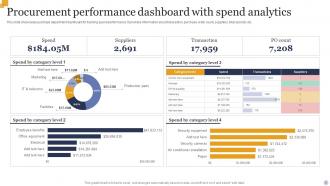
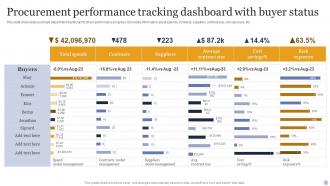
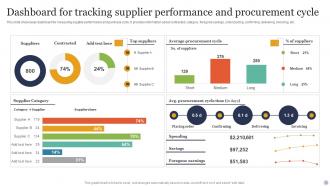
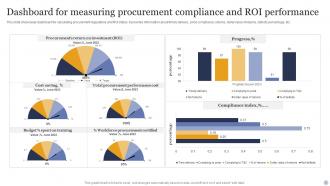






FAQs for Procurement Performance Powerpoint
Procurement KPIs include cost savings, supplier performance, purchase order cycle times, contract compliance, and spend analysis accuracy. These metrics streamline operations by identifying areas for optimization, enhancing negotiation leverage, and ensuring efficient resource allocation, with many financial services institutions finding that diligent KPI tracking delivers significant cost reductions and improved supplier relationships.
Technology and automation enhance procurement performance by streamlining sourcing, automating invoice processing, and improving spend analysis. These approaches deliver significant cost reductions, faster cycle times, and enhanced transparency, with many financial services institutions finding that robotic process automation minimizes errors and accelerates approvals. Ultimately, this enables strategic resource allocation and a competitive advantage in an increasingly dynamic landscape.
Stakeholder collaboration in procurement involves engaging departments like finance, legal, and operations throughout the process, ensuring alignment on needs and objectives. While demanding consistent communication, it also minimizes risks, streamlines approvals, and fosters innovation, with many organizations finding that cross-functional input delivers significant cost savings and enhanced contract compliance, ultimately driving operational efficiency.
Procurement teams can utilize data analytics to drive decision-making by leveraging spend analysis, predictive modeling, and risk assessment tools. These technologies streamline sourcing by identifying cost savings, optimizing supplier selection, and forecasting demand, ultimately delivering enhanced negotiation power and improved contract compliance. With many financial services institutions finding that data-driven insights minimize maverick spending and maximize return on investment.
Supplier relationship management (SRM) impacts procurement performance by fostering collaboration, enhancing transparency, and driving innovation with key vendors. While demanding initial investment, it also minimizes risks, streamlines communication, and enables better contract negotiation, with many financial services institutions finding that strategic partnerships deliver significant cost savings and improved service levels. Ultimately, SRM enhances operational efficiency and competitive advantage.
Procurement best practices include strategic sourcing, spend analysis, supplier relationship management, process automation, and e-procurement solutions. These technologies streamline operations by minimizing manual tasks, enhancing transparency, and facilitating better negotiation, with many financial services institutions finding that centralized procurement delivers significant cost reductions and improved compliance.
Sustainability initiatives can be integrated into procurement performance metrics through carbon footprint tracking, supplier diversity programs, and waste reduction targets, ultimately enhancing brand reputation. While implementing these changes presents both challenges and opportunities, organizations are increasingly finding that prioritizing environmental and social governance streamlines operations, minimizes risk, and delivers cost savings alongside positive societal impact.
Procurement performance challenges include limited visibility, maverick spending, inefficient processes, and a lack of skilled resources. These hurdles present both challenges and opportunities, however, organizations can overcome them by implementing spend analytics, automating workflows, and fostering strategic supplier relationships. With many financial services and retail institutions finding that centralized procurement delivers significant cost savings and enhanced operational efficiency, ultimately streamlining supply chains and boosting profitability.
Procurement performance can be linked to overall business goals and strategies by aligning sourcing initiatives with revenue growth, cost reduction, and risk mitigation. These technologies streamline supply chain operations, enhance supplier collaboration, and improve contract management, ultimately delivering significant cost savings and a competitive advantage. With many financial services and retail organizations finding that integrated procurement delivers enhanced operational efficiency and improved bottom-line results.
Innovative procurement strategies include e-procurement, strategic sourcing, supplier relationship management, and risk mitigation protocols. These technologies streamline operations by automating processes, enhancing transparency, and fostering collaboration, with many financial services and healthcare institutions finding that these approaches deliver significant cost reductions and improved contract compliance.
Procurement performance differs across industries due to varying supply chain complexities, regulatory landscapes, and risk tolerances, impacting sectors like healthcare, manufacturing, and retail. Best-in-class performers streamline sourcing by leveraging data analytics, automating processes, and fostering supplier collaboration, ultimately delivering significant cost savings and enhanced operational efficiency. With many financial services institutions finding that strategic sourcing delivers a competitive advantage, organizations increasingly prioritize transparency and risk mitigation in procurement strategies.
Employee training and development significantly enhances procurement performance by fostering negotiation skills, contract management expertise, and supplier relationship strategies. While initial investment is required, it also minimizes risks, streamlines sourcing, and improves compliance, with many financial services institutions finding that skilled buyers deliver substantial cost savings. These programs ultimately deliver operational efficiency and a competitive advantage through strategic resource allocation.
Benchmarking procurement performance against industry standards helps organizations identify areas for improvement through comparative analysis of spend, cycle times, and supplier performance. While revealing gaps in efficiency, it also highlights best practices, enabling strategic sourcing, streamlined processes, and enhanced negotiation tactics. With many financial services and retail institutions finding that consistent benchmarking delivers significant cost reductions and a competitive advantage, ultimately optimizing resource allocation and fostering stronger supplier relationships.
Market volatility significantly impacts procurement performance by disrupting supply chains, increasing material costs, and creating uncertainty around lead times. While challenging, it also presents opportunities for strategic sourcing, risk mitigation, and supplier diversification. These technologies streamline sourcing by leveraging data analytics, building resilient networks, and negotiating favorable contracts, ultimately delivering cost savings and competitive advantage.
Organizations can foster continuous procurement improvement by implementing regular performance reviews, skill development programs, and cross-functional collaboration, while embracing data-driven insights. These technologies streamline processes by automating tasks, identifying cost savings, and enhancing supplier relationships, with many financial services institutions finding that proactive analysis delivers significant operational efficiency and competitive advantage.
-
Happy to found you SlideTeam. You guys are value for money. Amazing slides.
-
Eye-catching PPT designs, outstanding team, and best customer service. I’m a super satisfied customer here!