


Profitable business model of courier and delivery services industry ppt formats




Try Before you Buy Download Free Sample Product
 Impress Your
 Audience
 100%
100% Editable
 Save Hours
 of Time


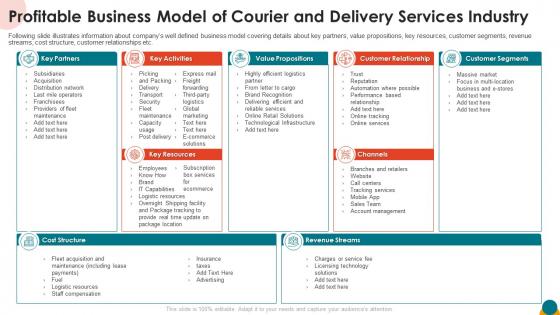
Following slide illustrates information about companys well defined business model covering details about key partners, value propositions, key resources, customer segments, revenue streams, cost structure, customer relationships etc.
People who downloaded this PowerPoint presentation also viewed the following :
Profitable business model of courier and delivery services industry ppt formats with all 6 slides:
Use our Profitable Business Model Of Courier And Delivery Services Industry Ppt Formats to effectively help you save your valuable time. They are readymade to fit into any presentation structure.





FAQs for Profitable business model of courier and delivery services
You definitely need solid logistics and fleet management first. Pricing is honestly where everyone screws up - gotta find that sweet spot between competitive and actually making money, you know? Route optimization software is clutch for keeping costs low and deliveries quick. Oh, and customer service matters way more than you'd think because people literally panic about their packages lol. Build partnerships with local businesses for steady orders. Start small though - pick one area and absolutely crush it there before you even think about expanding. Way smarter than spreading yourself too thin from day one.
Dude, tech integration is a total game-changer for delivery ops. GPS routing cuts out all the guesswork and slashes fuel costs, while automated dispatch handles job assignments way faster than doing it manually. Your drivers get mobile apps that adjust routes on the fly based on traffic - pretty cool stuff. Customer tracking apps are honestly a lifesaver because people stop calling every five minutes asking where their package is. The data analytics side gives you crazy insights too, though that might be getting into the weeds. I'd definitely start with route optimization software first - you'll see results almost immediately. Most companies see 15-30% cost reductions, which isn't too shabby.
Honestly, customer experience makes or breaks courier companies now. People expect real-time tracking and decent delivery windows - bare minimum stuff. When something goes wrong (and trust me, it will), how fast you respond matters way more than you'd think. One crappy delivery gets blasted all over social media instantly. The smart companies are perfecting everything from app design to driver attitude. Oh, and here's the thing - customers will forgive delays if you're upfront about them. But leave them wondering where their package is? You're done. Communication beats speed every single time.
So basically, start collecting GPS data from your deliveries for a few weeks - that's your baseline. Then dig into the analytics to see traffic patterns and where drivers are getting stuck. You can cluster deliveries by area and spot which routes are consistently slow. The algorithms for this stuff are actually pretty cool when you see them work. Focus on tracking fuel costs, delivery times, and how many hours your drivers are putting in. Oh and don't forget customer locations obviously - that's huge for efficiency. Test the optimized routes against your baseline and you'll see the savings add up quick.
Be where customers are when they're desperate for help. Google My Business is clutch - people frantically search "courier near me" when stuff hits the fan. Partner with law firms and medical offices since they need regular pickups. Word-of-mouth is everything in this business. Seriously, one happy law office will send you like 10 referrals. LinkedIn's solid for B2B connections too, way better than Instagram for this stuff. Make your customer service amazing and throw in referral bonuses. Oh, and optimize your Google presence first - that's where the urgent, high-paying orders actually come from.
Dude, pricing models can totally make or break how many customers you get. Subscriptions are great for steady money and keeping people around, but customers hate committing upfront. Pay-per-delivery feels way safer to them, so more people actually sign up - though they're less likely to stick around long-term. Dynamic pricing works during busy times but honestly makes people furious when they see those surge fees (learned that one the hard way). I'd start with competitive per-delivery rates to get people hooked, then slowly roll out subscription deals that actually offer real value. Just test everything and keep an eye on who's staying vs. leaving.
Honestly, the regulatory stuff changes everywhere you go - licensing, vehicle rules, how you classify workers, data privacy. Europe's nuts about GDPR and whether drivers are employees. Asia cares more about traffic laws and local permits. The US? Total mess with every state doing its own thing. Labor classification is probably gonna be your biggest headache though, since nobody's figured out gig workers yet. Oh, and map out what you need in each market super early. Trust me, fixing compliance later costs way more than just building it right from the start.
So honestly, start small with this stuff - maybe electrify like 20% of your fleet first because those upfront costs are insane. Route optimization software is clutch for cutting fuel and emissions (plus it saves money). Electric bikes work great for city deliveries if you're not hauling massive packages. Partner with clients using recyclable packaging and push consolidated deliveries to cut down trips. I'd probably focus on one thing until it's actually making you money, then expand. The packaging thing is easier than people think - just gotta find the right partners who aren't stuck in the stone age.
Biggest win? You skip all the crazy upfront costs - warehouses, trucks, tech systems, that whole expensive mess. Plus these companies actually know what they're doing with tricky stuff like international shipping. But here's the thing - you're gambling with your customer experience. If they screw up a delivery, guess who gets the angry emails? You do. Costs can get sneaky too, and good luck getting priority during Christmas rush when everyone's fighting for capacity. Honestly, I'd go hybrid. Keep your most important routes and let them handle the rest. Best of both worlds.
Look, your customers are literally telling you what works by what they actually buy. Same-day delivery popular? Expand it. Everyone going for the cheap option? Focus there instead. It's this weird cycle where their spending habits show you what's actually profitable - way more reliable than surveys, honestly. Demographics matter too though. Like younger people want that contactless thing, businesses need specific time windows. The trick is watching what they choose (not what they claim they want) and shifting your options based on that. Pretty straightforward once you get the hang of reading the patterns.
Drones and self-driving trucks are everywhere now - plus AI routing that figures out optimal delivery times on the fly. Electric vehicles and cargo bikes are huge too since companies are obsessed with going green. Customers basically demand real-time tracking and want their delivery window narrowed down to like an hour, which is honestly pretty crazy when you think about it. COVID pushed contactless delivery and those Amazon locker things into overdrive. Last-mile stuff is where you'll make or break it. Sustainability matters more than ever - that's your competitive edge right there.
Honestly, you've gotta start prepping like months ahead - check your old data to see when things get crazy. Hire temp drivers early and line up freelance couriers who can jump in fast. Get some decent routing software that adjusts automatically when orders explode (trust me on this one). Try offering scheduled delivery windows to spread things out, though customers will probably still want everything yesterday. The real trick? Have backups for your backups. Make deals with other delivery companies now so you're not totally screwed when Black Friday hits and everyone's ordering at once.
E-commerce is like rocket fuel for courier services, but honestly Amazon has made everyone crazy impatient about delivery times. Your volumes will probably jump big time. Customers want same-day delivery, real-time tracking, all that stuff now. Plus you'll be dealing with everything from tiny phone accessories to massive furniture pieces - which is actually kind of a logistical nightmare. Route optimization software is huge though. Get good tracking systems early. Maybe look into partnering directly with e-commerce platforms? That could give you an edge. It's definitely creating opportunities, just comes with way more complexity than before.
Focus on showing you're reliable - post real delivery updates, share customer reviews, and show your drivers actually doing their thing. Stories and TikTok are perfect for those satisfying "package delivered" moments (honestly, people eat that stuff up). Keep posting about your coverage areas and delivery windows. When customers tag you, jump on those comments fast and reshare their posts. Trust comes from being transparent about everything. Oh, and don't spread yourself too thin - pick one platform first and post daily rather than half-assing multiple apps.
Honestly, start with tracking - real-time updates so you catch delays before customers do. Then drill your drivers on proper handling because one busted package will wreck your rep way faster than you'd expect. Customer notifications should be automatic for pickups and deliveries, no one likes being left in the dark. Oh and definitely set up some kind of feedback system so problems don't fester. I'd say audit what's broken first though - tackle your biggest headache and work from there. Way better to get ahead of issues than constantly putting out fires.
-
Appreciate the research and its presentable format.
-
Really like the color and design of the presentation.