


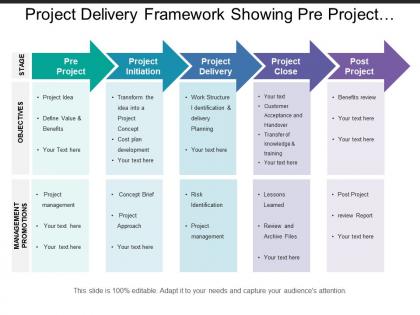
Project delivery framework showing pre project initiation delivery and close





Try Before you Buy Download Free Sample Product
 Impress Your
 Audience
 100%
100% Editable
 Save Hours
 of Time


Brilliance becomes affordable with our Project Delivery Framework Showing Pre Project Initiation Delivery And Close. They assure you an excellent bargain.
People who downloaded this PowerPoint presentation also viewed the following :
Project delivery framework showing pre project initiation delivery and close with all 5 slides:
Expose gender bias with our Project Delivery Framework Showing Pre Project Initiation Delivery And Close. Ensure everyone gets an equal chance.



FAQs for Project delivery framework showing pre project initiation
You need to nail down your governance structure and get everyone using the same processes. Roles and responsibilities have to be crystal clear - seriously, this is where most teams fall apart. Make sure you've got consistent tools across all projects, plus solid checkpoints and gates built in. Resource management and risk protocols are obvious musts. Oh, and communication frameworks are absolutely critical (I swear bad communication kills more projects than anything else). Don't forget metrics so you can actually see what's working. Start by figuring out what you're already doing well, then patch the gaps.
Start by figuring out what makes your different project types actually different - like IT stuff needs way more testing rounds, construction hits all those regulatory hoops. Most frameworks are stupidly rigid anyway, so don't feel bad about tweaking them. Change up the governance requirements and milestone checkpoints based on what each project type actually needs. Documentation should match the risk level too. The whole point is keeping some consistency across teams while not making everyone's life harder. Oh, and definitely ask your teams what's actually slowing them down before you decide anything.
Dude, stakeholder engagement is honestly everything when it comes to project delivery. I've watched projects completely tank because someone didn't bother getting the right people on board early enough - it's painful to see. You've got to identify everyone who matters upfront and figure out how they actually want to communicate. Some people love emails, others need face-to-face meetings, whatever. Build those check-ins right into your framework so you're constantly gathering feedback and keeping expectations realistic. Without buy-in from day one? You're basically setting yourself up to fail, and nobody wants that headache.
Look, risk management can't just be an afterthought - you need it woven into every single phase of your delivery framework. During planning, identify what could go wrong. Then keep watching for new risks as you execute and wrap up. I've seen too many projects crash because teams only think about risks at kickoff meetings. Build regular risk check-ins right into your standard process, along with clear escalation paths and backup plans. Oh, and map out where you're currently handling risks versus where you should be - you'll probably find some scary gaps that need fixing.
Look, there's no magic bullet here. Agile's solid if you need lots of feedback loops and quick iterations. Lean's all about cutting the fat and focusing on what actually matters. Honestly, Waterfall gets trashed all the time but it works fine when requirements are locked down - sometimes boring is good. Design Thinking's your friend for anything user-focused. DevOps helps dev and ops teams stop fighting each other, which is always nice. Just don't try to force one approach everywhere. Figure out what's broken first, then grab whatever fixes it.
So the trick is building in change processes from day one - like formal request procedures that weigh scope changes against your budget and timeline. Most good frameworks use iterative cycles (sprints, phases, whatever) so you can actually pivot without everything falling apart. Buffer time is crucial too - scope creep always happens, might as well plan for it. Regular stakeholder check-ins help catch changes early before they become disasters. Oh, and make sure you've got clear decision-making authority mapped out upfront. Those old rigid frameworks would get demolished in today's environment honestly.
Honestly, tech can save you so much time on projects. Those dashboards give you real-time updates instead of constantly bugging people for status reports - which nobody enjoys anyway. Collaboration tools are a lifesaver when your team's scattered everywhere. Project management platforms handle the boring stuff automatically: task assignments, deadlines, resource planning. Some AI tools can even spot problems before they blow up. The best part? Way less admin work means more time for actual project stuff. My advice: pick whatever's driving you crazy right now and automate that first. Don't try to fix everything at once.
Track your delivery stuff first - on-time rates, budget variance, scope creep, defects. The usual drill. Team velocity matters too since it shows if people can actually get work done without the framework getting in their way. Don't sleep on the fuzzy metrics though. Stakeholder satisfaction and team feedback will save your butt when leadership starts asking questions. I've seen frameworks that looked perfect on paper but everyone hated using them. Start with maybe 3-4 metrics that actually matter to your company, then add more later if you need to.
Your communication plan is like the nervous system connecting everyone in your project framework. Draft it right after you nail down scope and governance - but honestly, it weaves through every phase from start to finish. The whole thing falls apart fast if people don't know what's going on. Right people, right info, right timing. That's basically it. I learned this the hard way on a project last year where we had amazing structure but terrible communication. Total disaster. Keep updating yours as things change because they always do.
Honestly, the hardest part is dealing with everyone's different work styles - some people want super detailed processes, others just wing it. Communication gets messy fast, especially if you've got team members across timezones. Plus everyone has different comfort levels with frameworks. Different departments will fight you on changing their workflows too, which is annoying but expected. Cultural stuff around deadlines can be tricky if you're working internationally. I'd say start small with a pilot group first. Get some quick wins, then tweak things based on what actually works instead of forcing some rigid system on everyone.
Honestly, lessons learned are like gold when you're building your framework. Look at your last few project post-mortems - the patterns there? That's your starting point. I'd grab feedback from retrospectives and figure out what keeps going wrong (and what actually worked). Then build those fixes right into your processes. The teams I know who skip this just keep making the same mistakes - it's kind of painful to watch. Those "oh god never again" moments need to become actual checkpoints or better templates. Trust me, reviewing 3-5 recent project failures will show you exactly where your framework needs work.
Look, your Project Delivery Framework will get stale without continuous improvement - I've watched this happen so many times. Each project shows you what's broken or what actually works. Regular retrospectives are key here. Document the lessons you learn, then use them to fix bottlenecks and update your processes. Business needs change, tech evolves, and your framework needs to keep up. Otherwise you'll just keep making the same dumb mistakes over and over. Honestly, some teams I know have been stuck in this cycle for years. Start small - maybe just do quick retrospectives after each phase and see what patterns emerge.
Honestly, you've gotta weave compliance stuff into your planning right from the start. Figure out which regs actually apply to your project first. Then map those compliance checkpoints to your major milestones - create some kind of matrix tracking requirements against what you're delivering. I've watched so many teams panic at the end because they treated this like an afterthought. Not fun. Assign someone to own each regulatory piece. Oh, and don't just check in at formal gates - schedule regular touchbases with your compliance folks throughout. Build in extra time for approvals too, because that stuff always takes longer than you think it will.
Dude, make it visual first - flowcharts and templates beat walls of text every time. Stick everything in Confluence or SharePoint so people can actually find it. I swear, most frameworks fail because they're hidden in some random drive folder. Include real examples from projects you've done before, and create those little quick-reference cards for common stuff. Oh, and definitely do walkthroughs with new people - they'll catch things you missed. The feedback sessions are clutch for keeping it useful instead of just collecting digital dust.
Ok so basically a Project Delivery Framework just gets everyone on the same page - like your marketing team won't randomly ambush engineering anymore because there's clear handoff points. Roles and responsibilities are spelled out, so finance knows exactly when to jump in on scope changes. The meeting schedules and documentation stuff might sound super dry (and honestly it is), but trust me, it works when everyone's following the same playbook. Just don't try to copy-paste some corporate template. You gotta tweak it to match how your team actually operates or people will ignore it completely.
-
Graphics are very appealing to eyes.
-
Graphics are very appealing to eyes.