


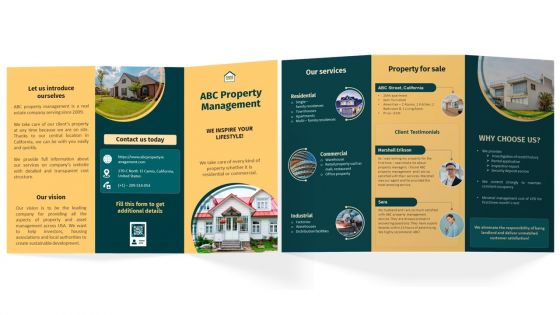
Real Estate Property Management Company Brochure Trifold




Try Before you Buy Download Free Sample Product
 Impress Your
 Audience
 100%
100% Editable
 Save Hours
 of Time


The Real Estate Property Management Company Brochure is the perfect solution for advertising your property management company. This professional and comprehensive pamphlet presentation template summarize all the key details about the company and its services, including residential, commercial, and industrial. It also includes client testimonials and details of the property for sale. The brochure is designed to be easy to use and understand, with clear, concise information on each aspect of property management. It is an ideal tool for promoting your company and showcasing your expertise. Get the Real Estate Property Management Company Brochure today and take your property management company to the next level.
People who downloaded this PowerPoint presentation also viewed the following :
Real Estate Property Management Company Brochure Trifold with all 1 slides:
Use our Real Estate Property Management Company Brochure Trifold to effectively help you save your valuable time. They are readymade to fit into any presentation structure.

FAQs for Real Estate Property Management
So basically you're handling tenants, maintenance, and all the money stuff. Screening people who want to rent, collecting payments, dealing with complaints - you know, all the annoying parts landlords don't want to do. Property inspections are big too, plus enforcing lease rules and keeping track of budgets. Oh and marketing empty units, which honestly can be a pain depending on the area. You'll also coordinate repairs and keep detailed records of everything. My advice? Learn your local tenant laws first because those will bite you if you don't know them.
So residential means you're dealing with people's actual homes - noise complaints, broken dishwashers, all that fun stuff. Commercial is different because you're working with businesses who need the space to operate and make money. Lease terms are totally different too. Residential is usually 1-2 years max, but commercial tenants often sign 3-10 year agreements. Plus they handle most of their own buildouts and improvements, which is actually nice. The legal side gets way more complicated with commercial though - honestly makes my head spin sometimes. I'd definitely start with residential if you're new to this. Way easier to learn the basics before jumping into the business side of things.
Get a solid property management system first - AppFolio or Buildium are both great for rent collection and maintenance stuff. QuickBooks is a must for your books, trust me on that one. I swear by having some kind of maintenance tracker too, whether it's ServiceTitan or just a decent CRM setup. DocuSign saves so much hassle with leases. Oh, and don't forget basic storage like Google Workspace for all your docs. Build around the PM system since everything else connects to it, then just add tools as you need them.
Honestly, just don't be a pain to deal with. Fix stuff fast when tenants call - nobody wants to wait weeks for a broken faucet. I do walkthrough inspections maybe twice a year, and keeping hallways/shared spaces decent makes a huge difference. Being reachable is clutch too. Don't ghost people when problems pop up. Small upgrades between tenants help a ton - fresh paint, nice light fixtures, whatever. Oh and throw them a bone sometimes, like allowing cats or letting them hang pictures. Sounds obvious but treat them well instead of like walking ATMs. Most will renew if you're not awful.
Okay so fair housing laws are absolutely critical - don't mess around with those. Your state's landlord-tenant laws are next, covering stuff like security deposits and evictions (this varies a ton by location btw). Property condition disclosures can really screw you over if you miss something. Lead paint, mold, ADA compliance - all mandatory. Habitability standards too. Honestly, I'd grab your state's landlord-tenant handbook and maybe chat with a real estate lawyer once a year. It's boring but way better than getting sued later.
Do them every 6 months and give tenants 24-48 hours notice (check your state's rules). I swear by bringing a flashlight - you'll find so much stuff hiding in dark spots. Make a checklist for HVAC, plumbing, electrical, all that fun landlord stuff. Honestly, taking photos saves your butt later when you need to prove something was already broken. Safety issues come first, obviously. Write everything down and get back to tenants about repairs within a few days. Just be respectful about their space and you're golden.
Honestly, get a digital tracking system first - way better than dealing with random texts and calls all day. I categorize everything by urgency so emergencies don't get buried under routine stuff. Having go-to vendors already lined up is clutch... learned that the hard way when my water heater died on Christmas Eve and I had zero contacts. Do walkthrough inspections regularly to catch problems early. Even a basic ticketing app will save your sanity compared to managing requests through your personal phone. Oh, and set clear timeframes so tenants know what to expect.
Start with a comparative market analysis - look at similar places within half a mile and what they're charging. Rent per square foot is usually the fairest way to compare. I'd track your local trends monthly since everything's been crazy unpredictable lately. Got parking or allow pets? That stuff matters for pricing above market. Seasonal patterns are huge too - summer's always different than winter here. Oh, and set up Google alerts for new listings so you're not caught off guard when rents suddenly jump or drop.
Dude, start with an energy audit - it'll show you exactly where you're bleeding money. LED lights and programmable thermostats are no-brainers for cutting costs. Water stuff makes a huge difference too. Low-flow fixtures and smart irrigation can save you tons. Your tenants will actually thank you since their bills go down. I'd also throw in some recycling programs and maybe switch to eco-friendly cleaning products. Oh, and don't forget regular HVAC maintenance - that's probably the biggest thing for keeping everything running smooth. Honestly, the sustainability angle is just a bonus when you're saving this much cash.
So property managers are basically your middleman with tenants - they handle all the application reviews, negotiate rent amounts, lease terms, pet stuff, whatever. They know local laws too which honestly saves you from potential headaches later. The best part? No more late-night texts about security deposits or random tenant complaints. When it's renewal time, they'll tell you what market rates look like so you don't undersell yourself. Oh, and they're way better at the back-and-forth negotiation thing than most of us. Worth it if you've got other stuff going on.
Dude, your management style basically determines if tenants will actually want to stay or bounce after their lease is up. Being responsive makes them feel like you give a damn - they'll renew and treat your place better. But ignore them completely? That's how you get bitter tenants who stop caring too. I swear, micromanagers stress everyone out while the MIA landlords just piss people off. You want to hit that middle ground - available but not annoying. Tell them upfront how fast you'll respond to texts or calls, then don't be a flake about it.
Ugh, communication delays are the worst part honestly. You can't just pop over to check on maintenance stuff, so small problems become huge headaches. Coordinating repairs through blurry tenant photos? Total nightmare. Building trust with tenants over text is rough too - way different than meeting face-to-face. Time zones will drive you crazy if you're managing properties in different areas. Oh, and COVID taught me this lesson the hard way lol. Get solid property management software and find reliable local contractors you can trust. Virtual tours are pretty much essential now for showings. It's doable but definitely has its frustrations.
Document everything - seriously, every single late payment and complaint with dates. Try mediation first when disputes come up, saves you both headaches and money. If you end up evicting, follow your state's process to the letter or you'll be starting over (learned that one the hard way). The paperwork sucks but you'll thank yourself later if it goes to court. Keep things professional with tenants but not robotic. Oh, and get a lawyer to check your process once a year - also worth building relationships with tenant attorneys since they actually help resolve stuff faster sometimes.
Track your occupancy rates and rent collection percentages first - those are make or break. Tenant turnover matters too, plus how long units sit empty. Nobody wants to hemorrhage money on vacant apartments. Maintenance costs per unit will save your sanity and budget. Response times for repairs? Super important unless you enjoy dealing with pissed off tenants at 2am. I'd also watch your net operating income monthly and compare it to what you budgeted. Maybe survey tenants occasionally for satisfaction scores. Honestly, just throw these into a simple spreadsheet you check monthly so you can catch problems before they snowball.
Honestly, get a tenant portal set up - it'll change your life. Residents can submit maintenance requests and pay rent all in one spot instead of calling you constantly. Property management apps are clutch for sending building announcements and scheduling stuff. I know it sounds like extra work at first, but trust me on this. Automated responses handle the basic questions 24/7, plus you get actual data on how fast you're responding. Start simple with just the portal. Your inbox will thank you, and tenants feel way more heard when they can track their requests instead of wondering if you got their voicemail.
-
A fantastic collection of templates. I'll likely use this as my go-to resource for future templates and support.
-
“One of the best experiences with SlideTeam for my presentation.Everything on time, communication is efficient and price is reasonable. All good in one place.”