

Revamping Ticket Management System For Efficient Support Operations Powerpoint Presentation Slides





Try Before you Buy Download Free Sample Product
 Impress Your
 Audience
 100%
100% Editable
 Save Hours
 of Time


Service Desk is a ticket management framework that enables businesses to implement robust and effective workflows for internal and customer-oriented support departments. Check out our professionally designed presentation on Revamping Ticket Management System for Efficient Support Operations that provides a general overview along with significant trends, statistics, and best practices which can be referred to by service desk professionals or enterprises. Our IT help desk PowerPoint presentation offers access to multiple strategies that can help businesses optimize their service desk operations, such as automation, knowledge management, incident management, ticket management, service request escalation management, self-service portal deployment, utilization of service desk management tools, etc. It further includes slides that can help the support teams through the RACI matrix, training program, and communication plan, assisting in re-organizing and streamlining workflows. Lastly, the Service desk PPT provides details related to costs and software selection relating to service desk management and can help assess the performance of the above strategies through impact analysis, KPIs, and dashboards. Get access now.
People who downloaded this PowerPoint presentation also viewed the following :
Content of this Powerpoint Presentation
Slide 1: This slide introduces Revamping Ticket Management System for Efficient Support Operations. Begin by stating Your Company Name.
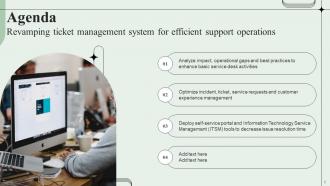
Slide 2: This slide depicts the Agenda of the presentation.
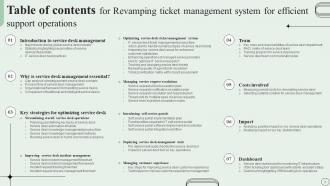
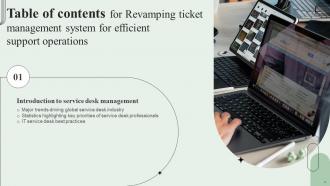
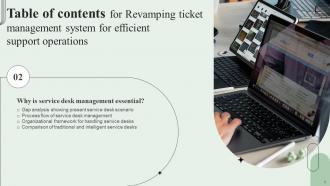
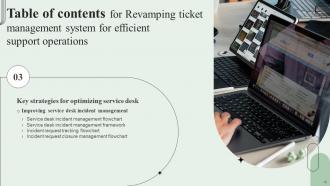
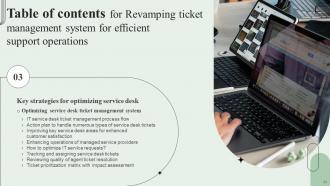
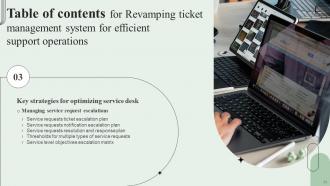
Slide 3: This slide includes the Table of contents.
Slide 4: This slide highlights the Title for the Topics to be covered further.
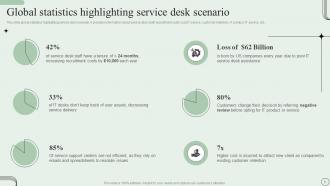
Slide 5: This slide reveals the global statistics highlighting service desk scenario.
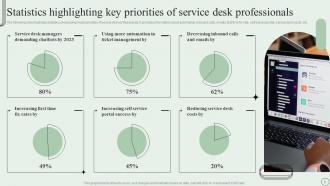
Slide 6: The following slide illustrates statistics showcasing major priorities of service desk professionals.
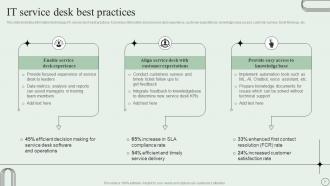
Slide 7: This slide mentions information technology (IT) service desk best practices.
Slide 8: This slide elucidates the Heading for the Topics to be covered further.
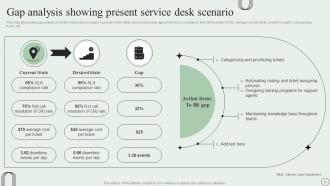
Slide 9: This slide showcases gap analysis of current service desk scenario.
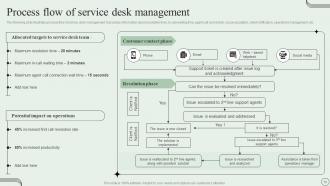
Slide 10: The following slide illustrates process flow of service desk management.
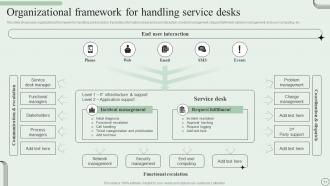
Slide 11: This slide showcases organizational framework for handling service desks.
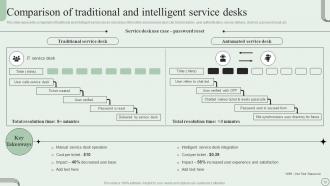
Slide 12: This slide represents comparison of traditional and intelligent service desks.
Slide 13: This slide contains the Title for the Ideas to be covered further.
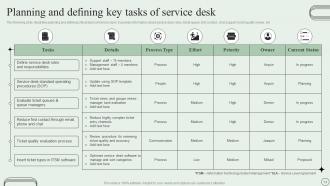
Slide 14: The following slide illustrates planning and defining critical tasks of service desk.
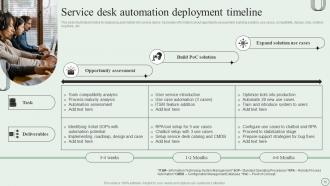
Slide 15: This slide represents timeline for deploying automation into service desks.
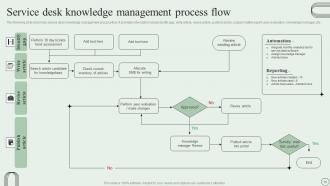
Slide 16: The following slide describes service desk knowledge management process flow.
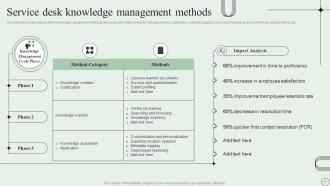
Slide 17: This slide provides information about the service desk knowledge management methods.
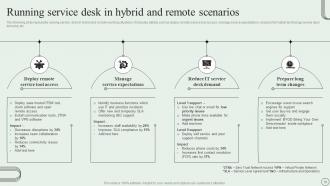
Slide 18: This slide highlights running service desk in hybrid and remote working situations.
Slide 19: This slide mentions the Heading for the Contents to be discussed further.
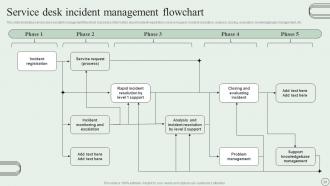
Slide 20: This slide illustrates the service desk incident management flowchart.
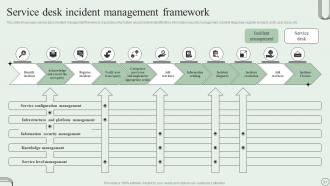
Slide 21: This slide showcases service desk incident management framework.
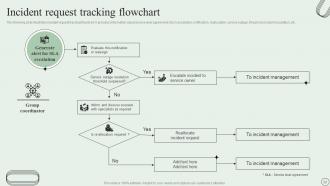
Slide 22: The following slide potrays the Incident request tracking flowchart.
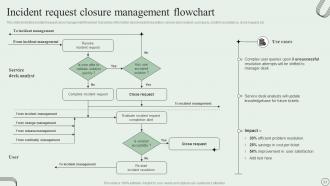
Slide 23: This slide illustrates incident request close management flowchart.
Slide 24: This slide contains the Title for the Topics to be covered further.
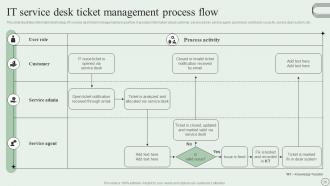
Slide 25: This slide illustrates information technology (IT) service desk ticket management process flow.
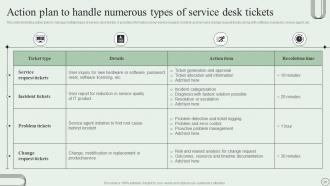
Slide 26: This slide reveals the action plan to manage multiple types of service desk tickets.
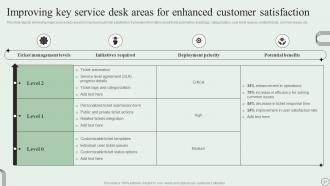
Slide 27: This slide depicts enhancing major service desk areas for improved customer satisfaction.
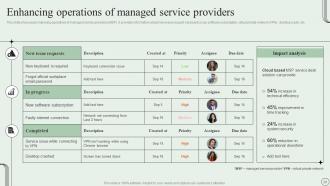
Slide 28: This slide showcases improving operations of managed service providers (MSP).
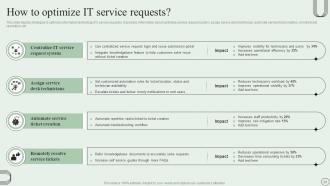
Slide 29: This slide elucidates strategies to optimize information technology (IT) service requests.
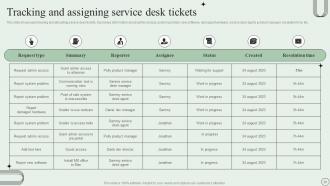
Slide 30: This slide showcases tracking and allocating service desk tickets.
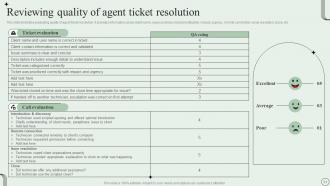
Slide 31: This slide illustrates evaluating quality of agent ticket resolution.
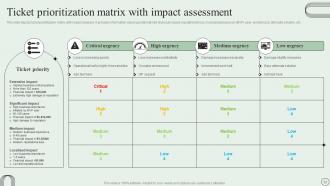
Slide 32: This slide depicts ticket prioritization matrix with impact analysis.
Slide 33: This slide indicates the Heading for the Contents to be discussed further.
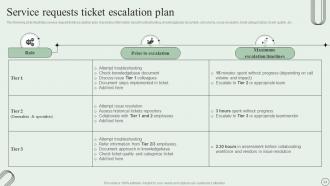
Slide 34: The following slide illustrates service request ticket escalation plan.
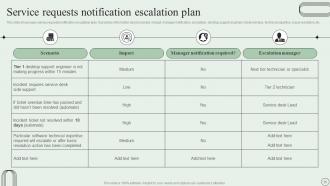
Slide 35: This slide shows service requests notification escalation plan.
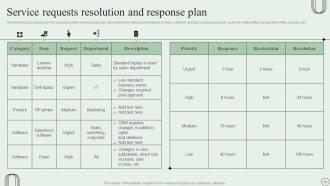
Slide 36: This slide exhibits information about the Service requests resolution and response plan.
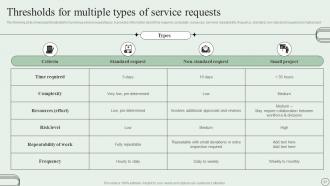
Slide 37: The following slide showcases thresholds for numerous service request types.
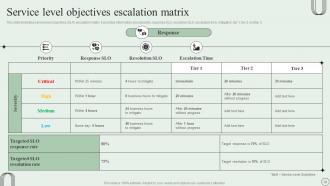
Slide 38: This slide illustrates service level objectives (SLO) escalation matrix.
Slide 39: This slide incorporates the Title for the Topics to be covered in the next template.
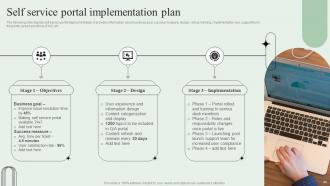
Slide 40: The following slide depicts self service portal deployment plan.
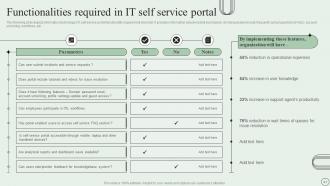
Slide 41: This slide reveals information technology (IT) self service portal functionality requirement checklist.
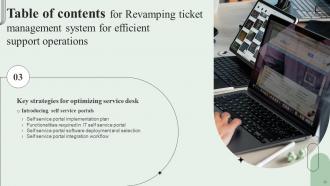
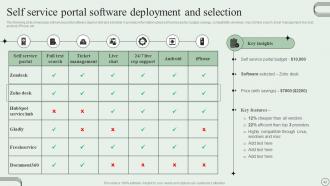
Slide 42: The following slide showcases self service portal software deployment and selection.
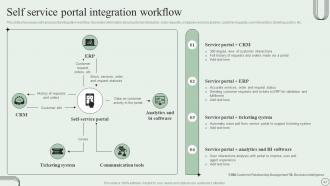
Slide 43: This slide presents self service portal integration workflow.
Slide 44: This slide states the Heading for the Components to be discussed in the upcoming slide.
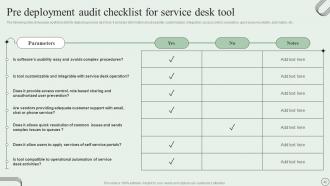
Slide 45: The following slide shows audit checklist for deploying service desk tool.
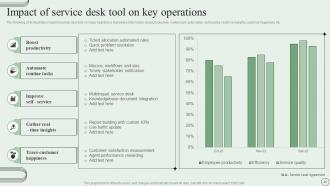
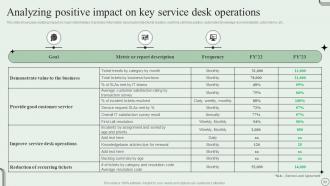
Slide 46: The following slide highlights the impact of service desk tool on major operations.
Slide 47: This slide displays the Title for the Ideas to be covered in the forth-coming template.
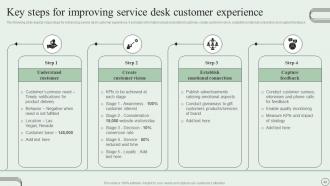
Slide 48: The following slide states the major steps for enhancing service desk customer experience.
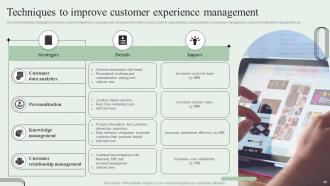
Slide 49: This slide elucidates the strategies to enhance customer experience management.
Slide 50: This slide reveals the Title for the Ideas to be discussed further.
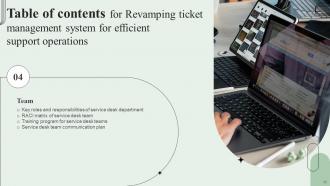
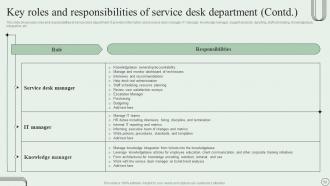
Slide 51: This slide highlights the roles and responsibilities of service desk department.
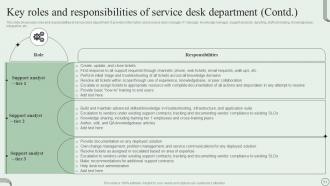
Slide 52: This is yet another slide continuing the Key roles and responsibilities of service desk department.
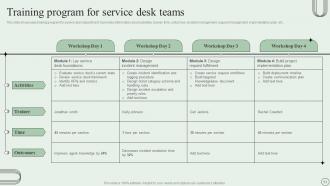
Slide 53: This slide exhibits information about the training program for service desk department.
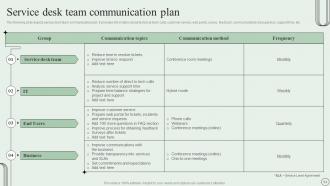
Slide 54: The following slide depicts information on the service desk team communication plan.
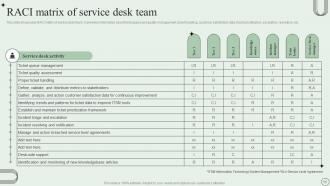
Slide 55: This slide lists the RACI matrix of service desk team.
Slide 56: This slide includes the Heading for the Topics to be discussed further.
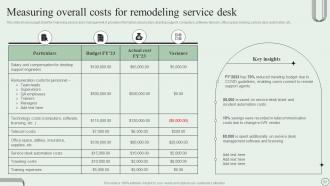
Slide 57: This slide shows the budget sheet for improving service desk management.
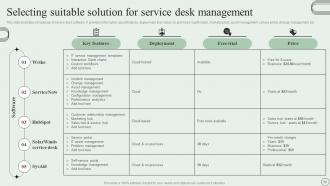
Slide 58: This slide reveals comparison of service desk software and deals with selection of the suitable solution for service desk management.
Slide 59: This slide showcases the Title for the Topics to be covered next.
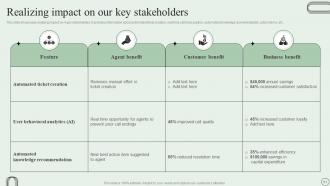
Slide 60: This slide displays realizing impact on major stakeholders.
Slide 61: This slide reveals realizing impact on the Organization's key stakeholders.
Slide 62: This slide incorporates the Heading for the Contents to be covered further.
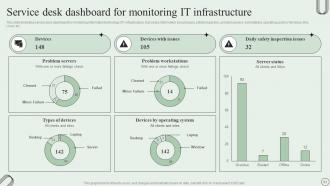
Slide 63: This slide illustrates service desk dashboard for monitoring information technology (IT) infrastructure.
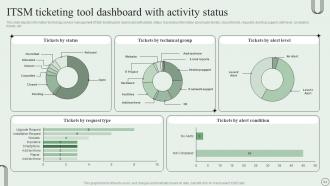
Slide 64: This slide depicts information technology service management (ITSM) ticketing tool dashboard with activity status.
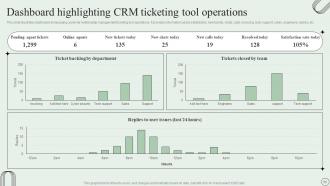
Slide 65: This slide highlights dashboard showcasing customer relationship management ticketing tool operations.
Slide 66: This is the Icons slide for revealing all the Icons used in the plan.
Slide 67: This slide is used for showcasing additional Company related information.
Slide 68: This is Meet our team slide for depicting the information related to the team members.
Slide 69: This is Our target slide. State your organization's targets here.
Slide 70: This slide includes the Post it notes for reminders and deadlines.
Slide 71: This is Our Goal slide. List your organization's goals, vission and mission here.
Slide 72: This is the About us slide for stating Company information.
Slide 73: This is the Thank You slide for acknowledgement.
Revamping Ticket Management System For Efficient Support Operations Powerpoint Presentation Slides with all 78 slides:
Use our Revamping Ticket Management System For Efficient Support Operations Powerpoint Presentation Slides to effectively help you save your valuable time. They are readymade to fit into any presentation structure.







FAQs for Revamping Ticket Management System For Efficient Support Operations
Effective ticket management systems include automated routing and prioritization, SLA management, multi-channel integration, advanced reporting analytics, and workflow customization capabilities. These features streamline operations by reducing response times, enhancing agent productivity, and improving customer satisfaction, with many organizations finding that strategic automation and intelligent categorization ultimately deliver competitive advantage and operational efficiency.
Automated ticket routing improves response times by instantly directing tickets to appropriate agents based on expertise, priority levels, and workload distribution, eliminating manual sorting delays. This strategic combination enables faster resolution times, reduces customer wait periods, and ensures specialized support reaches the right department immediately, with many organizations finding that automated systems deliver significantly enhanced customer satisfaction and operational efficiency.
Reporting and analytics enable organizations to identify bottlenecks, track resolution times, monitor agent performance, and analyze recurring issues within ticket management systems. Through comprehensive dashboards and data insights, businesses streamline workflows, optimize resource allocation, and enhance customer satisfaction, with many support teams finding that analytics-driven decisions reduce response times and ultimately deliver more efficient service operations.
Integration with CRM systems enhances ticket management by providing comprehensive customer histories, enabling personalized support interactions, and streamlining communication across departments. This strategic combination allows support teams to access purchase records, previous interactions, and customer preferences instantly, ultimately delivering faster resolution times and improved customer experiences while reducing operational costs for organizations.
Best practices for categorizing tickets include using clear severity levels, departmental classifications, request types, customer segments, and business impact categories. These frameworks streamline resolution by enabling automated routing, resource allocation based on urgency, and SLA compliance tracking, with many organizations finding that structured categorization reduces response times and enhances customer satisfaction significantly.
AI and machine learning improve ticket resolution efficiency by automating ticket classification, predicting resolution times, and routing issues to appropriate agents based on expertise and workload. These technologies enable intelligent prioritization, suggest solutions from historical data, and identify patterns in recurring problems, with many organizations finding that automated responses handle routine inquiries instantly, ultimately reducing resolution times significantly.
A self-service portal streamlines ticket management workflow by enabling customers to resolve common issues independently, automatically categorizing requests, and reducing manual agent intervention. This approach significantly decreases ticket volume for support teams while improving response times, with many organizations finding that customers can resolve 60-70% of basic inquiries themselves, ultimately delivering faster resolutions and enhanced operational efficiency.
Essential security measures include end-to-end encryption, multi-factor authentication, role-based access controls, regular security audits, and automated data backup systems. These protocols streamline data protection by restricting unauthorized access, encrypting sensitive information during transmission and storage, and ensuring compliance with privacy regulations, with many organizations finding that robust security frameworks ultimately deliver enhanced customer trust and competitive advantage.
Mobile accessibility revolutionizes ticket management by enabling real-time response capabilities, location-independent support delivery, and instant customer communication through push notifications and mobile-optimized interfaces. Support teams in retail, healthcare, and financial services can now resolve issues during commutes, provide faster response times, and maintain continuous customer engagement, ultimately delivering enhanced service quality and competitive advantage in an increasingly mobile-first business environment.
Common pitfalls include inadequate staff training, insufficient data migration planning, poor system integration with existing tools, unrealistic timeline expectations, and lack of stakeholder buy-in. Organizations often underestimate the complexity of workflow customization and change management, with many finding that phased implementation approaches and comprehensive user training significantly reduce transition risks while ensuring smoother adoption.
Ticket management systems facilitate collaboration by centralizing communication, enabling real-time updates, and providing shared visibility into case progress and resolution status. Through automated routing, knowledge sharing features, and collaborative workflows, support teams streamline handoffs, reduce response times, and maintain consistent service quality, while managers gain comprehensive oversight that ultimately enhances team coordination and customer satisfaction.
Measuring ticket management system effectiveness involves tracking key performance indicators like resolution times, customer satisfaction scores, first-call resolution rates, agent productivity metrics, and ticket volume trends. Organizations can benchmark these metrics quarterly, analyze patterns in recurring issues, and correlate system performance with business outcomes, ultimately identifying areas for process optimization and enhanced customer service delivery.
Different industries customize ticket management systems by implementing specialized workflows, priority matrices, and compliance protocols tailored to their operational needs. Healthcare systems prioritize patient safety tickets, financial services emphasize regulatory compliance tracking, and retail focuses on customer experience metrics, with many organizations finding that industry-specific customizations enhance response times, improve service quality, and ultimately deliver competitive advantage.
Organizations should look for customization options including custom fields, automated workflow rules, personalized dashboards, configurable ticket categories, and flexible user role permissions. These features enable businesses to align the system with their specific processes, whether in IT support, customer service, or project management, ultimately streamlining operations and enhancing team productivity across departments.
User feedback can be incorporated through regular surveys, analyzing ticket patterns and resolution times, monitoring user satisfaction scores, and implementing suggestion portals within the system interface. These insights enable organizations to streamline workflows, enhance automation features, and optimize user experiences, with many customer service teams finding that feedback-driven improvements ultimately deliver faster resolution times and higher customer satisfaction rates.
-
Innovative and attractive designs.
-
Professionally designed slides with color coordinated themes and icons. Perfect for enhancing the style of the presentations.