Safe Implementation Roadmap For Business Enterprises

Rating:
100%
Safe Implementation Roadmap For Business Enterprises Safe Implementation Roadmap For Business Enterprises
Slide 1 of 6

or

Favourites Favourites

Try Before you Buy Download Free Sample Product

Audience Impress Your
Audience
Editable 100%
Editable
Time Save Hours
of Time
The Biggest Sale is ending soon in
0
0
:
0
0
:
0
0
Rating:
100%
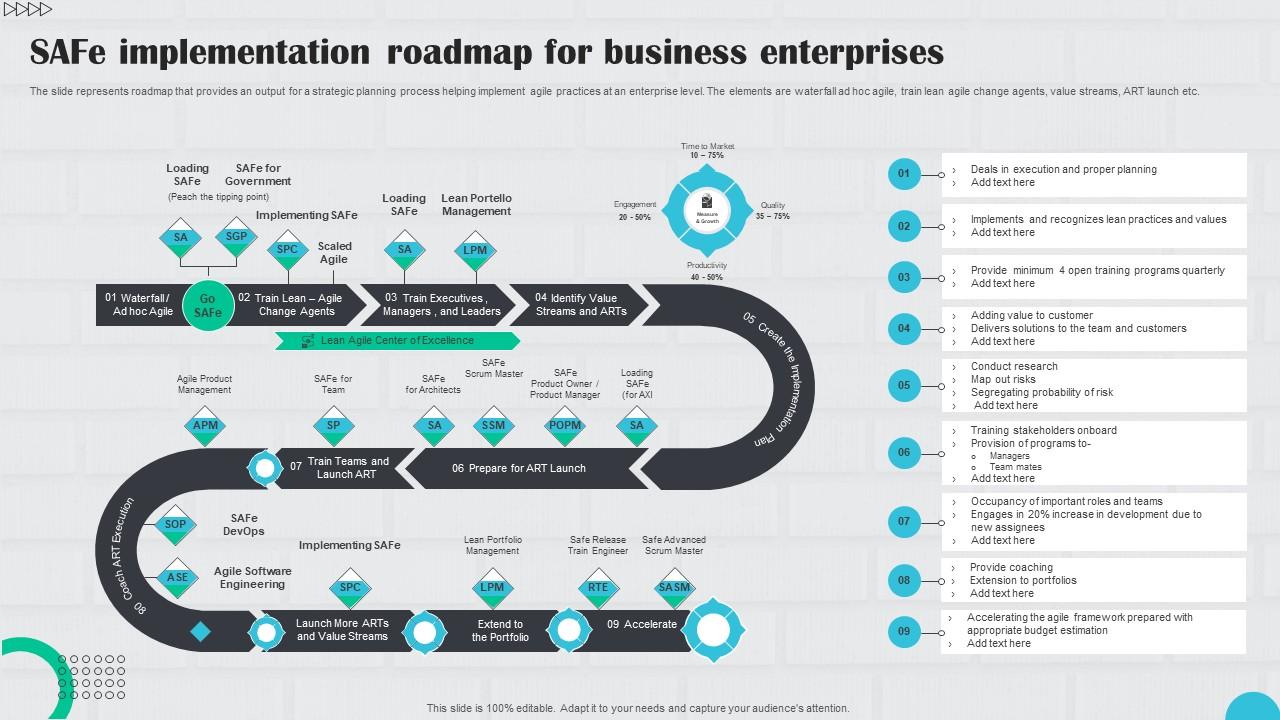
The slide represents roadmap that provides an output for a strategic planning process helping implement agile practices at an enterprise level. The elements are waterfall ad hoc agile, train lean agile change agents, value streams, ART launch etc. Presenting our set of slides with Safe Implementation Roadmap For Business Enterprises. This exhibits information on one stages of the process. This is an easy to edit and innovatively designed PowerPoint template. So download immediately and highlight information on Government, Management.

FAQs for Safe Implementation Roadmap

Honestly, start with a walkthrough this week and just write down every hazard you spot - that's your base. You need someone actually owning this stuff or it'll get ignored completely. Training's probably the biggest piece since people can't follow rules they don't know exist. Document everything, especially the close calls (those tell you more than you'd think). Clear policies, regular inspections, and a decent incident reporting system round it out. Sounds like a lot but most of it's just getting organized about what you're probably already doing anyway.

Honestly, ditch the PowerPoints - nobody pays attention to those things. Get people actually doing stuff instead of just watching slides. Monthly safety huddles work great where teams talk about close calls they've seen. Way more effective than those yearly training sessions everyone forgets about immediately. Focus on scenarios they'll actually encounter at work, let them practice the procedures hands-on. Oh, and tackle your riskiest areas first - that's where you'll see the biggest impact. The whole thing needs to feel routine, not like some separate boring requirement they have to sit through.

Tech can seriously save lives at work - the good stuff prevents accidents before they even happen. Wearable sensors track air quality and if someone's getting too tired, while AI spots hazards in real-time. Dangerous jobs? Let robots handle those. Digital training and incident apps make all that compliance paperwork way less painful (thank god). Honestly though, don't just buy whatever's trendy. Figure out what's actually killing people or causing injuries at your place first. Then find tech that tackles those specific problems. Way more effective than throwing money at random gadgets.

Start by doing a full walkthrough of your workplace - I'm talking everything from the obvious machinery risks to stuff you might overlook like ergonomic problems or sketchy air quality. Write it all down and rank things by how bad they could get and how likely they are to happen. Honestly, this part's kind of tedious but super worth it. Then figure out how to fix each issue - maybe it's new safety procedures, better equipment, PPE, or just training people properly. Don't rush through it or you'll definitely miss something important. Also, circle back to update your assessment every so often since things change.

First figure out what could actually go wrong at your place - fires, medical stuff, natural disasters, whatever applies. Map out escape routes and pick meeting spots outside. Someone needs to be the 911 caller, someone else handles family communication (people lose their minds during emergencies, seriously). Run drills often enough that it becomes automatic. Keep contact info current and have copies of everything stored in multiple places - cloud AND hard copies because Murphy's Law. Oh, and update the whole thing yearly or when major changes happen to your building/staff.

Honestly, make it personal instead of just another boring rule to follow. Your leadership needs to actually walk the walk - not just talk about safety but live it. Quick tip: celebrate the people who report hazards instead of making them feel like snitches. That's huge. Set up simple reporting systems and actually fix things fast when issues come up. Regular meetings are fine but here's what really works - tie safety wins to promotions and recognition. Once people realize being safety-smart gets you ahead, they'll start watching each other's backs naturally. It's kind of brilliant how that psychology works.

OSHA's your main headache here - they handle most workplace safety stuff like hazard communication and emergency procedures. Workers' comp insurance is mandatory pretty much everywhere too, which is annoying but whatever. Your state probably has extra rules on top of federal ones, so definitely check your labor department's website. Start with OSHA's guidelines for your specific industry since they break it down better that way. The whole thing can be pretty overwhelming honestly. Maybe get a safety consultant to do a quick audit? Better than getting fined later for missing something stupid.

Do quarterly audits or after any incidents - use a checklist for equipment, procedures, training docs, all that stuff. Walk around with your employees though, they'll catch things you totally miss and honestly they like feeling heard. Take photos of everything and rank issues by how risky they are. Yeah it's boring but being systematic actually works. Give someone ownership of each problem with deadlines. Here's the thing - follow up religiously or you just wasted money on paperwork that sits in a drawer somewhere.

Dude, the biggest myth is that safety gear slows you down. Trust me, it prevents way more delays than it causes - injuries take forever to recover from. Most people think common sense is enough, but when you're pumped up or rushing, you'll do stupid stuff you'd never normally do. Here's what's crazy - experienced workers are actually the worst about this. They get cocky and start skipping steps. The stats back that up. Oh, and everyone thinks "it won't happen to me" until it does. Just treat safety protocols like they're absolutely mandatory, no matter how experienced you think you are.

Honestly, treat mental health like it's just as crucial as physical safety - because it is. Train your supervisors to spot when someone's stressed or burned out, since that's when accidents happen. I've watched too many preventable incidents unfold because nobody bothered to actually check in. Make sure people can talk about mental health stuff without worrying they'll get fired. Then build it right into your safety protocols. Mandatory breaks, stress programs, counseling access - the whole thing. Here's what really matters though: mental health isn't some separate issue. It's literally the foundation of workplace safety.

Honestly, KPIs are a game-changer because you get real data instead of crossing your fingers hoping people are careful. I'd start with maybe 3-4 simple ones you can actually track without going crazy. The cool thing is spotting patterns early - like if near-miss reports suddenly drop, that's usually people not reporting rather than things getting safer. Your team gets more invested too when they see progress on stuff like incident-free days. Oh, and having actual numbers makes budget meetings way easier since you can show leadership the ROI on safety spending instead of just asking nicely.

Your workers see the real dangers every day - management doesn't. Get them involved in safety committees and ask what actually scares them out there. Companies usually see incident rates drop 20-40% when they do this right. People follow rules they helped make, not ones forced on them from above. Makes total sense if you think about it. But here's the thing - you can't just have meetings for show. Their suggestions need to turn into actual changes or they'll stop caring. I'd start by asking your frontline folks what keeps them up at night safety-wise.

Honestly, start with getting your team's input on where they see the biggest risks - they're the ones dealing with this stuff daily. Training's obviously crucial, but skip the death-by-PowerPoint approach and do actual hands-on scenarios that people will remember. Don't cheap out on protective equipment either, because that's just asking for trouble. The culture part is probably the trickiest though. Workers need to feel safe reporting close calls without getting blamed for it. Regular audits help too, but only if you actually follow through on what you find.

Look, companies get this totally wrong - they think safety slows everything down. It's actually the opposite though. Build it into your workflows from day one and you'll cut out waste while avoiding expensive accidents and downtime. Get your team to help spot where safety issues are also creating inefficiencies, then tackle both at once. Good training and decent equipment pay for themselves pretty quickly. I mean, my old boss used to complain about safety meetings until we had that incident that shut us down for three days. Regular audits help too. Just ask your people where they're getting stuck - usually it's the same spots causing both problems.

Honestly, good communication can make or break safety at work. People need to actually understand what they're doing, not just pretend they get it during those boring training sessions. I've watched so many accidents happen because someone "thought" they knew the right procedure. Mix things up - use visuals, do hands-on demos, check in regularly. Don't just rely on that annual meeting everyone zones out during. Make it ongoing and interactive. Otherwise you're just crossing your fingers and hoping nobody gets hurt, which is pretty much the worst strategy ever.

Ratings and Reviews

100% of 100
Review Form
Write a review
Most Relevant Reviews
  1. 100%

    by Danial Fernandez

    Thank you for showering me with discounts every time I was reluctant to make the purchase. 
  2. 100%

    by Garcia Ortiz

    Great combination of visuals and information. Glad I purchased your subscription.

2 Item(s)

per page: