

PMO Process Flow With Management Roles




Try Before you Buy Download Free Sample Product
 Impress Your
 Audience
 100%
100% Editable
 Save Hours
 of Time


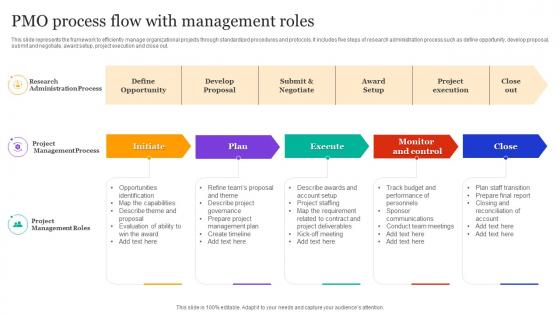
This slide represents the framework to efficiently manage organizational projects through standardized procedures and protocols. It includes five steps of research administration process such as define opportunity, develop proposal, submit and negotiate, award setup, project execution and close out.
People who downloaded this PowerPoint presentation also viewed the following :
PMO Process Flow With Management Roles with all 6 slides:
Use our PMO Process Flow With Management Roles to effectively help you save your valuable time. They are readymade to fit into any presentation structure.






FAQs for PMO Process Flow
So basically there are five stages every PMO goes through: initiation (getting the project approved and defined), then planning where you map everything out, execution is when stuff actually happens, monitoring keeps you on track, and closure wraps it all up with lessons learned. Monitoring is honestly make-or-break territory - that's where you'll either nail it or watch everything go sideways. Don't micromanage but stay aware, you know? Oh, and figure out what stage your current projects are in first. Makes it way easier to know where to focus your energy.
First thing - grab some paper and literally draw lines connecting each project to your main goals. Sounds basic but trust me, it works. Your PMO needs a scoring system that ranks projects by how well they hit strategic priorities. Most PMOs totally mess this up by overthinking the process part. Have regular check-ins where you ask "does this project actually matter anymore?" Your project managers need to see the big picture too, not just focus on their tiny piece of it. Oh and here's the brutal truth - if you can't explain how something moves your strategy forward, just kill it. Don't waste time redesigning lost causes.
Honestly, stakeholder engagement is make-or-break for your PMO setup. You can't just build processes and hope people use them - trust me on that one. Map out your key players first, then loop them in during the initial design phase so you actually understand their headaches. Regular check-ins are clutch once things get rolling. The whole point is making them feel like partners, not just people you're doing things to. Otherwise you'll end up with beautiful processes that collect dust while everyone keeps doing things the old way.
Honestly, you need both the hard numbers and the touchy-feely stuff. Look at delivery rates, budget performance, timelines - executives eat that up. But here's the thing: if your project managers hate you, the PMO isn't working. Survey people regularly. Are they actually using your processes or just pretending to? Less firefighting happening? Teams seem less stressed? I'd do quarterly reviews mixing the data with honest feedback from stakeholders. Sometimes the metrics look great but everyone's miserable - that tells you something's off. Adjust based on what you're hearing, not just what the dashboard shows.
Look, there's actually a bunch of good options out there. Microsoft Project and Smartsheet are pretty solid if you need heavy-duty scheduling stuff. For basic task tracking though? Asana or Monday work fine and your team won't hate using them. Honestly, I've watched way too many PMOs obsess over finding the "perfect" system when they should just pick something and stick with it. SharePoint or Confluence can handle all your documentation needs. Oh, and Zapier's great for connecting different tools - saves you from doing repetitive stuff manually. Just start simple and add complexity later.
Look, you gotta bake risk management right into your PMO process from day one. Don't make the mistake I see everywhere - treating it like some checkbox exercise. Build risk checkpoints into project kickoffs and planning sessions. Your PMs should be flagging issues as they happen, not waiting for monthly meetings. Set up dashboards so you can actually see patterns across projects (trust me, you'll spot stuff you missed before). Make it part of every stage gate and governance review. The whole point is making risk assessment feel natural at every decision point. Otherwise you're just playing catch-up when things go sideways.
Ugh, honestly the hardest part is just getting people to stop freaking out about change. Everyone's used to their own little systems and suddenly you're asking them to do things differently. Data inconsistency between teams is brutal too - like, good luck trying to standardize anything when everyone's tracking stuff their own way. Getting the higher-ups on board can be tricky since PMOs sometimes look like just more red tape. Oh, and without proper training? People will 100% go back to whatever they were doing before. Start with small pilot projects first. Keep explaining why you're doing this (seriously, over-communicate). Make sure you've got solid support from key people before going company-wide.
Honestly, communication makes or breaks your whole PMO flow. I've seen too many projects crash because nobody knows what's happening or who's supposed to do what. You need to figure out who needs which updates at every step - then automate that stuff so it actually happens. Clear channels keep projects moving through gates without drama. Stakeholders stay in the loop, decisions happen faster. The teams aren't sitting around confused about expectations. Oh, and don't make communication some bonus feature you add later. Build it right into your process from day one or you'll be dealing with bottlenecks and missed deadlines constantly.
Start with recurring cross-functional meetings where teams share updates and roadblocks - yeah, they're boring but honestly they work. Set up shared dashboards so everyone can see project status without hunting people down. Your PMO should facilitate, not gatekeep, with clear escalation paths when things go sideways. Create templates that don't make people want to tear their hair out (easier said than done, I know). Test everything on one pilot project first. Oh, and transparent communication channels are crucial - people need to actually talk to each other instead of working in silos.
Honestly, just bake the improvement stuff right into your regular PMO rhythm. Monthly retrospectives are gold - sit down and figure out what's actually broken vs what's humming along nicely. Track some basic efficiency metrics, but don't go overboard with data. Get real feedback from your PMs and stakeholders (they'll tell you the truth if you ask). Then make small tweaks based on what you're hearing. Oh, and do quarterly reviews where you can roll out the bigger changes. Way better than crossing your fingers and hoping things magically get better on their own.
Track these four things: how many projects you're actually finishing on time and budget, whether you're using your people efficiently, if stakeholders are happy, and what ROI you're getting from completed work. Most PMOs honestly just chase numbers that look good in meetings but don't mean much. Way more useful to watch leading indicators - like how well you're catching risks early and developing your team's skills. That's where the real value is. Get those basics down first, then add more later. Your execs will appreciate not having to wade through 20 different charts.
Start by making your PMO processes modular instead of rigid step-by-step chains. When something changes (and it will), you want components you can swap out easily. Build in decision points where teams pick different paths based on their project type. Honestly, I've watched way too many PMOs turn into total bureaucratic disasters because they tried standardizing every little thing. Focus on what outcomes you want, not micromanaging how people get there. Set up regular reviews where you actually listen to feedback - like, really listen. Oh, and always pilot changes small before going company-wide.
Dude, documentation is honestly what saves your butt in PMO work. When everyone's doing their own thing, tracking becomes impossible - trust me on this one. You'll need those docs for knowledge transfer too, especially when people inevitably leave the team. Stakeholders eat up that visibility into project status and decisions. Plus compliance audits? Way easier with proper paper trails. The trick is making documentation mandatory at every step, not optional. Oh and standardize those templates from day one. Short sentences work. Longer ones keep things flowing naturally when you're explaining the why behind processes.
Yeah totally! Your PMO just needs to chill out with the heavy gate stuff and do lighter checkpoints instead. Embed some PMO people right with the agile teams - that's honestly the best way to figure out what's actually going wrong day-to-day. Focus on helping with sprint reviews and clearing blockers rather than demanding tons of upfront docs. You can still standardize metrics across teams (which managers love anyway) and coach people on ceremonies. The whole vibe shifts from enforcer to enabler. Way better dashboards too since you'll see real progress instead of just... whatever those old reports were supposed to show.
Honestly, three big things are changing PMOs right now. Hybrid work tools are huge - everyone's remote so you need solid virtual dashboards and collab stuff. AI analytics are actually getting scary good at spotting risks early, which saves so much headache later. Then there's this whole adaptive PMO thing where you can switch between waterfall and agile mid-project depending on what works. Oh, and don't try to do everything at once - I learned that the hard way. Just pick whichever trend fixes your biggest current nightmare and test it out first. Way less messy than overhauling your entire process.
-
Keep doing the good work guys. Surpass the needs and expectations always!!
-
The templates are the best in class. Very clear and innovative graphics! I am excited to explore and download more presentations.