ITIL Problem Management Process Flow

Rating:
80%
ITIL Problem Management Process Flow
Slide 1 of 6
Favourites Favourites

Try Before you Buy Download Free Sample Product

Audience Impress Your
Audience
Editable 100%
Editable
Time Save Hours
of Time
The Biggest Sale is ending soon in
0
0
:
0
0
:
0
0
Rating:
80%
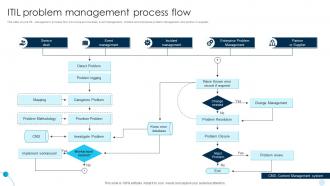
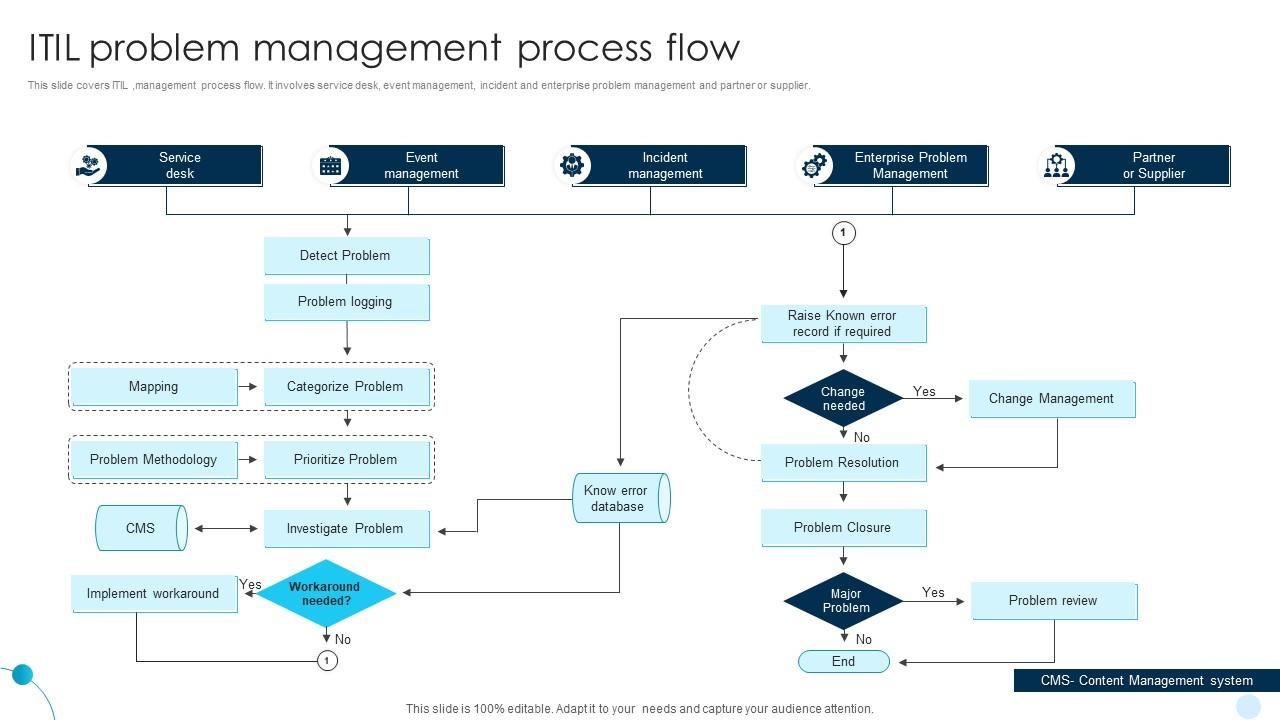
This slide covers ITIL, management process flow. It involves service desk, event management, incident and enterprise problem management and partner or supplier. Introducing our ITIL Problem Management Process Flow set of slides. The topics discussed in these slides are Service Desk, Event Management, Incident Management. This is an immediately available PowerPoint presentation that can be conveniently customized. Download it and convince your audience.
People who downloaded this PowerPoint presentation also viewed the following :

FAQs for ITIL Problem

So the big goals are stopping problems from happening again and reducing damage when they do pop up. You're basically being a detective - digging into what's actually causing issues instead of just putting band-aids on everything. Problem Management also tries to catch potential issues before they blow up into real incidents, which honestly is a game changer. Oh, and you build up this knowledge base of known problems and quick fixes that everyone can tap into. I'd start by looking at whatever incidents keep happening most - those are usually your goldmine for figuring out the real problems underneath.

So basically incident management is pure panic mode - you're just trying to get stuff working again ASAP. Problem management is more like being a detective after the fact. Picture this: your email server dies. Incident management? Get that thing back online however you can, even if you just turn it off and on again (honestly works half the time). Then problem management kicks in to figure out WHY it died so you don't have to deal with this mess again next week. One's reactive and frantic, the other's methodical and preventive. You really need both though.

So there are five stages you'll go through: Problem Identification (catching recurring issues), Problem Logging (getting it into your system), then Categorization & Prioritization (basically figuring out how urgent it is), Investigation & Diagnosis (this part's actually pretty fun - you're like a tech detective), and finally Resolution & Closure. You'll probably loop back through the investigation phase a bunch of times though. Document everything well so your team can find workarounds later when the same crap happens again. I'd honestly start with nailing down your logging process first - makes everything else way smoother.

Start with your incident patterns - that's where the real problems hide. Look for recurring stuff, major outages, anything that's actually hurting the business. Honestly, if you see three similar incidents, there's probably something deeper you're missing. For prioritizing, just use impact vs frequency. High-impact issues on critical services? Obviously those go first. But those annoying little frequent problems are worth fixing too - they'll slowly kill your team's morale. Weekly reviews help, and set up some automated clustering alerts if you can.

RCA is huge for ITIL Problem Management - it stops you from just bandaging the same issues repeatedly. Methods like fishbone diagrams or the 5 whys help trace problems back to what's actually causing them. Honestly, I kind of enjoy the detective work aspect of it. You're looking for permanent solutions instead of temporary patches. Document everything as you go (trust me on this one). Otherwise you end up in this endless cycle where the same stuff breaks every few weeks. Fault tree analysis works well too if you're dealing with complex systems.

Most places use ServiceNow, Remedy, or Jira Service Management for problem management - they track your records and root cause stuff. Monitoring tools like Splunk are clutch for spotting patterns that point to bigger issues. Oh, and you'll want something like Confluence for documenting known errors and fixes. But honestly? The tool doesn't matter if your process sucks. I'd map out how you currently handle problems first. Then just pick whatever your team won't abandon after two weeks - that's half the battle right there.

Look, instead of always putting out fires, proactive problem management gets you ahead of issues before they blow up into expensive disasters. Analyze your incident patterns first - you'll spot the same problems cropping up repeatedly. Then systematically fix those root causes. Way better than the constant firefighting cycle, trust me. Your downtime drops, support tickets decrease, and you avoid those costly emergency fixes. Plus your team can actually focus on strategic stuff instead of troubleshooting the same annoying issues every week. It's honestly a game-changer once you get into the rhythm of it.

Track the basics first - problems found, solved, and still open. Mean time to find root causes matters a lot, plus how long resolution takes overall. Problem recurrence rate is huge because honestly, if stuff keeps breaking you're not really fixing anything. Count how many incidents you prevent through problem fixes too. Oh and document known errors for each problem - that percentage tells you a lot. I'd look at monthly trends instead of just snapshots. Way more useful for spotting what's actually working.

So basically you create this feedback loop where Problem Management catches stuff before it blows up. Root cause findings go straight into your Change Management decisions - way better than flying blind, right? You'll stop making changes that accidentally create new headaches or repeat old ones. Service quality goes up because you're actually working with real data instead of just winging it. Plus you get ahead of issues rather than constantly putting out fires. Oh, and definitely start tracking how your problem records affect upcoming changes - that's where you'll see the magic happen.

Ugh, the cultural stuff is always the worst part. Everyone's so used to putting out fires that they can't think ahead - drives me crazy but it happens everywhere. Most teams just don't have the skills for proper root cause analysis either. Management won't fund it because they can't see immediate returns, which... fair but shortsighted. Oh, and trying to mesh it with your current processes? Total headache. Honestly just pick your most annoying repeat incidents and start there. Build some wins first.

So basically, problem management is where you find the real goldmine for improvements. You're digging into root causes instead of just fixing symptoms over and over. Those patterns you spot? They show exactly where your services are falling apart. Here's the thing though - you can't just document the technical fix and call it done. Write down actual improvement recommendations that your CSI folks can actually use. The trending data helps too since it shows which fixes will give you the biggest bang for your buck. Oh, and make sure you're feeding those lessons back into how you design and roll out services. Otherwise you'll just keep making the same mistakes.

Look, documenting known errors saves your team from going in circles on the same stupid issues. You'll build up this database that becomes gold when incidents hit - people can grab workarounds fast instead of reinventing the wheel. Plus it shows you which problems keep biting you in the ass so you know what actually needs fixing first. I learned this the hard way after watching my old team debug the same network timeout like five times in one month. Just make sure you write down clear symptoms and workarounds that make sense to whoever finds them later.

Honestly, ITIL Problem Management and DevOps work together better than people think. Your post-mortems? That's just problem management with a sexier name. DevOps teams are already doing root cause analysis - just way faster and with everyone in the room instead of some ticket sitting around forever. You're constantly watching metrics and logs anyway, so you're catching patterns before they become real problems. The sprint approach makes way more sense than those old-school ITIL timelines that dragged on forever. Try this: treat your next retro like an actual problem review session. You'll totally see what I mean about the connection.

Start with ITIL 4 Foundation - yeah, it's boring as hell but everyone uses that framework. Then grab some Problem Management training from AXELOS or PeopleCert. Get your team familiar with root cause stuff like 5 Whys and fishbone diagrams too. Knowledge management tools are clutch for tracking known errors. Oh, and don't send everyone at once - train one person first, then have them teach the rest. Way cheaper that way.

So problem management is like your early warning system - it catches recurring issues before they blow up into major outages. When you analyze those patterns, you're basically finding infrastructure weak spots ahead of time. Here's what works: feed those problem records straight into your risk registers and use them to figure out which systems desperately need backups or redundancy. The trick is getting your problem management folks to actually talk to the business continuity team regularly. I've seen too many companies where these groups work in silos and miss obvious connections. Schedule those cross-team reviews - it'll save you headaches later.

Ratings and Reviews

80% of 100
Write a review
Most Relevant Reviews
  1. 80%

    by Walsh Turner

    This PowerPoint layout is very helpful from a business point of view, and it's visually stunning too! I'm so happy with this product because it has helped me understand and deliver great presentations. 
  2. 80%

    by Courtney Griffin

    One-stop solution for all presentation needs. Great products with easy customization. 

2 Item(s)

per page: