


ITIL Incident Categorization Management Process Flow Chart




Try Before you Buy Download Free Sample Product
 Impress Your
 Audience
 100%
100% Editable
 Save Hours
 of Time


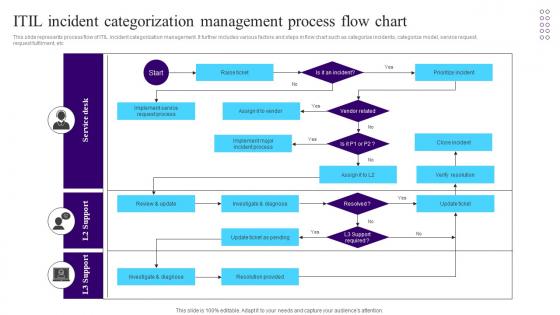
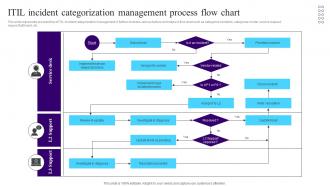
This slide represents process flow of ITIL incident categorization management. It further includes various factors and steps in flow chart such as categorize incidents, categorize model, service request, request fulfilment, etc
People who downloaded this PowerPoint presentation also viewed the following :
ITIL Incident Categorization Management Process Flow Chart with all 9 slides:
Use our ITIL Incident Categorization Management Process Flow Chart to effectively help you save your valuable time. They are readymade to fit into any presentation structure.








FAQs for ITIL Incident Categorization Management
So basically you're trying to get people back online ASAP and keep the business running when stuff breaks. Don't worry about finding the root cause right away - that's a different team's headache. You'll want solid processes for logging everything, figuring out what's urgent vs what can wait, and knowing when to escalate. Communication matters a ton here. Users get cranky when they're left in the dark about fixes. Honestly, I'd start by looking at your current process and spotting where things usually get stuck. Think of it like being the IT paramedic - stabilize first, investigate later.
So basically, incident management is about putting out fires fast - get that broken email server back up however you can. Problem management comes later and asks "why did this crash anyway?" Then they actually fix the underlying issue. Most companies are terrible at the second part honestly. They just keep restarting servers instead of figuring out the real problem. It's like putting a bandaid on a leaky pipe - works for now but you'll be dealing with the same mess next week. You need different mindsets too. Incident folks gotta move quick. Problem people are more like detectives.
So your Service Desk is like the gateway for all incidents coming in. They log everything, sort it into categories, and figure out what needs immediate attention. Straightforward issues? They fix those right away. Complex problems get bumped up to the specialists who actually know what they're doing. Throughout the whole mess, they're updating users and closing tickets when stuff gets resolved. Honestly, if your Service Desk team isn't trained properly on how to categorize and escalate things, your incident metrics are gonna be all over the place.
Dude, automation will save your sanity. Start with ticket routing - keywords automatically send stuff to the right teams instead of someone manually sorting through everything. Set up auto-escalation too because honestly, things slip through cracks when people get busy. You can trigger basic scripts for common problems, and automated status updates stop users from constantly asking "is it fixed yet?" Trust me, even just automating how tickets get classified will free up hours. Your analysts can focus on actual problem-solving instead of shuffling paperwork around. Pretty much a no-brainer once you see it working.
Honestly, just document everything like you're explaining it to someone who has no clue what happened. Get the who/what/when/where down first. I always include the initial symptoms users complained about, plus every troubleshooting step I tried - even the dumb ones that failed miserably. Future you will be grateful, trust me. Timestamps are huge too. Don't skip the business impact stuff or which services got hit. Yeah, it's annoying when you're already stressed and putting out fires, but it'll save you from playing detective again when the same crap breaks next month. A template checklist makes this way faster.
So there's really four things you should watch. MTTR is huge - that's how fast you're actually getting stuff fixed. First Call Resolution matters too because nobody wants to get transferred around five times, you know? Track your incident volume trends and make sure you're categorizing things right. Volume shows if you're preventing problems or just putting out fires constantly. Honestly though, MTTR's where I'd start - it's the most telling metric. Oh and definitely automate the reporting part. Trust me, you don't want to be pulling spreadsheets manually every month like I used to.
Good incident management is honestly a game-changer for IT service quality. You'll catch problems way faster and fix them before they spiral into major disasters. Small issues won't snowball into those nightmare outages that make everyone hate you. The data you collect shows weird patterns too - like why does that one server always crash on Tuesdays? I swear there's always one. That intel helps your team tackle root causes instead of constantly putting out fires. Just make sure everyone actually logs incidents properly and follows the same steps. Consistency is what builds the reliability users expect.
Honestly, communication skills are probably more important than people think - your team has to explain technical disasters to executives without making their eyes glaze over. Obviously you need solid troubleshooting chops and system knowledge. But staying calm when everything's on fire? That's where people either shine or crack. Look for folks who can prioritize multiple incidents without losing their minds. Analytical thinking matters too, plus attention to detail. I'd start by figuring out what gaps your current team has, then maybe do some cross-training. Time management is huge since you're always juggling chaos.
Track your MTTR and first-call resolution rates - those are your bread and butter metrics. Customer satisfaction scores matter too, obviously. Don't get caught up in weekly numbers though, they'll drive you crazy. I always tell people to look at 3-6 month trends instead. Monthly team meetings work great for digging into this stuff together. Check your escalation patterns while you're at it. Recurring incidents? That's where you'll find the real process gaps. Honestly, the data tells you everything if you actually sit down and analyze it properly.
Honestly, the tooling stuff will probably drive you crazy first. Teams hate new processes - can't blame them when they're already swamped. You'll get inconsistent priority levels and weird categorization that makes your reports look like garbage. Communication between teams? Total mess, especially during escalations. But here's what worked for me - pick your most critical services and start there. Don't try to boil the ocean right away. Make the process actually help your responders instead of adding more BS to their day. Quick wins are everything here.
ITIL 4 basically threw out those rigid step-by-step processes we all hated. Now it's way more flexible and actually works with DevOps stuff. The big thing? They want you thinking about how incidents mess up the whole user experience, not just closing tickets fast. There's tons more automation and self-service options too. Plus incidents aren't just problems anymore - they're supposed to be learning moments, which sounds cheesy but actually makes sense. Oh, and forget those old SLA obsessions. Map your incident flow against what actually creates business value instead. Trust me, it's a much better approach than the old cookbook method.
Honestly, ServiceNow is what most teams use - it's solid but probably way too much for smaller companies. Remedy and Jira Service Management work great too for incident tracking. For catching stuff early, you'll need monitoring like Nagios or Datadog (SolarWinds is decent but kinda clunky IMO). Slack integration is clutch for alerts. The biggest headache though? When your tools don't play nice together. Nothing's worse than juggling multiple dashboards when everything's on fire and your boss is breathing down your neck.
Look, good incident management is honestly a game-changer for keeping customers happy. Quick resolution times matter, but so does communication - nobody wants to wonder if you even know their system is broken. Map out clear escalation paths so tickets don't get stuck with the wrong person for hours. Regular updates are huge too. I've seen teams use simple templates that work really well for this. The bonus? You'll start catching patterns in what breaks and can actually fix root causes. Oh, and definitely figure out where your current process bogs down first - that's usually where the quick wins are hiding.
Honestly, just dig into your incident data every month - what's breaking, how long fixes take, that stuff. Post-incident reviews are seriously underrated, they'll show you patterns you'd never notice otherwise. Get feedback from users too, not just internal metrics. Then tweak small things based on what you find. Maybe update your knowledge base or change how you escalate issues. Oh, and actually schedule quarterly reviews of the whole process - sounds boring but it works. The trick is being systematic about it instead of just reacting to whatever fire pops up next.
Look, major incidents are a totally different beast than regular tickets. You need to skip the usual chains and get senior people involved ASAP. Set up a war room or dedicated call right away. Communication becomes way more intense - we're talking hourly updates instead of the normal "we'll circle back" nonsense. You'll be fast-tracking changes and maybe even hitting your disaster recovery stuff. Honestly? It's like going from cruise control to full emergency mode. My advice - build out that major incident playbook before you actually need it, because trust me, you don't want to wing it when everything's falling apart.
-
I took a chance with SlideTeam. I never looked back. Great products and great service.
-
These stunning templates can help you create a presentation like a pro.