Roadmap For Planning And Managing Ecommerce Website Project
Try Before you Buy Download Free Sample Product
Audience
Editable
of Time
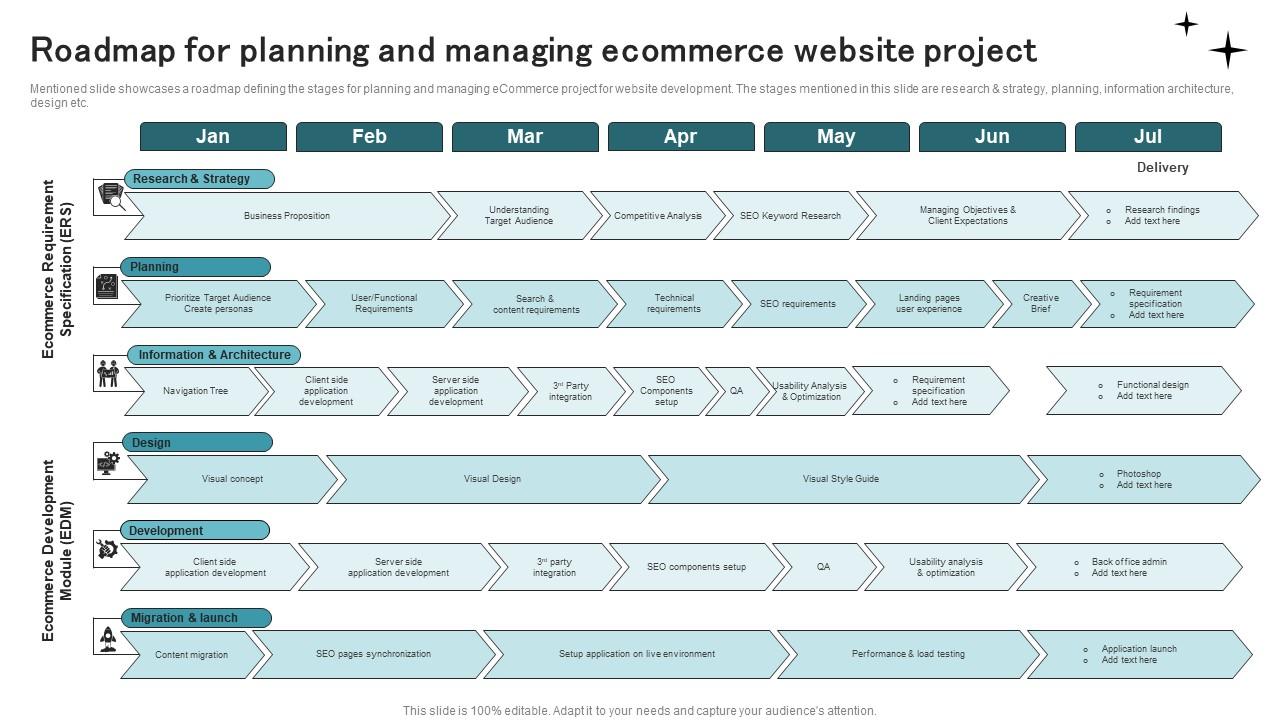
Mentioned slide showcases a roadmap defining the stages for planning and managing eCommerce project for website development. The stages mentioned in this slide are research and strategy, planning, information architecture, design etc.
People who downloaded this PowerPoint presentation also viewed the following :
Roadmap For Planning And Managing Ecommerce Website Project with all 6 slides:
Use our Roadmap For Planning And Managing Ecommerce Website Project to effectively help you save your valuable time. They are readymade to fit into any presentation structure.
FAQs for Roadmap For Planning And Managing
Okay so there's basically six main phases you'll go through. Planning and design come first - that's where you figure out what you actually want to build. Then UX/UI design happens, which honestly gets pretty chaotic with everyone's opinions flying around. Development's next where your team builds the real thing. Don't skip testing! I've seen too many launches go sideways because of that. Launch day's exciting but kind of anticlimactic? Most of your real work happens after - tracking analytics, reading user feedback, making tweaks. My advice is nail down timelines early so people know what to expect.
Dude, agile is perfect for eCommerce stuff. You can roll out features bit by bit instead of waiting forever to launch some "perfect" site. When competitors do something new or customer habits change, your team can pivot super fast with those sprint cycles. We got saved so many times during COVID when everything was nuts - honestly thought our site would crash and burn. Bugs get caught way earlier too. Oh and stakeholders actually stay interested when you show them demos regularly instead of going radio silent for months. I'd start with 2-week sprints, maybe focus on just one main feature each time. Works way better than the old waterfall approach.
Honestly, UX can totally make or break your eCommerce site. People need to find stuff easily and checkout without wanting to throw their phone across the room. If your site's confusing, they'll just bounce to Amazon - I've done this so many times lol. Good navigation and search features directly boost your conversion rates. When everything flows smoothly, you'll get fewer angry support emails too. Oh, and bring in UX people early in the process. Don't just tack on design at the end like an afterthought - that never works out well.
Good communication is honestly a game-changer for eCommerce projects. No more of those awkward "wait, who's doing what?" moments that totally derail launches. Your team actually knows what they're supposed to be doing and when stuff's due. Plus stakeholders finally get why certain technical things take forever, and developers understand which features customers actually care about. Daily standups help a ton. So does having a shared project board where everyone can see what's happening. I know it sounds basic, but those "I thought you were handling that" disasters? They pretty much disappear when people are actually talking to each other regularly.
Dude, start with Asana or Monday.com for project management - they're lifesavers for tracking everything. Slack keeps everyone talking (trust me, communication issues kill projects faster than bad code). Jira's your best friend for bugs and sprints. Google Workspace handles docs and requirements pretty well, though Notion's cool too if your team's into that. Oh, and don't forget Google Analytics once you launch. I'd honestly just pick 2-3 of these to start - I made the mistake once of trying like 8 tools and it was chaos.
Start with your must-haves: product catalog, cart, payments, order management. Map out the whole user flow from browsing to checkout. Then think about integrations - inventory systems, shipping calculators, tax stuff. The backend work always takes longer than you think, trust me. Sure, reviews and recommendations are nice, but scope creep will destroy your timeline if you're not careful. I'd honestly be pretty ruthless cutting features at first. Get everything documented and signed off on early. When stakeholders inevitably ask for "just one more thing," you'll thank yourself later.
Scope creep will destroy you - stakeholders always want "just one more thing." Integration's a nightmare too when payment systems and APIs refuse to work together. Security bugs? They'll torpedo your whole launch if you're not careful. Performance testing comes back to bite everyone late in development. Mobile responsiveness is honestly such a pain but you can't skip it. Timeline slippage happens to literally every project I've seen. My biggest tip is padding your estimates with extra time upfront. Also, get security audits done early instead of scrambling at the end. Trust me on that one.
Analytics shows you what's actually happening instead of guessing - track user behavior, conversions, sales patterns. I've watched teams build features nobody used because they skipped checking data first (such a waste). Start with basic stuff like cart abandonment and engagement metrics. This helps you prioritize features, spot checkout problems, see where people bail out. Seriously though, even simple tracking saves you from expensive screwups. Way better than flying blind and hoping for the best.
Oh man, break that project into smaller chunks with actual deadlines - trust me on this one. I completely bombed a holiday launch once and it was a nightmare. Daily check-ins with your dev team are clutch for catching issues before they blow up. Monday or Asana work great for tracking everything (though honestly any tool you'll actually use is fine). The hardest part? Saying no to "quick additions" when everyone gets excited about new features. Set up your automated testing from day one - you don't want to be debugging at 2am before launch. Start user testing at least two weeks out.
Market research is basically your project's GPS - you can't plan without it. Use it to nail down your target audience and figure out which features customers actually care about. I've watched so many projects totally bomb because teams just built what they assumed people wanted. Big mistake. Research helps you set realistic timelines too, plus you can see what competitors are doing wrong (or right). Budget allocation becomes way easier when you have real data backing your decisions. Trust me, spending time upfront beats guessing your way through development later.
Honestly, treat them like actual partners instead of just people you hire to do stuff. Communication is huge - set expectations right away and do regular check-ins. I totally screwed this up on a marketplace project once and it cost us three weeks because I assumed everyone knew what was going on (spoiler: they didn't). Get shared dashboards going so you can track progress together. Always have backup plans ready because something will go wrong, trust me. Before any project kicks off, hop on a call to align on timelines and how you'll communicate. Oh, and figure out escalation paths early - way easier than scrambling later when things get messy.
Honestly, start with SEO from the very beginning - don't bolt it on later. Get your keyword research done during discovery, and loop in the SEO folks when you're wireframing. Technical stuff like URL structure and page speed? That goes right into your dev requirements. I learned this the hard way - trying to fix SEO after launch is absolutely brutal. Sprint reviews should include SEO checkpoints so you catch issues early. Oh, and mobile optimization needs to be in your acceptance criteria too. Way easier to build it right the first time than scramble to fix everything later.
You'll need to track both the technical stuff and business impact. Site speed, uptime, conversion rates - basically anything that shows if your platform actually works. Then revenue growth, customer acquisition cost, average order value. Honestly? Most teams get obsessed with metrics that look impressive but mean nothing. I learned this the hard way on a project last year. Pick maybe 5-7 that actually matter for your goals and check weekly. Set up a dashboard so stakeholders can see progress themselves. Trust me, you don't want to be making reports every week.
Oh man, payment gateways are such a pain. Documentation varies wildly between providers - some are crystal clear, others make you want to scream. Stripe's usually solid but their webhook testing still ate up way more time than I expected on my last build. Each one has different approval timelines too, anywhere from a few days to several weeks. Don't forget about all the edge cases you'll need to handle - failed payments, refunds, the works. Transaction fees add up quick, and some have compliance hoops to jump through. Honestly? Pad your estimates by at least 25% and start the application process ASAP.
Dude, you absolutely need post-launch support - trust me on this one. Real customers will break your site in ways you never imagined during testing. Traffic spikes will reveal performance issues. Bugs will crawl out of nowhere. And honestly? There's always some weird edge case that'll crash everything at the worst possible moment. You'll want monitoring tools running from day one so you can spot problems fast. Quick fixes matter because frustrated customers just bounce to competitors. Also set up clear procedures for who handles what when things go sideways - learned that the hard way!
-
It's always a delight to see new templates from you! I am extremely pleased with the fact that they are easy to modify and fit any presentation layout in seconds!
-
Kudos to SlideTeam for achieving the high success rate in delivering the top-notch slides.Â