


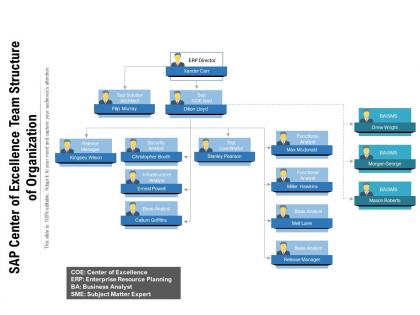
Sap center of excellence team structure of organization




Try Before you Buy Download Free Sample Product
 Impress Your
 Audience
 100%
100% Editable
 Save Hours
 of Time


Our Sap Center Of Excellence Team Structure Of Organization are explicit and effective. They combine clarity and concise expression.
People who downloaded this PowerPoint presentation also viewed the following :
Sap center of excellence team structure of organization with all 2 slides:
Give your audience a fulfilling experience. They will find our Sap Center Of Excellence Team Structure Of Organization elevating.

FAQs for Sap center of excellence team
So you're looking at Solution Architects first - they map out the whole technical direction. Business Process Experts are crucial too since they translate between IT and actual business needs. Don't sleep on getting solid Technical Leads for development stuff. Change Management people handle getting users to actually adopt the system (good luck with that one lol). Integration specialists are honestly where I'd focus early - that's where everything falls apart if you don't have someone dedicated. Some teams throw in Training Coordinators and Governance leads. I'd fill architect and process expert roles first though.
So basically you want regular meetings with both business people and IT folks - quarterly steering committees work well, plus monthly check-ins. Get reps from major business units on your CoE so they can actually translate what the business needs into your SAP roadmap. Here's the thing though - most CoEs totally bomb this because they get obsessed with shiny new tech features. Don't be those guys. Your KPIs need to connect to real business results, not just technical stuff. Document how each big project supports actual business goals and review your roadmap every quarter when priorities inevitably shift.
So the SAP CoE team is basically who you call when you need to keep everything running smoothly. They're like the referees of your SAP setup - handling standards, security stuff, making sure processes stay consistent across modules. Not glamorous but honestly pretty crucial. Performance monitoring, upgrades, compliance with regulations... they deal with all that behind-the-scenes work. Oh and definitely bring them into conversations early if you're planning any big changes or new implementations. Trust me, it'll save you headaches later when they don't have to backtrack on decisions.
So your SAP CoE basically sets up regular check-ins to review processes and gets your business users talking to the tech team. They track metrics to find where things get stuck and keep a list of requests for improvements. What's really useful is they can see patterns across departments that individual teams totally miss. Run workshops to figure out what's bugging users most - honestly, this part's crucial because people will complain about everything if you let them. Just make sure your CoE isn't spending all their time putting out fires. They need actual time blocked off for making things better, not just fixing whatever broke yesterday.
Obviously you need the tech people - ABAP developers, someone who knows FI/CO or SD inside out, plus sys admin folks. But here's the thing: soft skills are honestly just as critical now. Find people who can actually talk to business users without making their eyes glaze over. Change management is huge too since everyone hates SAP updates. You definitely want at least one person with that cross-module experience who gets how everything connects. Oh, and project management skills are non-negotiable - you'll be spinning like ten plates at once. Don't just hire fixers; get strategic thinkers.
So it really comes down to what kind of business you're in. Manufacturing companies stack their teams with production planning and supply chain people. Financial services? They're all about compliance and security folks. Retail is obsessed with integration experts for that whole omnichannel thing - which makes sense I guess. Healthcare and pharma have these super specific regulatory roles that honestly most other industries don't even know exist. My advice would be to check out what 2-3 similar companies are doing, then just tweak it based on whatever's driving you crazy right now.
Track both the tech stuff and business impact - system uptime, adoption rates, how fast issues get resolved. Cost savings from standardization matter too, plus project delivery times. But honestly? User satisfaction is everything - people won't use what they hate, even if it works perfectly. Also watch how often teams come to you for help vs doing their own thing (that's a big tell). Oh and don't go crazy measuring everything at first. Pick 3-4 key metrics and expand later once you've got those dialed in.
Your SAP CoE is basically the knowledge hub for everything. They'll document best practices and create standards so teams aren't constantly starting from scratch. Setting up communities where different groups can share what works (and fails spectacularly) is huge. The CoE maintains configuration standards and runs training sessions. Honestly, this prevents that awful situation where Bob's the only one who knows how the critical stuff functions - then Bob goes on vacation. Start by finding your power users. Get them involved early since they already know the pain points.
Give your CoE team dedicated time to mess around with new SAP tech - AI stuff, cloud solutions, whatever's hot. Hackathons work great for this. Mix in business people with your IT crew since they catch things we totally miss. Oh, and actually fund the good ideas that come up, even small pilots. Regular brainstorming sessions honestly produce some wild breakthroughs. Set up an easy way for people to submit concepts. The key thing? Don't punish smart failures. Celebrate them alongside wins or people stop taking risks.
So they basically start with impact assessments like 8-12 weeks out, then your department gets a "change champion" who's your go-between with the CoE team. Pretty standard stuff. Training gets tailored to what you'll actually deal with, which is nice - no sitting through irrelevant demos about modules you'll never touch. Communication plans and all that coordination happens behind the scenes. Honestly, just jump on whatever training they offer early rather than waiting. Trust me on this one - learning new workflows while you're trying to hit deadlines is not fun. The whole thing's way more organized than our last system rollout was.
Honestly, don't underestimate how much training matters with SAP - I've seen rollouts crash because people just got frustrated and gave up. Your CoE needs dedicated training folks and super users who basically translate between the techies and everyone else. These champions become your lifeline for daily questions and basic troubleshooting. Find them early and treat them well! They'll handle workshops, create guides, and keep documentation updated. Way better than drowning in support tickets later. The whole thing falls apart without proper handholding, especially in those first few months.
Think of your SAP CoE as the GPS for your digital transformation - they figure out where SAP fits in your tech stack and what processes to tackle first. They'll check out your current setup, rank projects by business impact, then build a realistic rollout plan. No trying to do everything at once (trust me, that never works). The team also saves you from making the same mistakes they've seen at other companies. Oh, and definitely start with a maturity assessment of your SAP landscape - gives you a solid baseline to work from.
Honestly, governance and scope creep will kill you - everyone thinks the CoE is their personal SAP help desk. Business units always want to do their own thing instead of following standards, which is super frustrating. Getting consistent funding is rough too, especially when executives lose interest. Communication across multiple teams becomes this huge mess. And don't get me started on the "we needed this last week" mentality while you're trying to actually do things right. My advice? Set hard boundaries upfront about what you will and won't do. Also, nail down that executive sponsorship before you even start - trust me on this one.
Honestly, external partnerships are a game-changer for SAP CoEs. They fill those annoying knowledge gaps and bring perspectives your internal team probably doesn't have. Plus, partners usually know about new SAP features way before you do - which is super helpful. Just don't pick partners who do the exact same stuff your team already does. I've watched companies blow budgets on redundant skills, and it's painful to see. Start with smaller pilot projects first. Test how well you work together before diving into anything major. Oh, and set up clear communication from day one - vague expectations kill partnerships faster than anything else.
Honestly, your CoE is gonna look totally different in a few years. Cloud architects and AI specialists will be huge - way more demand there than traditional ABAP work (though ABAP folks can pivot to extensions pretty easily). The whole citizen developer thing is kinda crazy - I watched a marketing person build their own app last month, no joke. You'll probably need people who can guide those business users instead of doing everything for them. Oh, and with SAP pushing industry-specific stuff, domain experts beat generalists now. I'd get your team cross-training ASAP before everyone else catches on.
No Reviews