


Scrum In SDLC Agile System Development Lifecycle Ppt Microsoft




Try Before you Buy Download Free Sample Product
 Impress Your
 Audience
 100%
100% Editable
 Save Hours
 of Time


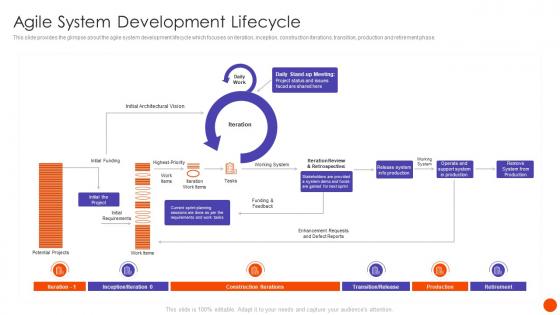
This slide provides the glimpse about the agile system development lifecycle which focuses on iteration, inception, construction iterations, transition, production and retirement phase.
People who downloaded this PowerPoint presentation also viewed the following :
Scrum In SDLC Agile System Development Lifecycle Ppt Microsoft with all 6 slides:
Use our Scrum In SDLC Agile System Development Lifecycle Ppt Microsoft to effectively help you save your valuable time. They are readymade to fit into any presentation structure.





FAQs for Scrum In SDLC Agile System Development
Scrum teams comprise three key roles: Product Owner, who defines requirements and prioritizes features; Scrum Master, who facilitates processes and removes obstacles; and Development Team members, who build and deliver the product. These roles contribute to project success by ensuring clear communication, maintaining focus on customer value, and enabling rapid iteration, with many organizations finding that this collaborative structure significantly reduces development time while enhancing product quality and stakeholder satisfaction.
Scrum facilitates adaptive planning through short sprints, regular retrospectives, and continuous stakeholder feedback, enabling teams to adjust priorities and requirements based on real-world insights. This iterative approach allows organizations to respond quickly to market changes, reduce project risks, and deliver value incrementally, with many software development teams finding that they can pivot strategies while maintaining momentum and competitive advantage.
The Sprint goal provides unified direction and purpose for development teams, ensuring all activities align toward a specific, valuable outcome while enabling flexibility in implementation approaches. It guides daily standups, task prioritization, and scope decisions by serving as a filter for work acceptance, with many agile organizations finding that clear Sprint goals reduce scope creep, enhance team collaboration, and ultimately deliver more focused, business-valuable increments.
Teams effectively manage their Product Backlog through regular refinement sessions, continuous stakeholder collaboration, and value-based prioritization using frameworks like MoSCoW or story mapping. Through ongoing grooming activities, product owners work with development teams and stakeholders to reassess priorities, remove outdated items, and add emerging requirements, ultimately ensuring the backlog reflects current business needs and delivers maximum customer value.
Sprint Retrospective techniques include Start-Stop-Continue exercises, root cause analysis, timeline reviews, team satisfaction surveys, and action item prioritization methods. These approaches enhance team collaboration by identifying process bottlenecks, celebrating successful practices, and implementing targeted improvements, with many development teams finding that structured retrospectives deliver faster delivery cycles and improved product quality.
Scrum events, particularly Daily Stand-ups, enhance communication by creating structured touchpoints where team members share progress updates, identify impediments, and align on priorities. These brief, focused sessions foster transparency and accountability, enabling teams to quickly address blockers, coordinate interdependent tasks, and maintain momentum toward sprint goals, ultimately delivering improved project outcomes and stronger team cohesion.
Common Scrum implementation challenges include resistance to cultural change, inadequate training, unclear role definitions, insufficient stakeholder engagement, and unrealistic sprint commitments. Teams overcome these obstacles by investing in comprehensive training programs, establishing clear communication protocols, and fostering collaborative environments, with many organizations finding that gradual implementation and strong Scrum Master guidance ultimately delivers improved project visibility and enhanced team productivity.
Scrum supports cross-functional collaboration through daily standups, sprint planning sessions, retrospectives, and shared sprint goals that require diverse expertise. These structured ceremonies enable developers, designers, testers, and product owners to coordinate seamlessly, identify dependencies early, and solve problems collectively, ultimately delivering higher-quality products faster while fostering stronger team cohesion.
Teams can measure Scrum success through velocity trends, sprint goal achievement rates, team satisfaction scores, stakeholder feedback quality, and cycle time improvements. These metrics provide deeper insights than task completion alone, with many organizations finding that tracking team morale, defect rates, and customer value delivery ultimately delivers better product outcomes and sustainable development practices.
The Scrum Master facilitates conflict resolution by mediating discussions, identifying root causes, and guiding teams toward collaborative solutions while maintaining neutrality. Through coaching techniques, active listening, and process improvements, Scrum Masters help teams develop self-organizing capabilities, ultimately enhancing team dynamics, productivity, and project delivery in increasingly complex development environments.
Scrum practices adapt to remote teams through digital collaboration tools, enhanced communication protocols, and modified ceremony formats. Virtual daily standups, online sprint planning sessions, and digital retrospectives enable distributed teams to maintain agile workflows, while cloud-based project management platforms streamline transparency and accountability, ultimately delivering faster development cycles and improved team coordination.
Effective Sprint Planning practices include setting clear sprint goals, accurately estimating story points, involving the entire development team in discussions, prioritizing backlog items based on business value, and establishing realistic capacity limits. These practices streamline project delivery by enhancing team alignment, reducing scope creep, and improving predictability, with many software development organizations finding that structured planning sessions ultimately deliver faster releases and higher-quality outcomes.
The concept of "done" establishes clear completion criteria that directly shapes the Definition of Done by providing specific, measurable standards for deliverables, quality gates, and acceptance requirements. This alignment ensures consistent understanding across development teams, product owners, and stakeholders, while streamlining sprint planning, reducing technical debt, and enhancing product quality, ultimately delivering predictable outcomes and faster release cycles.
Organizations ensure effective stakeholder engagement throughout Scrum by establishing regular sprint reviews, maintaining transparent product backlogs, and facilitating continuous feedback loops through demos and retrospectives. Through structured touchpoints like stakeholder meetings and product owner collaboration, companies in sectors like software development and manufacturing streamline communication, enhance product alignment, and ultimately deliver solutions that meet market demands while maintaining competitive advantage.
Scrum delivers sustained competitive advantages through enhanced team productivity, faster time-to-market, improved product quality, greater customer satisfaction, and increased organizational adaptability. While traditional methodologies often struggle with changing requirements, many technology companies, financial services firms, and healthcare organizations find that Scrum's iterative approach ultimately reduces project risks and development costs significantly.
-
Placing an order on SlideTeam is very simple and convenient, saves you a lot of your time.
-
I have been using SlideTeam for the past six months. Very happy and satisfied!