

Segmentation targeting and positioning model powerpoint presentation slides





Try Before you Buy Download Free Sample Product
 Impress Your
 Audience
 100%
100% Editable
 Save Hours
 of Time


Our content-ready segmentation targeting and positioning model PowerPoint presentation slides will provide methods to increase the value of your firm in the market and increase business. Here in this STP framework PPT presentation, you will learn about market segment evaluation, customer segmentation layout, market targeting, market positioning, strategic positioning and competitive landscape. Companies tend to change their focus consistently for better returns. Through market segmentation, you can identify your niche, attract new customers, and deliver customer-focused messages more effectively. These presentation templates also cover few related topics such as STP process, marketing mix, brand positioning, geographic segmentation, target customer segment, competitor analysis, market research, etc. One of the biggest advantages of segmentation is that if you target the right segment, you will definitely get high profits. The approach mentioned in our PowerPoint visuals let you identify your most valuable market and sell your product successfully. So, download segmentation targeting and positioning model presentation slides to bring real success to your company. Bring about consistency and continuity with our Segmentation Targeting And Positioning Model Powerpoint Presentation Slides. Ensure fewer interruptions.
People who downloaded this PowerPoint presentation also viewed the following :
Content of this Powerpoint Presentation
Slide 1: This slide introduces Segmentation, Targeting and Positioning Model. State Your Company Name and get started.
Slide 2: This is an Agenda slide. Showcase your agendas here.
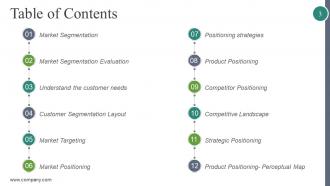
Slide 3: This slide shows Table of Contents displaying- Market Segmentation, Market Positioning, Market Segmentation Evaluation, Understand the customer needs, Customer Segmentation Layout, Market Targeting, Positioning strategies, Product Positioning- Perceptual Map, Product Positioning, Competitor Positioning, Competitive Landscape, Strategic Positioning.
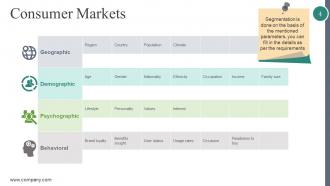
Slide 4: This slide presents Consumer Markets. Segmentation is done on the basis of the mentioned parameters, you can fill in the details as per the requirements.
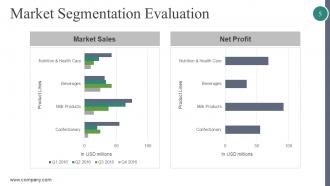
Slide 5: This slide shows Market Segmentation Evaluation displaying- Market Sales, Net Profit.
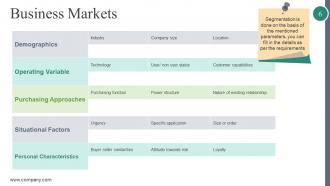
Slide 6: This slide presents Business Markets. Segmentation is done on the basis of the mentioned parameters, you can fill in the details as per the requirements
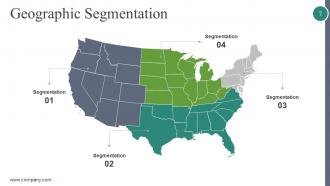
Slide 7: This slide shows Geographic Segmentation in US map image form.
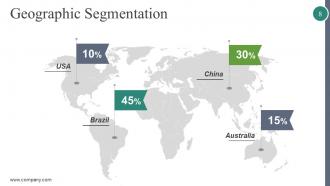
Slide 8: This slide showcases Geographic Segmentation in world map image form.
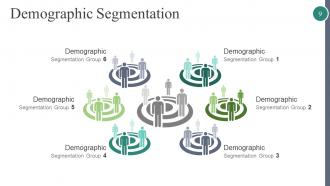
Slide 9: This slide shows Demographic Segmentation to be displayed.
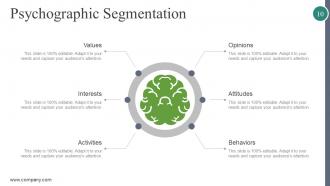
Slide 10: This slide showcases Psychographic Segmentation displaying- Opinions, Behaviors, Attitudes, Values, Activities, Interests.
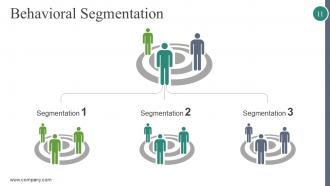
Slide 11: This slide showcases Behavioral Segmentation to be shown.
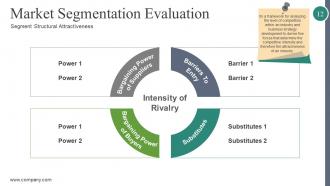
Slide 12: This slide presents Market Segmentation Evaluation with- Bargaining Power of Suppliers Bargaining Power of Buyers Barriers To Entry Intensity of Rivalry with Power, Barrier and Substitutes. Its a framework for analyzing the level of competition within an industry and business strategy development to derive five forces that determine the competitive intensity and therefore the attractiveness of an industry.
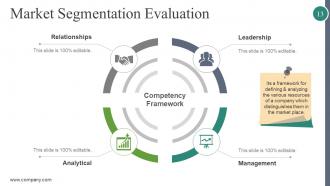
Slide 13: This slide shows Market Segmentation Evaluation displaying- Competency Framework, Relationships, Analytical, Leadership, Management. Its a framework for defining & analyzing the various resources of a company which distinguishes them in the market place.
Slide 14: This slide presents Understand the Customer Needs showing- What they do, When they buy, How they buy, What they expect of you, Understand your customer. Analyse and understand the customer needs & requirements.
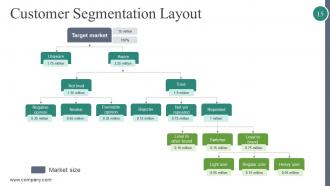
Slide 15: This slide showcases Customer Segmentation Layout displaying- Market size, Heavy user, Light user, Regular user, Loyal to brand, Switcher, Loyal to other brand, Negative opinion, Neutral opinion, Favorable opinion, Rejecter, Not yet repeated, Repeated, Not tried, Tried, Unaware, Aware, Target market.
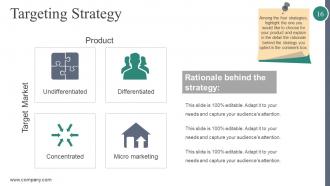
Slide 16: This slide shows Targeting Strategy in matrix form showcasing- Undifferentiated, Concentrated, Differentiated, Micro marketing, in terms of Product and Target Market with Rationale behind the strategy. Among the four strategies, highlight the one you would like to choose for your product and explain in detail the rationale behind the strategy you opted in the comment box.
Slide 17: This slide presents Market Positioning with- Target segment, Description of the product, Competitive alternatives, Market category, Key benefit, Primary differentiation, Attributes which sets you apart, Market. After analyzing the segment and the target market, you need to fill in this positioning template.
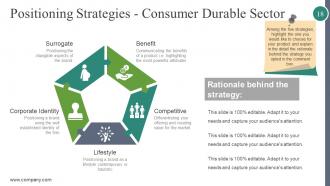
Slide 18: This slide showcases Positioning Strategies - Consumer Durable Sector displaying- Benefit, Competitive, Lifestyle, Corporate Identity, Surrogate.
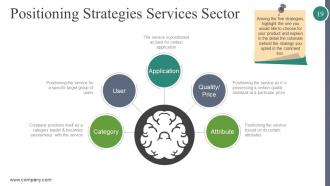
Slide 19: This slide shows Positioning Strategies Services Sector with- Category, User, Application, Quality, Price, Attribute. Among the five strategies, highlight the one you would like to choose for your product and explain in the detail the rationale behind the strategy you opted in the comment box.
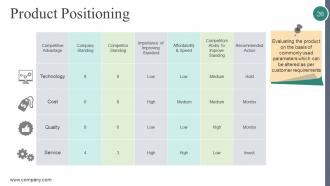
Slide 20: This slide shows Product Positioning in tabular form. Evaluating the product on the basis of commonly used parameters which can be altered as per customer requirements.
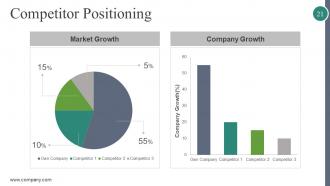
Slide 21: This is a Competitor Positioning slide in graph form showing- Company Growth and Market Growth.
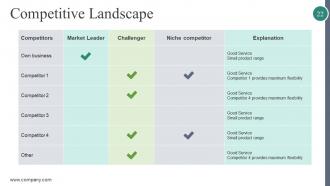
Slide 22: This is a Competitive Landscape slide in tabular form.
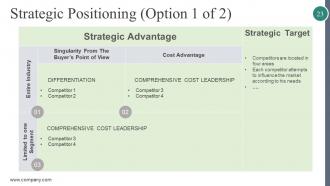
Slide 23: This slide showcases Strategic Positioning.
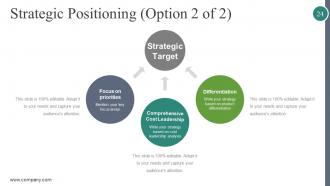
Slide 24: This slide also showcases Strategic Positioning stating- Strategic Target Differentiation, Comprehensive Cost Leadership, Focus on priorities.
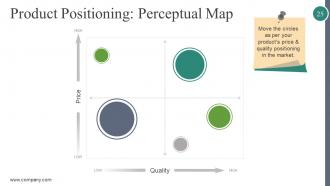
Slide 25: This is Product Positioning: Perceptual Map slide. Move the circles as per your product’s price & quality positioning in the market.
Slide 26: This slide is titled Coffee Break to halt and then proceed further. You may change the slide content as desired.
Slide 27: This slide is titled Our Charts. You may change the slide content as desired.
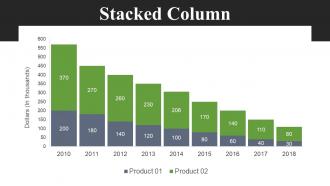
Slide 28: This is a Stacked Column graph slide to show product/entity comparison, specifications etc.
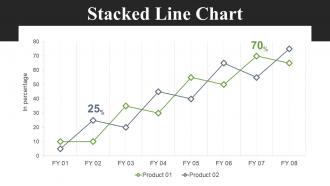
Slide 29: This is a Stacked Line Chart slide to show product/entity comparison, specifications etc.
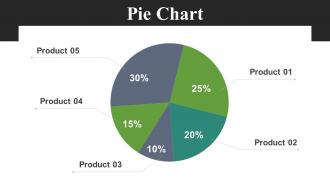
Slide 30: This is a Pie Chart slide to show product/entity comparison, specifications etc.
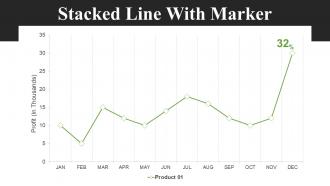
Slide 31: This is a Stacked Line With Marker slide to show product/entity comparison, specifications etc.
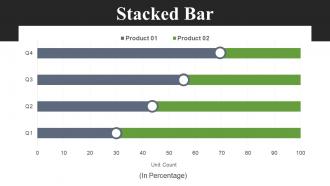
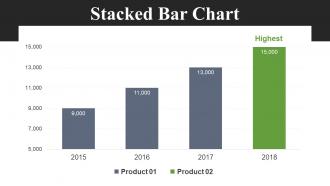
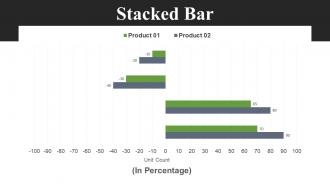
Slide 32: This is a Stacked Bar Chart slide to show product/entity comparison, specifications etc.
Slide 33: This is a Stacked Bar Chart slide to show product/entity comparison, specifications etc.
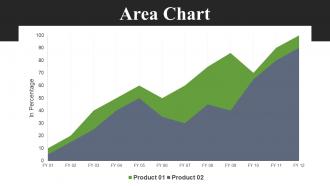
Slide 34: This is an Area Chart slide to show product/entity growth, comparison, specifications etc.
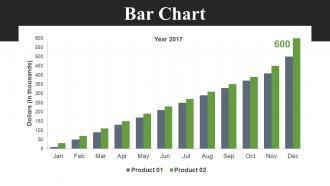
Slide 35: This is a Bar Chart slide to show product/entity growth, comparison, specifications etc.
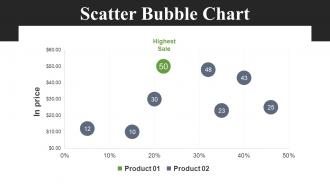
Slide 36: This is a Scatter Bubble Chart slide to show product/entity comparison, specifications etc.
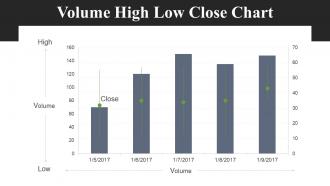
Slide 37: This is a Volume High Low Close Chart slide to show product/entity comparison, specifications etc.
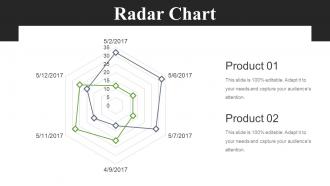
Slide 38: This is a Radar Chart slide to show product/entity comparison, specifications etc.
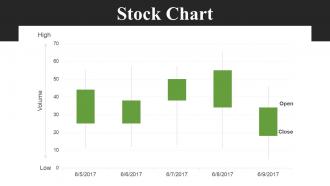
Slide 39: This is a Stock Chart slide to show product/entity comparison, specifications etc.
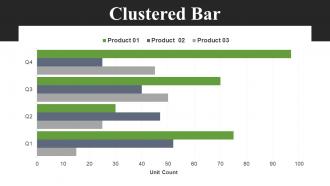
Slide 40: This is a Clustered Bar graph slide to show product/entity comparison, specifications etc.
Slide 41: This is a Stacked Bar Chart slide to show product/entity growth, comparison, specifications etc.
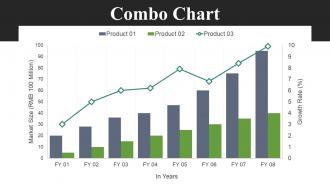
Slide 42: This is a Combo Chart slide to show information, comparison specifications etc.
Slide 43: This slide is titled Additional Slides to move forward. You can change the slide content as per need.
Slide 44: This slide showcases Our Mission. Show your company mission and goals here.
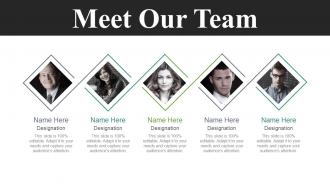
Slide 45: This slide showcases Meet Our team with name, designation and image boxes.
Slide 46: This is an About Us slide. State team/company specifications here.
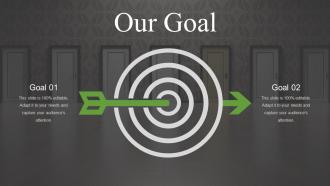
Slide 47: This is Our Goal slide. State your goals here.
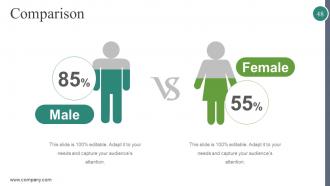
Slide 48: This slide showcases Comparison of two entities in male female chart imagery form.
Slide 49: This is a Financial score slide. State financial aspects, information etc. here.
Slide 50: This is a Quotes slide to convey company/organization message, beliefs etc. You may change the slide content as per need.
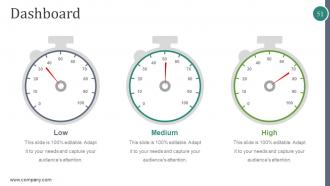
Slide 51: This is a Dashboard slide to state Low, Medium and High aspects, kpis, metrics etc.
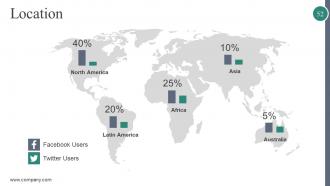
Slide 52: This is a Location slide to show global segragation, presence etc. on a world map and text boxes to make it explicit.
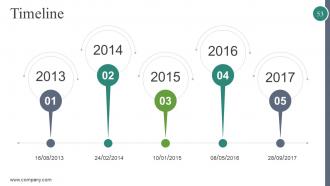
Slide 53: This is a Timeline slide to present important dates, journey, evolution, milestones etc.
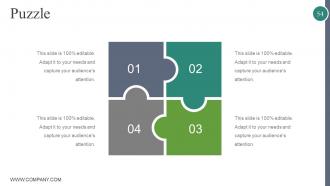
Slide 54: This is a Puzzle pieces image slide to show information, specifications etc.
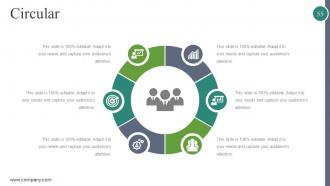
Slide 55: This is a Circular image slide. State specifications, information here.
Slide 56: This is a Post It slide to mark events, important information etc.
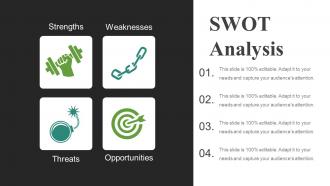
Slide 57: This is a SWOT Analysis slide.
Slide 58: This is a Target image slide. State targets, etc. here.
Slide 59: This is a Venn diagram image slide to show information, specifications etc.
Slide 60: This is a Mind map image slide to show information, specifications etc.
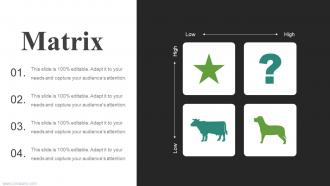
Slide 61: This is a Matrix slide to show information, specifications etc.
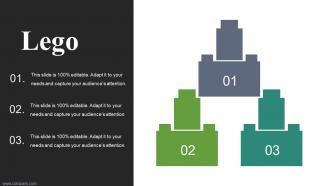
Slide 62: This is a Lego infographic slide to show information, specifications etc
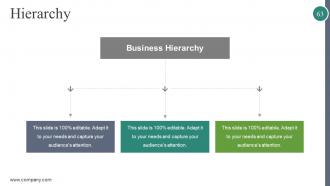
Slide 63: This is a Hierarchy image slide to show information, organization/team structure, specifications etc.
Slide 64: This is a Silhouettes infographic slide to show information, specifications etc.
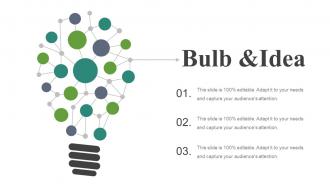
Slide 65: This is a Bulb & Idea image slide to show ideas, innovative information etc.
Slide 66: This is a Magnifying Glass image slide to show information, specifications etc.
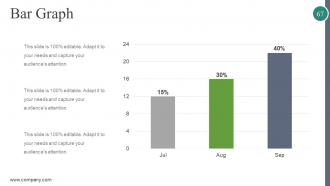
Slide 67: This is a Bar Graph slide to show product/entity comparison, specifications etc.
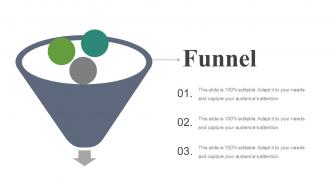
Slide 68: This is a Funnel image slide to show information, funneling aspects, specifications etc.
Slide 69: This is a Contact Us slide with Email, Address# street number, city, state, Contact Numbers.
Slide 70: This is a Thank You slide for acknowledgement or to end a presentation.
Segmentation targeting and positioning model powerpoint presentation slides with all 70 slides:
Bring about enduring cohesion. They help adjudicate disputes.













FAQs for Segmentation targeting and positioning model
STP breaks down into three parts - segmentation, targeting, and positioning. You'll start by splitting customers into groups based on demographics, behavior, whatever makes sense for your business. Targeting comes next, where you pick which segments are worth going after. This step trips people up because there are so many choices and everyone wants to target "everyone" (spoiler: don't). Positioning is basically how you want people to think about your brand versus the competition. Oh, and definitely get your segmentation sorted first - it makes the rest way less confusing.
Look, segmentation totally changes how you think about marketing. You stop wasting time trying to appeal to literally everyone - which honestly never works anyway. Pick out 2-3 distinct customer groups who actually behave differently. Then you can craft messages that actually resonate with each group. Your budget goes further because you're not shooting in the dark anymore. Different channels work better for different segments too. I'd start by digging into whatever customer data you already have. You'll probably spot some patterns pretty quickly, and maybe even find opportunities you completely missed before.
So there are basically four ways to slice up your market. Demographics - age, income, that stuff. Geographic is where people live. Psychographic gets into their lifestyle and values (honestly this one's harder to nail down). Then behavioral - how they actually buy things and use brands. Most people don't just pick one though. Like you might go after "eco-conscious millennials in cities who shop online a lot." The trick is figuring out what actually drives people's decisions about YOUR product specifically. Don't overthink it - just focus on segments you can realistically reach and serve differently.
Honestly, just start by talking to people who already buy from you - like 10-15 customers this week. Ask why they picked your stuff over competitors. Social media analytics are clutch too, but don't get lost in all the data (I've been there, it's a rabbit hole). Focus on the patterns you keep seeing - age ranges, spending habits, where they scroll online. Survey your current customers and peek at what your competition's doing. The goal is building those detailed buyer personas, but base them on real info, not gut feelings. Demographics and pain points matter way more than you'd think.
Honestly, start with your CRM data - everyone ignores it but there's gold in there. Then throw surveys at people using Qualtrics or SurveyMonkey to fill the gaps. SPSS and R are your best friends for the actual analysis, though Excel works if you're not doing anything too fancy. Google Analytics is obviously clutch for digital stuff. Oh, and don't sleep on social listening tools like Hootsuite - they'll show you what people actually think, not just what they tell you in surveys. Mix all these together instead of relying on one source. That's where the magic happens.
STP basically stops you from just guessing who your customers are based on random demographics. First, you segment to find groups with similar behaviors. Then you figure out which segments are actually worth targeting (some aren't, honestly). Positioning comes last - that's where you understand how each group sees value differently. Your personas end up way more accurate because they're built on real patterns, not just "25-35 year olds who make decent money." I'd map your current personas against an STP framework if I were you - bet you'll find some obvious holes you missed before.
So basically, you can position the same product totally differently depending on who you're talking to. Like, call it "premium luxury" for rich people but "smart value" for budget shoppers. B2B folks might care about how durable it is, while millennials just want it to look cool. Honestly, it's kind of like being a marketing chameleon. You'll switch up the benefits you highlight, change your emotional angle, maybe even use different price points or sell through different channels. The tricky part? Don't lose your core brand identity while you're shape-shifting all over the place.
You can't do STP without checking out your competition first - it's like going into battle blindfolded. Map out who's already targeting your segments and how they're positioning themselves. Some fights aren't worth picking, trust me. Look for gaps where competitors are sleeping on potential customers. When you're segmenting, see which areas are overcrowded versus totally ignored. Your positioning strategy basically becomes "here's how we're different from those other guys." Without this competitive intel, you're just guessing. Start by figuring out who's playing in your space and what they're saying to customers.
Okay so first thing - write down your positioning statement, key messages, all that stuff. Actually document it because otherwise everyone just wings it differently. Train your whole team on this so marketing isn't saying one thing while customer service sounds completely different. I've seen brands totally confuse people this way. Your campaigns, product stuff, even how you answer emails should all feel consistent. Short version: get everyone on the same page and do regular check-ins to catch when someone goes rogue. Otherwise you'll just confuse your customers.
Track your segmentation accuracy through customer surveys and purchase patterns - are people still behaving like you predicted? For targeting, watch conversion rates and acquisition costs per segment. Most companies mess up here because they never revisit their original research, which is honestly pretty dumb since markets change constantly. Brand perception surveys help measure positioning success, plus keep an eye on how competitors are moving. Set quarterly check-ins to compare everything against your STP goals. When the numbers show it's not working anymore, don't be stubborn about pivoting.
Honestly, the hardest part is getting decent market research without breaking the bank. Quality data costs way more than you'd think. Plus you might not have enough budget to actually target multiple segments once you find them. Positioning is where I see most people mess up - everyone ends up sounding identical, which defeats the whole point. Getting your team on board is huge too since this stuff touches everything from product to messaging. Oh, and don't try to be everything to everyone right off the bat. Pick one segment, test it out, see what works. You can always expand later once you've got some wins under your belt.
Dude, digital marketing completely changed how STP works. Now you can segment people based on crazy specific stuff - like what they clicked last Tuesday or where they grabbed coffee. The targeting is honestly kind of creepy sometimes. But here's the cool part: you don't have to guess if your positioning works anymore. A/B tests show you what's actually landing with people, and you can tweak things instantly based on real data. Social listening helps too - you'll see what resonates before committing to huge campaigns. Way better than the old "launch and pray" approach we used to do.
STP works best when you've got lots of different types of customers - retail, cars, tech companies, banks, that kind of stuff. Nike's a perfect example, they segment by whether you're into casual wear or serious athletics. Banks do it too, creating different products for various income levels. Any business where trying to appeal to everyone at once feels awkward will see results. Oh, and B2B software companies are obsessed with it because they can target specific pain points instead of generic messaging. If you're in a crowded market where people want totally different things, you basically can't survive without segmenting properly.
Going international means tweaking your STP for each market. Local values and income totally change how people buy stuff - Japanese consumers are nothing like Americans. Targeting gets messy because attractive markets often have crazy regulations or distribution headaches. Honestly, positioning is where most companies screw up. You've got to adapt your message without losing what makes your brand special. It's this balancing act between staying consistent globally but still feeling local. My advice? Pick two similar markets first and test everything before going bigger.
Don't slice your market into a million tiny pieces - that's the biggest trap. Also avoid trying to be everything to everyone with bland positioning. I've watched so many teams just guess what customers want instead of actually checking. Big mistake. Your segments need to be big enough to make money AND reachable through your marketing (seems obvious but people mess this up constantly). Test your positioning with real customers before you commit. Can't tell you how many times I've seen companies skip this step and face-plant later.
-
Unique design & color.
-
Great quality product.