


Product Positioning Powerpoint Presentation Slides






Try Before you Buy Download Free Sample Product
 Impress Your
 Audience
 100%
100% Editable
 Save Hours
 of Time


Present your product marketing plan with our content ready Product Positioning PowerPoint Presentation Slides. Product positioning is very essential for a marketing plan. If you want to be successful in the market, then your product should hold a proper place in the minds of customers Positioning strategy PPT helps you to determine how to showcase product to the target customers. Marketing professionals can use this brand positioning Presentation design to identify direct competitors. The product marketing plan PowerPoint graphics contains templates such as positioning strategy, brand positing framework, brand worksheet, statement and model, product communication and repositioning, etc. Furthermore, the outstanding market segmentation PPT slide is also helpful for topics like market projections, brand positioning, product strategy, brand strategy, product marketing plan, segmentation and targeting, customer engagement, brand management to name a few. Download right-time marketing PPT slide to create a convincing marketing presentation. Give every clue due importance with our Product Positioning Powerpoint Presentation Slides. Be able to conduct the investigation.
People who downloaded this PowerPoint presentation also viewed the following :
Content of this Powerpoint Presentation
Slide 1: This slide introduces Product Positioning. State your company name and get started.
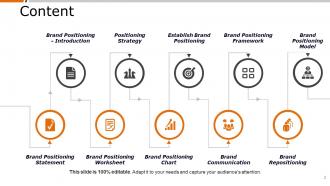
Slide 2: This is a Content slide with the following points to be displayed/ stated- Brand Positioning - Introduction, Positioning Strategy, Establish Brand Positioning, Brand Positioning Framework, Brand Positioning Model, Brand Positioning Statement, Brand Positioning Worksheet, Brand Positioning Chart, Brand Communication, Brand Repositioning.
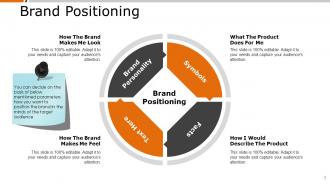
Slide 3: This slide shows Brand Positioning with the following three parameters- Brand Personality, Symbols, Facts. You can decide on the basis of these mentioned parameters how you want to position the brand in the minds of the target audience.
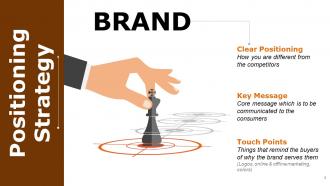
Slide 4: This slide shows Positioning Strategy with- Clear Positioning, Key Message, Touch Points.
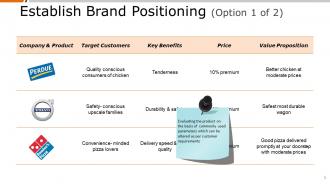
Slide 5: This is Establish Brand Positioning (Option 1 of 2) slide with the following parameters- Company & Product, Target Customers, Key Benefits, Price, Value Proposition. Evaluate the product on the basis of these parameters, you can also alter thse as per your requirements.
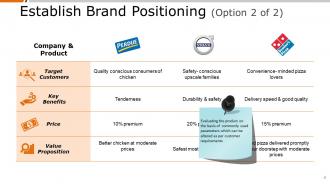
Slide 6: This is also Establish Brand Positioning (Option 2 of 2) slide. Use as per your requirement.
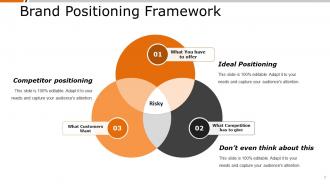
Slide 7: This slide shows Brand Positioning Framework. We have mentioned three of its parameters/ factors, you can use them as per your requirement.
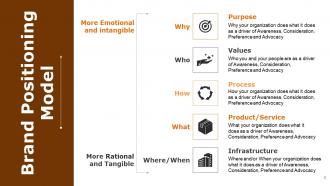
Slide 8: This slide shows Brand Positioning Model divided into two categories- More Emotional and intangible, More Rational and Tangible. It also consists of the following points- Purpose, Values, Process, Product/Service, Infrastructure.
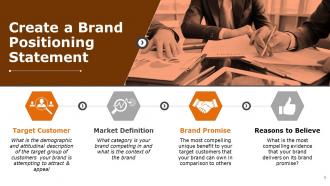
Slide 9: This is Create a Brand Positioning Statement slide showing- Target Customer, Market Definition, Brand Promise, Reasons to Believe.
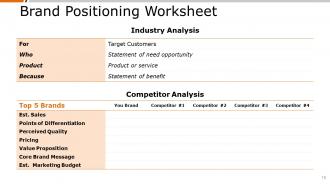
Slide 10: This slide shows Brand Positioning Worksheet. You can alter/ edit as per your requirement.
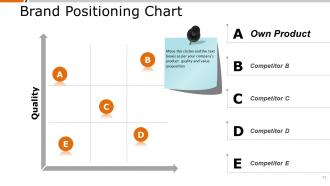
Slide 11: This slide shows Brand Positioning Chart in a matrix form. Move the circles and the text boxes as per your company’s product quality and value proposition.
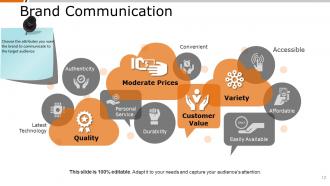
Slide 12: This slide shows Brand Communication with the following attributes- Variety, Quality, Moderate Prices, Customer Value, Authenticity, Latest Technology, Personal Service, Durability, Easily Available, Convenient, Affordable, Accessible. Choose the attributes you want the brand to communicate to the target audience.
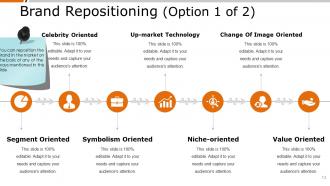
Slide 13: This is Brand Repositioning (Option 1 of 2) slide. We have mentioned few of the ways with which you can reposition your brand. Either make use of them or add your own.
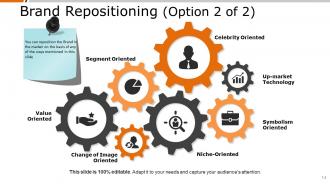
Slide 14: This is also Brand Repositioning (Option 2 of 2) slide showing the following ways- Segment Oriented, Celebrity Oriented, Symbolism Oriented, Up-market Technology, Niche-Oriented, Change of Image Oriented, Value Oriented.
Slide 15: This is Product Positioning Icon Slide. Use/ add icons as per need.
Slide 16: This is a Coffee Break slide to halt. You may change it as per requirement.
Slide 17: This slide forwards to Charts & Graph. You may alter the content as per need.
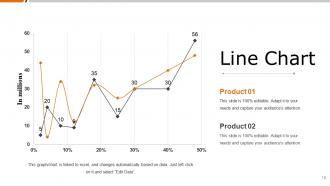
Slide 18: This is a Line Chart slide for product/ entity comparison.
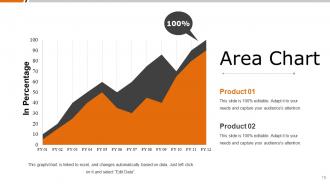
Slide 19: This is an Area Chart slide for product/ entity comparison.
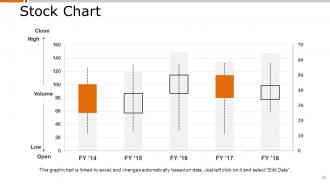
Slide 20: This is a Stock Chart slide to present product/ entity comparison, specifications etc.
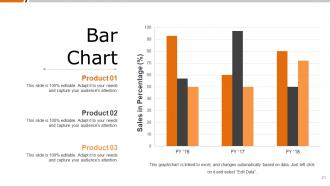
Slide 21: This is a Bar chart slide to present product/ entity comparison, specifications etc.
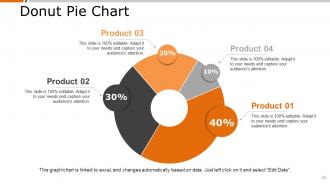
Slide 22: This slide presents a Donut Pie Chart. Add text as per need.
Slide 23: This slide is titled Additional Slides to move forward. You can change the slide content as per need.
Slide 24: This is Our Mission slide to state.
Slide 25: This slide showcases Our Team with Name and Designation to fill.
Slide 26: This is an About Us slide. State team/ company specifications here.
Slide 27: This is Our Goal slide. State your goals here.
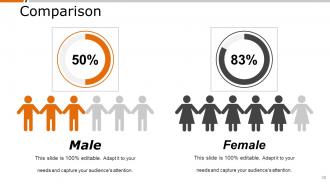
Slide 28: This is a Comparison slide. You can compare the male and female ratio in it.
Slide 29: This is a Business Quotes slide to convey the company's message, beliefs etc.
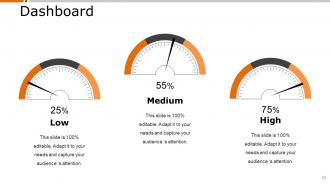
Slide 30: This is a Dashboard slide to show growth factors in terms of High, Low, Medium.
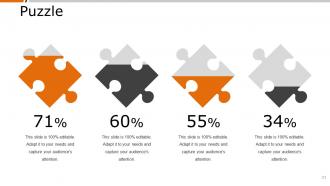
Slide 31: This is a Puzzle image slide to show information, specifications etc.
Slide 32: This is a Target image slide to show targets, goals, information, specifications etc.
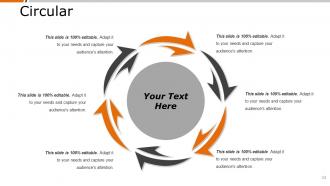
Slide 33: This is a Circular image slide. State information, specifications etc. here.
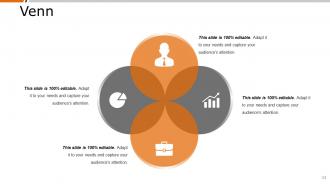
Slide 34: This is a Venn diagram image slide to show information, specifications etc.
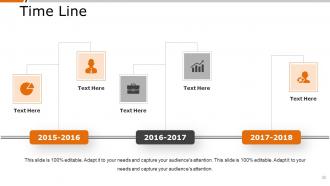
Slide 35: This is a Timeline image slide to show growth factors, milestones etc.
Slide 36: This is a Thank You slide with Address# street number, city, state, Contact Numbers and Email Address.
Product Positioning Powerpoint Presentation Slides with all 36 slides:
Boost internal efficiency with our Product Positioning Powerpoint Presentation Slides. Establish better interdepartmental cooperation.









FAQs for Product Positioning
Honestly, start with getting super specific about who you're actually targeting - not just "small businesses" but like "tech startups with 10-50 employees drowning in spreadsheets." Once you nail that down, map out what your top 3 competitors are saying. Then find the gap where you can own something real that people actually give a shit about. Your messaging has to connect those dots without sounding like every other company. I always think the "better features" angle is so lazy - what problem are you solving that nobody else is tackling?
So here's the thing - audience segmentation is basically your entire positioning strategy. You're splitting people into groups based on what actually matters to them, their problems, what drives them. Different segments care about totally different benefits from your product. Makes way more sense than that whole "appeal to everyone" approach which... yeah, doesn't work. I'd say start with your main segment first, get that positioning right, then tweak it for the others. Each group needs messaging that actually speaks to them specifically.
Think of competitive analysis like checking out what's already on the shelf before you decide where to put your product. Map out 3-5 direct competitors and see what they're claiming - spoiler alert, half of them probably say "innovative solution" or something equally boring. Look for gaps where nobody's really owning a specific message or benefit. You want to understand what customers already think about these brands so you can either play into those expectations or go completely against them. The goal? Find that sweet spot where you can actually stand out instead of blending into the noise.
Honestly, it's all about being crystal clear on what makes you different. Write down your top 3 things that competitors can't offer - then make sure that messaging is everywhere. Your website, ads, how your team pitches it, even packaging if you have it. The real test is this: if someone's comparing you to 5 similar options, can they immediately see why they should pick you? Most companies think they're being clear but they're really not. Check if your "why us" actually comes through when customers hit your touchpoints. It sounds obvious but you'd be surprised how many businesses mess this up.
Oh man, don't try being everything to everyone - learned that one the hard way! Focus on what your customers actually need instead of just bashing competitors. Skip the internal buzzwords that confuse buyers. Features don't sell, outcomes do. Here's what kills me though - people panic and switch positioning every month when they don't see instant results. That's nuts. Pick one solid value prop, test it with real people, then stick with it for at least 6 months. Good positioning needs time to work.
Look, it all depends on your industry because customers want totally different things. Tech companies push innovation and cool features. Consumer brands? They're selling you a lifestyle - how you'll *feel* using their stuff. Healthcare is weird though, it's all about trust and results (nobody cares if their surgeon is trendy lol). B2B focuses on saving money and time, while consumer stuff taps into who you want to be. Here's what I'd do: check out how your biggest competitors position themselves, then figure out what angle they're all missing. That's your opening.
So you'll need to check if people actually "get" your positioning and if it's moving the needle business-wise. Start with brand awareness surveys and see how customers talk about you vs competitors - focus groups are clutch for this. Then watch your conversion rates, acquisition costs, and market share. Here's the thing though: positioning is super slow to show up in revenue, so don't freak if sales don't jump right away. I'd probably run perception surveys quarterly and track conversions monthly. Oh, and customer interviews are honestly underrated for this stuff.
Honestly, customer feedback is like a reality check for your positioning. Shows you if people actually get what you're trying to say or if you're way off. You'll discover what benefits they really care about - not what you think they should care about. That can be pretty humbling, not gonna lie. The words they use? Pure gold. They'll describe your product in ways that sound real to other prospects. I always tell people to write down the exact phrases customers use when talking about your solution. Then you can tweak your positioning to match how your market actually talks and thinks.
Look for gaps your competitors are totally missing - maybe there's a customer group getting ignored or problems nobody's solving well. Don't just copy what's working, that's boring and makes you invisible. Price wars suck, so focus on being actually different through your messaging or features instead. Dig into what frustrates people about current options. I mean, sometimes the obvious stuff is what everyone overlooks. Make it super obvious why they'd pick you over the big players. Test your angle with a small group first before you go all-in.
Dude, stories just stick in people's heads way better than boring feature lists. Like, Nike could go on about their rubber soles and whatever, but instead they're all about "just do it" and crushing your goals. Way more memorable, right? Your customers need to actually see themselves in the story though - not some generic "Sarah from accounting increased productivity by 47%" nonsense that sounds totally made up. Stories show how your product actually fits into real life instead of just existing as this random thing with specs. Plus it separates you from competitors who sound like robots reading datasheets.
Honestly, digital marketing changed everything for product positioning. Now you can micro-target specific audiences with different messages and see what actually works through engagement data. A/B testing lets you try positioning angles instantly instead of waiting forever for traditional research. Social media's wild - you can position directly against competitors (sometimes gets messy though lol). The coolest part? You can pivot fast based on real metrics. I'd start by testing like 2-3 different messages across your channels and just watch what performs best. Way better than the old guessing game.
Your visual branding is literally your positioning strategy in picture form. Colors, fonts, logo style - all of it screams where you sit in the market before anyone reads anything. Rolex vs Casio, you know? Same watches, completely different vibes. Bold minimalist stuff says "we're cutting-edge." Warm colors and handwritten fonts feel more approachable. Honestly, most brands get this backwards though - they pick pretty visuals first, then wonder why their messaging feels off. Figure out your positioning statement first. Then make every visual choice back that up consistently.
Look at Volvo - they straight up own "safety." Apple made themselves the cool creative kids fighting boring corporate IBM. Nike? They're not just selling shoes, they're selling that whole "just do it" mentality. Then there's Dollar Shave Club, which honestly was genius. While Gillette was pushing fancy 5-blade whatever-technology, these guys were like "dude, it's just a razor" and completely killed it with simple and cheap. The thing is, each brand found their own corner that nobody else was really claiming. Pick one clear thing your audience actually cares about and just... stick with it. Don't try being everything to everyone - that never works.
Honestly, cultural context makes or breaks global positioning. What kills it in one market might totally bomb somewhere else. You've gotta adapt everything - messaging, visuals, even product features. Red means luck in China but death in South Africa, which is crazy when you think about it. Some cultures want super direct communication while others find that rude. Price sensitivity varies wildly too. Oh, and don't forget the whole individualism vs. community thing - Americans love "treat yourself" messaging but that flops in collectivist cultures. Always test locally first and work with people who actually get the cultural stuff, not just speak the language.
Your pricing and positioning are basically joined at the hip. Price high? You're screaming premium. Go low and you're the budget-friendly option. Think about it - if I say "luxury skincare" but charge $5, that's just weird mixed signals. The price literally tells your story before anyone even uses your stuff. I learned this the hard way with a project last year, honestly. You can't position yourself as the fancy option then undercut everyone by 50%. So yeah, when you're figuring out your positioning, make sure your pricing backs up whatever vibe you're going for.
-
Good research work and creative work done on every template.
-
Great designs, Easily Editable.