


Product Training Powerpoint Presentation Slides
Give your sales and other professionals enough knowledge about the product or service using Product Training PowerPoint Presentation Slides. Get access to this content-ready product training PPT templates and educate your team with the probable customers concerns. Give product information and prepare them with the knowledge using product training PowerPoint slideshow. Equip your staff with adequate information so that they can turn probable customers into regular customers. This ready-to-use product training complete PowerPoint presentation covers topics like about the product, product list, product rating, product roadmap, product comparison, product pricing, and more. This deck answers every question that your sales team or a customer might have. Incorporate these PPT templates to make your next sale easy. Get your hands on this ready-made product training PPT slides to prepare your sales team to make their best efforts to impress the customers. Cut down the friction with our Product Training Powerpoint Presentation Slides. Have a calming effect on any argument.




















-

- Google Slides is a new FREE Presentation software from Google.
- All our content is 100% compatible with Google Slides.
- Just download our designs, and upload them to Google Slides and they will work automatically.
- Amaze your audience with SlideTeam and Google Slides.
-

Want Changes to This PPT Slide? Check out our Presentation Design Services
-

- WideScreen Aspect ratio is becoming a very popular format. When you download this product, the downloaded ZIP will contain this product in both standard and widescreen format.
-

- Some older products that we have may only be in standard format, but they can easily be converted to widescreen.
- To do this, please open the SlideTeam product in Powerpoint, and go to
- Design ( On the top bar) -> Page Setup -> and select "On-screen Show (16:9)” in the drop down for "Slides Sized for".
- The slide or theme will change to widescreen, and all graphics will adjust automatically. You can similarly convert our content to any other desired screen aspect ratio.
Compatible With Google Slides

Get This In WideScreen
You must be logged in to download this presentation.


Do you want to remove this product from your favourites?
PowerPoint presentation slides
Presenting product training presentation slides. This deck consists of total of 35 PPT templates. Each slide comprises of professional visuals with an appropriate content. These slides have been designed keeping the requirements of the customers in mind. This complete presentation covers all the design elements such as layout, diagrams, icons, and more. This deck has been crafted after a thorough research. You can easily edit each template. Edit the colour, text, icon, and font size as per your requirement. Easy to download. Compatible with all screen types and monitors. Supports Google Slides. Premium Customer Support available.

People who downloaded this PowerPoint presentation also viewed the following :
Content of this Powerpoint Presentation
Slide 1: This slide introduces Product Training with relevant imagery. State Your Company Name and get started.
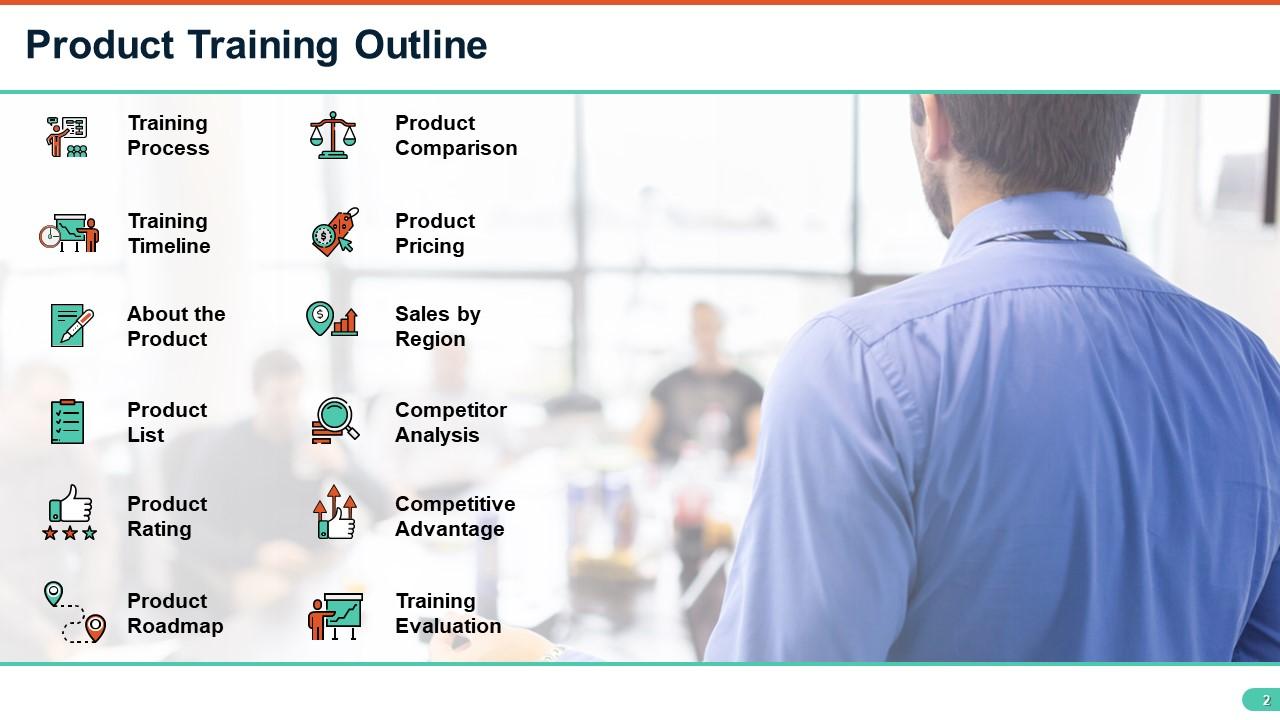
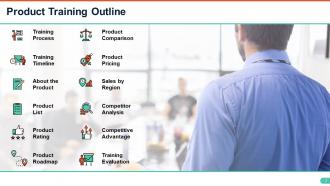
Slide 2: This slide presents Product Training Outline consisting of- Training Process, Training Timeline, About the Product, Product List, Product Rating, Product Roadmap, Product Comparison, Product Pricing, Sales by Region, Competitor Analysis, Training Evaluation, Competitive Advantage.
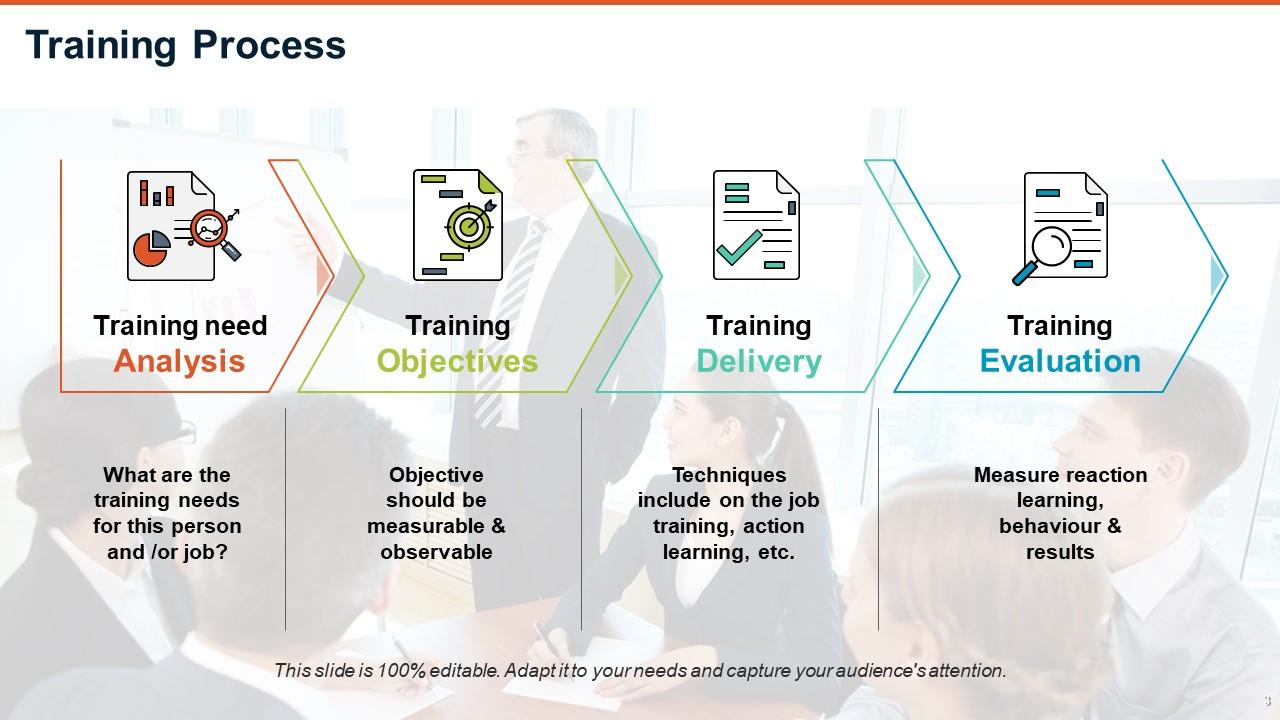
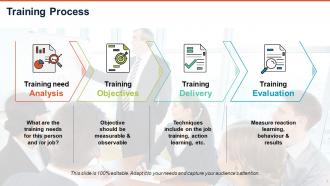
Slide 3: This slide showcases the Training Process with the following points- What are the training needs for this person and /or job? Objective should be measurable & observable, Techniques include on the job training, action learning, etc. Measure reaction learning, behaviour & results, Training need Analysis, Training Objectives, Training Delivery, Training Evaluation.
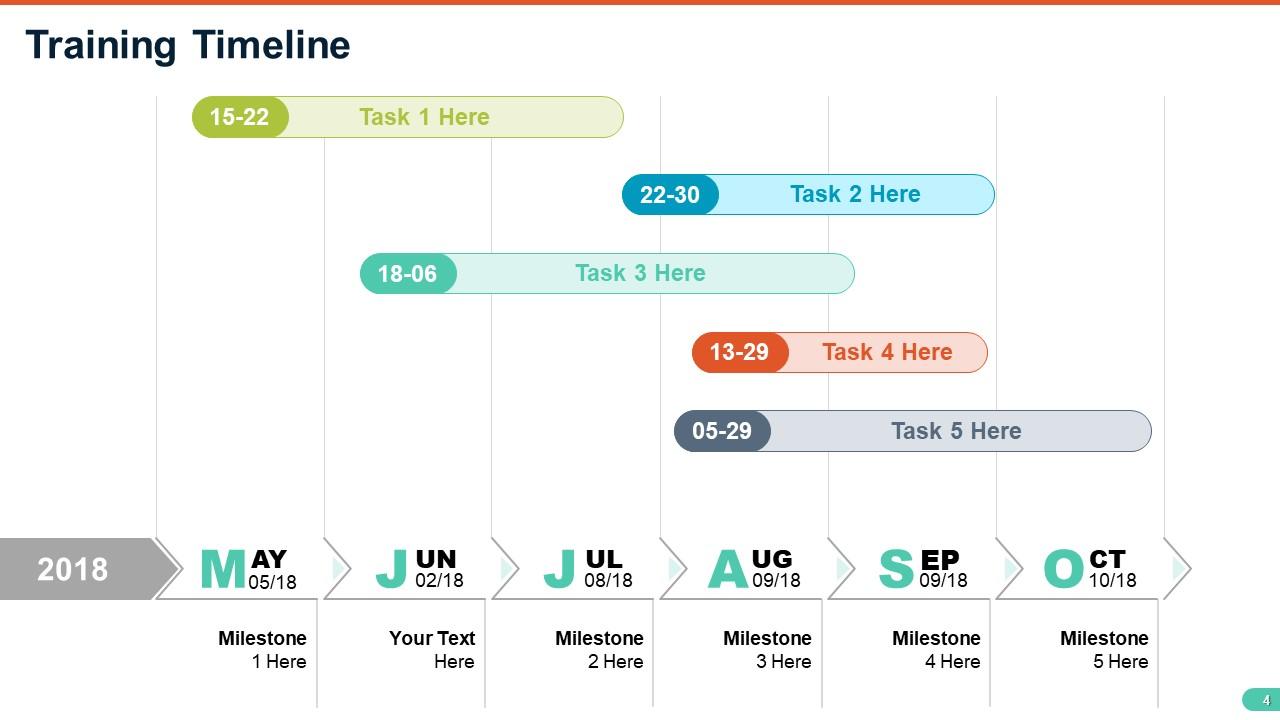
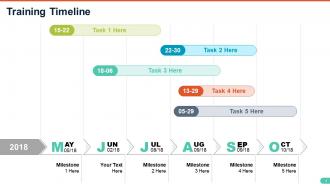
Slide 4: This slide presents Training Timeline.
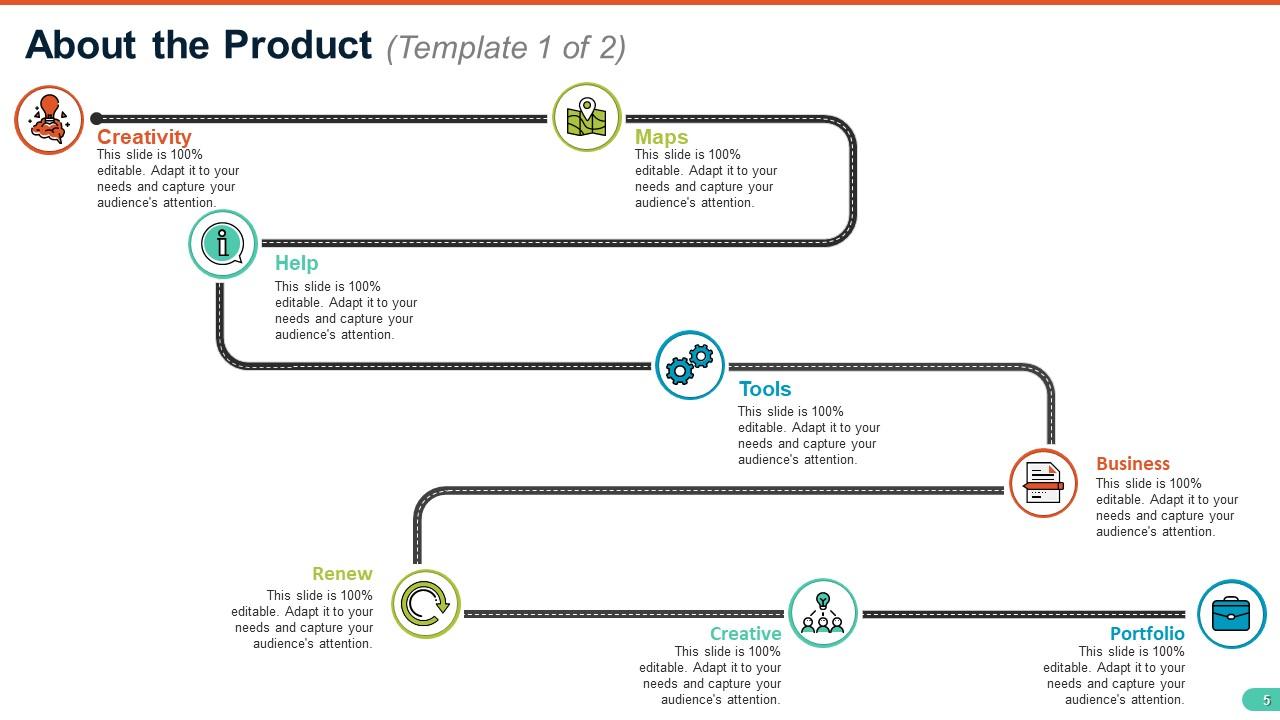
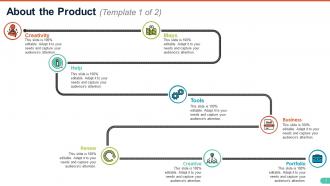
Slide 5: This slide presents About the Product with- Creativity, Maps, Help, Tools, Business, Renew, Creative, Portfolio.
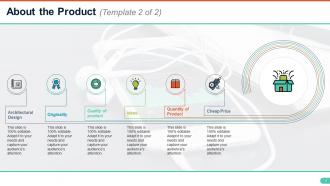
Slide 6: This slide showcases About the Product with- Architectural Design, Originality, Quality of product, Ideas, Quantity of Product, Cheap Price.
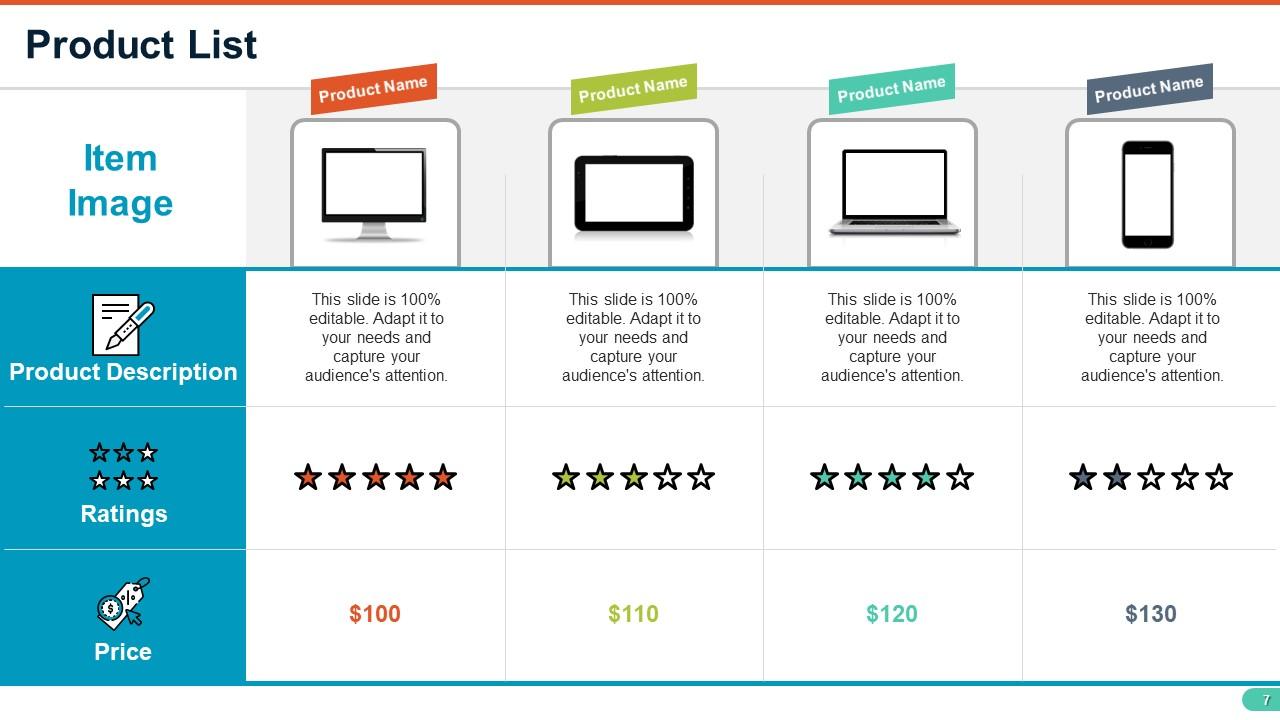
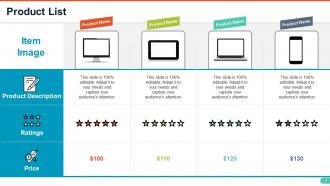
Slide 7: This slide showcases Product List with- Item Image, Product Description, Ratings, Price, Product Name.
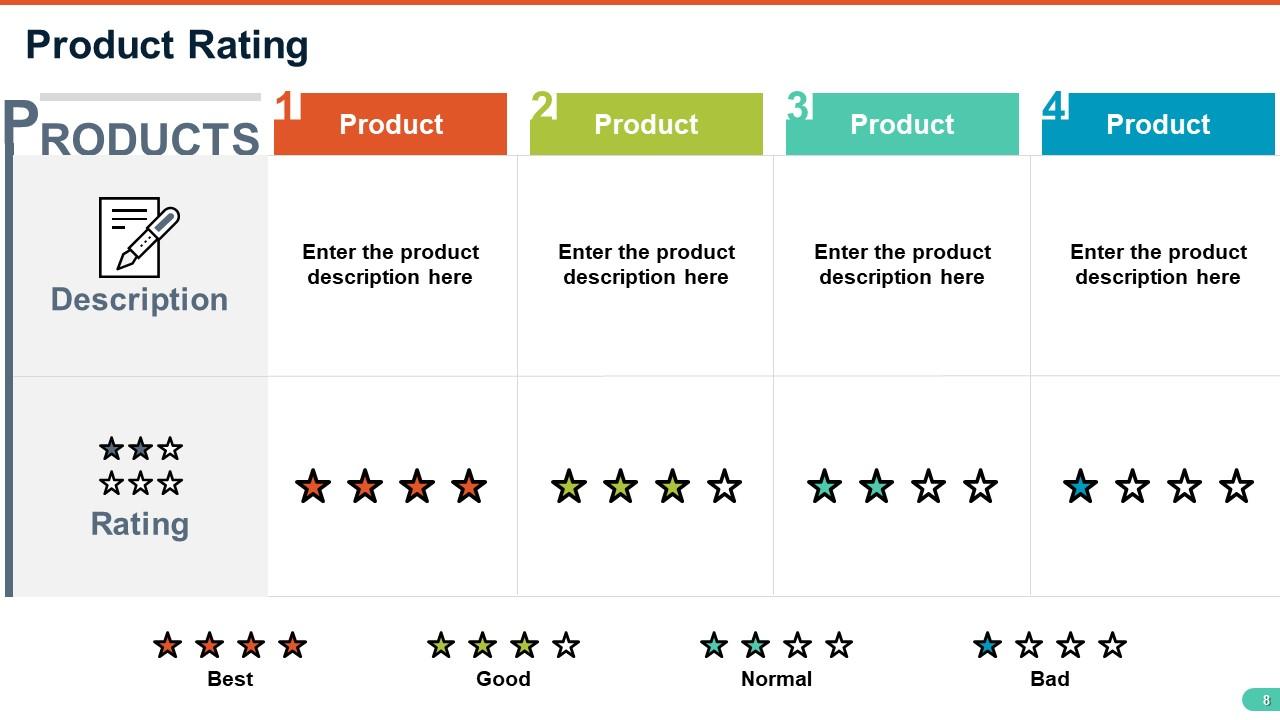
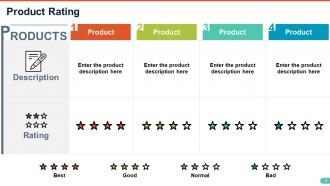
Slide 8: This slide presents Product Rating in tabular form displaying- Product, Description, Rating: (Best Good Normal Bad).
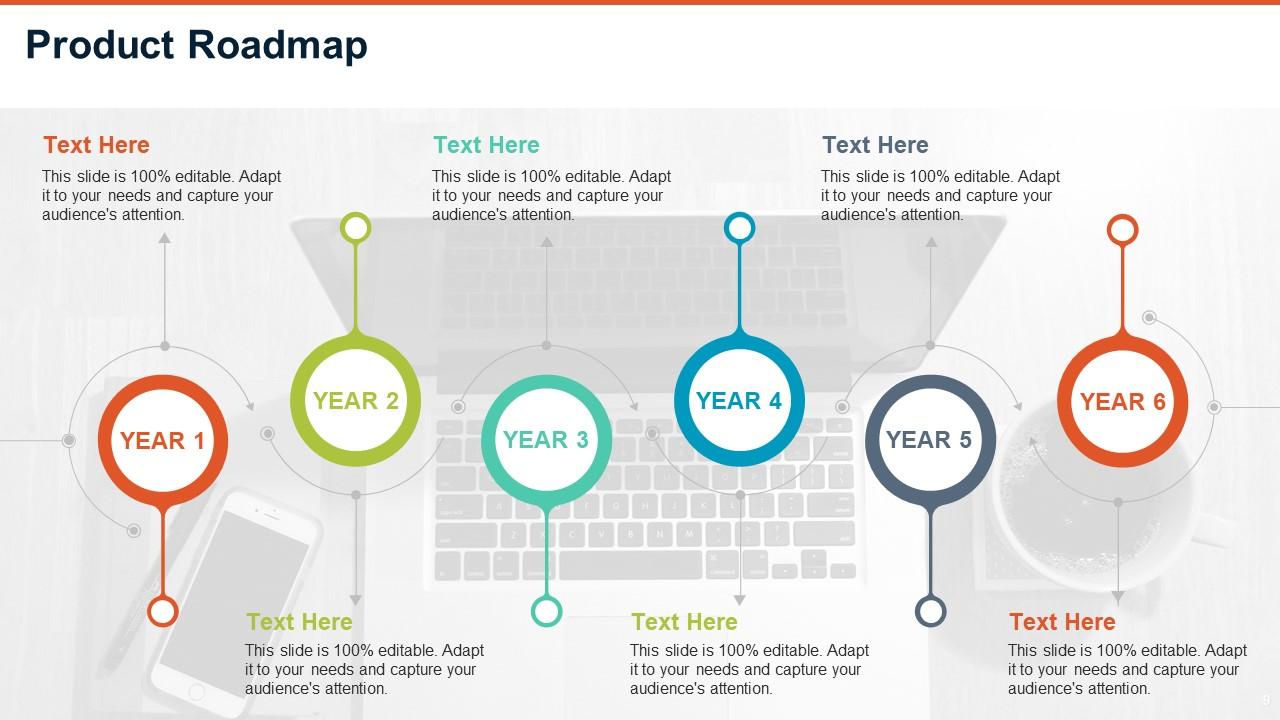
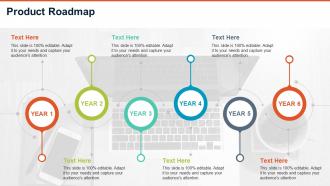
Slide 9: This slide showcases Product Roadmap for different years to be shown.
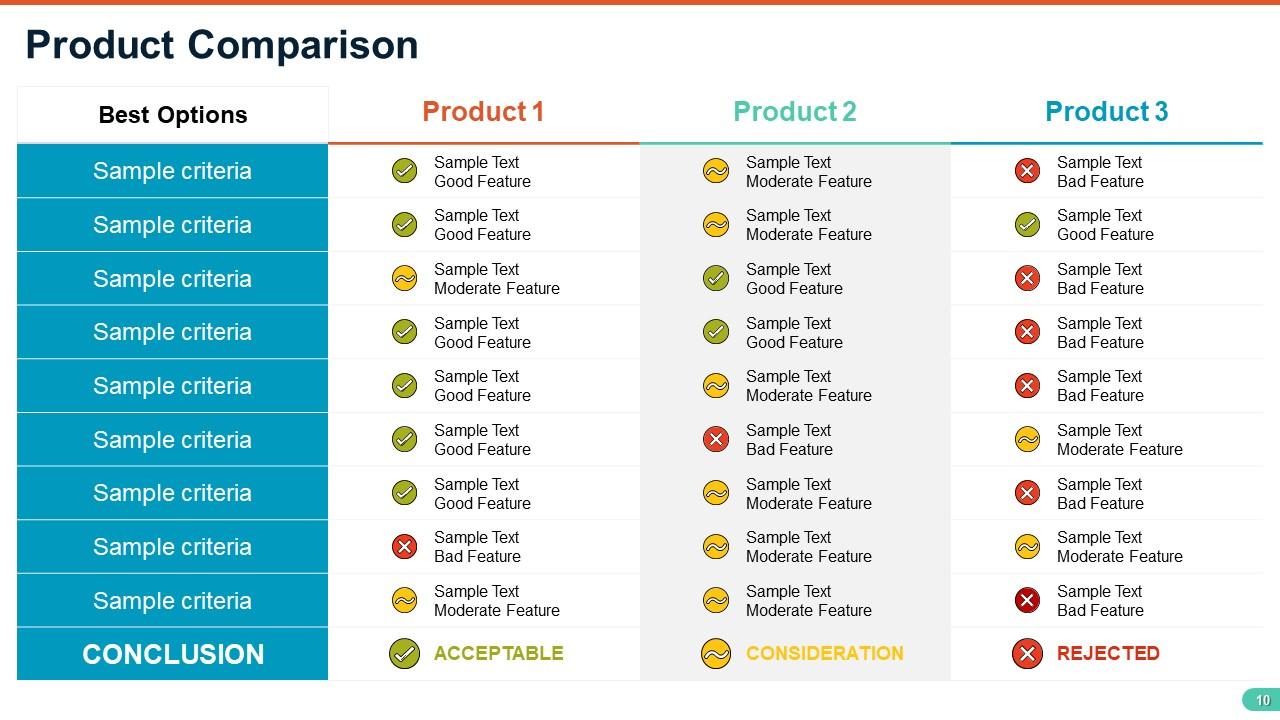
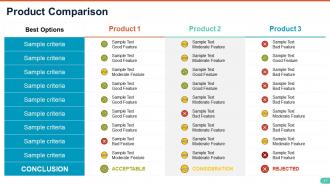
Slide 10: This slide shows Product Comparison in tabular form.
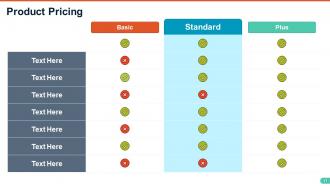
Slide 11: This slide shows Product Pricing in table form.
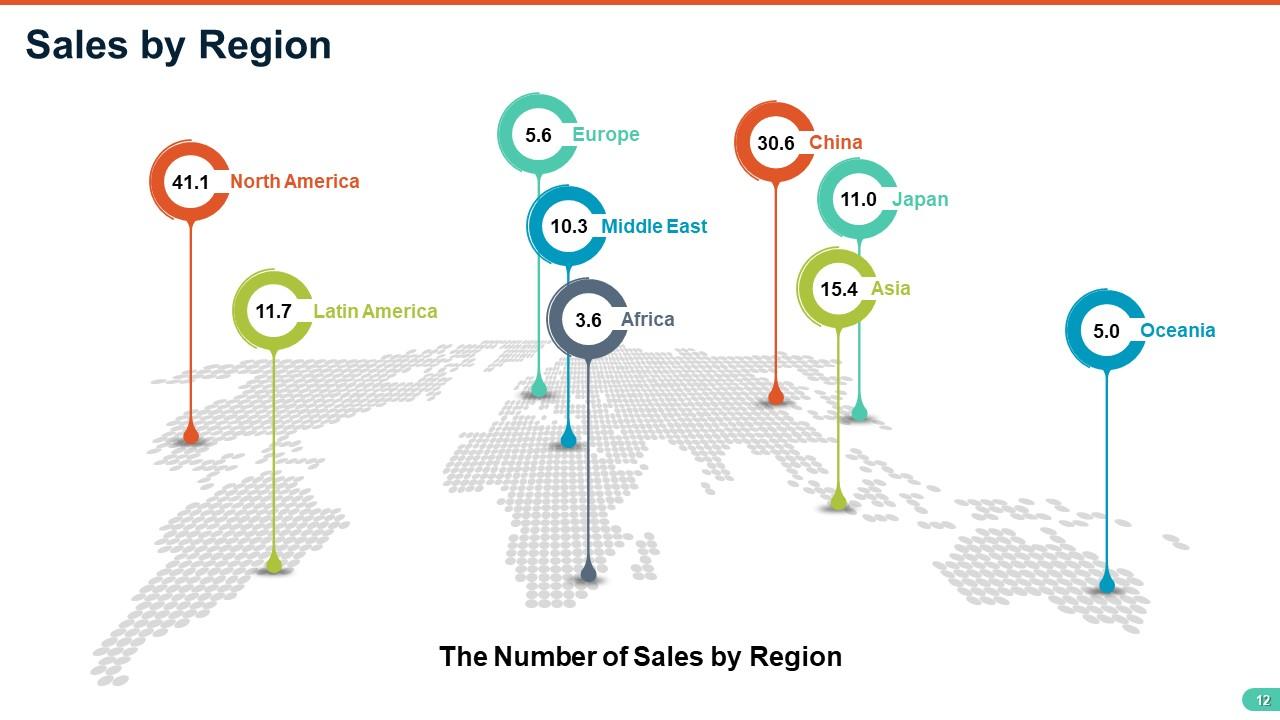
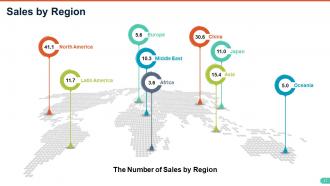
Slide 12: This slide showcases Sales by Region to shown on world map image.
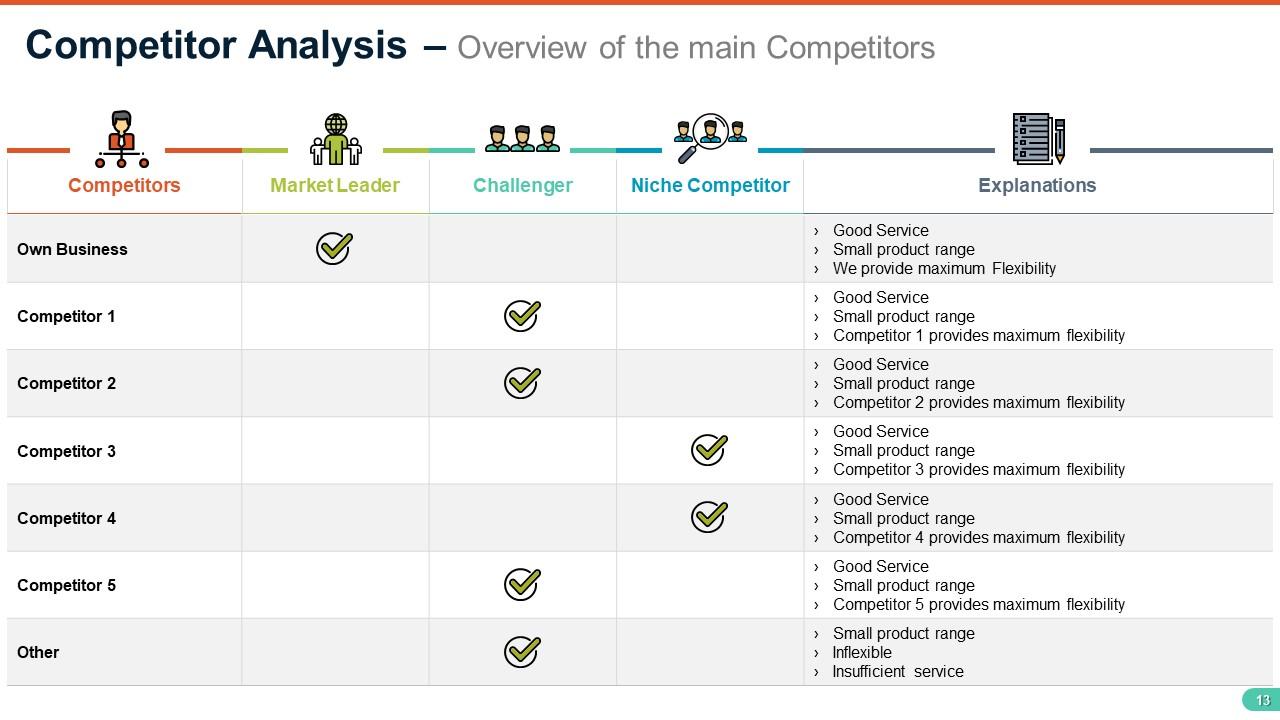
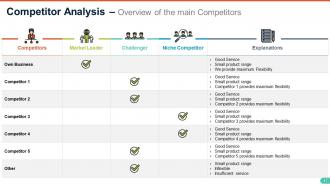
Slide 13: This slide shows Competitor Analysis – Overview of the main Competitors in tabular form showing- Competitors, Market Leader, Challenger, Explanations, Niche Competitor.
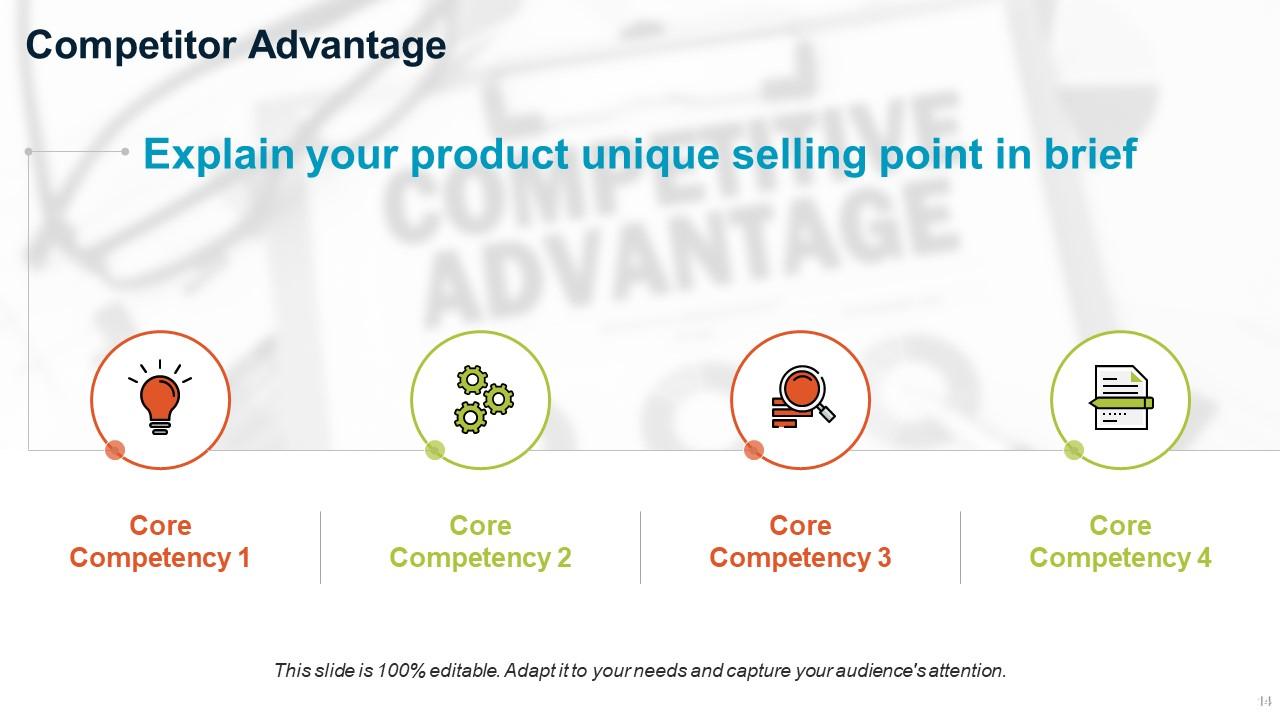
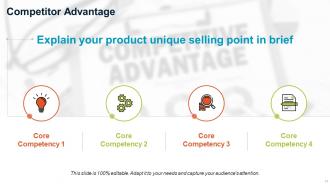
Slide 14: This slide presents Competitor Advantage to be shown.
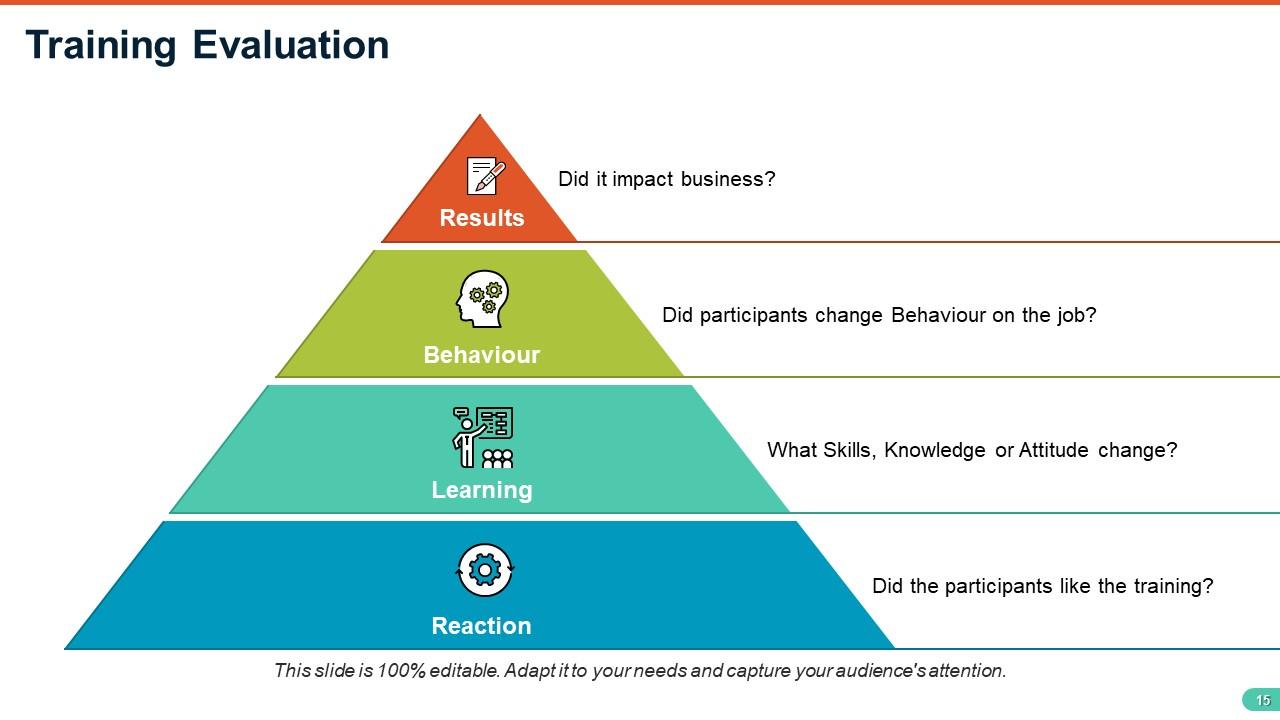
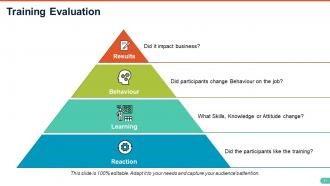
Slide 15: This slide shows Training Evaluation in pyramid form displaying- Results, Behaviour, Learning, Reaction.
Slide 16: This is a Coffee Break image slide. You may change the slide content as per need.
Slide 17: This is Product Training Icons Slide. Use the icons as per requirement.
Slide 18: This is Product Training Icons Slide. Use the icons as per need.
Slide 19: This slide is titled Charts and Graphs to move forward. You may change the slide content as per need.
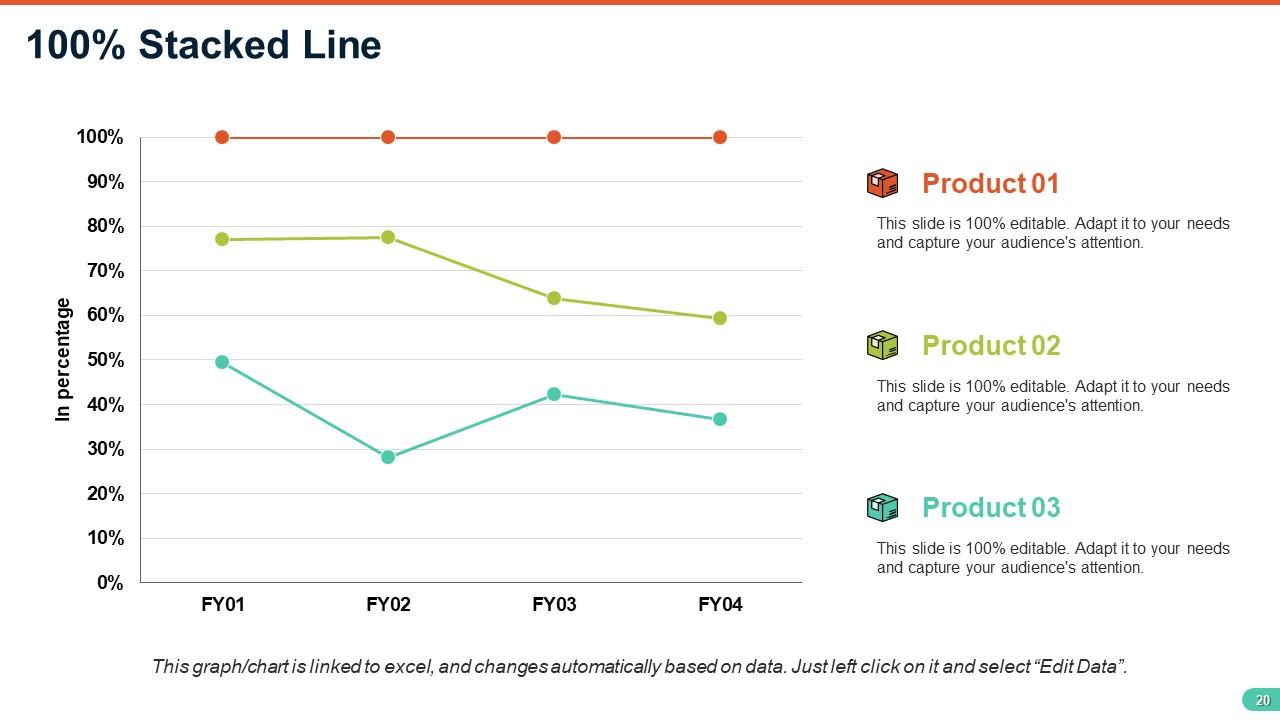
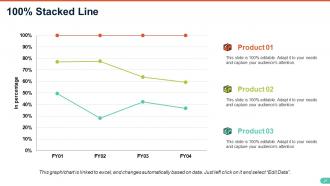
Slide 20: This slide shows a Stacked Line Chart for two product/entity comparison, information, specifications etc.
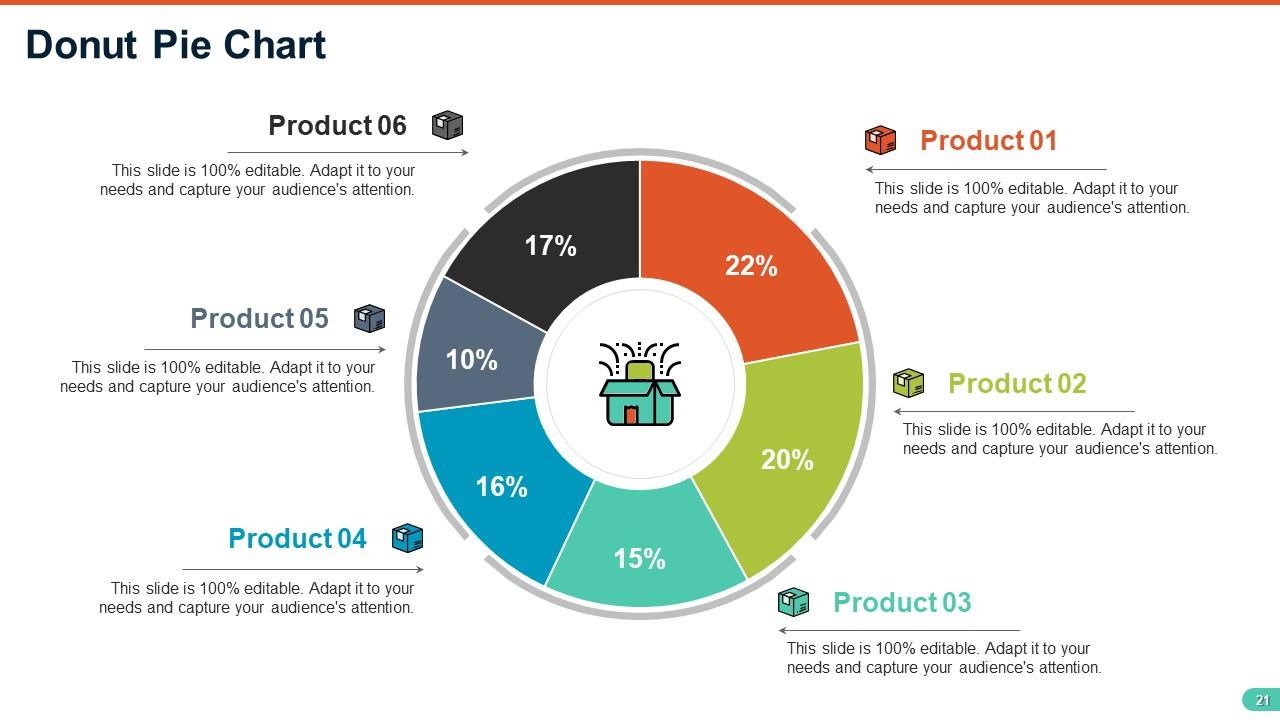
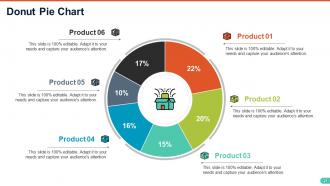
Slide 21: This is a Donut Pie chart slide to show product/entity comparison, specifications etc.
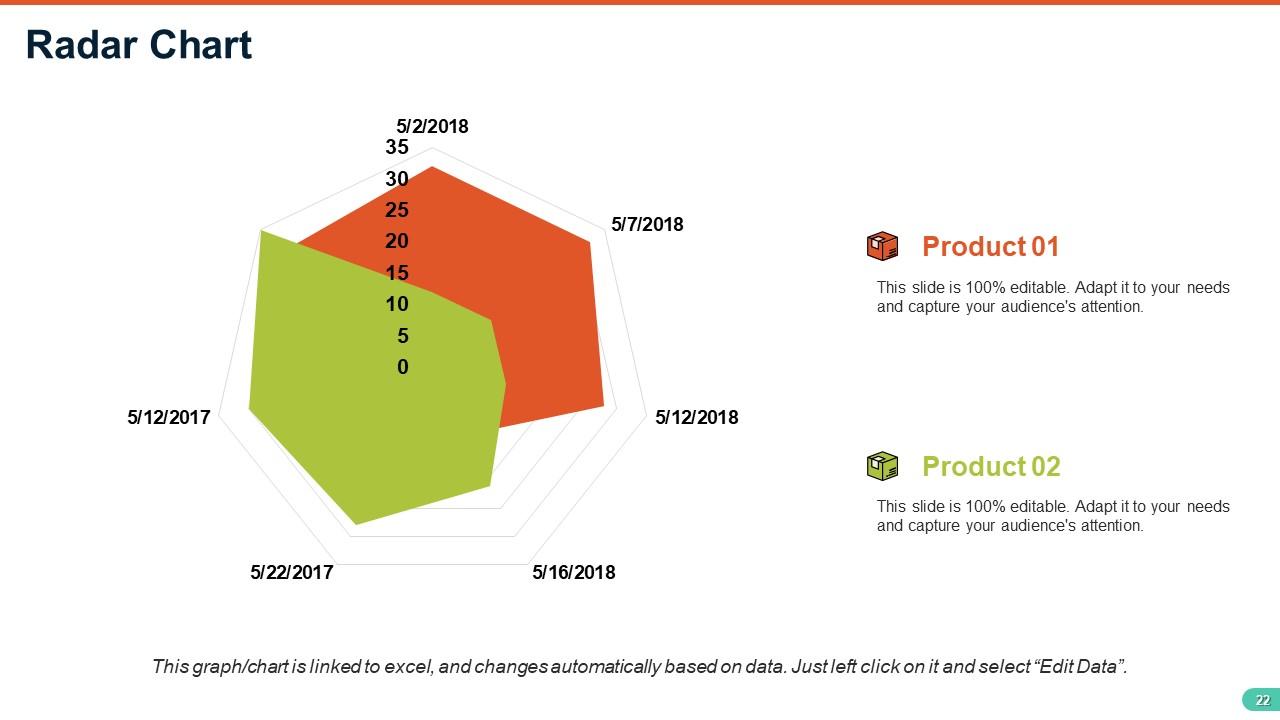
Slide 22: This slide shows a Radar Chart for two product/entity comparison, information, specifications etc.
Slide 23: This slide is titled Additional Slides to move forward. You may change the slide content as per need.
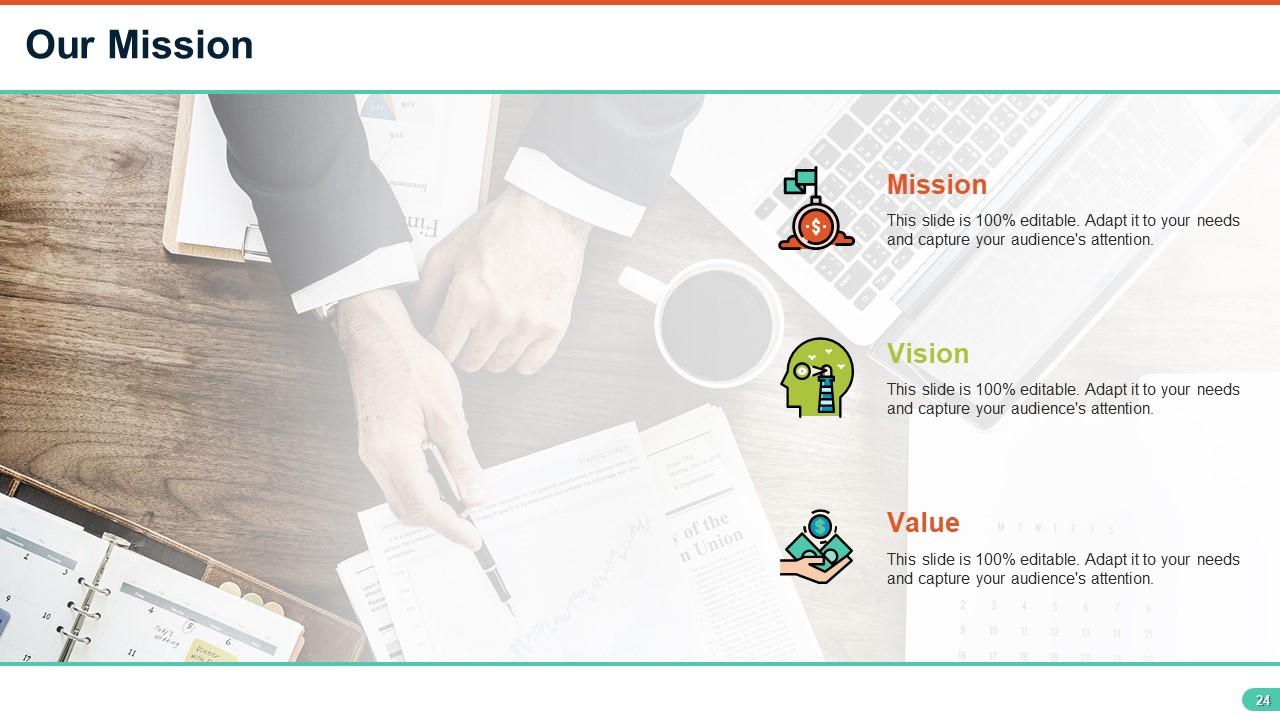
Slide 24: This is Our Mission slide. State mission, vision and value, its nuances/ details here.
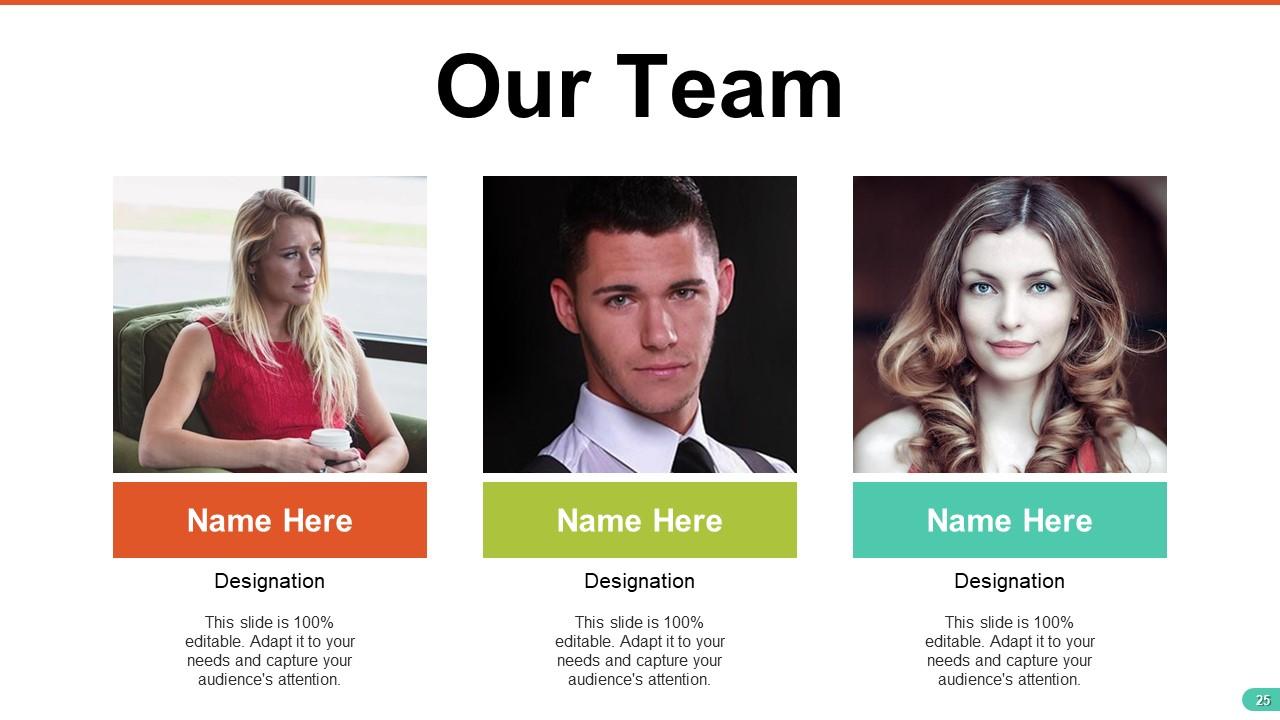
Slide 25: This is Our team slide with name, designation and text boxes to state information.
Slide 26: This is an About us slide. State team/company specifications here.
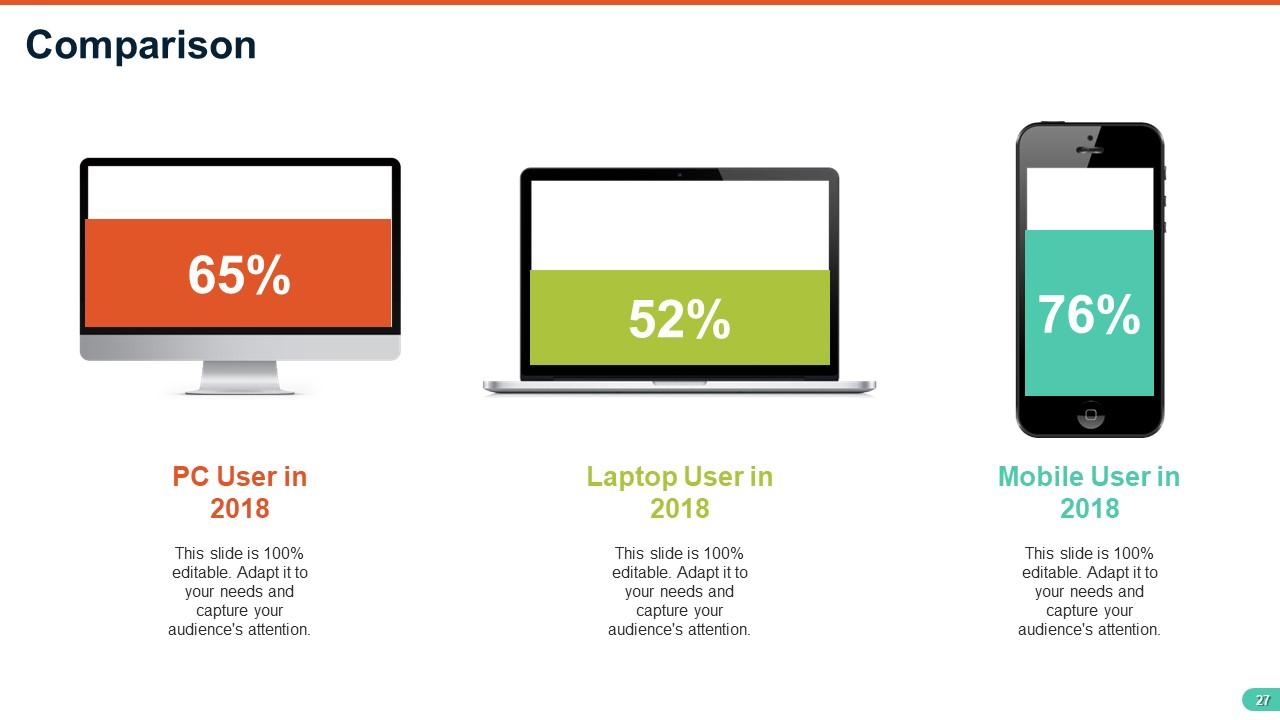
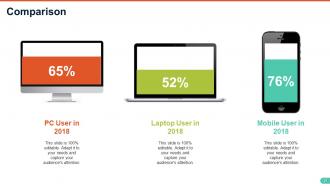
Slide 27: This is a Comparison slide to show comparison, information, specifications etc.
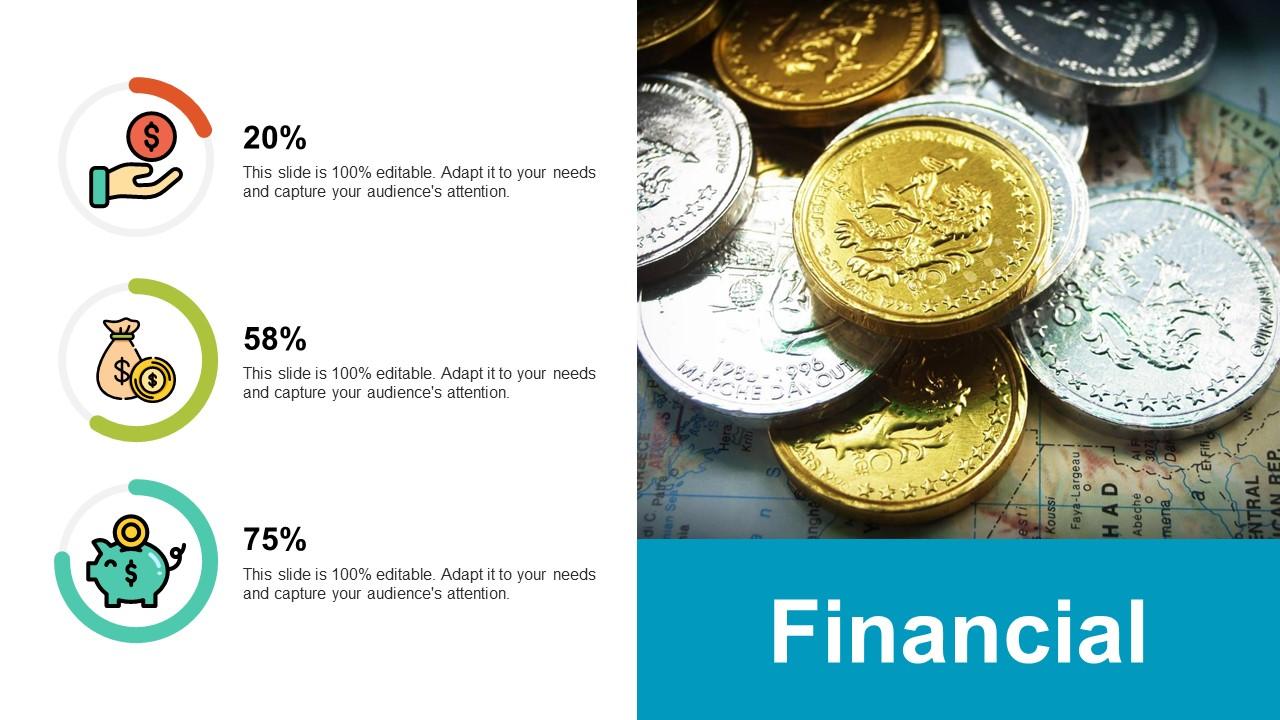
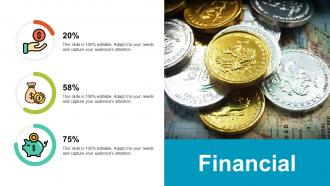
Slide 28: This is a Financial Score slide. State financial aspects etc. here.
Slide 29: This is a Quotes slide. Convey message, beliefs etc. here. You may also change the entire content as desired.
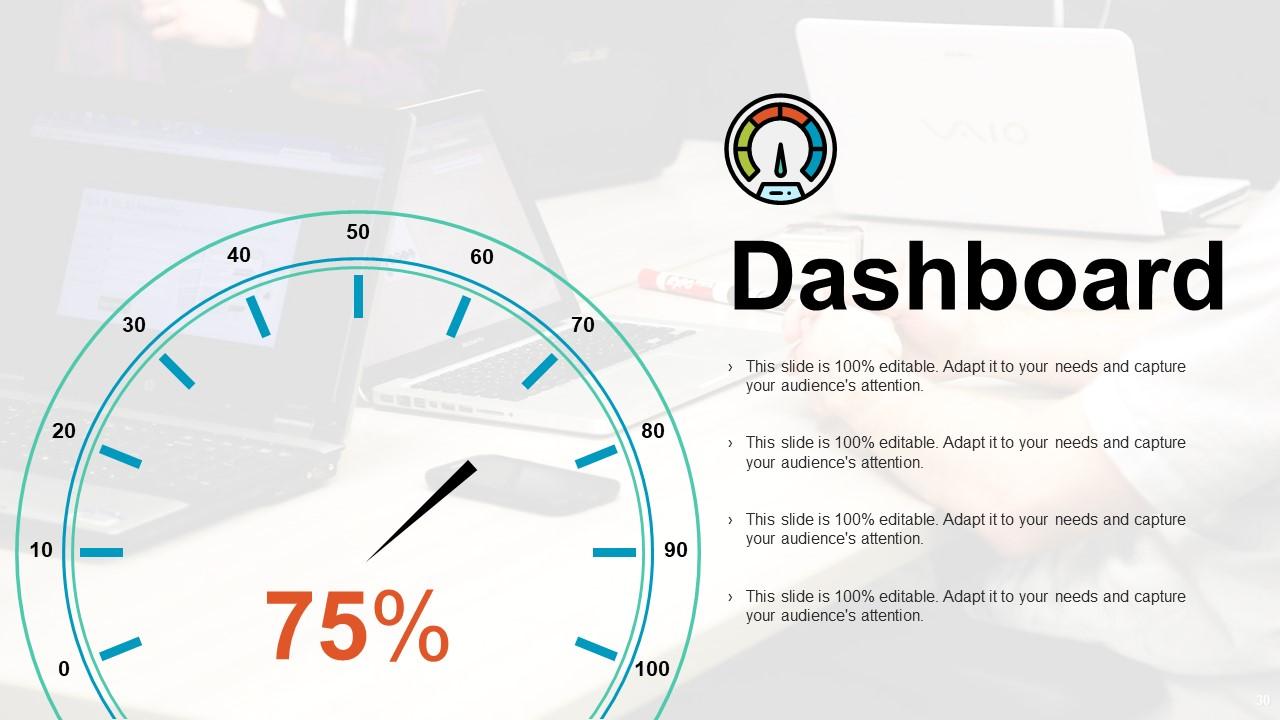
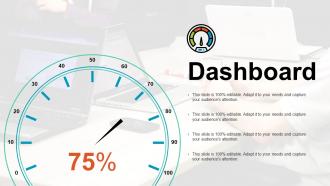
Slide 30: This is a Dashboard slide for showing information, specifications etc.
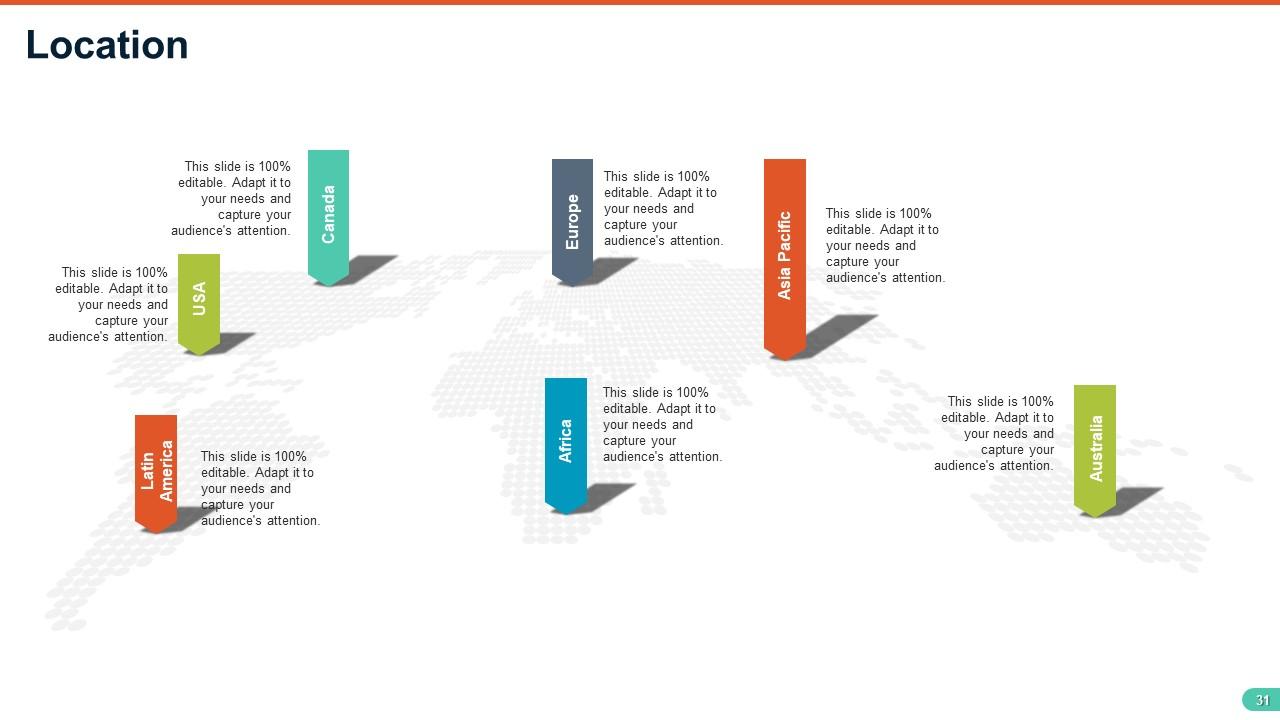
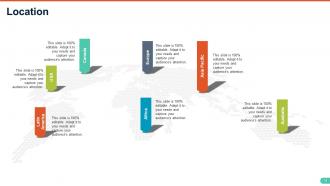
Slide 31: This is a Location slide of world map top show global marketing, growth, presence etc.
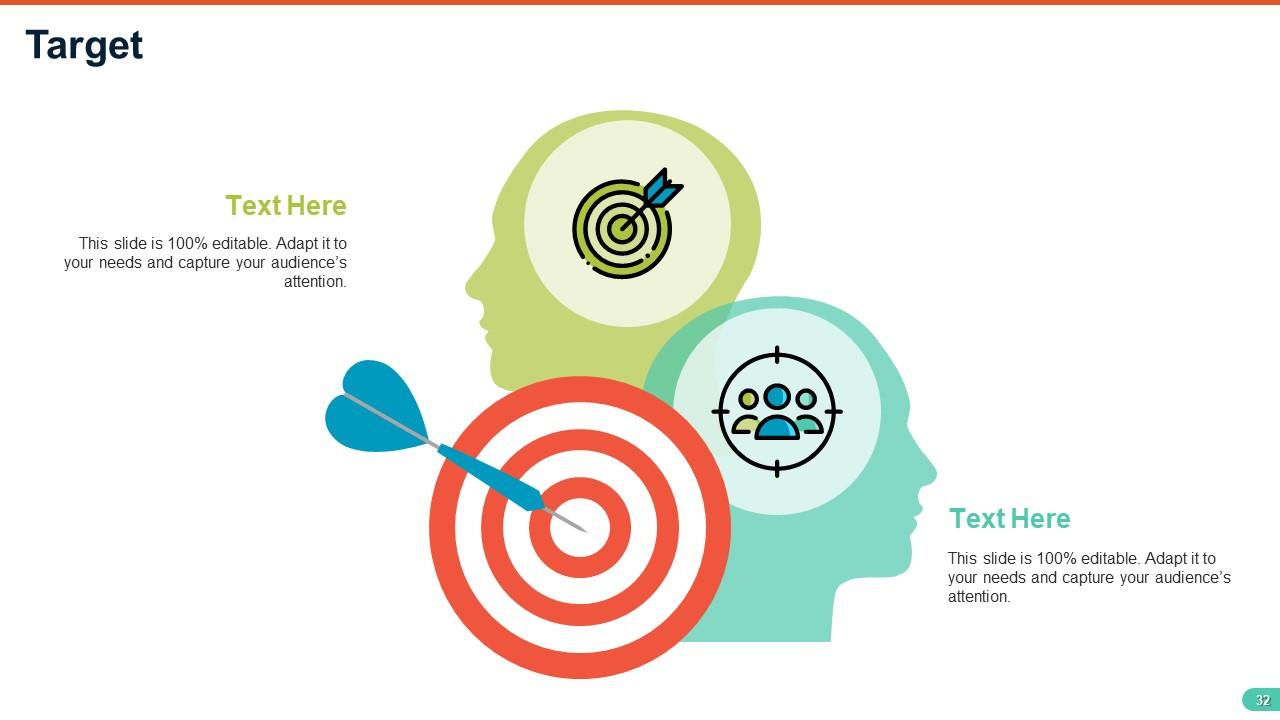
Slide 32: This is a Target image slide. State your targets, goals etc. here.
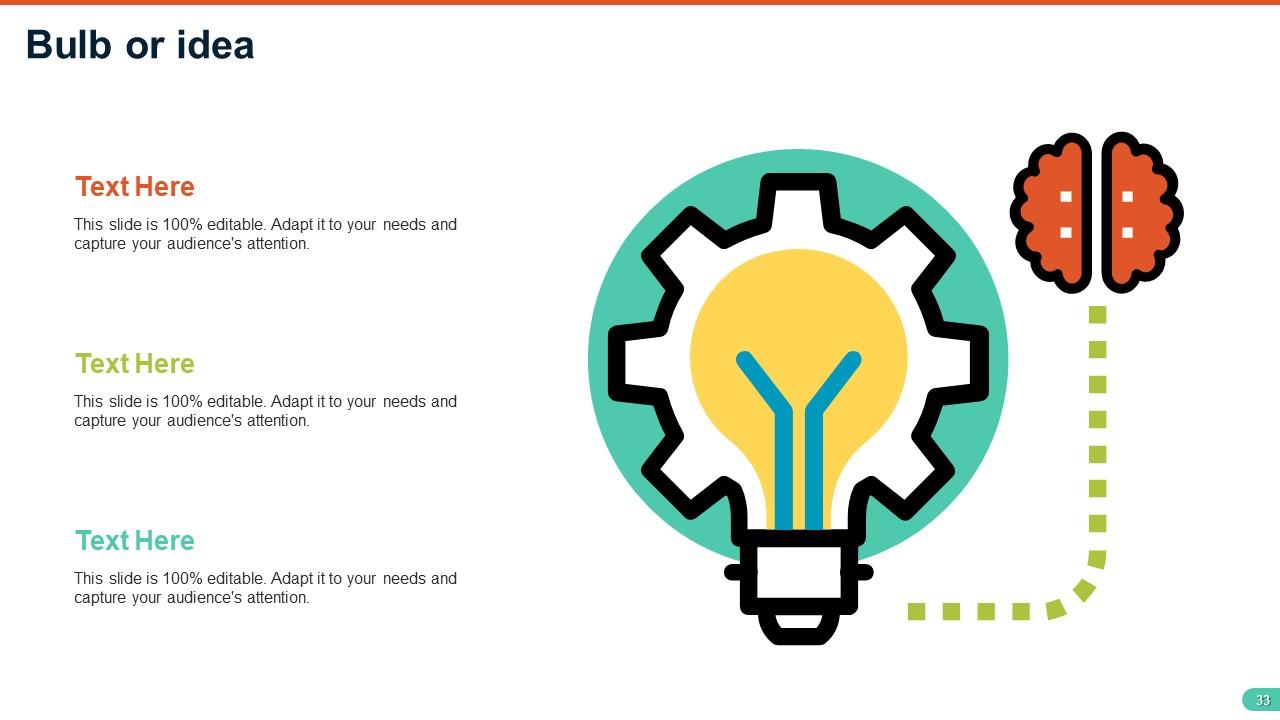
Slide 33: This is a Bulb or Idea slide to state a new idea or highlight innovative specifications/information etc.
Slide 34: This is a Magnifying Glass image slide to show information, specifications etc.
Slide 35: This is a Thank You slide with Email Address, Address# street number, city, state, Contact Numbers.
Product Training Powerpoint Presentation Slides with all 35 slides:
Create an ethereal atmosphere with our Product Training Powerpoint Presentation Slides. Give folks a heavenly experience.
-
Wonderful templates design to use in business meetings.
-
Graphics are very appealing to eyes.
