


New product development powerpoint presentation slides





Try Before you Buy Download Free Sample Product
 Impress Your
 Audience
 100%
100% Editable
 Save Hours
 of Time


With our content-ready new product development PowerPoint presentation slides, you can easily organize your product design and development project. This will save money, time and business resources in planning from scratch. You can take advantage of this product development lifecycle presentation to understand various topics such as product idea screening, analysis and lifecycle, market analysis, tools & techniques, development plans, cost analysis, product feasibility, branding & repositioning. Apart from this, pricing, distribution channels, advertising, market mapping, budgeting are also covered here. Every product goes through a number of stages before its final launch into the market. Here we have comprehensively covered each and every aspect of product designing. These NPD project PPT templates can also be used to create presentation on agile development, product development lifecycle, portfolio launch, stage gate process, product design stages, entry strategies, development and launch. Download our readymade new product development PowerPoint presentation slides to easily sail through the tough task of planning everything on your own. Impart a bit of joie-de-vivre with our New Product Development Powerpoint Presentation Slides. Get a chance to to feel genuinely carefree.
People who downloaded this PowerPoint presentation also viewed the following :
Content of this Powerpoint Presentation
Slide 1: This slide introduces New Product Development. State Your Company Name and get started.
Slide 2: This is an Agenda slide. Present your agendas here.
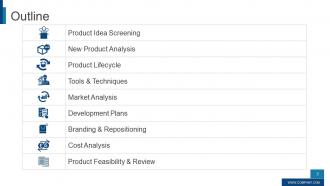
Slide 3: This slide presents an Outline for New Product Development.
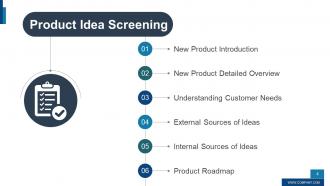
Slide 4: This slide presents Product Idea Screening with- New Product Introduction, New Product Detailed Overview, External Sources of Ideas, Internal Sources of Ideas, Understanding Customer Needs, Product Roadmap.
Slide 5: This slide shows New Product Introduction with- Technology used, Benefits, Product Details.
Slide 6: This slide presents New Product Detailed Overview. This step is crucial to ensure that unsuitable ideas are rejected as soon as possible as Ideas need to be considered objectively.
Slide 7: This slide presents Understanding Customer Needs.
Slide 8: This slide showcases External Source of New Product Ideas such as- Consumer Activity Analysis, Market Gap Analysis Competitors, Long Range Studies, Learning From, Market Research.
Slide 9: This slide shows Internal Sources of New Product Ideas with the following subheadings- Sales Force, Innovation Group Meetings, Stockholders, Employee Suggestions, Research and Engineering: Product Testing, Product Enhancement, Brainstorming, Management: Strategic Planning, Marketing Manager.
Slide 10: This slide presents a Product Roadmap showing- Product Launch, Bootstrap Upgrade, Data Logging Module, Chrome Support, Public API.
Slide 11: This slide also presents a Product Roadmap showing- Product Launch, Bootstrap Upgrade, Data Logging Module, Chrome Support, Public API.
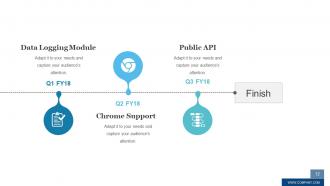
Slide 12: This slide presents a Product Roadmap showing- Finish, Data Logging Module, Chrome Support, Public API.
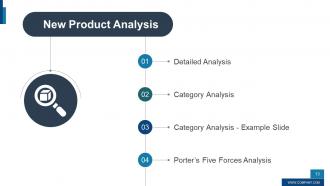
Slide 13: This slide shows New Product Analysis categorized as- Detailed Analysis, Category Analysis, Porter’s Five Forces Analysis, Category Analysis - Example Slide.
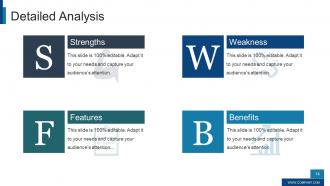
Slide 14: This slide showcases a Detailed Analysis displaying- Strengths, Weakness, Features, Benefits.
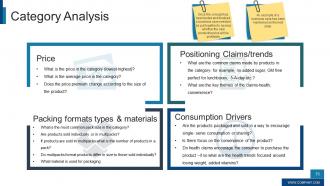
Slide 15: This slide shows Category Analysis with the following subheadings- Packing formats types & materials: What is the most common pack size in the category? Are products sold individually or in multipacks? If products are sold in multipacks what is the number of products in a pack? Do multipacks format products differ in size to those sold individually? What material is used for packaging. Consumption Drivers: Are the products packaged and sold in a way to encourage single- serve consumption or sharing? Is there focus on the convenience of the product? Do health claims encourage the consumer to purchase the product –if so what are the health trends focused around losing weight, added vitamins? Price: What is the price in the category (lowest-highest)? What is the average price in the category? Does the price premium change according to the size of the product? Positioning Claims/trends: What are the common claims made by products in the category- for example, no added sugar, GM free perfect for lunchboxes, 5-A-day etc.? What are the key themes of the claims-health, convenience? Once the concept has been tested and finalized, a business case needs to be put together to assess whether the new product/service will be profitable.
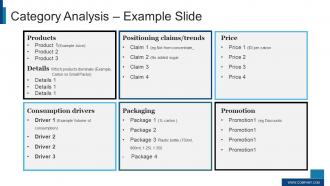
Slide 16: This slide shows Category Analysis- Example Slide with the following subheadings- Products, Details, Positioning claims/trends, Claim, Price, Consumption drivers, Packaging, Promotion.
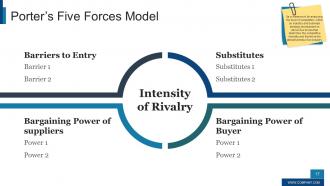
Slide 17: This slide presents Porter’s Five Forces Model displaying- Bargaining Power of suppliers, Bargaining Power of Buyer, Barriers to Entry, Substitutes as Intensity of Rivalry.
Slide 18: This slide showcases Product Life Cycle displaying- Repositioning a Product, Introduction Stage, Maturity Stage, Decline Stage, Growth Stage.
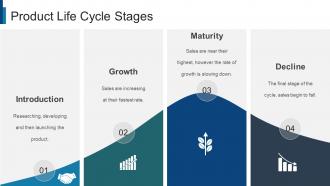
Slide 19: This slide presents Product Life Cycle Stages crest grpah showing- Introduction, Growth, Maturity, Decline.
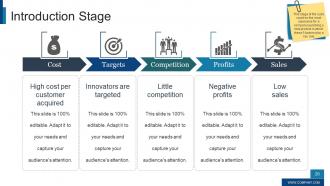
Slide 20: This slide shows the Introduction Stage with the following subheadings- Cost: High cost per customer acquired Targets: Innovators are targeted Competition: Little competition Profits: Negative profits Sales: Low sales This stage of the cycle could be the most expensive for a company launching a new product in which these 5 factors play a key role.
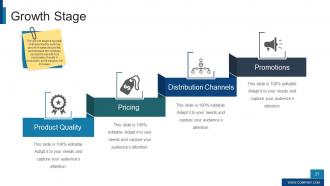
Slide 21: This slide shows the Growth Stage consisting of- Pricing, Distribution Channels, Product Quality, Promotions. The growth stage is typically characterized by a strong growth in sales and profits, and because the company can start to benefit from economies of scale in production, profit margins will increase.
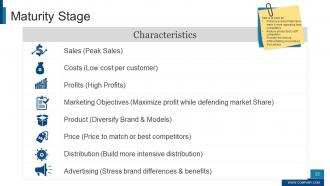
Slide 22: This slide shows Maturity Stage with- Enhance product features to make it more appealing than competitors, Reduce prices due to stiff competition, Promote the factors differentiating your product from others.
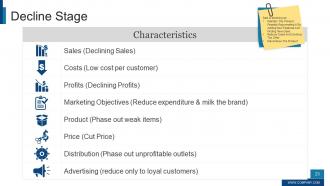
Slide 23: This slide presents the Decline Stage comprising of- Maintain The Product, Possibly Rejuvenating It By Adding New Features And Finding New Uses, Reduce Costs And Continue The Offer, Discontinue The Product.
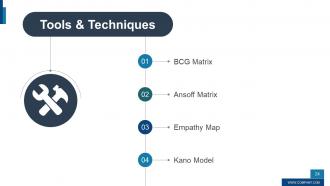
Slide 24: This slide presents the Tools and Techniques- Listed ones are- BCG Matrix, Ansoff Matrix, Kano Model, Empathy Map.
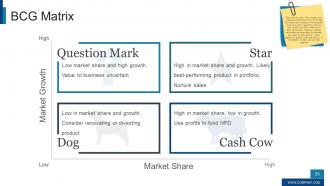
Slide 25: This slide shows a BCG Matrix in terms of- Market Share and Market Growth.
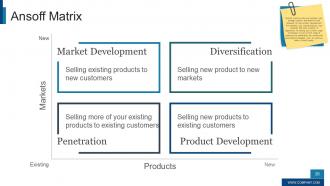
Slide 26: This slide shows an Ansoff Matrix showing- Market Development: Selling existing products to new customers Penetration: Selling more of your existing products to existing customers Diversification: Selling new product to new markets Product Development: Selling new products to existing customers
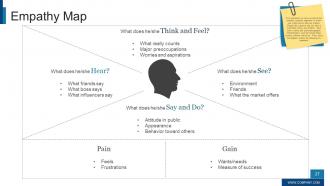
Slide 27: This slide shows an Empathy Map.
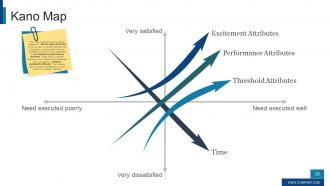
Slide 28: This slide shows a Kano Map.
Slide 29: This slide presents Market Analysis with the following points- Market Segmentation, Product Market Mapping, Market Attractiveness, Competitive Strategies.
Slide 30: This slide showcases Market Segmentation divided as- Geographic: Region, Country, Population, Climate. Demographic: Age, Gender, Nationality, Ethnicity, Occupation, Income, Family Size. Psychographic: Lifestyle, Personality, Values, Interest. Behavioral: Brand Loyalty, Benefits Sought, User Status, Usage Rates, Occasion, Readiness to buy.
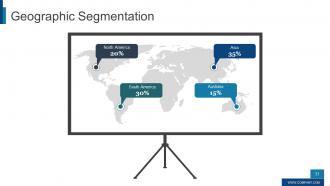
Slide 31: This slide showcases Geographic Segmentation on a world map image.
Slide 32: This slide showcases Geographic Segmentation on a US map image.
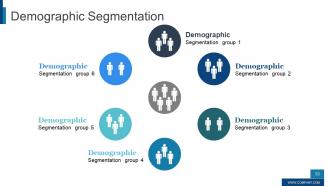
Slide 33: This slide showcases Demographic Segmentation with different segements to fill information for.
Slide 34: This slide presents Psychographic Segmentation showing- Opinions, Attitudes, Activities, Behaviors, Values, Interests.
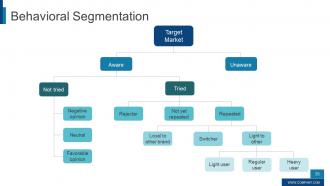
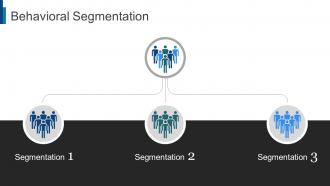
Slide 35: This slide showcases Behavioral Segmentation in hierarchy form consisting of- Rejecter, Not yet repeated, Repeated, Target Market, Aware, Unaware, Light to other, Switcher, Loyal to other brand, Light user, Regular user, Heavy user, Negative opinion, Neutral, Favorable opinion, Not tried, Tried.
Slide 36: This slide displays Behavioral Segmentation with different segements to be shown.
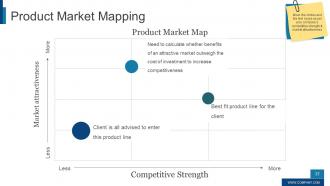
Slide 37: This slide presents Product Market Mapping in terms of Market Attractiveness and Competitive Strength.
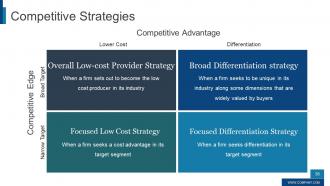
Slide 38: This slide displays Competitive Strategies matrix showing- Broad Differentiation strategy, Focused Low Cost Strategy, Overall Low-cost Provider Strategy, Focused Differentiation Strategy in terms of Competitive Advantage and Competitive Edge.
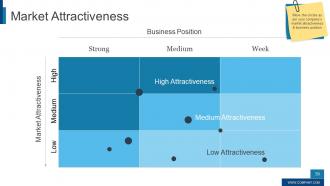
Slide 39: This is a Market Attractiveness risk matrix showing- Business Position, Market Attractiveness, High Attractiveness, Medium Attractiveness, Low Attractiveness.
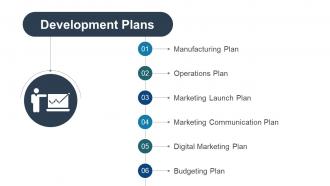
Slide 40: This slide shows Development Plans consisting of- Manufacturing Plan, Operations Plan, Marketing Communication Plan, Digital Marketing Plan, Marketing Launch Plan, Budgeting Plan.
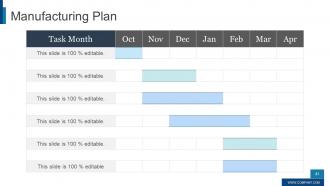
Slide 41: This slide shows Manufacturing Plan in gantt chart form.
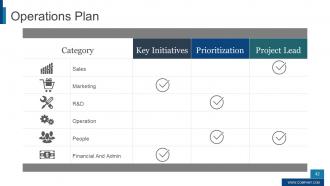
Slide 42: This slide presents Operation Plan table.
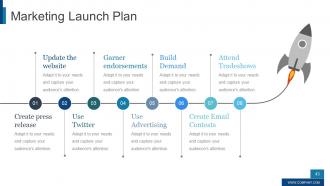
Slide 43: This slide presents Marketing Launch Plan showcasing- Update the website, Create press release, Garner endorsements, Use Twitter, Build Demand, Use Advertising, Attend Tradeshows, Create Email Contests.
Slide 44: This slide presents a Marketing Communication Plan consisting of- Direct Marketing, Personal Selling, Sales Promotion, Advertising, Public Relations.
Slide 45: This slide showcases a Digital Marketing Plan.
Slide 46: This slide showcases a Budgeting Template.
Slide 47: This slide showcases Branding & Repositioning with- Repositioning a Product, Repositioning Strategy, Maturity Stage, Decline Stage, Growth Stage.
Slide 48: This slide shows Repositioning A Product maze with- To new Consumers: Presenting product with a different twist to entice new customers, and minimize alienating current users. In some instances, leads to a new category Among Existing Customers: Involves promoting new & alternative product uses. Revitalizes product by building a new character. In same instances, leads to a new sub category.
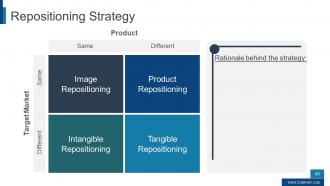
Slide 49: This slide shows Repositioning Strategy matrix with- Image Repositioning, Intangible Repositioning, Tangible Repositioning, Product Repositioning.
Slide 50: This slide shows Building Brand Preference in tabular form.
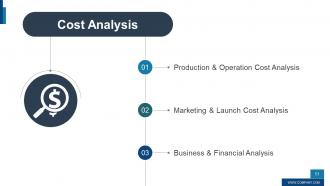
Slide 51: This slide shows Cost Analysis consisting of- Production & Operation Cost Analysis, Marketing & Launch Cost Analysis, Business & Financial Analysis.
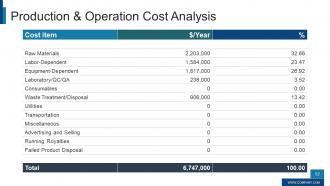
Slide 52: This slide showcases Production & Operation Cost Analysis in tabular form.
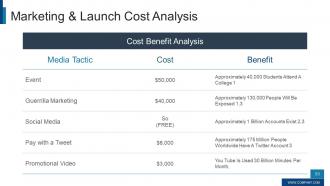
Slide 53: This slide shows Marketing & Launch Cost Analysis in tabular form.
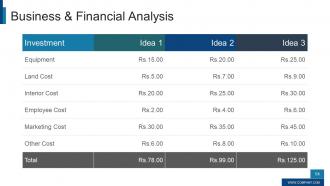
Slide 54: This slide shows Business & Financial Analysis in tabular form.
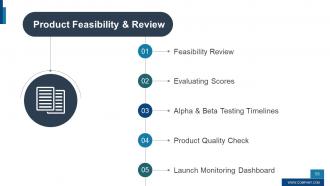
Slide 55: This slide showcases Product Feasibility & Review with- Feasibility Review, Evaluating Scores, Product Quality Check, Launch Monitoring Dashboard, Alpha & Beta Testing Timelines.
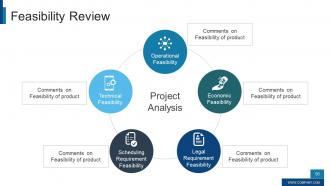
Slide 56: This slide showcases Feasibility Review with- Comments on Feasibility of product, Scheduling Requirement Feasibility, Legal Requirement Feasibility, Economic Feasibility, Operational Feasibility, Technical Feasibility as Project Analysis.
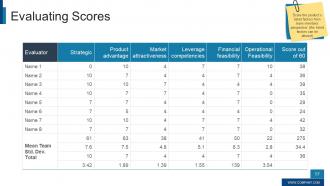
Slide 57: This slide presents Evaluating Scores. Score the product’s listed factors from team members perspective (the listed factors can be altered).
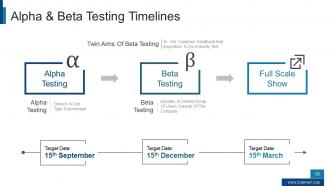
Slide 58: This slide shows Alpha & Beta Testing Timelines showing- Alpha Testing, Beta Testing, Full Scale Show.
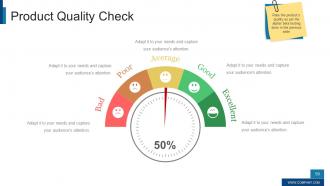
Slide 59: This slide shows Product Quality Check in metric scale with- Bad, Poor, Average, Good, Excellent as parameters.
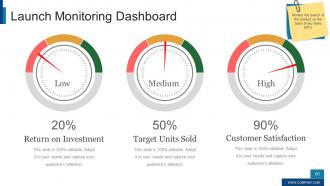
Slide 60: This slide presents a Launch Monitoring Dashboard showing- Customer Satisfaction, Return on Investment, Target Units Sold, Monitor the launch of the product on the basis of any three KPI’s in terms of Medium, High, Low.
Slide 61: This slide presents Icons for NDP. Use them as per need.
Slide 62: This slide is titled Additional Slides to move forward. You can change the slide content as per need.
Slide 63: This is Vision, Mission and Values slide. State them here.
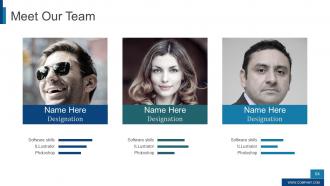
Slide 64: This is Meet Our Team slide with names, designation and text boxes.
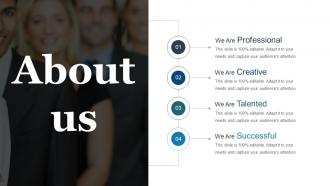
Slide 65: This is an About Us slide. State company/team specifications here.
Slide 66: This is Our Main Goal slide. State your goals here.
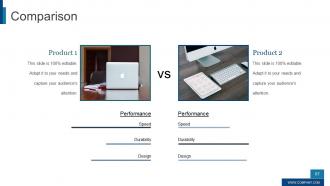
Slide 67: This slide showcases Comparison of two entities in tabular form.
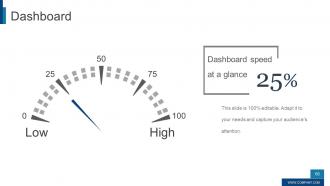
Slide 68: This slide displays a Dashboard. State performance aspects here.
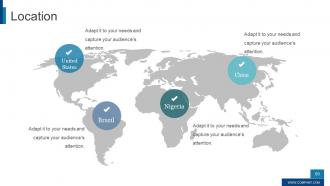
Slide 69: This is a Location slide of world map image to show global growth, presence etc.
Slide 70: This is a Timeline slide to show company growth, milestones etc.
Slide 71: This is a Puzzle image slide to show information, specifications etc.
Slide 72: This is a Target slide. State targets, goals etc. here.
Slide 73: This is a Venn diagram image slide to present information, specifications etc.
Slide 74: This is a Mind map image slide to show information, specifications etc.
Slide 75: This slide is titled Our Charts to move forward. You can alter the slide content as per need.
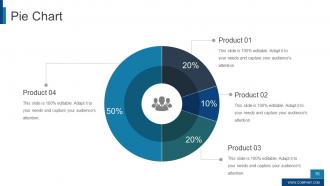
Slide 76: This is a Pie chart slide. State specifications, comparison of products/entities here.
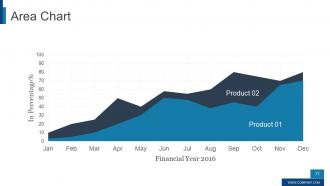
Slide 77: This is an Area chart slide. State specifications, comparison of products/entities here.
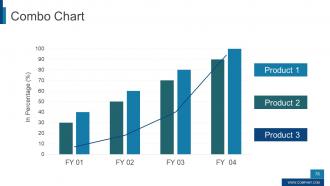
Slide 78: This is a Combo chart slide. State specifications, comparison of products/entities here.
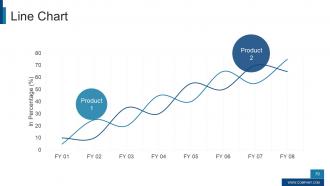
Slide 79: This is a Line chart slide. State specifications, comparison of products/entities here.
Slide 80: This is a Thank You slide with Address# street number, city, state, Contact Number, Email Address.
New product development powerpoint presentation slides with all 80 slides:
Encourage fairness with our New Product Development Powerpoint Presentation Slides. Be completely frank in your approach.
-

New Product Development
-
Agenda Slide
-
Outline
-
Product Idea Screening
-
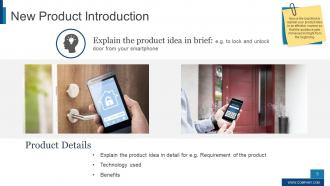
New Product Introduction
-
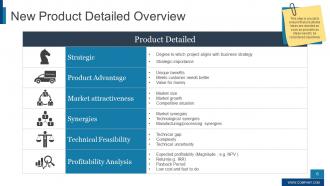
New Product Detailed Overview
-
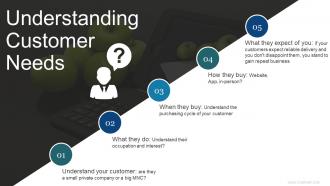
Understanding Customer Needs
-

External Source of New Product Ideas
-
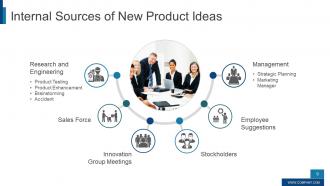
Internal Sources of New Product Ideas
-

Product Roadmap
-

Product Roadmap
-
New Product Development
-
New Product Analysis
-
Detailed Analysis
-
Category Analysis
-
Category Analysis Example Slide
-
Porter s Five Forces Model
-

Product Life Cycle
-
Product Life Cycle Stages
-
Introduction Stage
-
Growth Stage
-
Maturity Stage Characteristics
-
Decline Stage Characteristics
-
Tools Techniques
-
BCG Matrix
-
Ansoff Matrix
-
Empathy Map
-
Kano Map
-
Market Analysis
-

Market Segmentation
-
Geographic Segmentation
-

Geographic Segmentation
-
Demographic Segmentation
-

Psychographic Segmentation
-
Behavioral Segmentation
-
Behavioral Segmentation
-
Product Market Mapping
-
Competitive Strategies
-
Market Attractiveness
-
Development Plans
-
Manufacturing Plan
-
Operations Plan
-
Marketing Launch Plan
-
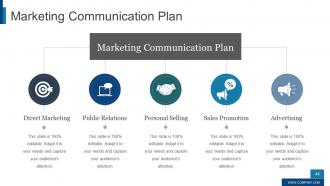
Marketing Communication Plan
-
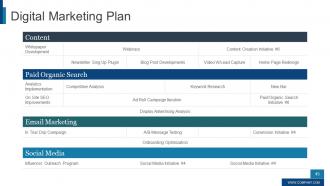
Digital Marketing Plan
-
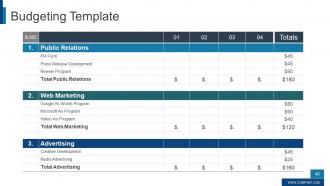
Budgeting Template
-
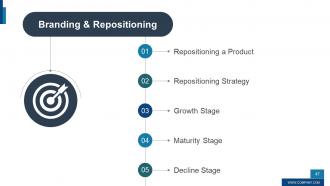
Branding Repositioning
-

Repositioning A Product
-
Repositioning Strategy
-

Building Brand Preference
-
Cost Analysis
-
Production Operation Cost Analysis
-
Marketing Launch Cost Analysis
-
Business Financial Analysis
-
Product Feasibility Review
-
Feasibility Review
-
Evaluating Scores
-
Alpha Beta Testing Timelines
-
Product Quality Check
-
Launch Monitoring Dashboard
-
Icons for NDP
-
Additional Slides
-
New Product Development
-
Meet Our Team
-
About us
-
Our Main GOAL
-
Comparison
-
Dashboard
-
Location
-
Timeline
-

Puzzle
-
Target
-
New Product Development
-
Mind Map
-

Our Charts
-
Pie Chart
-
Area Chart
-
Combo Chart
-
Line Chart
-
Thank You Card
FAQs for New product development
So you're looking at idea generation first, then concept development, feasibility analysis, prototyping, testing, and launch. Brainstorm and research what people actually need. Turn that into something real you can work with. Honestly, the feasibility check is where most people get a reality slap - can you even make this thing without going broke? Build prototypes next. Test with real users (gets chaotic but that's the fun part). Polish based on feedback and ship it. Oh, and it's totally not linear - you'll bounce between stages constantly as you figure stuff out. Set deadlines for each phase though, otherwise you'll tinker forever.
Honestly, market research stops you from building stuff nobody wants to buy. You'll figure out what people actually need and how much they're willing to spend. Plus you can find those sweet spots competitors totally missed - that's where the real money is. The data helps with everything from what features to build to how you price things. I mean, without it you're basically throwing darts blindfolded. Do the research first even though it feels tedious. Trust me, way better than having to completely change direction six months in when you realize you guessed wrong.
Look for patterns in what users are actually saying - that's where the gold is. Don't chase every random complaint though. I collect feedback through surveys, support tickets, whatever's easiest. Honestly? Teams that ignore this stuff and just build what they assume people want... yeah, that's a disaster waiting to happen. Your feedback basically becomes your product roadmap. It'll show you which bugs are genuinely annoying people vs. nice-to-haves. Start with one consistent piece of feedback and test a small fix first. Way better than overhauling everything at once.
So design thinking basically flips your whole product development approach - instead of starting with "what can we build?" you're asking "what do people actually need?" First step is really getting into your customers' heads through interviews and that empathy mapping stuff. Then you nail down the actual problem before anyone gets excited about solutions. Honestly, the prototyping part is my favorite because you can test stuff super fast without burning through your budget. Oh, and it forces all your teams to actually talk to each other instead of working in their weird little bubbles. Just try the five-stage thing on your next project - you'll be surprised how differently everyone starts thinking.
Man, timing and pricing will probably mess with you the most. I've watched so many launches crash because people skipped talking to actual customers first - like, why do teams always think they can skip that step? Supply chain stuff goes wrong, your own team can't agree on anything, and competitors love dropping bombs right when you're ready to go. Oh, and messaging is way harder than it looks. Build in extra time everywhere and have backup plans. Seriously though, start customer conversations super early. Way earlier than feels right. That feedback prevents most disasters.
Honestly, cross-functional teams are a game changer because they kill those annoying department silos. You get engineering, marketing, and design all talking to each other instead of that awful telephone game. Catches problems super early too - like when someone promises a feature that's literally impossible to build (we've all been there). Different perspectives from day one means way more creative solutions. Oh, and you're collaborating instead of just reviewing each other's mess afterward. Just grab your key people and start meeting weekly right from kickoff. Trust me on this one.
So you want both leading and lagging indicators - stuff like daily active users, feature adoption, engagement scores. Business metrics matter too: revenue growth, customer acquisition costs, churn rate. Honestly, customer satisfaction scores are boring but you can't ignore them. Here's the thing though - pick maybe 3-5 key metrics tops. Any more and you'll just get overwhelmed by all the numbers. Set up a dashboard everyone checks weekly so the whole team knows how things are going. I learned this the hard way when we tried tracking like 15 different things and nobody could agree on what actually mattered.
Honestly, tech can be a game changer for speeding up product development. AI helps with rapid prototyping, and cloud platforms let your team collaborate in real time - no more endless email chains. Analytics are clutch for validating ideas before you waste time building them. Project management tools keep everyone on the same page (though sometimes I think we have too many notifications lol). Digital testing catches problems early instead of finding them after you've already manufactured everything. My advice? Figure out where you're getting stuck most and tackle those bottlenecks first with the right tools.
Dude, you absolutely need to scope out your competition before building anything. I learned this the hard way on my last project - thought I had this brilliant idea until I found three companies already doing it better. Look at your top competitors and figure out what they're nailing and what they're missing. That's where you'll find your sweet spot for positioning and pricing. Honestly, it's like having a cheat sheet for what features actually matter to users. Don't try to reinvent everything from scratch. Build something better instead. Start by mapping out maybe 5 key players - the patterns you'll spot are pretty eye-opening.
Honestly, just spread your risk around. Do the boring market research first - I know it sucks but so many people skip it and regret it later. Break everything into smaller chunks so you can bail if things go sideways. Budget way more time and money than you think you'll need because stuff always takes forever. Cross-train people so you're not totally screwed when someone inevitably quits. Set checkpoints to review progress. If you're missing milestones, don't be afraid to cut your losses early. Better to kill a failing project than throw good money after bad.
Honestly, just bake it into your process from the start instead of scrambling later. Pick materials that don't suck for the planet - recycled stuff, renewables, things that'll actually break down. Build products that last and can be fixed (novel concept, I know). Oh, and figure out packaging early because nobody has time for those Russian nesting doll situations with plastic everywhere. You'll want to think through the whole journey - making it, shipping it, people using it, what happens when they're done with it. Set actual goals for this stuff and track them like you would your budget. Way easier than trying to green-wash everything after the fact.
Get real users who actually match your audience - learned this the hard way when I just grabbed coworkers lol. Figure out what you want to learn first. Give them realistic tasks instead of just "what do you think?" Let them explore naturally but keep things somewhat structured. Write down everything, especially when they hit problems or find weird workarounds. Here's the thing though - test super early with rough prototypes. Paper sketches, whatever. You'll catch massive issues before you waste months building the wrong thing. Trust me on this one.
Honestly, get your branding and marketing people involved from the very beginning - like, day one of product development. Don't just slap it on at the end. Your brand team should help shape what you're actually building so it matches what you've promised customers. Marketing can pull in customer insights that'll inform your features. I've watched so many solid products completely bomb because nobody talked to each other during development. Set up regular check-ins between product, brand, and marketing teams. Maybe I'm biased but this stuff matters way more than people think. Start with concept reviews and keep everyone in the loop on big decisions.
Dude, storytelling is honestly your secret weapon for product management. It transforms boring specs into narratives people actually give a shit about. Like, show stakeholders how your feature makes someone's Tuesday less terrible - way more compelling than listing requirements. I've watched solid products completely tank because nobody could explain them clearly. Stories help you communicate the "why" behind decisions and get your team fired up about the mission. Plus execs remember good stories way better than slide decks. Start building that narrative early and keep tweaking it. Trust me on this one.
So basically, instead of that old waterfall approach where you plan everything upfront, Agile breaks stuff into these short 2-week sprints. Way better honestly. You're constantly getting real feedback from users instead of guessing what they want for months. The whole cross-functional team thing means everyone works together - no more of that BS where requirements get tossed between departments like hot potatoes. You'll build working prototypes super fast, pivot when something's not clicking, and catch expensive mistakes early. Oh, and you actually ship features people care about. Start with figuring out your MVP and plan that first sprint.
-
It saves your time and decrease your efforts in half.
-
Top Quality presentations that are easily editable.