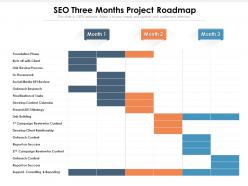
Seo three months project roadmap

Seo three months project roadmap
Slide 1 of 2
Favourites Favourites

Try Before you Buy Download Free Sample Product

Audience Impress Your
Audience
Editable 100%
Editable
Time Save Hours
of Time
The Biggest Sale is ending soon in
0
0
:
0
0
:
0
0
Presenting SEO Three Months Project Roadmap PowerPoint slide. This PPT presentation is Google Slides compatible hence it is easily accessible. This PPT theme is available in both 4,3 and 16,9 aspect ratios. This PowerPoint template is customizable so you can modify the font size, font type, color, and shapes as per your requirements. You can download and save this PowerPoint layout in different formats like PDF, PNG, and JPG.

People who downloaded this PowerPoint presentation also viewed the following :

FAQs for Seo three

Alright so first thing - do an SEO audit to see what's actually broken. Then keyword research to find the good stuff you're missing. After that, make a priority list based on what'll move the needle vs how much work it is. Content strategy and technical fixes come next. Then you actually implement everything (the fun part, right?). Don't forget the monitoring piece - you'll be tweaking constantly. Honestly, SEO is such a slow burn. Takes like 6+ months to see real results. I always tell people to think in quarterly chunks or you'll go crazy checking rankings every week.

Stop treating SEO like it's completely separate from everything else your marketing team does. Map your keywords directly to whatever campaigns they're running - new product launch, targeting millennials, whatever. I've watched so many teams waste tons of potential because they don't connect the dots. Your organic content should back up your paid ads and social posts, not compete with them. Honestly, just grab coffee with your marketing team and match your keyword strategy to their quarterly goals. Rankings are cool, but they're pointless if they don't actually help the business grow.

Look, keyword research is literally the backbone of SEO - it shows you what people are actually typing into Google. You can't just wing it and hope for the best, you know? Start with your main business terms, then branch out into those longer, more specific phrases your customers use. It helps you figure out which pages need work first and what content you're missing. Plus you'll see how tough the competition is for different terms. Honestly, skipping this step is like throwing darts blindfolded - you might hit something, but probably not what you're aiming for.

Honestly, competitive analysis is like having a roadmap instead of wandering around blind. Look at your top competitors and see what keywords they're crushing that you're not even targeting yet. Tools like SEMrush or Ahrefs will show you exactly where the gaps are. You can spot their weak content areas too - that's where you swoop in. Their backlink game strong? Note that. Probably avoid going head-to-head with the big players right away though, that's just common sense. Start with 3-5 competitors and you'll find some solid opportunities pretty quick.

So you'll want to watch your organic traffic and where you rank for keywords - those are the basics. Click-through rates matter too. Bounce rate and time on page are huge since Google's obsessed with user experience these days. But honestly? Conversion rate trumps everything else - doesn't matter how much traffic you get if nobody's actually buying or signing up or whatever. Oh, and track domain authority plus backlink growth for the long game. Just throw together a dashboard in Google Analytics and check monthly. Daily checking will drive you crazy.

Every quarter works as a good baseline for reviewing your SEO roadmap. But here's the thing - Google throws curveballs with algorithm updates, so sometimes you'll need to check in sooner. Monthly quick looks at your main metrics help catch problems before they get ugly. I always set calendar reminders for the quarterly deep dives because, let's be real, it's easy to forget when you're swamped. The goal isn't following some rigid plan - it's staying flexible enough to pivot when your current approach isn't working. Those quarterly reviews show you what's actually driving results vs. what's just busy work.

Start with Google Analytics and Search Console - they're free and show you what's actually happening with your site. Screaming Frog is perfect for finding broken links and duplicate content issues. For competitor research, grab either SEMrush or Ahrefs (I personally hate SEMrush's interface but some people love it). PageSpeed Insights will tell you if your site loads like molasses. GTmetrix gives you more detailed performance stuff. Honestly, stick with the free tools at first - you can find plenty of problems without dropping cash on subscriptions right away.

Don't treat SEO like something you tack on later - that's a huge mistake I see people make all the time. Figure out your target keywords right from the start during planning. Map those keywords to specific pages as you build out each section. Optimize your titles, headers, and meta descriptions while you're creating content, not after. Internal linking too. Trust me, doing this stuff as you go is so much less painful than going back through everything later. Oh, and don't forget about page speed and mobile stuff throughout the whole process. SEO works best when it's just part of how you naturally work.

Look, content marketing is basically what makes SEO actually work. You can't rank without stuff to rank, you know? Each blog post or video you put out targets new keywords your audience searches for. Good content naturally gets shared and linked to - which Google eats up. Honestly, the magic happens when you match your content to what people are actually looking for. Map out what content you're missing against the keywords you want to hit. I always tell people to think about search intent first, then create. It's way more effective than just throwing random posts out there and hoping something sticks.

Hey! So first thing - grab your Google Business Profile and get that dialed in. Then hunt down local keywords like "plumber in Denver" instead of generic stuff. Citations are boring as hell but you gotta do them - Yelp, industry directories, all that. Keep your business name, address, and phone number identical everywhere (super important). Reviews help tons, obviously. Create some content that's actually about your area too. Oh and track your local pack rankings separate from regular SEO - they're totally different animals. Most people mess up the citation consistency thing, so double-check that.

So mobile optimization - start with responsive design since Google crawls your mobile version first now. Speed is huge too, you want under 3 seconds or people bounce immediately. Compress your images and maybe try lazy loading if you haven't already. Make sure buttons aren't tiny - nobody wants to play finger gymnastics on their phone. Oh, and Core Web Vitals actually matter for rankings these days. Honestly though, just run Google's Mobile-Friendly Test first to see what you're dealing with. No point guessing when you can get the real data upfront.

Start with Screaming Frog, GTmetrix, and Search Console - they'll catch the obvious issues first. Focus on site speed, mobile stuff, crawl errors, and broken links since those actually matter for rankings. The tool reports are gonna be massive and kinda overwhelming, but don't freak out. I always prioritize by traffic impact vs how easy something is to fix. Hit the quick wins first, then deal with the nightmare stuff like site architecture or Core Web Vitals later. Honestly, just throw everything in a spreadsheet with priority levels and deadlines - sounds boring but it keeps you sane.

So backlinks are like votes of confidence for your site. When other websites link to you, Google sees that as "hey, this content must be decent." Quality matters way more than quantity though - one link from a respected industry site beats 50 from sketchy directories any day. Guest posting works great for building them, or just creating stuff people actually want to share. I'd start by checking what links you already have (there are free tools for this). Then reach out to sites in your space. Honestly, it's kind of a grind but totally worth it for rankings.

So social media won't directly bump up your SEO rankings, but it helps in other ways. Your content gets shared around, which means more people visit your site - and Google notices that traffic boost. Your social profiles also show up when people search for your brand name, so you're taking up more space on that results page. Honestly, I think most people overthink this stuff. Just create content that works well on social AND helps your SEO. The social part amplifies what you're already doing rather than doing the heavy lifting itself.

Honestly, AI search is kinda taking over - ChatGPT, Google's SGE thing, all that stuff is changing how people look for answers. Voice search is still big too, so you'll want conversational keywords and FAQ content. Video is absolutely dominating right now. Google eats it up. Your site speed and mobile experience still matter a ton for those Core Web Vitals - that hasn't changed. But here's the thing - forget keyword stuffing. People want content that actually solves their problems now. I'd go through your stuff and ask "would this genuinely help someone?" Experience-driven content is where it's at these days.

Ratings and Reviews

0% of 100
Review Form
Write a review
Most Relevant Reviews

No Reviews