


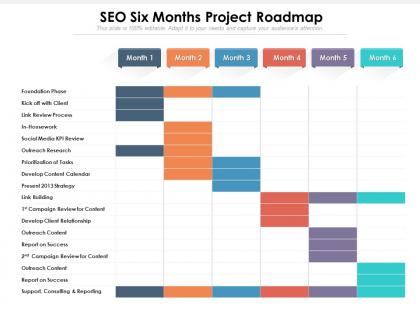
Seo six months project roadmap




Try Before you Buy Download Free Sample Product
 Impress Your
 Audience
 100%
100% Editable
 Save Hours
 of Time


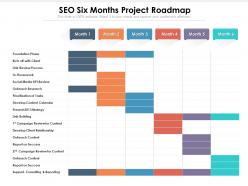
Utilize our pre build SEO Six Months Project Roadmap to present your plan of action in the most effective way. Reduce the paperwork and showcase how different activities are linked to each other by incorporating this attention grabbing PowerPoint theme. This completely editable roadmap PPT layout is suitable to fit all your needs and to have a structured outline of the entire process flow using color coding. Provide guidelines to your teammates about the progression process by employing our PPT theme. Team members can easily be designated into teams by accessing the work milestones to be accomplished within the timeframe. You can easily modify the PowerPoint slide according to real time situations. Download our stunning SEO Six Months Project Roadmap, and you are good to go to prove your expertise in strategic planning.
People who downloaded this PowerPoint presentation also viewed the following :
Seo six months project roadmap with all 2 slides:
Give your audience a fulfilling experience. They will find our SEO Six Months Project Roadmap elevating.
FAQs for Seo six
So there's basically four phases to tackle. Start with auditing your current site - find all the broken stuff and see what's actually working. Strategy comes next, where you figure out your goals and what to hit first. This part's honestly make-or-break for everything else. Implementation is just doing the work - fixing technical issues, updating content, all that fun stuff. Then you've got ongoing monitoring where you track how things are going and tweak as needed. Oh, and don't speed through that first audit phase! I learned that the hard way. Better foundation analysis means way more targeted strategy later.
Honestly, just dump every keyword you can think of into Ahrefs or SEMrush first - I know it's overwhelming but you need that big picture. Check what your competitors are ranking for too. Then sort by search volume and difficulty. I make this nerdy little scoring system in Google Sheets because I'm weird like that. Go for the low-hanging fruit first though - decent search volume but not crazy competitive. Those wins keep you motivated while tackling the harder keywords. Oh, and group similar ones together so you're not all over the place. Way more efficient that way.
So for competitor research, SEMrush or Ahrefs are your best bet - both show you what keywords they're ranking for and their backlinks. SEMrush has a cleaner interface though, way less cluttered. Screaming Frog is solid for crawling their sites and checking technical stuff. SimilarWeb gives decent traffic estimates too. Don't ignore the free options - Google Keyword Planner works, and honestly just looking at their page titles manually can tell you a lot about their strategy. Oh, and start with just one paid tool. Trust me, having multiple dashboards open gets messy fast.
Track your organic traffic, rankings, and conversions from day one. SEO is painfully slow though - like watching paint dry honestly. Technical stuff shows up first (crawl errors, site speed), then rankings creep up around month 2-3. Traffic and conversions come last. Don't freak out if nothing happens immediately; that's totally normal. I'd set up monthly dashboards comparing everything to your starting numbers. Oh, and celebrate tiny wins because you'll need the motivation when you're staring at flat graphs for weeks.
Dude, if you've got a physical location or serve specific areas, local SEO should be baked into your strategy from day one. Don't make the mistake I see constantly - waiting until the end to worry about it. Get your Google Business Profile dialed in, build those local citations, and create content around your actual service areas. The cool thing? Way less competition than going after national keywords, so you'll actually see results faster. Oh and definitely figure out which geographic searches are bringing you paying customers vs just tire kickers. Start with auditing what you've got now.
Look, you gotta match your content topics to what people are actually googling right from the start. Figure out your audience's search terms first, then build content pillars around the good keywords. I set up monthly themes where each month tackles different keyword groups - honestly saves me from publishing random stuff that goes nowhere SEO-wise. Every post needs its main keyword, but it should also feed into your bigger topic expertise. Oh, and don't treat content and SEO like they're separate things you'll figure out later. They're basically the same strategy. Content calendar helps too - keeps everything organized instead of just winging it.
Google Analytics 4 is where you'll want to start - tracks your organic traffic and how people actually use your site. Then grab Google Search Console, which shows what keywords are bringing people in. Honestly, those two alone will give you tons to work with. If you've got budget, SEMrush or Ahrefs are pretty solid for checking out competitors. I'd set up some custom dashboards in GA4 so you're not drowning in data every week. The cool part happens when you compare GSC and GA4 side by side - you'll spot weird gaps in your content strategy.
Honestly, I check mine weekly just to catch any weird drops or tech issues early. Monthly is probably the bare minimum though. Don't go crazy making big changes every few weeks - SEO takes forever to actually show results, so you'll just stress yourself out. Save the major pivots for quarterly reviews when you've got real data to work with. Weekly = spot problems fast. Monthly = figure out what's actually working. Quarterly = make the bigger strategic moves with your content and keywords. Oh and set those calendar reminders now or you'll totally forget (I always do).
Honestly, mobile is where you need to focus first - Google crawls your mobile site before desktop now. Your site needs to load in under 3 seconds on phones (yeah, people are that impatient). Make sure everything's actually clickable without fat-fingering other buttons, and text doesn't require zooming to read. Core Web Vitals are a big deal for rankings too. I'd run it through Google's Mobile-Friendly Test first to see what's broken, then hit PageSpeed Insights. The responsive design thing seems obvious but you'd be surprised how many sites still suck on mobile.
Don't treat technical SEO like some annoying cleanup task you'll deal with "later." Build it right into your dev sprints from the start. I learned this the hard way - trust me, your future self will thank you. Map out crawlability fixes and Core Web Vitals stuff alongside your regular feature work. Set up checkpoints too, like doing speed audits after big UI changes. Oh, and always handle redirect mapping before you mess with URLs. Your developers won't hate you for surprise technical debt, and honestly? Everything just runs smoother when it's all planned together instead of scrambled.
Honestly, just make stuff that's actually worth linking to - other sites will naturally want to reference it. Guest posting works well if you target the right blogs in your space. Broken link building is super effective but kinda mind-numbing work. I'd skip those sketchy paid link schemes though, they'll bite you later. Building real relationships with other site owners makes everything easier. Oh, and don't overlook your current network - friends, colleagues, whatever. They're usually happy to help if you've got good content. Then just expand from there bit by bit.
Oh man, UX and SEO are basically joined at the hip these days. Google's obsessed with user signals - bounce rates, how long people stick around, Core Web Vitals, all that stuff. I had a client last year whose site was painfully slow and people just bounced immediately. Rankings tanked for months while we fixed it. Here's the thing though - you can't treat UX as an afterthought. Build it right into your SEO strategy from the start. Get your page speed dialed in, make sure mobile doesn't suck, and actually think about how people navigate your site. Do this early and you'll see your rankings climb way faster. Trust me on this one.
Yeah, definitely start with on-page stuff first. It's like... you wouldn't build a house starting with the roof, you know? Get your title tags, meta descriptions, and headers sorted out before diving into the fancy link-building tactics. Those on-page tweaks are honestly pretty quick wins too - you'll see results way faster than waiting months for backlinks to kick in. I always tell people to audit their top pages first since that's where you'll get the biggest impact. Trust me, without solid on-page foundations, even amazing SEO work later won't hit as hard as it could.
Honestly, dashboards are your best friend here - Google Data Studio works great, or just use spreadsheets if you're keeping it simple. Track your main stuff: rankings, traffic, conversions. Stakeholders eat up those green arrows showing growth! Monthly reports should stick to 3-5 key metrics max. Nobody wants to drown in data. Always connect the dots to actual business results like "hey, this 40% traffic bump got us 200 more leads." Set up automated reports so you're not scrambling last minute every month. Oh, and definitely give them a heads up if something's running behind - way better than waiting for them to ask what's going on.
So basically, social media boosts your SEO when done right. Share your blog posts or whatever content you've optimized, and you'll get people clicking through to your site. Google sees that traffic and thinks "oh, this must be good stuff." Plus people might actually link to your content if they find it through social - and backlinks are huge for rankings. Just make sure you're using your target keywords in the social posts too. Honestly, don't spread yourself thin across every platform. Pick where your people actually are, then track what's driving real traffic back to your site.
No Reviews