


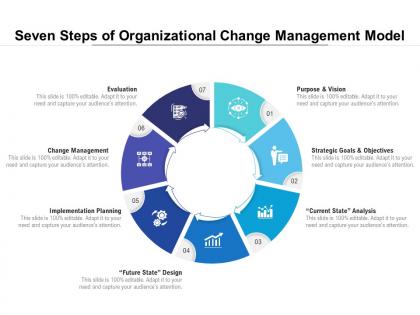
Seven steps of organizational change management model




Try Before you Buy Download Free Sample Product
 Impress Your
 Audience
 100%
100% Editable
 Save Hours
 of Time


Everyone goes gaga over our Seven Steps Of Organizational Change Management Model. Compliments just keep coming in.
People who downloaded this PowerPoint presentation also viewed the following :
Seven steps of organizational change management model with all 2 slides:
Get complimented on your choice with our Seven Steps Of Organizational Change Management Model. Everyone will fall for them.

FAQs for Seven steps of organizational
Honestly, it comes down to communication and getting leadership actually committed - not just saying they are. Explain the "why" to people, like how it affects them personally. Find your change champions in each department first, they'll do half the work for you. Training is huge too because people want to help but feel lost without proper support. Oh and definitely set up feedback systems so you can pivot when stuff goes wrong (which it will). The leadership thing is probably the biggest factor though - if they're not walking the walk, forget it.
Honestly, communication is everything when you're dealing with change at work. People hate being blindsided - like, they'll resist just because nobody explained what's happening. I've watched so many projects crash because leadership thought employees would just roll with it. You gotta be upfront about the why, not just the what. Set up town halls, send regular updates, actually listen to feedback. Different teams need different approaches too. Oh and make it a conversation, not just you talking at people. Trust me, that two-way thing makes all the difference in whether people buy in or revolt.
Dude, you absolutely need both strong leaders AND good managers for change to work. Leaders paint the big picture and get people actually excited about where you're heading. Managers? They're tracking deadlines, budgets, all that operational stuff that honestly isn't glamorous but will make or break you. Here's the thing - when change gets messy (which it always does), people need to understand the "why" or they'll just bail. Both sides have to stay in sync too. I'd focus on crafting that compelling vision first, then get really detailed about execution. Can't wing either part.
Honestly, employee buy-in is everything when it comes to change. I've watched amazing plans crash and burn just because people felt left out or threatened. Here's the thing - you can't just announce changes and expect everyone to get on board. Win over your informal leaders first (you know, the people everyone actually listens to in the break room). Be upfront about what's changing and why it matters to them personally. Get people involved early instead of springing it on them later. Otherwise you'll just end up with another failed initiative that everyone rolls their eyes about.
Honestly? Poor communication kills most change efforts before they even start. Leadership says they're on board but then middle managers are secretly undermining everything - I've watched this trainwreck so many times. People get defensive when they don't understand WHY things are changing. Rushing the timeline is deadly too. Companies think they can squeeze a year's worth of transformation into six months, then act shocked when it falls apart. Don't forget the emotional stuff either - change is hard and people need processing time. Find your champions early, talk about the vision constantly, and pad your deadlines.
Honestly, data analytics is a game-changer for managing organizational change. Instead of flying blind, you can actually see what's happening - track how people feel through surveys, watch adoption rates, spot which teams are crushing it vs. struggling. The best part? You'll catch resistance early and pivot before everything falls apart. I'd start small though - maybe pick 2-3 metrics that actually matter for your situation and build some basic dashboards. Oh, and it makes proving ROI to leadership way easier when you've got numbers backing you up.
Honestly, start by figuring out who actually matters and what they care about. Be upfront about why this change is happening - people hate being kept in the dark. Town halls are fine for the big picture, but real conversations happen in smaller groups where folks feel comfortable complaining. Listen to the pushback instead of brushing it off. Regular check-ins help, and actually do something with their feedback or they'll stop giving it. I learned this the hard way - when people's ideas vanish, they notice. Treat them like they're part of the solution, not roadblocks you need to work around.
Oh man, culture is everything when it comes to change! If your company culture backs the new direction, people just roll with it naturally. But when there's a mismatch? Good luck - you'll be fighting uphill battles constantly, even with amazing plans. I learned this the hard way at my last job actually. What works is figuring out your culture situation first, then either tweaking your approach to fit it or working on shifting the culture before anything else. Find those people who already get it and can show others the way.
So you'll want to track the obvious stuff first - productivity, turnover, project deadlines, financial metrics. Compare before vs after your changes. But here's the thing: numbers don't tell you everything. Survey people regularly, do focus groups, check pulse on morale. Are they actually using the new processes or just pretending? Pick 3-5 metrics that actually matter for your specific situation - don't go crazy with data. Set up monthly check-ins to see what's working. Oh, and measure against whatever goals you set originally (assuming you did that part right).
Honestly, training programs can totally save your butt during big changes. People need both the technical stuff for new systems AND soft skills like handling stress better. The timing's tricky though - too early and they'll forget everything, too late and everyone's panicking. I always think it's weird when companies skip explaining WHY things are changing and just focus on the how-to parts. Start planning once you know change is coming. Trust me, I've watched so many initiatives crash because people felt completely lost in the process.
Dude, feedback loops will save your ass on this project. You can catch problems while they're still manageable instead of waiting until everything's on fire. Set up regular check-ins with everyone - not just the bosses, but the people actually doing the work day-to-day. They'll tell you what's really happening. When folks see you're actually listening to their input, they buy in way more. Makes total sense when you think about it. Course-correct as you go rather than sticking to some rigid plan that isn't working. Oh, and resistance always shows up early if you're paying attention.
Look, change models are basically your game plan so you don't just throw stuff at the wall and hope it works. Kotter's got 8 steps - super top-down, all about urgency and getting everyone on board. Works great for massive company overhauls. ADKAR's totally different though, focuses on individuals going through awareness, desire, knowledge... you get it. Most teams I know just cherry-pick from both honestly. Oh, and whatever you pick has to actually fit your company culture - can't force a square peg situation. Main thing? Commit to one approach instead of bouncing around like my last manager did.
Honestly, think of tech as your best friend during big changes. It speeds up communication, makes training way less painful, and shows you what's actually working (because let's be real, nobody wants to just guess). Collaboration tools keep everyone on the same page, learning platforms help your team level up, and analytics reveal where people are hitting roadblocks. Just don't go overboard with fancy stuff - I've seen teams crash and burn trying to learn five new systems at once. Start with what they already know. Build from there once they're not freaking out about everything else changing.
Honestly, the biggest thing is making change feel normal instead of like some big emergency every time. Let your team experiment and screw up - I swear you learn way more from failures anyway. Cross-train people so you're not screwed if someone quits. Make it safe for people to speak up about problems early, before everything goes to hell. Oh, and celebrate the quick recoveries, not just when everything goes perfectly. Start with small pilot programs where you can practice bouncing back. It's all about making adaptability feel routine rather than this massive reactive thing.
Look, you definitely need the hard numbers - productivity, quality scores, customer satisfaction ratings. That stuff proves whether it actually worked. But honestly? The people side matters just as much. Check engagement surveys and retention because miserable employees will tank everything you've built. Track how fast people adopt new processes too. I'd probably set up maybe 6 key metrics on a dashboard and review monthly for the first year. Oh, and don't skip the pulse surveys - they catch problems before they explode.
No Reviews