


Change Management Team Org Chart Organizational Change Management




Try Before you Buy Download Free Sample Product
 Impress Your
 Audience
 100%
100% Editable
 Save Hours
 of Time


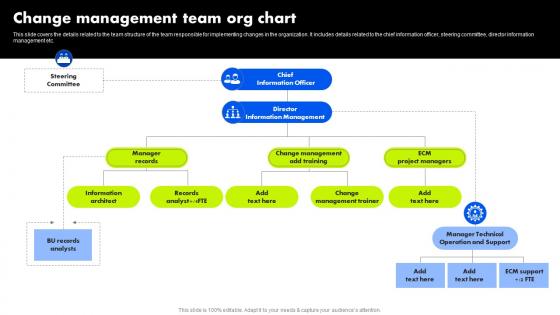
This slide covers the details related to the team structure of the team responsible for implementing changes in the organization. It includes details related to the chief information officer, steering committee, director information management etc.
People who downloaded this PowerPoint presentation also viewed the following :
Change Management Team Org Chart Organizational Change Management with all 6 slides:
Use our Change Management Team Org Chart Organizational Change Management to effectively help you save your valuable time. They are readymade to fit into any presentation structure.





FAQs for Change Management Team Org Chart
Honestly, three things will make or break your change project: solid communication, leadership backing, and getting employees actually engaged. Don't rush the people part - that's where most initiatives die. Make sure everyone knows why this change matters and what they get out of it. Leadership has to be visibly on board, no half-hearted support. Find your change champions super early though - they're gold for winning over the doubters. Oh, and build in training plus ways to track how things are going. I've seen too many companies skip the feedback loops and then wonder why nothing stuck.
Honestly, surveys and focus groups are your best bet here. One-on-ones work great too - people open up more when it's just you two. Look at how your team handled past changes because history tends to repeat itself, unfortunately. Don't forget the practical stuff either. Are people already drowning in work? Missing key skills? Even enthusiastic employees will struggle if they're maxed out. The water cooler conversations matter more than you'd think - sometimes the real concerns never make it to official meetings. Start gauging all this early so you're not scrambling later to fix problems you could've seen coming.
Ugh, communication is literally everything - most change projects die because of this. People hate not knowing what's happening way more than the actual change itself. You've got to tell them why it's happening, how it affects their daily stuff, and when things will happen. Seriously, say it three times more than you think you need to. I've watched so many managers just assume people understood without actually explaining anything properly. Use different ways to get the message out there, ask if they get it, and let people ask questions. Oh, and start talking about it early - don't wait until the last minute and think you can just send one email.
Look, culture basically makes or breaks any change you're trying to pull off. If you're dealing with a top-down place, get the executives on board first and use official channels. More collaborative environments? You'll need way more input sessions and consensus-building - takes forever but people actually stick with it. Risk-averse companies want pilots and proof before they'll budge an inch. Meanwhile innovative cultures sometimes jump in too fast without thinking it through (seen this backfire spectacularly). Bottom line: don't fight your culture's natural tendencies. Work with what you've got and adjust your timeline accordingly.
Get people involved early and explain WHY things are changing, not just what's different. Here's something that actually works - find your biggest doubters and pull them into planning. Sounds backwards, but they'll become your best supporters once they feel heard. Map out who might pushback first, then tackle their specific worries head-on. Celebrate little wins as you go. Don't sugarcoat the rough parts either - people see right through that fake positivity stuff. Oh, and be upfront when things aren't working. Transparency beats pretty presentations every time.
Definitely track your hard numbers first - did you actually hit those productivity or cost targets? But honestly, that's just part of it. Employee surveys will tell you if people are actually bought in or just going through the motions. Check if they're using the new systems or sneaking around them (happens more than you'd think). Customer feedback matters too if they're affected. Oh, and don't wait until the end to measure - do regular check-ins so you can pivot if things aren't working. The soft stuff like engagement levels is just as important as the spreadsheet data.
Honestly, most people rush it and don't talk to their teams enough. Don't assume everyone gets why you're making changes - trust me, they usually don't even when it's super obvious to you. Resistance will be way worse than you expect (it always is). Get your key people involved early and keep updating everyone constantly. Oh, and give people actual time to adjust to stuff. Here's what worked for me - find your biggest doubters first and convert them. Once they're on board, they'll do half your convincing for you.
Honestly, tech can be a game-changer for rolling out changes at work. Slack or Teams keeps everyone updated without those endless email chains. Project management tools help you see who's actually adopting the new stuff and who's dragging their feet. AI can even spot where people might push back before it happens - pretty wild stuff. Learning platforms beat the hell out of those boring company-wide meetings for training people. Just don't go overboard picking every shiny new tool. Focus on what'll actually fix your problems instead of creating new headaches. Been there, done that!
Honestly, start by figuring out who actually matters in this thing and what they care about. Get ahead of the gossip mill - seriously, people hate finding out big news from random hallway conversations. Set up different ways for people to give feedback... town halls are good but so are quick surveys or just grabbing coffee with key folks. Here's what works: give them real input on how stuff gets rolled out, not just fake "we value your thoughts" nonsense. Oh and keep updating them regularly! Even boring "nothing new this week" updates beat radio silence. People just want to feel like they're in the loop.
Dude, you've gotta be like a chameleon with this stuff. Younger folks want quick digital updates and fast results. Older employees? They're all about face-to-face convos and need the full backstory on why things are changing. Finance people eat up data and spreadsheets, but creative teams respond way better to stories. Survey everyone first to figure out what makes them tick - their communication preferences, what worries them, all that. Then create different messages for each group instead of blasting the same thing to everyone. It's honestly exhausting sometimes, but it works so much better than the spray-and-pray approach most companies use.
Track the obvious stuff first - are people actually using the new processes? But here's what most people miss: you gotta measure how they *feel* about it too. Run quick pulse surveys alongside your usage data. I've watched so many rollouts tank because leadership only looked at adoption numbers while everyone was secretly miserable. Also check training completion rates and support tickets - if tickets are spiking, that's a red flag. Maybe throw in some productivity metrics for the teams affected. Honestly though, start with just 3-4 things or you'll drown in spreadsheets. The sweet spot is tracking both behavior AND sentiment.
So feedback loops are like having radar for your changes - you actually know what's happening instead of just crossing your fingers. Catch problems while they're still small. See what's clicking with people. I swear, half the change projects I've watched fail because nobody was listening to what was actually going down. You need multiple ways for people to tell you the truth without getting in trouble. Regular check-ins work. Those quick pulse surveys too. Sometimes the best intel comes from random hallway conversations though. Just make sure you're really hearing what they say and doing something about it, not just collecting feedback for show.
Honestly, skip the whole "this is good for the company" speech and go straight to what's in it for them personally. People tune out otherwise. Keep groups small so they can actually ask questions instead of sitting through another boring presentation. I'd focus way more on hands-on practice than theory - let them mess around with the actual tools or processes. Oh, and don't expect it to stick after one session (rookie mistake). You'll need follow-ups, maybe pair them with someone who gets it, and give them stuff they can reference later when they're panicking at their desk.
Start with mapping out how your changes actually connect to the big goals - seriously, draw it out visually. Getting leadership on the same page first will save you so much headache later. Then focus on explaining the "why" to everyone else, not just the what. Oh and don't fall into the trap of measuring stupid stuff like completion rates. Track things that actually show you're moving toward your real objectives. Regular check-ins are clutch for catching when things start going sideways. The whole "golden thread" concept really works if you stick with it.
Okay, so first - just be straight with everyone about what's happening and why. No point in dancing around the hard parts or making promises that'll bite you later. Really think through how different people will be affected, especially anyone getting hit harder than others. Give people an actual say in things (not those BS "feedback sessions" that don't change anything). Oh, and don't rush the timeline if people need proper support to adjust - that's just cruel. I've watched way too many managers mess this up by forgetting they're dealing with real humans. Basic rule: how would you want to be treated?
-
SlideTeam is the way to go when you are in a time crunch. Their templates have saved me many times in the past three months.
-
Crisp and neat slides. Makes it fun and easier to curate presentations.