

Eight Step Framework Of Kotter Change Model





Try Before you Buy Download Free Sample Product
 Impress Your
 Audience
 100%
100% Editable
 Save Hours
 of Time


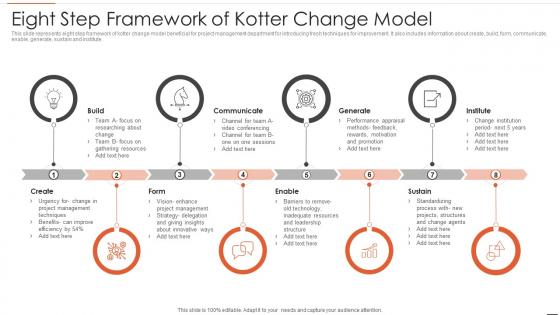
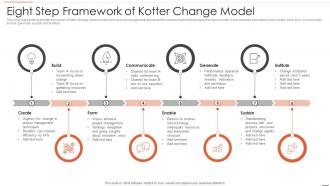
This slide represents eight step framework of kotter change model beneficial for project management department for introducing fresh techniques for improvement. It also includes information about create, build, form, communicate, enable, generate, sustain and institute.
People who downloaded this PowerPoint presentation also viewed the following :
Eight Step Framework Of Kotter Change Model with all 6 slides:
Use our Eight Step Framework Of Kotter Change Model to effectively help you save your valuable time. They are readymade to fit into any presentation structure.





FAQs for Eight Step Framework Of
So Kotter's thing has 8 steps that you gotta do in order - skipping around will bite you later. First you create urgency, build your team of supporters, then craft a vision. After that comes sharing the vision, empowering people to act, and getting some quick wins (seriously, people need to see progress or they'll check out). Then you build on those wins and keep pushing forward. Last step is making it all stick in the culture. Each one sets up the next, so don't rush through them even if it feels slow.
Dude, you gotta make it real for people - show them actual numbers. Lost customers, shrinking market share, whatever data makes them go "oh shit." Don't just say "change is coming" like every other exec does. Tell stories about the clients who walked away or deals you missed. Town halls work great for this - lay out the brutal facts openly. I mean, people aren't stupid, they'll see through fear tactics. But when it's their job on the line? That's when urgency clicks. Make it personal and immediate so they actually want to move.
Honestly, leadership makes or breaks the whole thing. Kotter's steps basically assume you've got strong leaders creating urgency and getting people on board with the vision. Without that buy-in? Good luck getting anyone to actually change. But here's the thing - you can't rely on just one person at the top. Build a coalition of champions across different levels. When things go sideways (which they always do), these are the people who'll keep pushing forward. My take? Find your key influencers first and get them genuinely pumped about the change. Don't even think about going company-wide until you've got them locked in.
You can't pull off big changes by yourself - trust me on this one. Find influential people across different departments who'll actually champion your idea when you're not around. Look for folks with real power, expertise, and credibility. I've watched so many initiatives crash because someone thought they could handle it solo or only got their immediate team on board. Your coalition becomes like your change army - they help communicate the vision and bulldoze through obstacles. Oh, and resistance will definitely happen, so you need these people to keep things moving. Start building that group early and get them genuinely pumped about what you're doing.
Honestly, the worst thing you can do is rush those early steps. Don't skip building urgency or getting leadership on board just because you're pumped to start changing things. Most places mess up by celebrating way too soon - like after one pilot goes well - instead of really baking the changes into how they operate. Communication is huge too. You can't just announce your vision once and call it good. Keep repeating it until people are probably sick of hearing it lol. Take your sweet time with the first four steps though. Seriously. If that foundation is shaky, everything falls apart later.
Pick milestones you can hit in 6-18 months - stuff like adoption rates or actual cost savings people can see. Make these wins super visible because honestly, nobody believes change is working without proof. Celebrate publicly through meetings or newsletters, whatever works for your team. The wins need to be so clear that even the biggest skeptics can't write them off as luck. Oh, and don't overthink it - just figure out what your first measurable win could be this quarter and go after it.
Honestly? Just ask people constantly if it's actually working. Set up quick check-ins and pulse surveys for each step. When you're creating urgency and building your coalition, find out if people genuinely feel it or if they're just nodding along. Implementation phases need feedback on what's blocking progress and which wins actually matter to folks. Here's the thing - most change efforts crash because leaders think they know what's landing without bothering to ask! For the final steps, focus on whether changes are sticking. Monthly sessions with different groups will save you major headaches down the road.
Dude, culture totally makes or breaks Kotter's model. Risk-averse places? Good luck creating urgency - people just shut down. Hierarchical companies struggle with building coalitions across different levels, but collaborative ones actually nail this part. Communication gets weird too since some cultures want everything sugar-coated while others need you to be brutally direct. Oh, and I've watched teams completely bomb at celebrating short-term wins because their culture thinks that's... I dunno, premature or something? Honestly, just do a culture check first and tweak each step instead of copy-pasting the whole framework.
Here's the deal - you gotta make those changes stick by weaving them into your culture (classic Kotter move). Celebrate wins loudly and share success stories all the time. When hiring or promoting people, pick ones who actually live the new way of working. Old habits are so annoying - they sneak back faster than you think. Update your job descriptions, performance reviews, and training stuff to match what you're trying to build. The goal is making these behaviors so normal that people can't imagine doing things differently. Oh, and figure out which systems need fixing first - don't try to change everything at once.
So Kotter's got 8 detailed steps while Lewin just does the whole unfreeze-change-refreeze thing. Way different vibes. Lewin's more about understanding why change is hard psychologically, but Kotter actually walks you through building coalitions, getting quick wins - all that practical stuff. I mean, both are useful but depends what you need? For big transformations I'd probably go with Kotter's roadmap first. Then maybe use Lewin's ideas to figure out what's really going on underneath. Kotter's just more actionable when you're actually trying to get shit done.
Yeah totally! You just gotta tweak the language a bit. So instead of "business urgency," you're rallying people around your mission - like a community crisis or funding crunch that needs action now. Your coalition becomes board members, volunteers, community folks rather than suits in boardrooms. The vision part? Actually easier since nonprofits already have that purpose-driven thing going. I've seen this work really well when orgs are restructuring programs or launching something new. My advice - figure out what's genuinely urgent for your community right now. That's where you build from.
Honestly, visuals and templates are game-changers for Kotter's model. People actually pay attention instead of zoning out during your presentation. You'll skip fewer steps too since templates give you that roadmap for building coalitions and staying consistent with messaging. Change is already confusing enough without drowning people in text-heavy slides. Basic flowcharts or even simple icons beat bullet points every time. I learned this the hard way after watching too many eyes glaze over. Templates also help structure your thinking so you don't rush through important phases.
Honestly, the biggest thing is building it right into your everyday stuff - check-ins, job descriptions, how you measure performance. Make the new way the easiest path forward. I can't tell you how many good changes I've watched completely fall apart because nobody thought about this part! Keep celebrating wins and talking about where you're headed. Oh, and definitely hire people who already get it - that makes a huge difference. Remove barriers to doing things the new way while making it harder to slip back into old habits. Figure out which daily routines need tweaking first.
So basically, match your metrics to whichever Kotter step you're on. Early stages? Track urgency scores and how engaged your coalition is. Middle part gets into training completion and those quick wins everyone loves to see. Don't go crazy with data though - seriously, I've seen teams drown in spreadsheets. Pick maybe 2-3 solid metrics per step and focus on the stuff that shows momentum building, not just end results. Oh, and figure out where you actually are in the process first. Then grab metrics that'll flag problems before they blow up. The resistance incidents one is pretty telling if you're hitting roadblocks.
Honestly, tech makes Kotter's change management way easier. Slack or Teams are perfect for dedicated change channels - you can share updates and celebrate wins without drowning people in emails. Video calls are clutch for remote teams too, especially when you're trying to build urgency. There's something about seeing faces that just hits different than text. Project dashboards help track everything transparently, which your guiding coalition will love. My advice? Don't go crazy with new tools. Pick one or two things your team already uses so you're not creating more chaos while managing change.
-
Illustrative design with editable content. Exceptional value for money. Highly pleased with the product.
-
The templates are easy to get, and the chat customer support is excellent.