


Shoe Industry Start Up Summary Powerpoint Ppt Template Bundles BP MM




Try Before you Buy Download Free Sample Product
 Impress Your
 Audience
 100%
100% Editable
 Save Hours
 of Time


Our Shoe Industry Start Up Summary Powerpoint Ppt Template Bundles BP MM are topically designed to provide an attractive backdrop to any subject. Use them to look like a presentation pro.
People who downloaded this PowerPoint presentation also viewed the following :
Content of this Powerpoint Presentation
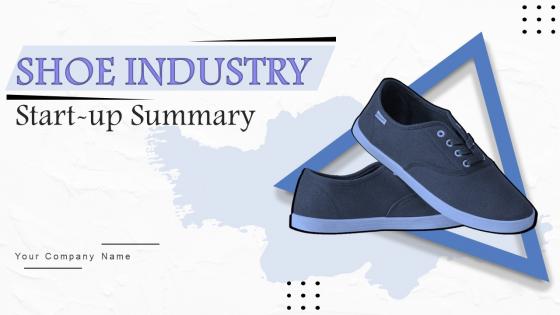
Slide 1: This slide introduces Shoe Industry Start-up Summary. State your company name and begin.
Slide 2: This slide shows Table of Content for the presentation.
Slide 3: This slide presents Company overview for shoe store start-up.
Slide 4: This slide displays Prevailing market scenario and opportunities for shoe industry.
Slide 5: This slide represents Vision, mission and goals associated with shoe industry.
Slide 6: This slide covers the shoe industry's vision, mission, and goals to ensure that it will deliver a diverse selection of eco-friendly shoes.
Slide 7: This slide presents Professional summary of shoe store start-up founder.
Slide 8: This slide displays Shoe store diverse product line.
Slide 9: This slide represents Competitive advantage of start-up shoe store.
Slide 10: This slide showcases Start-up cost summary for shoe industry.
Slide 11: This is another slide continuing Start-up cost summary for shoe industry.
Slide 12: This slide shows Effective revenue generation model for shoe start-up.
Slide 13: This is another slide continuing Effective revenue generation model for shoe start-up.
Slide 14: This slide presents Implementing quarterly milestones for successful business growth.
Slide 15: This slide displays Operations and manufacturing process of shoe store.
Slide 16: This slide represents Effective go-to-market strategy to increase sales and revenue.
Slide 17: This is a Thank You slide with address, contact numbers and email address.
Shoe Industry Start Up Summary Powerpoint Ppt Template Bundles BP MM with all 22 slides:
Use our Shoe Industry Start Up Summary Powerpoint Ppt Template Bundles BP MM to effectively help you save your valuable time. They are readymade to fit into any presentation structure.







FAQs for Shoe Industry Start Up Summary Powerpoint Ppt Template
Honestly, sustainability is where I'd start - everyone wants eco-friendly stuff and transparent sourcing these days. Direct-to-consumer is still killing it, cutting out the middleman completely. Customization's massive too. People are obsessed with getting shoes made just for them. Athleisure comfort designs aren't slowing down either, which makes sense because who doesn't want comfy shoes? Tech stuff like smart insoles or those AR try-on apps are getting pretty normal now. Actually kinda cool how far that's come. But here's the thing - don't try chasing every single trend. Pick maybe two that actually fit your vision and build from there.
Dude, you gotta stop trying to be everything to everyone. Pick ONE thing your shoes absolutely crush at and go all-in on it. Maybe it's sustainability, custom fit tech, or just being perfect for nurses who're on their feet 12 hours straight. Honestly? The whole "premium quality, affordable prices" angle is so overdone. Everyone says that crap. Instead, be the brand that actually fits wide feet properly, or only uses ocean plastic, or whatever. Then make sure your website, ads, packaging - everything screams that one thing. What can you say about your shoes in literally one sentence that nobody else can?
Reliability trumps everything else - one delayed shipment kills your whole launch. Get material certifications from suppliers and check their references with other shoe brands. Make sure they can actually handle your minimum orders without drama. Shipping costs add up crazy fast if you're importing leather internationally, so location matters. Always test samples first! I learned this the hard way when "premium" leather started cracking after like three weeks. Super embarrassing. Build relationships with 2-3 suppliers per material so you're not screwed if one flakes out.
People really care about eco stuff now and they'll actually pay more for it. Your best bet? Pick one green thing and nail it - maybe recycled rubber soles or organic materials. Don't try to be perfect at everything because customers can totally tell when brands are just faking it for marketing points. I'd start by finding suppliers who do sustainable materials well, then make that your whole story. It's honestly not even optional anymore - pretty much every successful brand has to have some environmental angle these days. Just be real about whatever you choose to focus on.
Dude, 3D printing is where it's at for prototypes and custom orthotics. CAD software lets you tweak designs super fast too. Smart materials are clutch - think moisture-wicking stuff or foam that adjusts to temperature. Everyone's obsessed with sustainability right now, so recycled and biodegradable materials could set you apart. Those foot-scanning apps for perfect sizing are pretty cool. Oh, and get some basic inventory software early - trust me on this one, it'll save your sanity later. Pick one tech thing that actually fixes a problem first, then build from there.
Honestly, Instagram and TikTok are where it's at for shoes right now. Get some influencers on board if you can swing it. Also - and this might sound obvious but - get your customers posting pics in your shoes. Maybe throw them a discount code or something? Email's boring but it actually works great for building up loyal customers early. Oh, and those pop-up events are clutch, especially if you're starting local first. My brother did something similar with his clothing line. Don't try to be everywhere at once though. Pick like two things and nail them.
Honestly, it's huge - like make or break huge. People are weirdly passionate about their shoes, so you've gotta figure out what they actually care about. Comfort? Looking good? Eco-friendly stuff? Price? Once you know that, everything else clicks - your design, pricing, how you sell it. My cousin learned this the hard way with her startup. Survey people, dig through competitor reviews to see what makes customers happy or ticks them off. Otherwise you're just guessing and probably wasting money on the wrong things.
Dude, it's rough out there. Manufacturing minimums are insane - we're talking thousands of pairs upfront, which kills your cash flow for months. Finding decent factories that don't cut corners? Good luck with that headache. The market's totally oversaturated right now too. Getting any shelf space when you're up against Nike and Adidas is basically impossible. Distribution alone will make you want to pull your hair out. Honestly, I'd pick some super specific niche first and really make sure people actually want what you're making. Budget like 3x what you think - trust me on this one.
Dude, get some killer photos of your shoes up on Instagram and TikTok first - show the actual making process too, people eat that stuff up. Don't waste money chasing big influencers yet. Find smaller ones who genuinely vibe with your brand instead. Way better ROI honestly. Jump into sneaker forums and fashion groups where your customers are already scrolling anyway. Oh and this is huge - start collecting emails from day one! Send them updates, new drops, whatever. I swear authentic content always wins over super polished stuff. Just be consistent and actually talk to people instead of posting into the void.
For shoe startups, crowdfunding is honestly your sweet spot - way easier to get people hyped about actual footwear than boring B2B stuff. Angel investors in fashion/consumer goods are solid too, plus there are footwear-specific accelerators out there. When you pitch, bring samples they can actually touch and feel. Your unit economics better be tight though since shoe manufacturing is a nightmare timeline-wise. Oh and don't skip the market research on your target customers - investors always drill down on that. There might be some industry competitions worth checking out too if you've got time to apply.
Look, you definitely need it but don't blow your whole budget on some massive celebrity deal. People won't drop serious money on shoes from a brand they've never heard of - that's just reality. Start with smaller local athletes or micro-influencers who actually fit your vibe. Their followers trust them more anyway, and you won't go broke paying them. I learned this the hard way when I saw a startup waste like half their funding on one big name who posted once and forgot about them. Build up slowly with people who genuinely care about your product, then go bigger later.
Honestly, get your inventory sorted first - that's where most shoe companies totally face-plant. Nobody wants to be stuck with 500 pairs of neon green boots collecting dust, so nail your demand forecasting early. Track everything in your supply chain since you're juggling multiple suppliers and probably overseas stuff. Quality control can't be an afterthought either - returns will absolutely murder your margins in footwear. Oh, and prep for the sizing nightmare that is customer service. Exchanges are just part of the game. Start basic with inventory software and simple CRM before going crazy with fancy automation.
Partner with 3PLs who get footwear - trust me, they already understand the sizing chaos you're about to deal with. Get your forecasting dialed in early since shoe production has insane lead times. The size variations will drive you nuts initially, but whatever. Make sure your inventory system is bulletproof before going global. I'd test one region hard first instead of spreading thin everywhere. Oh, and definitely keep buffer stock for bestsellers. There's nothing worse than being sold out of size 9s right when demand peaks. You'll thank yourself later.
Check out what your competitors are charging first - super important. Price a bit under the big brands while you're still proving yourself. Honestly, cost-plus pricing is pretty much useless for shoes since it's all about what people *think* your product is worth. Made that mistake early on! Your customers' budget matters way more than your margins. Try testing different prices with small runs if you can swing it. Quality materials can justify higher prices, but you've gotta tell that story well. Oh, and start lower - you can bump prices up later, but dropping them makes you look desperate.
Honestly, start small with your product line - you'll need to pivot fast when trends change (and they change SO fast now). Build flexibility in from the beginning. Direct-to-consumer and social media are your best friends for getting quick customer feedback. Find smaller manufacturers who can do smaller batches and turn things around quickly - the big guys are too slow for fashion. Oh, and definitely budget for prototyping and testing from day one. I'd start following micro-trends on TikTok and Instagram right now if you haven't already. Building those influencer relationships early is clutch too.
-
Excellent Designs.
-
Top Quality presentations that are easily editable.