


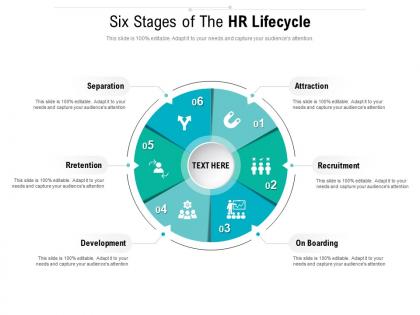
Six stages of the hr lifecycle




Try Before you Buy Download Free Sample Product
 Impress Your
 Audience
 100%
100% Editable
 Save Hours
 of Time


Our Six Stages Of The HR Lifecycle are explicit and effective. They combine clarity and concise expression.
People who downloaded this PowerPoint presentation also viewed the following :
Six stages of the hr lifecycle with all 2 slides:
Give your audience a fulfilling experience. They will find our Six Stages Of The HR Lifecycle elevating.
FAQs for Six stages of
So there are six main stages in the HR lifecycle: attraction, recruitment, onboarding, development, retention, and separation. They all connect - your attraction strategy affects who applies, which impacts how smooth onboarding goes, etc. Think of it like a chain reaction (hopefully ending in separation way less often than the others lol). The smart move is using feedback from later stages to fix earlier ones. Exit interviews can totally reshape how you attract people in the first place. Track metrics at each stage so you can catch problems early. Makes the whole employee journey way smoother from day one to whenever they leave.
Honestly, you gotta be everywhere but smart about it. Employee referrals are still the best - like, seriously, they convert way better than anything else. Fix your Glassdoor reviews first though because everyone stalks companies there now. Hit up LinkedIn, job boards, universities for entry-level stuff. Don't forget passive candidates who aren't even looking. Your job posts probably sound boring AF, so make them actually interesting. Maybe hit some industry events or work with recruiters for those impossible roles. Oh, and your social media needs to not suck - candidates judge you hard on that stuff. Just don't post and pray.
Your employer brand is basically how people see you as a workplace. Good reputation = better candidates want to apply. New hires come in with higher expectations, which actually makes onboarding easier. People stick around longer when they're genuinely proud of where they work - kind of like how you'd recommend a restaurant you love to friends. It also shapes whether employees see growth opportunities during reviews. Here's the thing though: don't oversell your culture. Nothing tanks your brand faster than promising amazing things then delivering something totally different. Authenticity wins every time.
Honestly, automation is a game-changer for onboarding - it'll handle all that tedious stuff you're probably sick of doing manually. Digital offer letters and e-signatures are obvious wins. Set up workflows to automatically send welcome emails, create accounts, and get equipment ready. Those paper packets are the worst anyway, half of them disappear before people even start! HR platforms can trigger training modules and track where everyone's at in the process. You won't have to chase people down or wonder if they filled out their tax forms. Start with whatever's eating up most of your time first - probably the paperwork stuff.
Honestly, start with asking your team what they actually want - might surprise you. Career growth is huge though, people bolt when they feel stuck. Set up real advancement paths and throw some training their way. Ditch the once-a-year review nonsense for regular check-ins where you actually hear them out. Flexible work is non-negotiable now (we all figured that out the hard way). Recognition matters but skip the cheesy employee-of-the-month plaques. Make it personal and meaningful. Oh, and fix one thing at a time - don't overwhelm yourself trying to revamp everything at once.
You gotta change up your management style based on where people are career-wise. New hires? Focus on clear expectations and frequent check-ins so they don't feel lost. For your solid performers, stick with regular feedback and goal-setting stuff. Growth-focused employees need stretch projects and development talks - though honestly most managers suck at this part. When someone's leaving or switching roles, it's all about knowledge transfer and real talk about what went well. The annual review copy-paste approach is basically useless. Match your style to their actual stage, not some generic template.
Track different metrics for each stage - makes way more sense than trying to use the same ones everywhere. Time-to-fill and cost-per-hire for recruiting. Onboarding's where I always look at 90-day retention since that's when people actually decide if they're staying. Development stage needs internal promotion rates and training completion - those engagement survey scores too if you're doing them. For retention, turnover rates obviously, but exit interview themes matter more than people think. Performance management gets tricky but goal completion works. Honestly, start with just 2-3 per stage or you'll drown in spreadsheets. Way easier to add more once you've got the basics figured out.
Honestly, how you handle people leaving is like free advertising for your company. Do it right - good handovers, exit interviews, keeping in touch - and those employees become walking recommendations to everyone they know. Screw it up though? They'll trash you on Glassdoor faster than you can blink. The smart move is treating exits like you do new hires because it keeps doors open for boomerang employees (who are gold since they already get your vibe). I've seen companies completely blow this and wonder why their reputation sucks. Good offboarding = more referrals down the road.
Okay so the biggest thing is don't make it feel like you're grilling them. I always prep some concrete examples ahead of time - good stuff and things that need work. Ask questions like "How do you think the X project went?" instead of just lecturing them about what they did wrong. The magic happens when you actually have a real conversation going both ways. Oh and please don't do the once-a-year thing - that's useless. Schedule them regularly, jot down notes while you're talking, and always wrap up with specific next steps. Here's what'll kill the whole thing though: if you don't follow through on what you promised. People remember that stuff.
Honestly, start this stuff right from day one - show new hires what their growth could look like. Don't wait until people are already planning their exit (learned that the hard way). Performance reviews aren't enough though. Have separate career chats every few months when there's no pressure about ratings or whatever. Mid-level people usually want stretch projects to fill skill gaps. Senior folks? Maybe lateral moves or let them mentor someone. The whole thing only works if you're actually staying ahead of it instead of being reactive.
Okay so compliance is basically a nightmare at every step, not gonna lie. Hiring means watching discrimination laws and background check rules. Onboarding hits you with I-9 forms and benefits stuff - plus whatever random state laws apply to you. Performance reviews? Document literally everything because future you will be grateful when someone files a complaint. Oh and don't forget ADA accommodations. When people quit, final paychecks have strict deadlines and you've got COBRA notices to send out. Honestly, just create little compliance checklists for each phase so you don't accidentally screw something up.
Start with job postings that don't accidentally exclude people - you'd be surprised how coded some language gets. Build diverse interview panels too. When new people join, they need to actually see themselves reflected in the company, not just hear nice words about inclusion. Train your managers on unconscious bias because honestly, most of them have no clue they're doing it. The trick isn't trying to fix everything at once though. Pick one area, figure out where things go sideways, then create better processes. It sounds overwhelming but once you have a system down, it becomes way more manageable than doing random diversity initiatives.
Honestly, culture touches everything in HR - it's wild how much it matters. When you're recruiting, it determines who even wants to work there and how you pitch the job. New people onboard way better when they can actually see your values in action instead of just some generic wall poster (you know the type). Your culture shows up in performance reviews, who gets promoted, even how people quit. I learned this the hard way at my last company - our "collaborative culture" was total BS and everyone could tell. The processes only work when they match what's really happening day-to-day.
Look, first thing you gotta do is dig into your workforce data - ages, skills, what people actually want from work. Then figure out how that lines up with your company's direction. Right now everyone's dealing with five generations working together (wild, right?) plus remote work isn't going anywhere. So tweak your recruiting, benefits, how you communicate - all that stuff. Oh, and if you're getting more career changers, your onboarding probably sucks compared to what they need. Honestly just survey people regularly and don't be stubborn about changing policies when needed.
Honestly, three big things are shaking everything up right now. AI's doing tons of the grunt work - resume screening, performance stuff, whatever. Makes life easier but we can't get lazy on the people skills, you know? Remote work totally flipped how we do onboarding and retention too. Everything's gotta work online now or you're screwed. Oh, and employees want constant feedback instead of waiting for yearly reviews - plus they expect their own customized development plans. I'd start by looking at what you're currently doing that could use better automation or remote tools.
No Reviews