

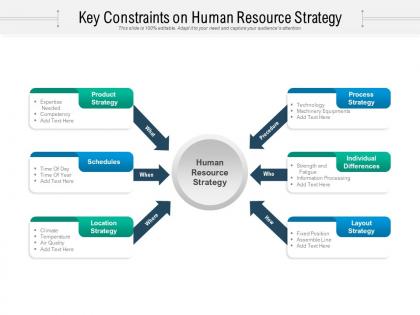
Key constraints on human resource strategy




Try Before you Buy Download Free Sample Product
 Impress Your
 Audience
 100%
100% Editable
 Save Hours
 of Time


Differentiate fact from fiction with our Key Constraints On Human Resource Strategy. Inform them of the events that actually happened.
People who downloaded this PowerPoint presentation also viewed the following :
Key constraints on human resource strategy with all 2 slides:
Inform folks of the events that actually happened with our Key Constraints On Human Resource Strategy. It helps differentiate fact from fiction.

FAQs for Key constraints on
Honestly, budget's gonna be your biggest headache - companies always want amazing talent but then act shocked at the price tag. Getting leadership on board is another nightmare, especially when they're set in their ways. Your current systems are probably ancient too, which makes everything harder. Legal stuff will slow you down, and don't even get me started on trying to get different departments to work together. Oh, and timelines? Forget about having enough time to actually plan properly. Start with small pilot programs first - once you show some wins, it's way easier to push for the bigger stuff you really want to do.
Look, culture and HR strategy have to match or you're screwed. If your company says it wants innovation but only promotes people who've been there forever and never rock the boat, good luck with that. Culture sets the real rules - what actually gets rewarded, who you can hire, who sticks around. I've seen amazing performance systems totally fail because nobody wants to have tough conversations. You can either work with your current culture or plan to change it, but pretending they don't need to align is pointless. Start by figuring out what you actually reward vs what you think you do.
Ugh, budget cuts are the worst for HR stuff. First thing that gets axed? Training programs, so your team's skills just stagnate. Then recruiting becomes this whole ordeal - you're stuck posting on the cheapest job sites while everyone else poaches the good candidates with better resources. Don't even get me started on outdated systems. I swear some companies are still doing performance reviews in Excel like it's 2005. The bigger problem is you spend all your time fixing problems instead of actually planning ahead. My advice? Figure out which constraint is killing you most and show leadership what it's costing them long-term.
Legal stuff basically controls what you can do with HR strategy. Employment laws, labor rules, data privacy - it's different everywhere and honestly a pain. You'll have this awesome hiring plan, then find out it breaks equal opportunity rules or visa stuff. The worst part? Compliance eats your budget and time gets wasted on legal reviews instead of actually doing things. Oh, and don't get me started on how slow lawyers can be sometimes. Get your legal team involved early when planning big HR moves. Trust me, it beats scrambling to fix everything later when they shoot down your ideas.
Honestly, tech can make or break your HR game. The good stuff? HRIS systems handle payroll automatically, AI recruitment tools screen way faster, and you actually get data that shows what's working. But here's the thing - budget constraints suck, legacy systems don't play nice together, and some platforms are so clunky they make everything worse. Oh, and training people on new systems takes forever. My take? Pick one decent tool that fixes your biggest headache first. Don't try to overhaul everything at once - you'll just create more problems.
Ugh, this stuff is such a headache honestly. You're trying to nail down local HR policies but then global trends keep messing with everything. Remote work changed the game completely - now your solid local salary looks terrible when people compare it to what Silicon Valley companies pay remote workers. Skills shortages don't help either. My advice? Stay flexible and audit your practices regularly against what's happening globally. Don't copy everything though - adjust what actually makes sense for your market. Sometimes you just gotta accept you can't compete with every trend, which sucks but it's reality.
Look, people hate change when they don't get why it's happening. So explain the "why" first - and make it about what's in it for them, not just corporate BS. Get your key influencers bought in early because they'll do half the work for you. Honestly? Some people will still complain no matter what you do. That's just how it goes. But if you can create some quick wins to show it's actually working, that helps a ton. Oh, and actually listen when people push back - sometimes they're right and you need to adjust. Shows you're not just steamrolling them.
Honestly, skills gaps just wreck your strategic plans because your team can't pull off what they don't know how to do. Like if everyone's terrible with tech, that fancy automation project? Yeah, it's getting pushed back while you scramble for training budget you didn't plan for. Kind of reminds me of planning a trip with a busted car - you're stuck taking the long way or fixing stuff first. What works is being brutally honest about what your people can actually do right now. Then you've got three choices: train them up, hire someone who knows their stuff, or bring in outside help.
Ugh, external labor market conditions basically hijack your whole HR strategy. When jobs are scarce, you can be picky about candidates. But tight markets? You're scrambling to sweeten comp packages and fast-track your hiring process just to stay competitive. Good luck with that. The tricky part is retention - even when unemployment's high, your best people will jump ship the second things improve. I swear it's like chasing a moving target half the time. Best bet is tracking market trends constantly and keeping your HR policies flexible enough to pivot when everything inevitably shifts again.
Honestly, I'd just stick to the basics that actually move the needle - employee retention, internal promotions, and how long it takes to fill roles. Those hit business impact directly. I used to track way too much stuff and it was a nightmare tbh. Pick maybe 3-5 things max that match what your company cares about. Google Forms works great for quick pulse surveys, or just dig into whatever HRIS data you already have. The whole trick is not drowning yourself in metrics. Keep it simple at first - you can always add more later once you've got a good rhythm going.
Dude, leadership alignment will make or break your HR strategy - I'm not even kidding. When the C-suite can't agree, you'll hit wall after wall. Budget fights, mixed priorities, employees getting confused messages. Saw this happen where the CEO pushed for aggressive hiring while the CFO simultaneously demanded cuts. Talk about a mess. You can't build anything solid when the top brass is pulling in different directions. My advice? Get everyone in a room early to figure out what they actually want before you waste time drafting anything. Way easier than trying to fix it later.
Honestly? Cross-departmental collaboration is your best bet for getting around HR constraints. Budget issues, resource problems, staffing headaches - they all get easier when you've got finance, operations, and leadership actually working with you instead of against you. Too many HR teams try to solve everything solo and it just doesn't work. Your IT folks probably have automation tools you don't even know exist, finance might have budget workarounds, and department heads see workforce stuff HR completely misses. Find the problems that hit everyone, not just you, then get those people involved from the start. Makes a huge difference.
Honestly, there's tons you can do without breaking the bank. Partner with local universities for recruiting - it's way cheaper than headhunters. Ditch the degree requirements and hire based on actual skills instead. When budgets are tight, look internally first and cross-train people. Two problems solved at once, plus your current team feels valued. Get your employees talking you up on social media since that costs nothing but works better than most paid ads anyway. Oh, and definitely figure out which constraint is screwing you over the most right now. Pick one creative solution and test it out next quarter. Start small but start somewhere.
Dude, if you can't keep your good people, your whole HR strategy is basically useless. You'll spend forever building training programs and career development stuff, but then watch your top performers walk out the door anyway. It's honestly like pouring water into a broken bucket or something. High turnover means you're always back to square one, which totally kills any momentum you're trying to build. Here's what I'd do though - track retention numbers for literally everything you launch. That way you can actually tell if your programs are working or just burning through budget. Makes way more sense than crossing your fingers and hoping.
Ugh, people just hate change - it's wild how they'll stick with broken systems rather than try something new. Fear of the unknown is massive too. Then you've got that "we've always done it this way" mentality that makes you want to bang your head against a wall. Loss aversion kills so many good initiatives because everyone fixates on what they might give up instead of what they could gain. I swear, sometimes it feels like you're literally fighting against human psychology! The trick though? Don't treat change management like some add-on - bake it into your plan from the start.
No Reviews