Strategic Human Resource Management Planning Model

Rating:
90%
Strategic Human Resource Management Planning Model
Slide 1 of 6
Favourites Favourites

Try Before you Buy Download Free Sample Product

Audience Impress Your
Audience
Editable 100%
Editable
Time Save Hours
of Time
The Biggest Sale is ending soon in
0
0
:
0
0
:
0
0
Rating:
90%
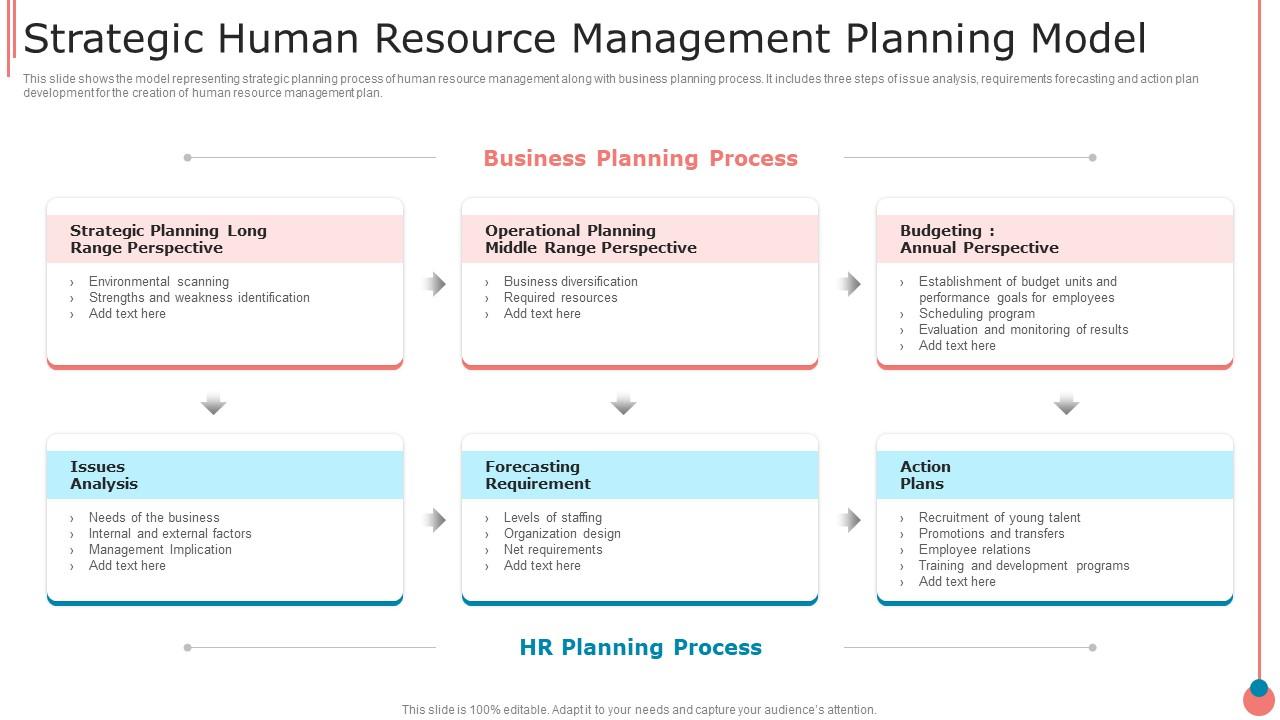
This slide shows the model representing strategic planning process of human resource management along with business planning process. It includes three steps of issue analysis, requirements forecasting and action plan development for the creation of human resource management plan. Presenting our well structured Strategic Human Resource Management Planning Model. The topics discussed in this slide are Issues Analysis, Forecasting Requirement, Action Plans. This is an instantly available PowerPoint presentation that can be edited conveniently. Download it right away and captivate your audience.

FAQs for Strategic Human Resource

Strategic HRM is basically connecting your people stuff to what the business actually needs to hit. HR can't just be about admin anymore - though yeah, someone still has to deal with all that paperwork mess. You're planning your workforce around growth targets and building the skills you'll need down the road. Culture matters too, but it should back up your strategy. Honestly, the biggest shift is treating HR decisions like real business decisions. Before rolling out any new program, ask yourself: does this actually get us closer to our goals? Otherwise you're just doing busy work.

Here's the thing - most companies still treat HR like it's just paperwork and benefits, so you're already winning if you think strategically about it. Strategic HRM basically makes your team way more agile than competitors. You can reskill people fast when new tech hits, build a brand that actually attracts good talent, and create a culture where people don't freak out about change. The trick is connecting your talent moves directly to business goals. I'd start by figuring out what skills you'll need in a couple years, then work backwards. Honestly, being proactive about skill gaps alone puts you miles ahead of most places.

Track the money stuff first - turnover rates, how long it takes to fill roles, cost per hire. Employee satisfaction scores matter too, plus performance ratings and who's getting promoted internally. Revenue per employee is honestly my go-to metric because it shows actual impact on the bottom line. Training ROI is solid if you're doing a lot of development programs. Oh, and see if your talent pipeline actually matches where the business is headed. Just pick like 5-7 metrics that make sense for your goals. Otherwise you'll go crazy trying to measure everything.

Tech seriously saves you so much time in HR by handling all the tedious stuff automatically. AI can screen resumes, analytics help you spot performance patterns, and self-service portals let employees update their own info. I swear, once you automate the paperwork, you'll actually have bandwidth for real strategic thinking. Pick tools that match what you're trying to accomplish though - don't just chase the latest shiny thing. My advice? Figure out what eats up most of your day first, then find solutions for those specific pain points. It's honestly a game-changer.

Ugh, the biggest pain is convincing executives that HR isn't just paperwork and benefits admin. They want ROI proof for everything, which is fair but exhausting. You'll constantly get pulled into urgent stuff instead of actually planning ahead - some days it feels like you're just putting out fires. Data skills are huge too, way more than most HR people realize. Oh, and good luck changing company culture if everyone's used to HR being the "party planning committee." My advice? Pick one thing, track the hell out of it, then use those results to prove you're not just overhead. Small wins first.

Honestly, you've gotta bake learning right into your performance reviews and pay structure - that's what actually moves the needle. Make sure job roles push people to grow new skills. Your managers need to coach, not just boss people around (which is way harder than it sounds, but whatever). Connect learning goals to how people get reviewed and paid. Mentorship programs help too. Give folks actual time and budget for development - can't just expect them to do it on weekends. Oh, and hire curious people from the start. They're the ones who'll actually use this stuff. Start by looking at what you're already offering and see where the holes are.

Dude, engaged employees are seriously worth their weight in gold. They stick around longer, work harder, and actually give a damn about customer service. Your turnover costs plummet when people don't hate coming to work. Plus they'll literally recruit their friends for you - free marketing! The crazy part? Teams that are bought-in will roll with strategic changes instead of fighting them tooth and nail. I'd start tracking engagement scores monthly if I were you. Connect those numbers to your business metrics and boom - you've got proof that investing in people pays off big time.

So here's the thing - you can't just slap diversity training on top of everything and call it a day. Strategic HRM means weaving D&I right into your core processes from the start. Recruitment, promotions, compensation reviews - all of it needs that lens. Sure, hiring diverse people matters, but honestly? Creating systems where they actually succeed once they're hired is way more important. Track real metrics that connect to business results, not just the fluffy stuff that sounds good in reports. Oh, and don't forget exit interviews - they'll tell you what's really happening.

Basically, you want your hiring and retention stuff to actually match what your business is trying to do - not just fill whatever positions randomly. Map out the skills you'll need in like 2-3 years, then figure out how to get there. Design career paths and pay that makes sense for your company's direction (benchmarking is still useful though). Don't just copy what other companies do. For keeping people around, focus on development programs that align with where you're headed. It's really about making your people strategy work with your business strategy instead of treating them as separate things.

Dude, your leadership style literally determines if your HR stuff actually works or not. Transformational leaders who paint that big picture vision? Their teams eat up talent development programs and culture changes. But autocratic types just get people going through the motions - zero real engagement. I've watched incredible HR strategies completely bomb because the leadership was way too heavy-handed or kept flip-flopping on messages. The collaborative approach usually wins because people feel heard in the process. Oh, and consistency matters more than people think. Match how you lead with what you're trying to achieve HR-wise, otherwise you're just wasting everyone's time.

Performance management is your strategic execution engine - it turns big HR plans into actual results. Individual goals get aligned with company objectives, and you can track who's crushing it versus who needs help. Honestly, most strategic plans live or die here. The data you collect becomes incredibly valuable for workforce planning and talent development. I've seen too many companies with solid strategies that fall apart because their performance management sucked. Just make sure your metrics actually tie to business goals, not some random KPIs that don't matter. Without this piece, strategic HRM is basically just expensive wishful thinking.

Honestly, HR analytics is a game changer because it stops you from making decisions based on hunches. Track things like turnover rates and engagement scores - you'll start seeing patterns before issues explode. The predictive stuff is where it gets really interesting though. You can actually forecast which top performers might bail or predict future skill shortages. I mean, who wouldn't want that kind of heads up? It makes aligning your people strategy with business goals way easier. My advice? Don't go crazy at first. Pick one metric your leadership team cares about and start there.

Look, fairness and transparency are your big ones here. Don't discriminate in hiring or pay - sounds obvious but you'd be surprised. Privacy stuff gets tricky with all these new monitoring tools (honestly some companies go way overboard). Give people a voice when decisions affect them directly. Performance reviews need to be consistent across the board. Your HR strategy should actually match what your company says it values, not just chase profits. Data protection is massive too - be careful what you're tracking and storing. It's definitely a balancing act but transparency usually saves you.

Ugh, globalization makes HR such a nightmare! What crushes it in NYC will totally flop in Tokyo or Mumbai. Different labor laws, cultural stuff around how people expect to be managed, plus the talent pools are completely different. Time zones are honestly the worst part - try coordinating anything when half your team is asleep. You've gotta nail that balance between keeping your company values consistent everywhere but adapting locally so people don't quit. I'd say stick hard to your core values, then make everything else flexible. Compensation, how you communicate, even how you measure performance - it all needs wiggle room.

Honestly, get yourself into those leadership meetings if you can swing it. You can't align HR with business goals if you don't actually know what they are - sounds obvious but so many people miss this. Make your talent programs and performance stuff directly support what the company's trying to do. Use the same metrics and language as other departments too. I've watched HR teams wonder why nobody takes them seriously while they're off doing their own thing in a corner. Be proactive about spotting skill gaps before they bite you. Start with auditing what you're currently doing against actual business priorities.

Ratings and Reviews

90% of 100
Review Form
Write a review
Most Relevant Reviews
  1. 100%

    by Donny Elliott

    Excellent work done on template design and graphics.
  2. 80%

    by Darrel Burns

    Loved the collection. Editing the presentation was seamless with their templates. 

2 Item(s)

per page: