8 stages indicating employee life cycle

Rating:
93%
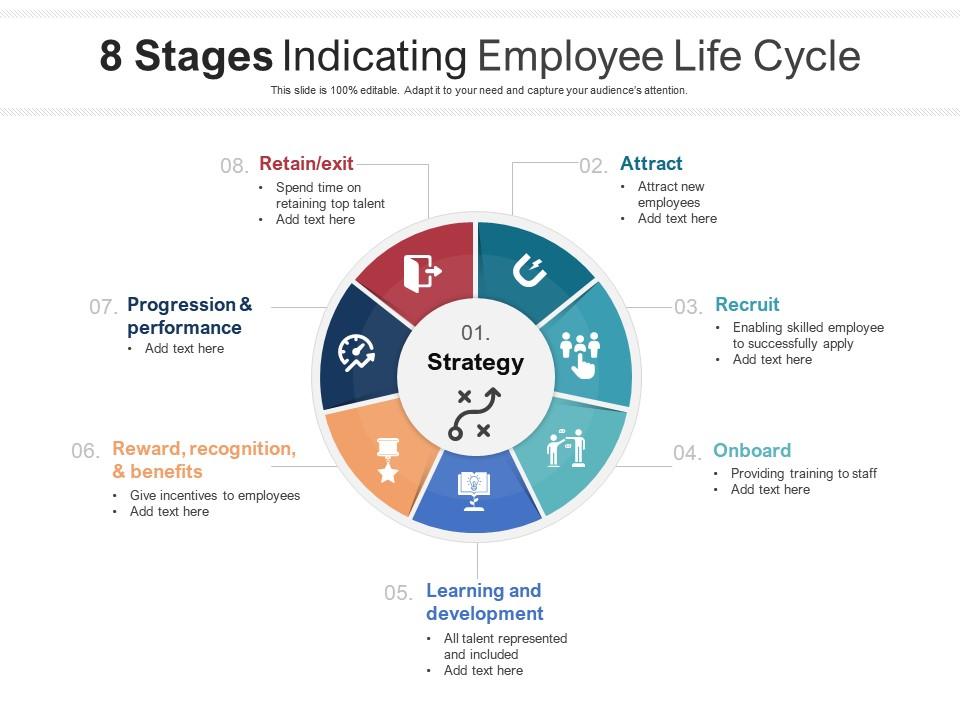
A circular diagram illustrating eight stages in an employee s lifecycle, including strategy, attract, recruit, onboard, learning and development, reward, recognition benefits, progression performance, and retain exit
Slide 1 of 2
Favourites Favourites

Try Before you Buy Download Free Sample Product

Audience Impress Your
Audience
Editable 100%
Editable
Time Save Hours
of Time
The Biggest Sale is ending soon in
0
0
:
0
0
:
0
0
Rating:
93%
Presenting our set of slides with 8 Stages Indicating Employee Life Cycle. This exhibits information on eight stages of the process. This is an easy to edit and innovatively designed PowerPoint template. So download immediately and highlight information on Performance, Development, Recruit.

FAQs for 8 stages indicating

So the employee life cycle breaks down into six stages: attraction, recruitment, onboarding, development, retention, and separation. Honestly, most companies mess up the onboarding part - I've watched great hires bail within weeks just because their first day was chaos. Each stage connects to the next, so if you screw up early, it ripples through everything. Development and retention are huge for keeping people productive and cutting turnover costs. Oh, and don't treat these like separate HR boxes to check. Start fixing your weakest area first since they all feed into each other anyway.

Send them a welcome package before day one - seriously cuts down on first-day nerves. Skip the paperwork marathon and focus on actual connections instead. Get them a buddy (definitely not their manager) for all those weird questions about where the good coffee is. Check in regularly during those first 90 days rather than just shoving them into random meetings. Quick wins are everything - they need to feel useful fast. Be crystal clear about what success looks like too. Oh, and make sure they actually feel like they belong from the start, not like they're drowning in info dumps.

Okay so performance management is basically what ties together your whole employee experience - onboarding, promotions, even exit stuff. But here's the thing: skip those awful once-a-year review marathons. Nobody likes those anyway. Make it ongoing instead. Regular check-ins work way better. Set clear goals upfront, then focus on actually developing people instead of just judging them. Think coaching, not criticism. Oh and honestly? Just ask your team what they need to succeed. They'll tell you if you actually listen.

So you'll want to track stuff at each step to see what's actually working. Look at which recruiting channels give you the best hires - that data's gold. During onboarding, watch engagement scores and how fast people get productive. Performance tracking catches problems early and shows you who's ready for bigger things. But honestly? Retention insights are where the real money is. You can spot who might quit before they do and actually fix things. Oh, and definitely dig into exit interviews first - work backwards from there to catch the red flags you missed earlier.

Honestly, you've gotta hit people at every stage if you want this to work. New hires need real onboarding - not just boring paperwork but actual mentors and clear 90-day targets. Growing employees? Give them stretch projects and cross-functional stuff. Don't ignore your veterans though - they get restless without fresh challenges. Mid-career people eat up leadership programs and rotation opportunities. Even when someone's leaving, do proper stay interviews. Oh, and here's the thing - schedule those development chats quarterly instead of waiting for problems. Proactive beats reactive every single time.

Think of feedback as your cheat sheet for fixing what's broken. Exit interviews, surveys, random check-ins - that's where you find out your "perfect" onboarding process actually sucks. New hires might be completely lost while you think everything's smooth. Honestly, most companies mess this up by never closing the loop. You ask for opinions, then... nothing changes. People notice that stuff. Fix the pain points they mention, tweak your processes, and actually tell them what you changed. Otherwise they'll just start giving you polite BS answers instead of the real issues.

Culture affects engagement from day one through exit interviews. New hires either feel welcomed or immediately start job hunting again - I've literally seen people quit after their first week because the vibe was so off. Growth-focused environments keep your best talent around, but toxic ones? People bail fast, especially the good ones you actually want to keep. Recognition and freedom to work matters huge during peak performance periods. Even when someone's leaving, treating them well means they might come back someday or send referrals your way. Honestly, just ask your team what's actually helping them versus what feels like corporate theater.

Don't rush them out - that always backfires. Do a proper exit interview since people actually tell the truth when they're leaving anyway. Let them wrap up their projects and say goodbye to everyone properly. The boring stuff matters too: get their final pay right, explain benefits, collect equipment back. Keep it professional but friendly the whole time. Honestly, even if things went south, how you handle someone's last week says everything about your company culture. They'll definitely talk about you later - might as well make sure it's good things.

Honestly, most of the boring HR stuff can be automated these days. Get an applicant tracking system, digital onboarding tools, performance management software - the works. Map out what's currently driving you crazy first though, then tackle those areas. The trick is making sure everything connects properly so you're not stuck copying data between systems (been there, it sucks). Oh and start with hiring automation since that's where you'll probably see the biggest time savings. You'll go from drowning in resumes to actually having bandwidth for strategic stuff.

Honestly, D&I touches literally every part of hiring and keeping people. You've got recruitment where you're trying to attract diverse talent, then onboarding that actually makes everyone feel welcome (not just check boxes). The development stuff is huge too - people stick around when they feel valued and can see real advancement opportunities. Exit interviews always reveal the gaps you missed along the way. Here's the thing though - you can't just slap diversity programs on top of broken processes. Has to be baked into each stage from the start. I'd audit your current setup first to see where you might be accidentally excluding people without realizing it.

Ugh, job market shifts mess with literally every part of managing people. Tight talent market? You're scrambling to hire faster, making onboarding actually decent, and bending over backwards to keep folks happy because they know they can bounce. Plus everyone wants promotions yesterday and fancy development programs. It's honestly a lot. When things cool down though, you get to be pickier about who you hire and don't have to throw money at retention stuff. The trick is not getting stuck doing what worked six months ago - I swear, what employees want changes constantly now.

Look, emotions matter way more than people think at work. New hires are pumped but terrified they won't fit in - your onboarding has to tackle that anxiety head-on. Growth phase? That's when people are hungry for recognition and chances to level up. Most companies completely whiff on this part, honestly. Mid-career folks start questioning everything and feel stuck. And when someone's leaving? It's messy - they're relieved but also sad about ditching work friendships. This stuff isn't fluffy - it tanks performance and retention if you ignore it. Train your managers to actually notice these emotional shifts.

Honestly, start this stuff on day one - don't wait around. Spot your high-potential people during onboarding and get them mentors right away. Most companies mess this up by waiting too long, which is dumb. Give them stretch assignments and cross-functional projects as they develop. Performance reviews? Perfect time to assess leadership skills too. The trick is making it ongoing, not just some random workshop once a year. People need to see their path forward - create clear leadership tracks so they know where they're headed. I'd audit your current processes first and see where you can sneak in leadership development opportunities.

Honestly, recognition is like the secret sauce nobody talks about enough. It keeps people motivated from day one all the way through their time at your company. When you actually acknowledge what people do well, they remember why they wanted to work there in the first place. Plus it's basically free but makes a huge difference - people see their growth, feel appreciated when things get stressful, and they'll actually say good things about you even after they leave. Just start calling out wins in meetings. You'll be surprised how much the whole vibe changes.

Track the basics first - how long hiring takes, onboarding scores, who's staying vs. leaving. Employee surveys are clutch (seriously, people skip these way too much). Check promotion rates and performance trends over time. The cool part is breaking this down by department or manager to see what's actually working. Oh, and do those quick pulse surveys throughout the year instead of just one massive annual thing. Honestly, just pick 3-5 metrics that align with what you're trying to achieve. You can always layer on more once you get the hang of it. Exit interviews tell you a ton too.

Ratings and Reviews

93% of 100
Review Form
Write a review
Most Relevant Reviews
  1. 80%

    by Domingo Hawkins

    Nice and innovative design.
  2. 100%

    by Jake Smith

    Thanks for all your great templates they have saved me lots of time and accelerate my presentations. Great product, keep them up!
  3. 100%

    by Alexander Ramirez

    Excellent design and quick turnaround.

3 Item(s)

per page: