


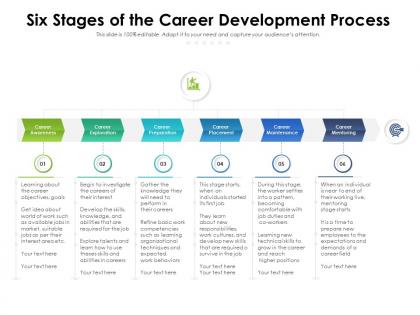
Six stages of the career development process




Try Before you Buy Download Free Sample Product
 Impress Your
 Audience
 100%
100% Editable
 Save Hours
 of Time


Our Six Stages Of The Career Development Process are topically designed to provide an attractive backdrop to any subject. Use them to look like a presentation pro.
People who downloaded this PowerPoint presentation also viewed the following :
Six stages of the career development process with all 2 slides:
Use our Six Stages Of The Career Development Process to effectively help you save your valuable time. They are readymade to fit into any presentation structure.

FAQs for Six stages of the
Communication and leadership skills are huge - they'll get you far anywhere. Adaptability too. Honestly, emotional intelligence might be even more important than people realize since you're dealing with humans all day. Problem-solving shows up everywhere obviously. Technical stuff matters but depends on your field. Oh and networking isn't just schmoozing - it's about actually connecting with people, which sounds cheesy but whatever. My take? Pick one soft skill and one technical thing to focus on this quarter. Then see what else you need to work on.
Dude, most jobs aren't even posted online - like 70% of them. Crazy right? But here's the thing: when you actually know people, they'll think of you first when stuff opens up. You get referrals, inside scoop on companies, mentors who actually care about your career. Don't waste time at those awkward networking mixers though. Just be helpful to people you meet and stay in touch. Quality over quantity always wins. Honestly, just text one person from your industry this week and see what happens.
Honestly, get a mentor if you can. They'll show you shortcuts and help you dodge mistakes that could set you back years. Plus they know people - like, their network becomes your network which is huge. The feedback alone is worth it because they'll call out your blind spots (sometimes brutally lol). I'm kicking myself for not finding one sooner. Office politics? They've seen it all. Should you take that risky project or switch teams? They've been there. Find someone whose path you actually respect and be upfront about what kind of help you need.
Look at job postings for roles you want and see what skills you're missing - that's your starting point. Ask your boss or coworkers for feedback (awkward but worth it). Those online assessments can help too, though some are pretty generic. Check out what people who are crushing it in your field are doing differently. Honestly, the hardest part is being real with yourself about weaknesses. Once you've got your list of gaps, figure out which ones would actually move the needle for your career goals. Don't try to fix everything at once.
Here's the thing - you've gotta build real connections with everyone, not just your boss. In meetings, listen way more than you talk so you can figure out what's actually going on. Yeah, people will dump all their office drama on you, but don't get sucked into gossip or picking sides. That stuff always backfires. Show up as the person who actually wants to solve problems and work together. Keep track of your wins and make sure the right people hear about them (but don't be weird about it). Oh, and start figuring out who really has influence around there - then find genuine ways to connect with those people.
You've gotta keep learning new stuff, no question about it. Things change so fast now - I swear there's some new app or tool trending every other day. Your skills can get stale quicker than you'd think. Companies really care about people who can adapt and roll with changes when they're promoting or hiring. Nothing crazy like going back to school though. Just pick up little things here and there - online courses, podcasts, mess around with new software. Even 30 minutes a week makes a difference. Start small and build from there.
Honestly, you need to get specific with your goals - write them down with actual deadlines, not just "someday I'll get promoted" nonsense. I made that mistake and wasted like 6 months doing nothing productive. Break the big stuff into quarterly chunks so it doesn't feel overwhelming. Check in monthly to see how you're doing. Get someone who'll actually hold you accountable (not your mom who thinks everything you do is perfect). Here's the thing - if your daily tasks aren't pushing you toward these goals, why are you even doing them? Sounds harsh but it's true.
Honestly, personal branding is kind of a game-changer. You become way more memorable when you've got that clear, authentic vibe going. Hiring managers and clients remember you because people work with folks they actually know and trust. Your brand helps you stand out - I mean, everyone's fighting for attention these days. Plus opportunities start coming to you instead of you scrambling after everything. First figure out what you want to be known for. Then just consistently post content about that stuff on LinkedIn or wherever your industry hangs out. It's pretty straightforward once you get rolling.
Honestly, start with your company first - HR usually has internal programs or they'll reimburse tuition. Way cheaper than paying out of pocket. LinkedIn Learning and Coursera are solid if you want something structured, but don't overlook YouTube and podcasts (some are actually better than paid courses, no joke). Industry associations do workshops too, plus you get to network which is half the battle. Figure out what skills you're missing first though. Then pick whatever format won't make you want to procrastinate - some people need deadlines, others just want to learn at their own pace.
Honestly? Ask for feedback constantly - it's the fastest way to actually get better at work. Don't just say "any feedback?" though, that gets you nothing useful. Ask specific stuff like "what could I do differently in meetings?" or "where do you think I'm weakest right now?" Here's the hard part: when someone tells you something, don't defend yourself. Just listen, even if it stings a little. Pick 1-2 things to actually change and do them. Then circle back later to show you took their advice - people love seeing that and they'll keep helping you improve.
Okay so remote work is definitely sticking around - that's pretty clear at this point. AI's gonna keep changing jobs, but honestly I think people panic too much about it. Focus on skills that work WITH AI instead of trying to fight it. The gig economy is exploding everywhere now, not just Uber drivers. Green jobs are massive too - sustainability roles in companies you wouldn't expect. Oh and the skills gap thing is real, so you kinda have to keep learning constantly now. I know, it's annoying but whatever. Stay flexible with work arrangements and pick one new skill to actually learn this quarter.
First thing - figure out which skills from your current job actually translate over. LinkedIn should reflect where you're heading, not just where you've been. Honestly, networking is going to be your best friend here since most jobs never even hit the boards. You might want to grab some courses or certifications to fill obvious gaps. Yeah, you'll probably take a pay cut at first, but it's usually temporary. Get comfortable telling your "why I'm switching" story - you'll be saying it a lot. Oh, and don't wait until you feel totally ready to start applying. That's how you figure out what actually works.
Dude, emotional intelligence is SO underrated for getting ahead at work. Like, I've watched super smart people get stuck because they can't read a room or handle stress without being weird about it. The higher up you go, the less it's about your actual skills and more about whether people want to work with you. Can you motivate your team? Do you make meetings better or worse just by being there? Honestly, once you start noticing how your vibe affects everyone else, you'll already be ahead of most people.
Don't pile career development on top of everything - that's a recipe for burnout (learned this the hard way). Instead, carve out small chunks from what you're already doing. I'd grab 30 minutes during lunch or wake up slightly earlier. Pick skills that actually help your current job so you're not just adding more work. One course per quarter is way more realistic than going crazy with five different things. Oh, and definitely loop in your manager - they might let you do some learning during work hours or tie it to projects you're already handling. Makes everything feel less overwhelming.
Honestly, the worst thing you can do is get too stuck on one rigid plan. Industries change fast and you'll miss cool opportunities if you're not flexible. Most people obsess over technical skills but totally ignore networking - I definitely made that mistake early on. Super guilty of it actually. Comparing your progress to everyone else's timeline is another trap that'll mess with your head. And don't sit around waiting for some perfect job to appear because that's not really how it works. Start meeting people now, even if it feels awkward at first. Stay open to pivoting when something better comes along.
-
Topic best represented with attractive design.
-
Commendable slides with attractive designs. Extremely pleased with the fact that they are easy to modify. Great work!
-
Designs have enough space to add content.
-
Out of the box and creative design.
-
Understandable and informative presentation.