


Career planning and development powerpoint presentation slides






Try Before you Buy Download Free Sample Product
 Impress Your
 Audience
 100%
100% Editable
 Save Hours
 of Time


Select our content ready Career Planning And Development PowerPoint Presentation Slides for employee competency assessment. Use this employee development plan PowerPoint template to evaluate, monitor & observe succession career planning. The employee succession planning PowerPoint complete deck includes self-explanatory templates like succession & career planning overview, identify the critical position, employee competency & assessment grid, sample flowchart, modelling chart, key succession & career planning metrics, development of career plan, manage ongoing process, roadblocks of succession management, performance improvement plan, key development practices, succession planning backup summary, detailed format, to name a few. The employee development strategy presentation deck also assists HR managers to make decisions, set goals and take actions. Outline objectives of career development with the help of this high quality and easy to use succession planning in HRM presentation deck. Get access to this professionally designed employee performance development plan now and communicate your ideas more effectively. Our Career Planning And Development Powerpoint Presentation Slides deliver on their boasts. It actually facilitates ease of functioning.
People who downloaded this PowerPoint presentation also viewed the following :
Content of this Powerpoint Presentation
Slide 1: This slide introduces Career Planning and Development. State Your Company Name and begin.
Slide 2: This is an Agenda slide. State your agendas here.
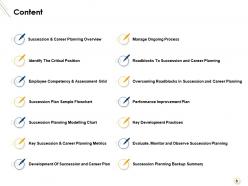
Slide 3: This slide shows Content of the presentation.
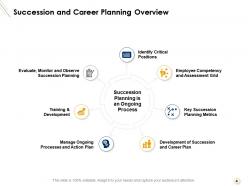
Slide 4: This slide presents Succession and Career Planning Overview.
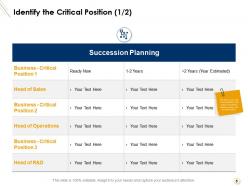
Slide 5: This slide displays Identify the Critical Position that require succession planning along with the time frame.
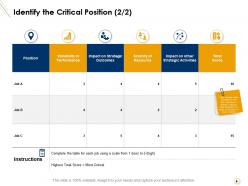
Slide 6: This is another slide representing Identify the Critical Position in tabular form.
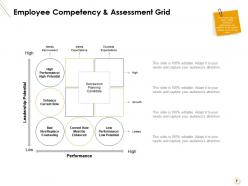
Slide 7: This slide showcases Employee Competency and Assessment Grid to identify individual’s performance and potential for the specific position in the coming future.
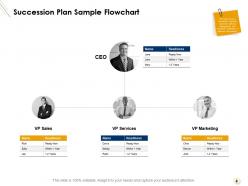
Slide 8: This slide shows Succession Plan Sample Flowchart defining designations and employee readiness to takeover that position.
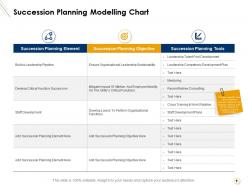
Slide 9: This slide presents Succession Planning Modelling Chart describing various planning elements, objectives and necessary planning tools that are required for succession planning implementation.
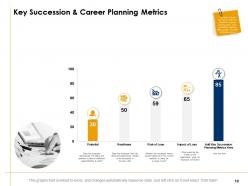
Slide 10: This slide displays Key Succession & Career Planning Metrics describing- Potential, Risk of Loss, Key Succession Planning Metric, Readiness, Impact of Loss.
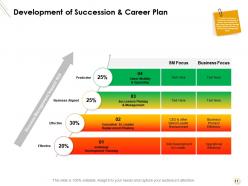
Slide 11: This slide represents Development of succession and career plan with data in percentage.
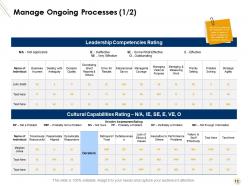
Slide 12: This slide showcases Manage Ongoing Process by assessing the employees on the basis of variety of factors to determine their readiness for succession planning.
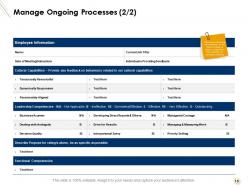
Slide 13: This is another slide for Managing Ongoing Processes.
Slide 14: This slide shows Roadblocks to Succession and Career Planning.
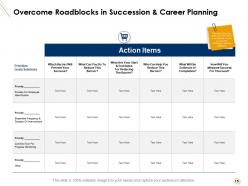
Slide 15: This slide shows the action plan that needs to be followed in order to overcome Roadblocks in Succession and Career Planning.
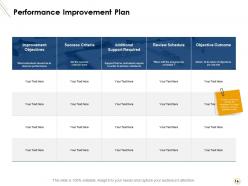
Slide 16: This slide presents Performance Improvement Plan to train and develop the employees for future positions.
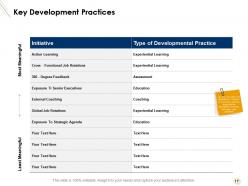
Slide 17: This slide displays Key Development Practices in tabular form.
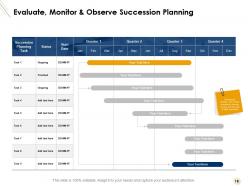
Slide 18: This slide represents Evaluate, Monitor and Observe Succession Planning.
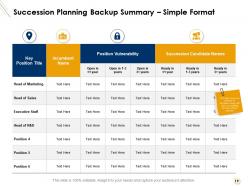
Slide 19: This slide showcases Succession Planning Backup Summary- Simple Format covering key positions for succession along with name of candidates and their relevant positions.
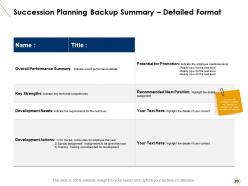
Slide 20: This slide shows Succession Planning Backup Summary- Detailed Format listing employee strengths and training and development needs for future job positions.
Slide 21: This slide displays icons for Career Planning and Development.
Slide 22: This slide is titled as Additional Slides for moving forward.
Slide 23: This is Our Mission slide with related imagery and text boxes.
Slide 24: This is Our Team slide with names and designation.
Slide 25: This is About Us slide to show company specifications etc.
Slide 26: This is a Venn slide with text boxes.
Slide 27: This is a Financial slide. Show your finance related stuff here.
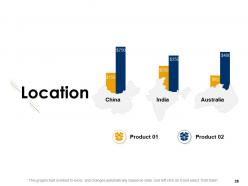
Slide 28: This is a Location slide with maps to show data related with different locations.
Slide 29: This is a Thank You slide with address, contact numbers and email address.
Career planning and development powerpoint presentation slides with all 29 slides:
Use our Career Planning And Development Powerpoint Presentation Slides to effectively help you save your valuable time. They are readymade to fit into any presentation structure.




FAQs for Career planning and development
Okay so first thing - be brutally honest about where you're at right now. What are you actually good at? What do you care about? Then think about where you want to be in like 3-5 years (yeah I know, classic interview question but whatever, it works). Figure out what's missing between point A and point B. Break that down into stuff you can actually do - some quick wins, some longer projects. Don't make it too rigid though because you'll probably change your mind about things. Oh and write it somewhere you'll see it, not some forgotten note app.
Okay, so first thing - be brutally honest about what you're actually good at vs what you suck at. I know it's painful, but ask some colleagues for real feedback too. We're weirdly blind to our own weak spots. Then grab a bunch of job descriptions for roles you want and see what skills pop up everywhere. Don't be vague though - like instead of saying "I'm a good communicator," be specific: "I nail presentations but my emails are trash." Once you've got that mapped out, you can figure out which gaps to tackle first. Honestly, the feedback part always makes me want to hide under my desk, but it works.
Dude, networking is seriously a game changer for your career. Most jobs aren't even posted online - you hear about them through people first. Plus you get the actual tea on what different roles are really like, not just the polished job description BS. I used to think it was all fake schmoozing too, but it's more about genuine connections. Coffee chats are clutch - just ask people about their day-to-day work. People genuinely love talking shop if you ask good questions. Your network basically becomes this early radar for industry shifts and opportunities. Trust me on this one.
Honestly, you've gotta mix up where you're getting info from. LinkedIn's actually amazing for this - follow people in your field and join those industry groups where everyone's debating what's next. Also hit up conferences or webinars when you can. Set up Google Alerts for buzzwords in your space too. Professional associations are solid but can be kinda boring sometimes. The real gold though? Talk to people actually doing the work daily, not just reading articles about it. I'd block out like 30 minutes each week just for hunting trends. You'll start seeing patterns way before everyone else catches on.
Honestly, there's a bunch of good stuff out there to help you figure this out. O*NET Interest Profiler is free and pretty decent for getting a sense of what you're actually into. 16Personalities too if you're into that whole personality test thing. LinkedIn Learning has some solid career courses - way better than I expected them to be, actually. Check with your HR about internal coaching programs since most people don't even know those exist. Oh, and professional associations usually have career resources that are actually useful. I'd probably start with an assessment first, then see what courses make sense based on what you learn about yourself.
Honestly? Check in every 6 months or so. I learned this the hard way - used to do it yearly but missed too much stuff. Life moves fast now and your priorities change way more than you think. Industries shift, random opportunities show up, sometimes you just get hit with unexpected life stuff. Short check-ins work better anyway. Set a reminder for like 30 minutes every quarter to ask "am I still on the right track?" Sounds basic but it actually prevents you from wandering off without realizing it. Way better than waiting a whole year and being like "how did I end up here?"
Dude, seriously - keep learning new stuff or you'll get left behind. The job market moves crazy fast these days. What you knew five years ago? Probably useless now, honestly. Employers actually love when you take courses because it shows you're motivated and they don't have to train you as much. Certifications, online classes, whatever - just pick something that fills a gap in your current job. It'll make you way more promotable and you can argue for better pay too. I learned this the hard way when I got passed over for a promotion last year because I hadn't updated my skills.
Look, you gotta figure out what "practical" actually means for you first - need money now or can you build up slowly? Find stuff that uses skills you're decent at, even if it's not your dream thing. Honestly, people get way too obsessed with finding their "one true calling" or whatever. You can totally develop passion for work that pays well and doesn't make you miserable. Research what those jobs actually look like day-to-day, talk to people doing them. Side projects are always an option too while you're building something stable. The sweet spot is where your interests meet actual market demand.
Honestly, I'd start with where you want to be in 5 years and work backwards from there. Break those big scary goals into smaller wins you can actually hit every 6-12 months. I totally messed this up early on by setting completely unrealistic timelines! Each milestone should build real skills for your next step. LinkedIn stalking people in your dream role is surprisingly helpful - see what they actually did to get there. Write everything down and check in quarterly because you'll forget otherwise. Also leave room to pivot since industries move crazy fast these days.
Look for mentors who are like 2-3 levels up from where you are now. Here's what I wish I'd known earlier - don't just ask for random advice! Show up with actual problems you're dealing with and then actually DO what they tell you. I totally bombed my first mentoring thing by being way too vague about what I wanted. Good mentors will hook you up with their contacts and give you the real scoop on what's happening in your field. Monthly check-ins work well. Oh, and always shoot them a quick email after summarizing what you talked about - they appreciate it way more than you'd think.
Honestly, the worst thing you can do is just drift around with zero plan - I've seen too many friends do this. But don't go crazy rigid either, since careers never go exactly how you think. Money isn't everything (learned that one the expensive way lol). Network consistently or you'll regret it later. Oh, and stop waiting for some perfect opportunity that doesn't exist. Take smart risks instead. My advice? Figure out where you want to be in 3-5 years, then just work backwards from there.
First things first - figure out what you actually care about, not what sounds good on paper. Be brutally honest about whether your job supports or crushes those values. Big mismatch? Time to make some moves. Hunt for companies or roles that fit your vibe - could be flexibility, making a difference, creative freedom, whatever. Honestly, some of the best opportunities come from places you wouldn't expect. You don't have to blow everything up though. Side projects, volunteering, or just changing how you approach your current work can help bridge the gap. Just don't drift aimlessly.
Honestly, numbers are everything on resumes - actual results beat job duties every time. Match their keywords too, obviously. Practice the STAR method for interviews (Situation, Task, Action, Result). Mock interviews feel super weird but they actually work. I used to hate them but whatever, they help you catch filler words and awkward pauses. Research the company hard and prep real questions about their problems, not just "what's the culture like?" Oh and start practicing this stuff even when you're not job hunting. It's way easier than cramming everything when you desperately need a job.
Honestly, skip their "values" page - it's just marketing BS. During interviews, ask how they actually handle conflict and what decisions look like day-to-day. Watch how people interact in the office. Do they seem genuinely happy or just saying what sounds good? Glassdoor helps but those reviews can be... dramatic sometimes. Here's what really works: ask to chat with someone who'd be your peer, not your manager. They'll tell you what it's really like without the sugar-coating your boss might give you.
LinkedIn has some solid career planning worksheets you can grab for free. Indeed's got goal-setting templates too. Honestly, I've seen people do amazing things with just a basic spreadsheet - way better than some fancy system they never touch. Trello or Notion work great if you want something a bit more visual to track your milestones. The trick is actually using whatever you pick consistently. I'd say grab one template this week and just fill in the basics. You can always make it fancier later, but building the habit first is what matters most.
-
Informative presentations that are easily editable.
-
Use of different colors is good. It's simple and attractive.
-
Easily Understandable slides.
-
Great quality product.