


Employee life cycle framework ppt infographics




Try Before you Buy Download Free Sample Product
 Impress Your
 Audience
 100%
100% Editable
 Save Hours
 of Time


Get the competition out for the count with our Employee Life Cycle Framework Ppt Infographics. They will be completely floored.
People who downloaded this PowerPoint presentation also viewed the following :
Employee life cycle framework ppt infographics with all 5 slides:
Our Employee Life Cycle Framework Ppt Infographics are designed by innovative brains. It contains amazing artworks.


FAQs for Employee life cycle
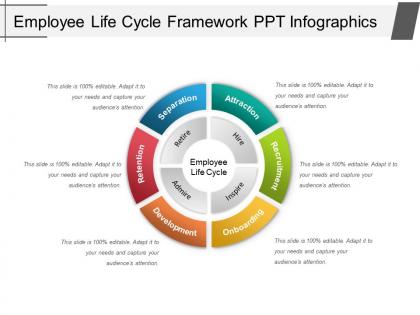
So there are six stages: attraction, recruitment, onboarding, development, retention, and separation. But here's what's cool - they're not just a straight line. Like, when someone leaves and does an exit interview? That actually circles back to attraction because they'll either trash-talk or recommend you to other people. Development and retention are super connected too since people stick around when they can actually grow. Oh and your hiring process totally sets the tone for onboarding expectations. Map out how each stage affects the others in your company - you'll probably find gaps you didn't even know existed.
Show people what working there is actually like, not some polished BS. Nobody wants to upload their resume multiple times - fix your application process. Be upfront about pay ranges from the start. Your current employees should be talking you up on social media and in interviews. Speed is everything though. Found someone amazing? Don't drag your feet because three other companies are probably trying to hire them too. Oh, and start building relationships before you actually need to fill positions - way easier that way.
Dude, onboarding is seriously everything. Those first couple weeks? They basically determine if someone's gonna love working there or start updating their LinkedIn again. I've seen it happen so many times - bad onboarding and people are mentally checked out before they even start. But when companies actually do it right, new hires feel like they belong and understand what they're supposed to be doing. The whole culture thing matters way more than just shoving a handbook at them. Introduce them to real people, not just HR. Structured programs work - the stats don't lie about retention rates.
So you want to know if your onboarding actually works? Time-to-productivity is huge - basically how fast new people hit their targets. Also check your 90-day retention because bad onboarding kills that fast. Track completion rates for training stuff and survey scores from new hires. Oh, and don't skip asking managers how ready they think people are - that's surprisingly telling. Mix the hard data with the feelings stuff, you know? I'd set up something simple to check monthly. Honestly, most companies are terrible at this but it's not rocket science if you just pay attention to the right things.
Yeah, you've gotta adapt your performance stuff based on where people are in their journey. New hires need tons of check-ins and simple goal-setting just to get their bearings. Once they hit their stride, that's when structured reviews and development planning kick in. Your seasoned folks? They want the strategic conversations - succession planning, leadership track, that whole thing. Most places totally blow this by using the exact same annual review for everyone, which is honestly pretty lazy. Match your approach to their actual career stage instead of treating a 10-year veteran like they just walked in the door.
Start by asking your team what skills they actually want to learn - that's honestly the most important step. Then build your programs around those interests instead of guessing. Regular skills assessments help, plus mentorship programs work great. Cross-training is clutch because it builds skills AND makes your team more flexible. Give people dedicated learning time if you can swing it (Google does that 20% thing but let's be real, most companies can't). The main thing is making development feel planned out, not just random training here and there. Oh, and make sure it connects to both career goals and what the business needs.
So employee engagement starts super high during onboarding - everyone's pumped and optimistic. Then reality hits and it usually drops when people realize the job isn't what they imagined. After that rough patch, things level out as folks get comfortable. But here's what's cool - engagement can shoot back up during promotions or exciting new projects. Watch out for two danger periods though: right before people quit (you'll see disengagement creeping in) and during big company changes. Honestly, I'd check in on engagement regularly instead of assuming it's fine. Those early dips? That's your chance to fix things before people walk.
Exit interviews are gold mines for real feedback - people finally spill what they actually think when they're walking out the door. Nobody's gonna tell their manager they're terrible while still collecting a salary, obviously. But once they're gone? You'll hear about the awful boss, underpaying issues, or that one team everyone hates working with. The trick is tracking what you hear repeatedly and doing something about it. I'd start keeping notes on common complaints - maybe do quarterly reports for the higher-ups? Otherwise you're just collecting stories that sit in a file somewhere doing nothing.
Honestly, just talk to everyone involved way before the move happens. Set up a proper handover plan - trust me, mystery projects are the worst. Have them shadow the new role first before throwing them in completely. The emotional stuff matters too since internal moves can be surprisingly stressful. Knowledge transfer sessions are clutch for making sure nothing gets lost. Oh, and treat it exactly like you're onboarding someone new because that's basically what's happening, even if they already know where the coffee machine is.
Your former employees are basically free marketing for you. They'll send great candidates your way, connect you with new clients, and some might even come back later with better skills. Honestly, I've watched companies score huge deals just because an ex-employee mentioned them at their new job. The trick is actually staying in touch, not just sliding into their DMs when you need favors. Maybe start a casual newsletter or throw them in a LinkedIn group? Keep it light though - nobody wants to feel like they're being hunted for referrals every month.
Oh man, this is actually way easier than it seems! HRIS systems can handle most of your onboarding - all that paperwork automation, progress tracking from offer letter to day one. Performance tools streamline the review cycles too. Offboarding's where I really see the magic though - automated checklists that revoke access, track equipment returns, schedule exit interviews. Takes like 5 minutes to set up but saves hours every time someone leaves. The trick is getting your systems to talk to each other so you're not manually entering stuff twice. I'd start by writing down everything you do manually now, then pick the most annoying tasks to automate first.
So here's the thing - your managers literally control everything about the employee experience. From onboarding through exit interviews, they're setting the vibe. Bad leaders create toxic cultures that burn people out fast. I can't tell you how many talented people I've watched quit because of awful managers (not the job itself). Good leaders focus on career growth, give solid feedback, and actually support their team when things get rough. Oh, and one crappy manager can destroy an entire department's morale. My advice? Train your leaders on people skills, not just technical stuff. That's where the magic happens.
Honestly, you've gotta build feedback into everything. Week one onboarding surveys, regular check-ins during projects, actual exit interviews when people bounce. Make performance reviews two-way streets instead of just managers talking at employees. Most companies wait until someone's already quitting to ask what went wrong - like, why?? Set up quarterly pulse surveys but here's the thing - you actually have to DO something with the responses or people will just ignore future surveys. Oh, and skip the annual feedback thing. Nobody remembers what happened 8 months ago anyway.
Look, most companies totally blow this - they only do the big annual review thing and miss everything in between. What actually works? Catch people doing good stuff and say something right away. Train your managers to notice wins, not just problems all the time. Quick shoutouts in meetings, dropping a message in Slack, whatever feels natural. Don't make it just a top-down thing either - let teammates recognize each other too. Set up easy ways for that to happen. The key is making it regular and actually meaning it when you do.
Honestly, you can't just make DEI a hiring thing and call it done. Start with recruitment - get diverse candidates and ditch the biased processes. Onboarding's where you actually make people feel welcome (or not). Career stuff is probably the biggest piece though - mentoring and promotions need to be fair across the board. Don't skip exit interviews either, they'll tell you if certain groups are bailing for fixable reasons. It won't happen on its own, so you've got to be deliberate about each step. Maybe audit one area first to see what's broken?
-
Presentation Design is very nice, good work with the content as well.
-
Excellent template with unique design.