

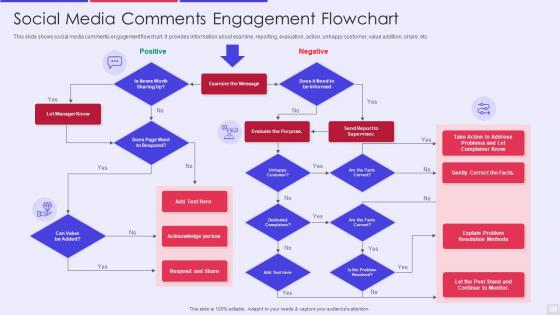
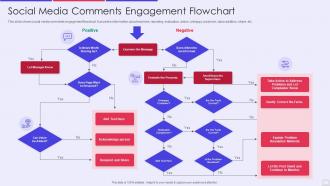
Social media comments engagement flowchart




Try Before you Buy Download Free Sample Product
 Impress Your
 Audience
 100%
100% Editable
 Save Hours
 of Time


Our Social Media Comments Engagement Flowchart are topically designed to provide an attractive backdrop to any subject. Use them to look like a presentation pro.
People who downloaded this PowerPoint presentation also viewed the following :
Social media comments engagement flowchart with all 6 slides:
Use our Social Media Comments Engagement Flowchart to effectively help you save your valuable time. They are readymade to fit into any presentation structure.





FAQs for Social media
Honestly, engagement rate is what I'd focus on first - it shows what percentage of your followers actually give a damn about your posts. Track likes, comments, shares, saves, and click-through rates too. Reach and impressions matter since they tell you how many eyeballs you're getting versus actual interaction. Oh, and if you're doing stories or videos a lot, completion rates and watch time are super telling. But here's the thing - don't go crazy tracking every single metric or you'll lose your mind. Pick maybe 3 or 4 that actually match what you're trying to achieve and stick with those.
Stop posting random stuff and actually figure out what your audience cares about. Check your analytics first - what's getting likes and comments? Then think about their real problems, not what you want to sell them. I swear, behind-the-scenes content works way better than polished posts most of the time. Reply to comments like you're chatting with friends. Ask questions in your captions! Then actually respond when people answer - that back-and-forth is everything. Show some personality too. Nobody wants to follow a boring brand account that sounds like every other company.
Dude, visuals are everything on social media - like they literally boost engagement by 650% compared to text-only posts. Makes total sense when you think about how fast we all scroll, right? Photos, videos, infographics, even those simple text overlay graphics will crush plain text every time. I'm totally guilty of mindless scrolling until something visually grabs me. Just make sure your stuff looks decent quality and actually relates to what you're saying. Oh, and definitely test different formats - see what gets your audience liking and sharing the most. It's honestly wild how much difference a good visual makes.
Honestly, just start reposting your customers' photos and videos - but always tag them! People get so excited when brands feature their stuff. It's basically free validation. Try running a hashtag contest where people share pics using your product, then show off the best ones on your stories. The thing is, user content feels way more real than your polished posts. Trust me, people engage with it more because it doesn't feel like an ad. Start small - repost one customer photo this week and see how much better it does than your usual content.
Your followers probably got bored with whatever you've been doing, so mix it up. Behind-the-scenes stuff works great, or try asking questions that actually make people want to respond. Those "remember when" posts are kinda cheesy but honestly they get engagement. Maybe switch up when you're posting too - people's schedules change. Look at your worst-performing posts from lately and literally do the opposite. Polls and interactive stories help wake people up. The whole thing is about breaking whatever made them scroll past you in the first place.
Social media algorithms are obsessed with early engagement - if your post gets likes and comments in that first hour, you're golden. Instagram's pushing Reels hard right now, LinkedIn loves native video, and TikTok's all about keeping people watching till the end. Facebook? Honestly no clue what they're doing anymore lol. The trick is getting your audience to engage consistently - that trains the algorithm to show your content to more people. Don't just post random stuff though. Focus on creating things that actually make people want to comment or share. Quality over quantity wins every time.
Honestly, I'd start with Tuesday-Thursday, somewhere between 9-11 AM or 1-3 PM when people are sneaking social breaks at work. Wednesday around 11 AM is like magic for most platforms. But here's the thing - your audience could be totally weird. I know B2B accounts that absolutely kill it Sunday mornings when everyone's meal prepping and mindlessly scrolling. Test different times for a few weeks and actually watch your engagement, not just how many people saw it. Oh, and each platform's different too. Those times I mentioned are solid starting points, but you'll need to adjust once you see when your people are actually online.
So basically, you just spy on what people are saying about your brand and industry online - but like, the legal kind of spying! Track mentions and hashtags to see what's trending. Check out competitor chats too. You'll spot pain points and figure out how people actually talk in your space. Pay attention to when your audience is most active and what content they're into. Which influencers do they trust? Once you know all that, you can jump into conversations naturally and make content people actually want to see instead of just guessing what works.
Okay so trending hashtags are basically your best friend for getting more engagement. Jump on them early though - like, the second you see something taking off in your niche. Hashtags work like search terms, so random people can actually find your stuff instead of just your usual followers. But here's the thing that drives me crazy - don't just throw in whatever's popular if it has nothing to do with your post. That's so obvious and people see right through it. Watch what's happening in your industry. Then create something that actually contributes to the conversation instead of just riding the wave.
Don't go dark or get all defensive - that's the worst move. Acknowledge what's happening fast, be straight about how you're handling it, and keep posting your normal good stuff too. Honestly, people respect brands way more when they don't just vanish the second things blow up. Listen more than you talk, answer real concerns (not the trolls), and resist explaining every little detail. I learned this the hard way - your audience remembers how you acted when shit hit the fan, not the actual drama itself.
The built-in analytics on most platforms are trash, honestly. Google Analytics and Facebook Insights are free but pretty basic. I'd try Hootsuite or Buffer first - they connect everything so you're not constantly switching between apps. Sprout Social has gorgeous reports if you don't mind spending more. For deeper stuff like tracking what people actually think about your brand, Brandwatch is solid. Oh, and Mention is good too for keeping tabs on competitors. Start with free trials though - you might not need all the fancy features right away.
So Gen Z and younger millennials are obsessed with visual stuff - Stories, Reels, TikToks, you know the drill. Quick and snackable content wins every time. Older millennials and Gen X actually want real posts they can dive into and have actual conversations about. Boomers live for Facebook sharing and writing novels in comment sections (my mom does this constantly). Here's what's interesting though - it's not just about which platform they use. How they engage is totally different. Younger people stick to likes and shares. Older folks will write paragraphs explaining their thoughts. Match your content style to how each group naturally behaves online.
Okay so biggest things: be transparent about sponsored posts, don't use manipulative tactics just for views, and actually engage with people who comment - don't just disappear after they support your content. Buying fake followers is super cringe and everyone can tell anyway. Think about whether what you're promoting could hurt people, especially younger followers. I'd say audit what you're doing now and ask yourself if you'd be cool with your audience seeing your behind-the-scenes process. Oh and authenticity matters more than perfect engagement rates tbh.
People connect with stories way more than boring corporate stuff. Like, would you rather hear about "optimized solutions" or how Sarah from accounting saved her small business $3K last month? Stories hit different because they're real. Behind-the-scenes content, customer wins, even times you messed up - that's what gets people commenting and sharing. Nobody's engaging with a press release, but they'll definitely react to something that feels authentic. Honestly, just pick one genuine story from your business and see how people respond. You'll probably be surprised at the difference it makes compared to regular posts.
Honestly, influencer marketing works because you're borrowing someone else's credibility. Their followers already trust them, so when they mention your brand, people actually pay attention instead of scrolling past like they do with regular ads. It's basically like getting a friend's recommendation. You don't need huge names either - micro-influencers in your specific niche usually get better engagement anyway. I'd focus on finding people whose audience matches who you're trying to reach rather than just going for follower count. Oh, and start small to test what works before throwing money around.
-
Informative presentations that are easily editable.
-
Design layout is very impressive.