Social Media Marketing Pitch Deck Ppt Template

Rating:
80%
Social Media Marketing Pitch Deck Ppt Template
Slide 1 of 39
Favourites Favourites

Try Before you Buy Download Free Sample Product

Audience Impress Your
Audience
Editable 100%
Editable
Time Save Hours
of Time
The Biggest Sale is ending soon in
0
0
:
0
0
:
0
0
Rating:
80%
This in-depth and intuitively designed Social Media Marketing Pitch Deck Ppt Template. It is a resourceful tool for every organization. Use it to showcase your services and present a strategic outlay of your business activities. This complete deck helps give a quick overview of the companys viability. It also targets various topics of interest, thus being a comprehensive tool that you can download and use. Take advantage of this PowerPoint pitch deck to discuss your business plans and vision in an impressive manner. You can also use this deck to give a quick demonstration of your product and its USP that can be shared on Google Slides or PowerPoint. This complete deck comes in an editable format and two aspects ratios, thus increasing its applicability and visibility. It also acts as a visual reinforcer to make your presence felt in the industry.

Content of this Powerpoint Presentation

Slide 1: This slide introduces Social Media Marketing Pitch Deck. State Your Company Name and begin.
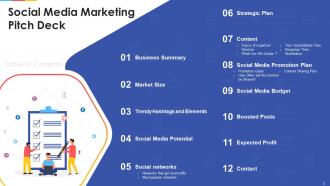
Slide 2: This slide presents Table of Content for the presentation.
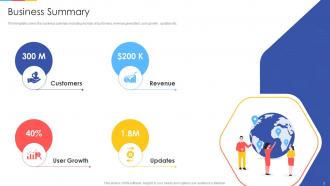
Slide 3: This slide covers the business summary including number of customers, revenue generated , user growth , updates etc.
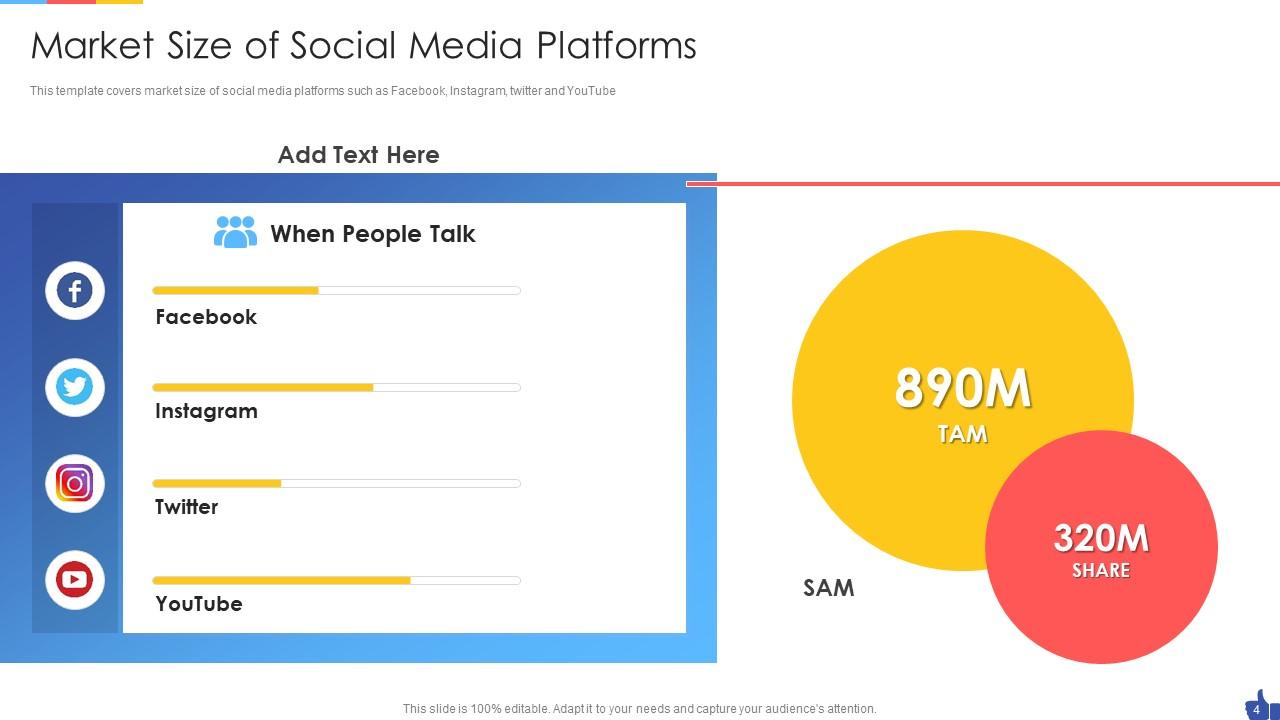
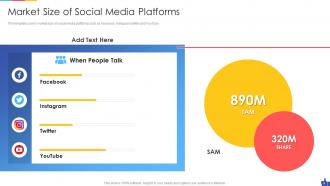
Slide 4: This slide covers market size of social media platforms such as Facebook, Instagram, twitter and YouTube.
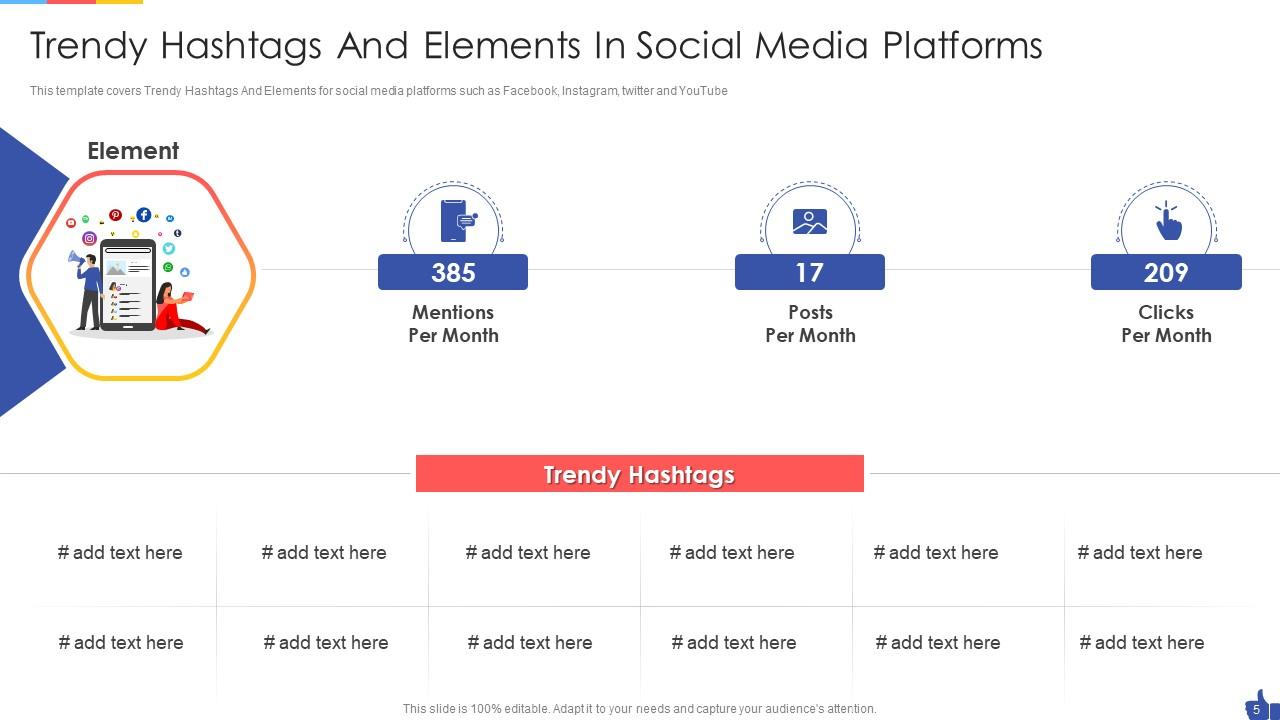
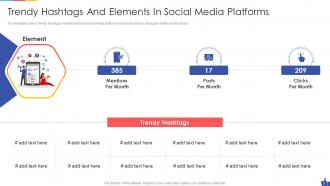
Slide 5: This slide covers Trendy Hashtags And Elements for social media platforms such as Facebook, Instagram, twitter and YouTube.
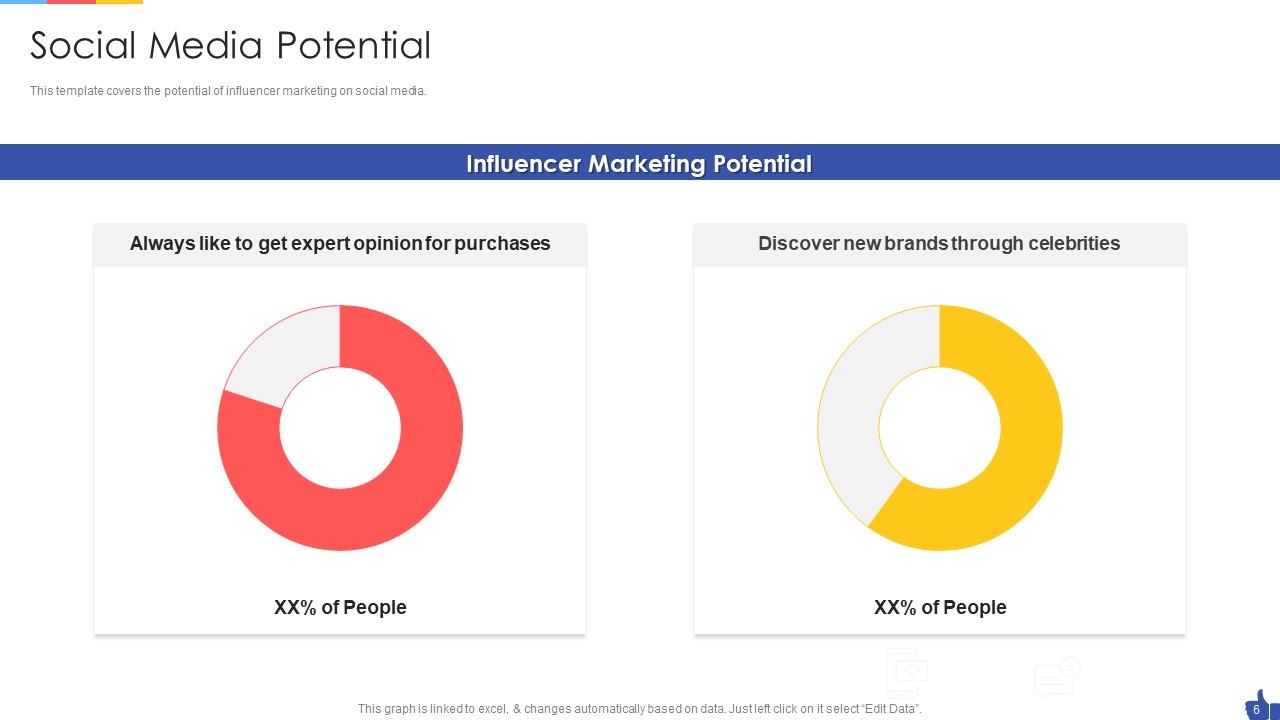
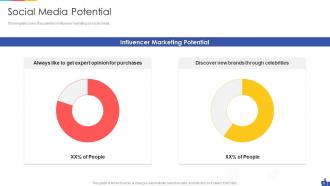
Slide 6: This slide covers the potential of influencer marketing on social media.
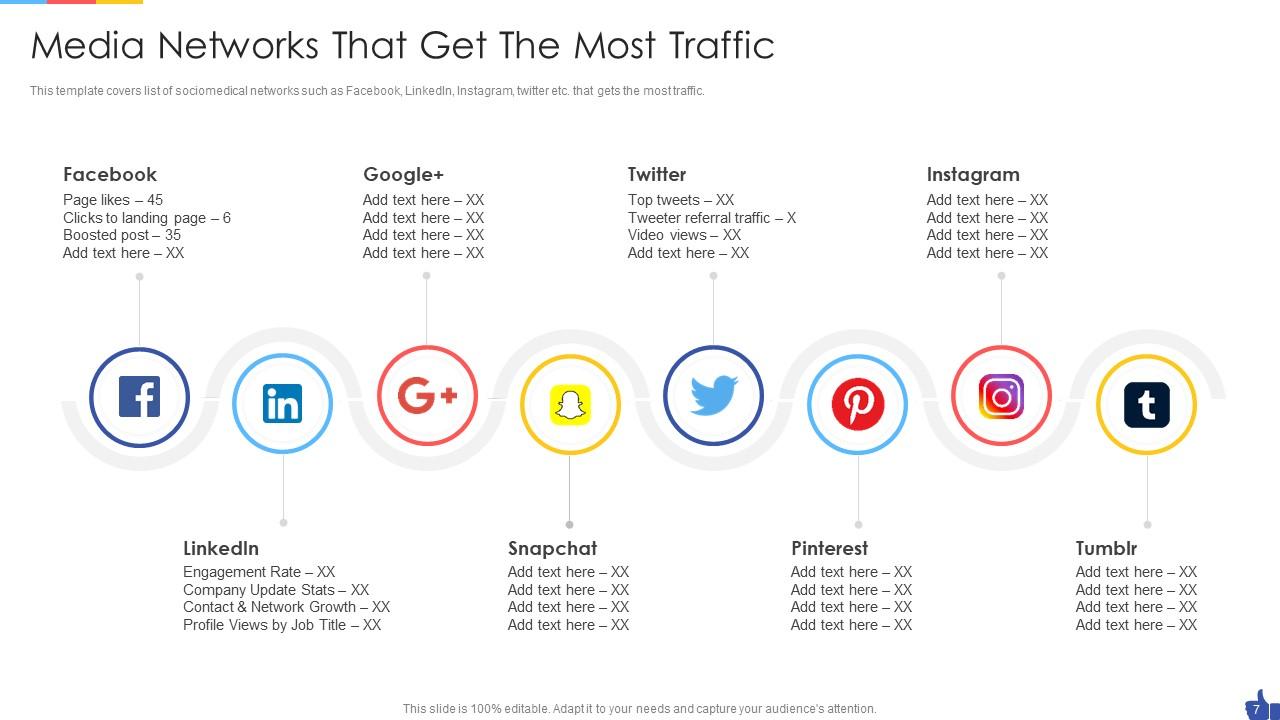
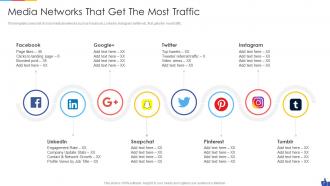
Slide 7: This slide covers list of sociomedical networks such as Facebook, LinkedIn, Instagram, twitter etc. that gets the most traffic.
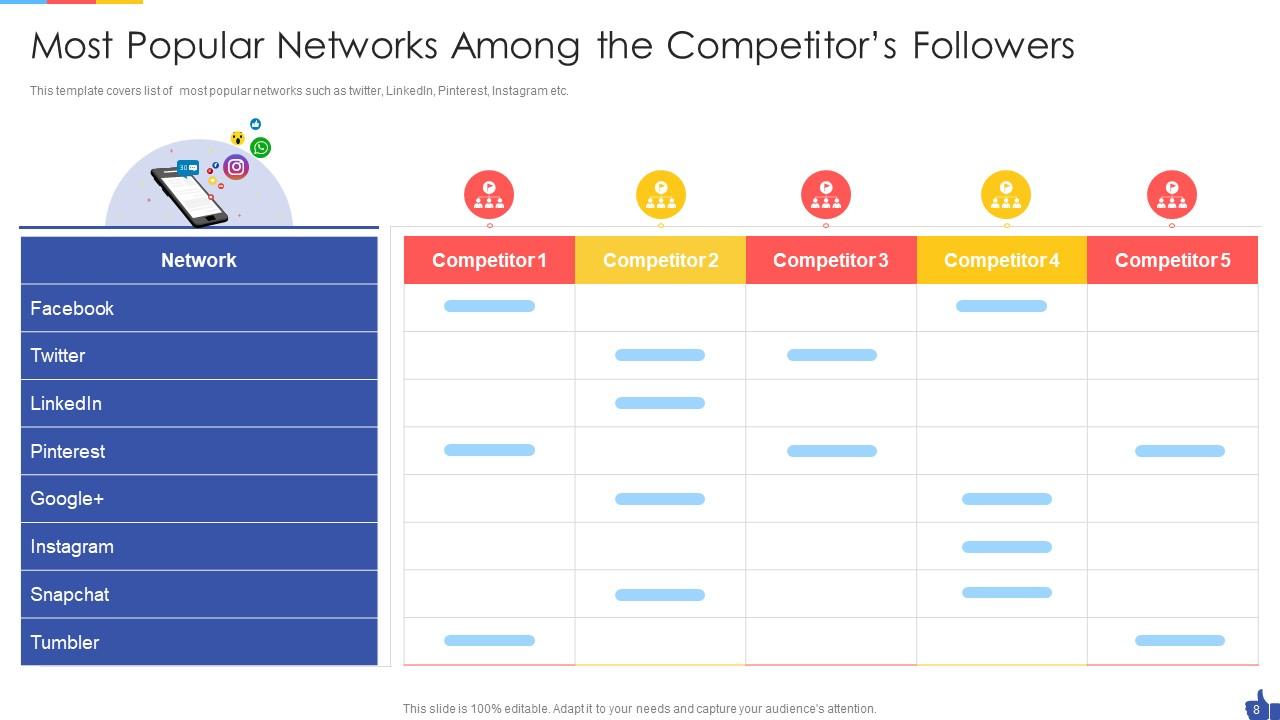
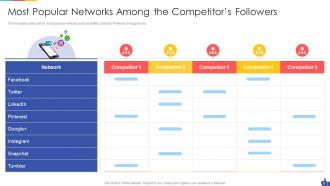
Slide 8: This slide covers list of most popular networks such as twitter, LinkedIn, Pinterest, Instagram etc.
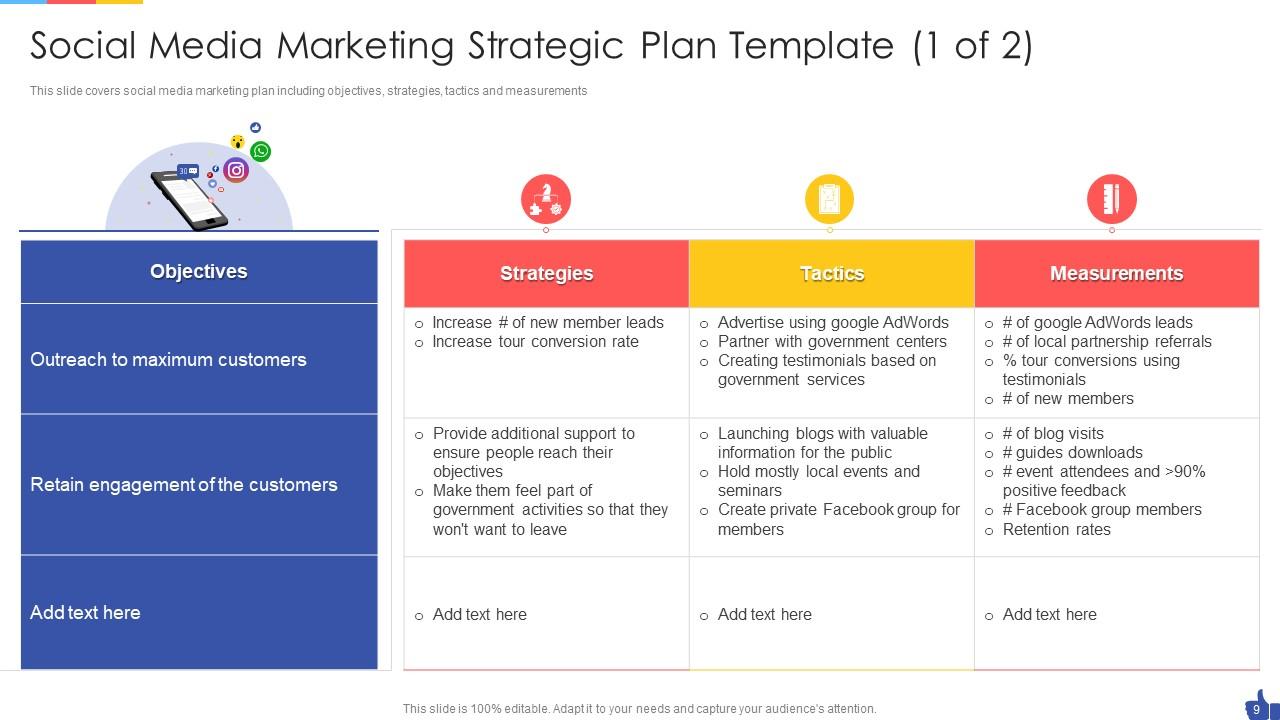
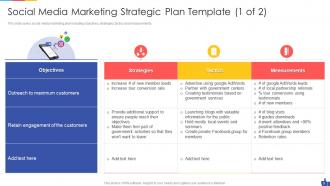
Slide 9: This slide covers social media marketing plan including objectives, strategies, tactics and measurements.
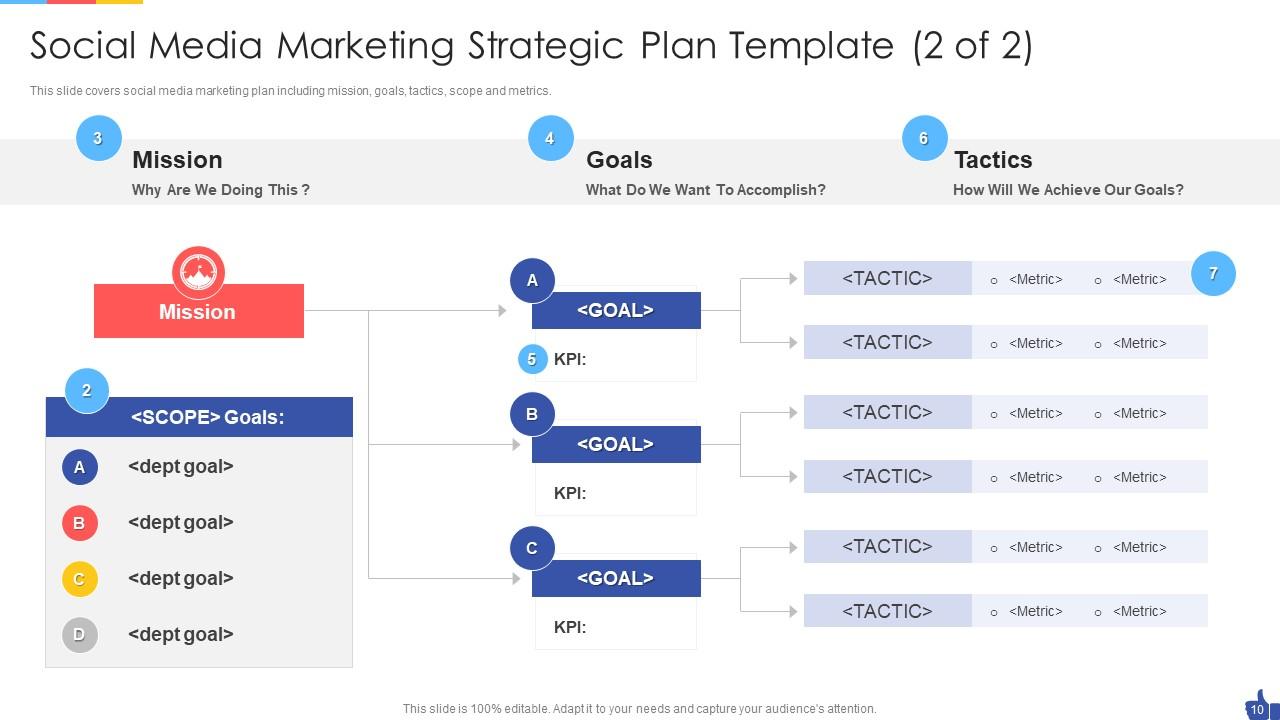
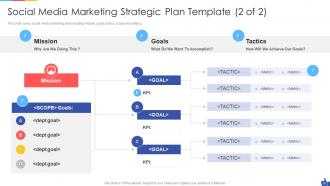
Slide 10: This slide covers social media marketing plan including mission, goals, tactics, scope and metrics.
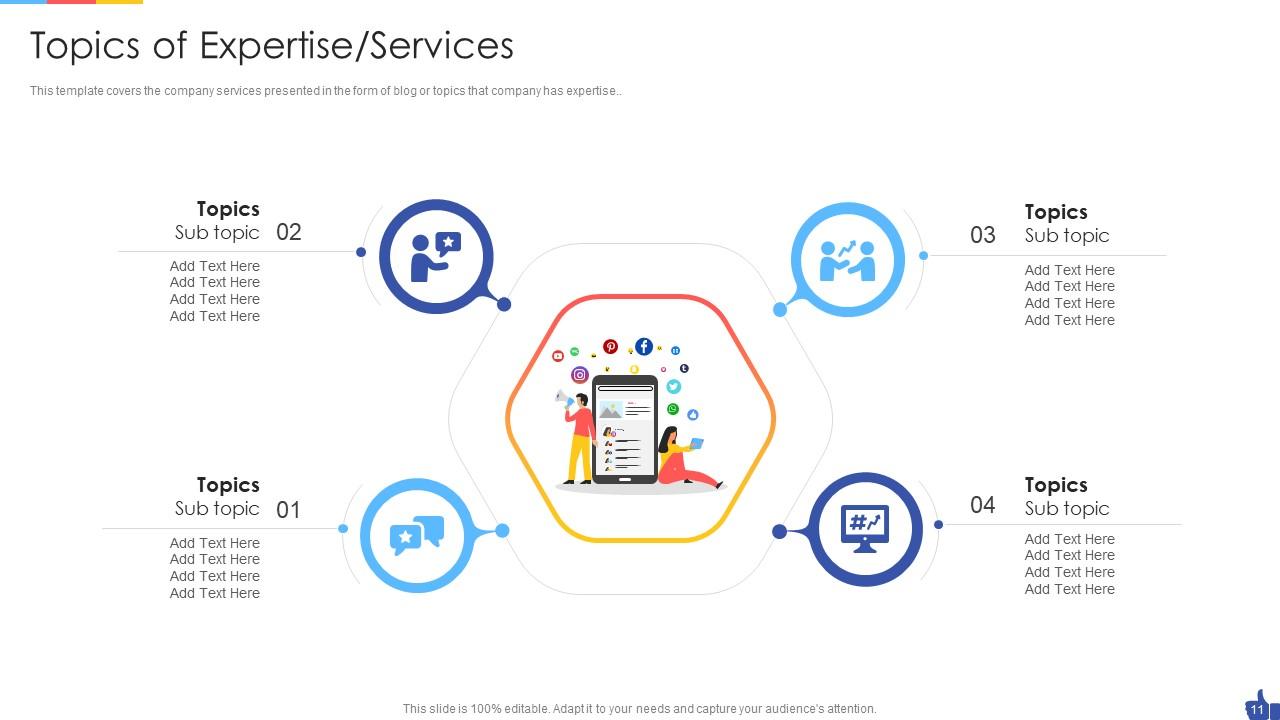
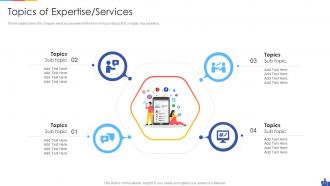
Slide 11: This slide covers the company services presented in the form of blog or topics that company has expertise.
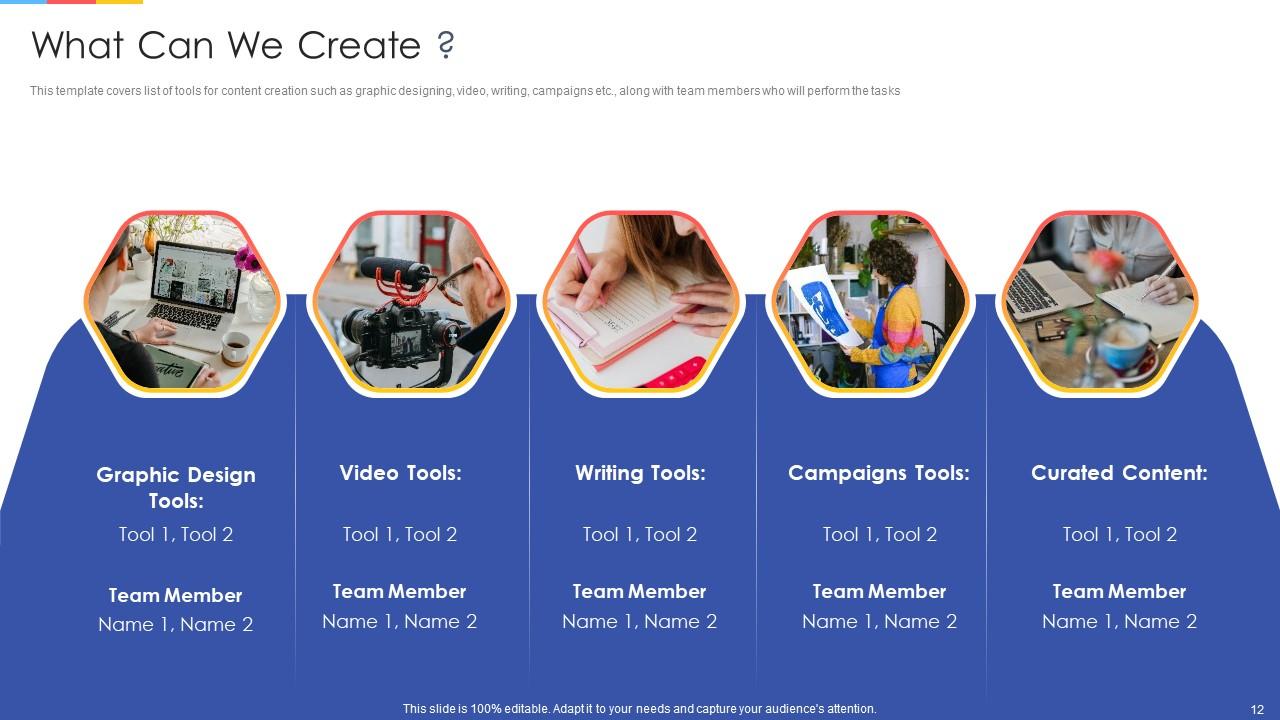
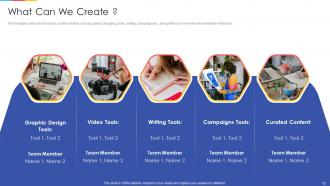
Slide 12: This slide covers list of tools for content creation such as graphic designing, video, writing, campaigns etc.
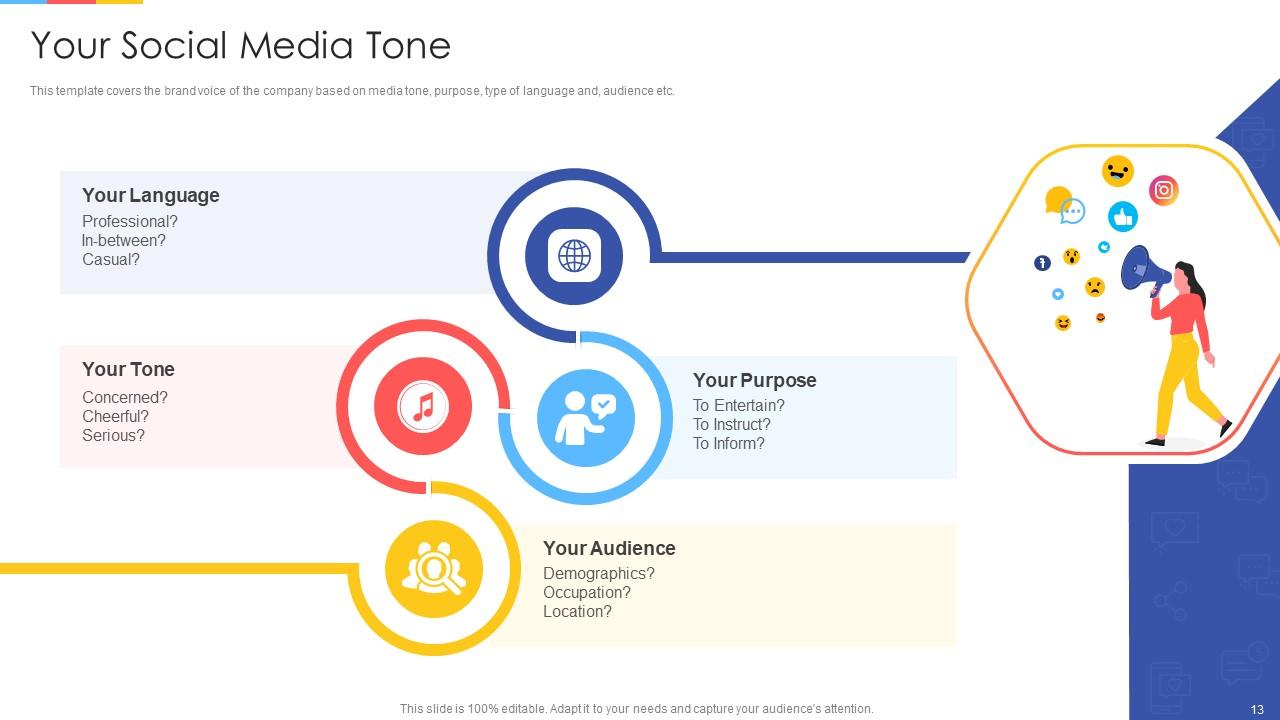
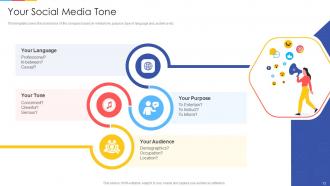
Slide 13: This slide covers the brand voice of the company based on media tone, purpose, type of language and, audience etc.
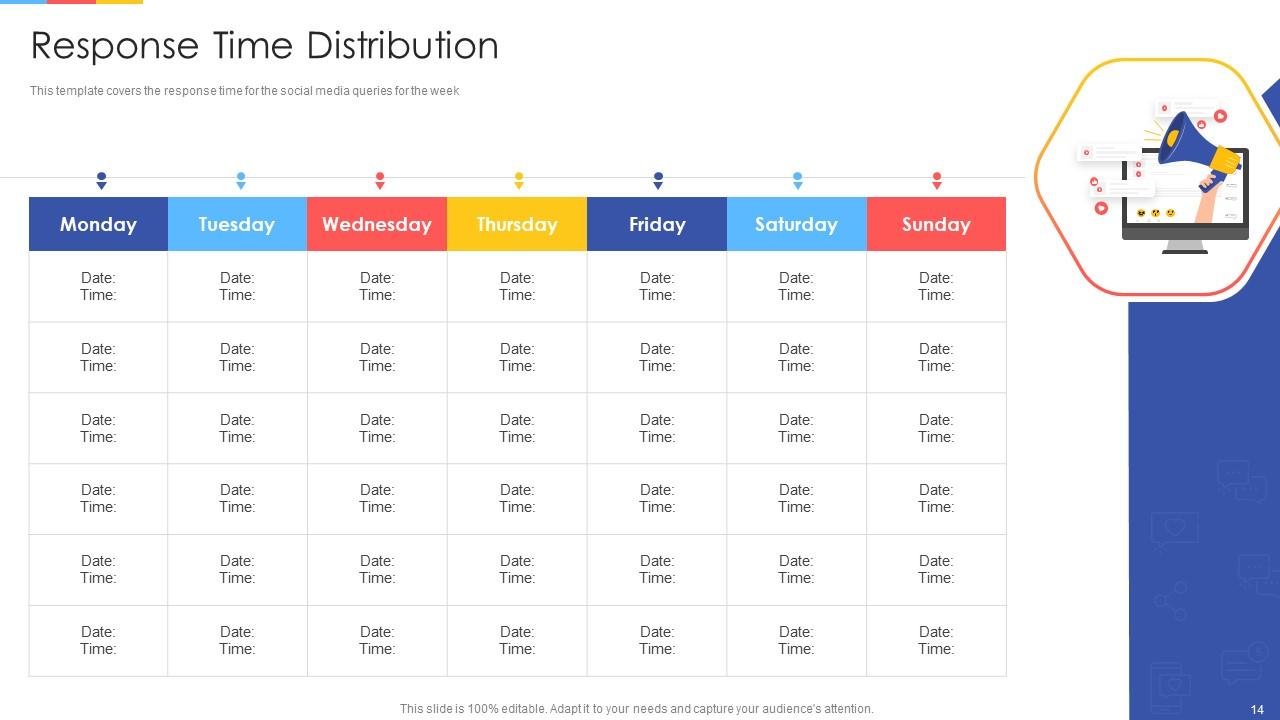
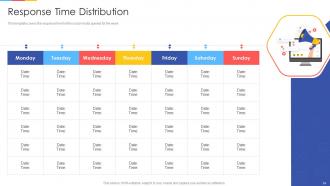
Slide 14: This slide covers the response time for the social media queries for the week.
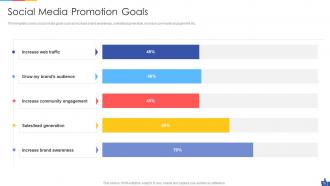
Slide 15: This slide covers social media goals such as increase brand awareness, sales/lead generation, increase community engagement etc.
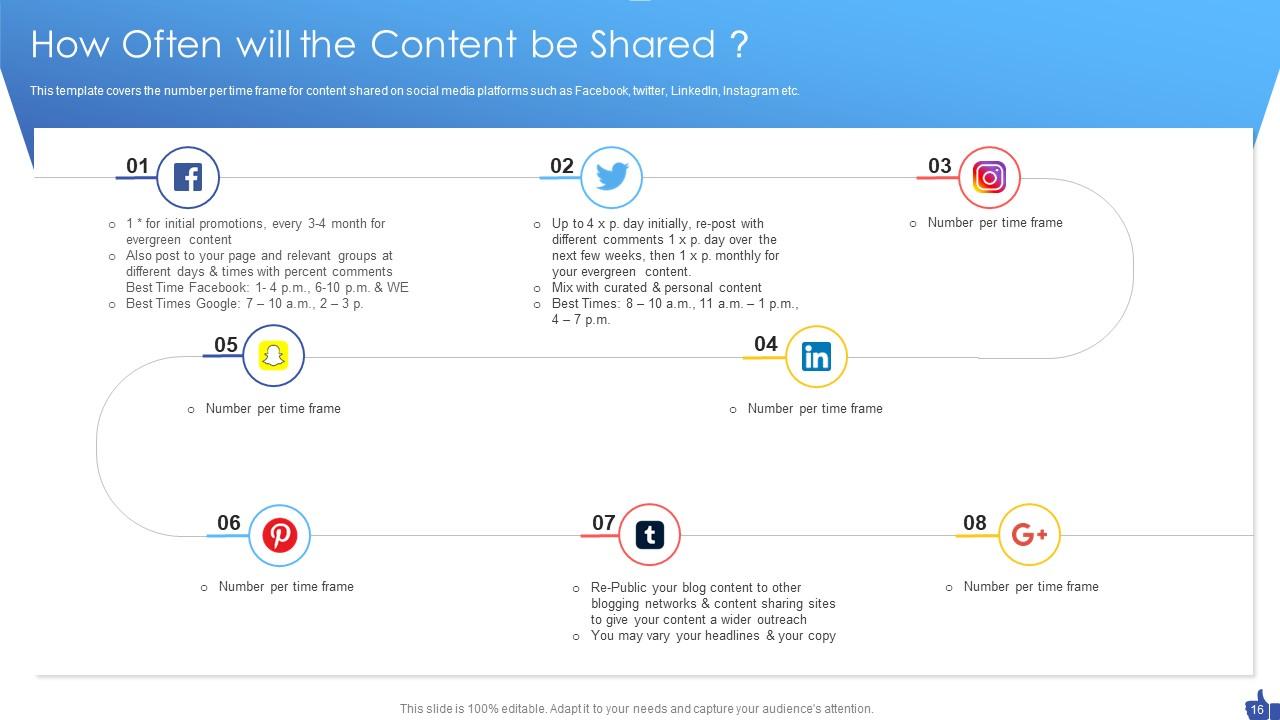
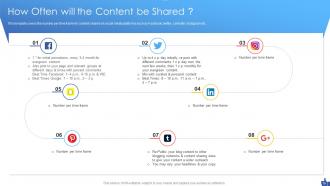
Slide 16: This slide covers the number per time frame for content shared on social media platforms such as Facebook, twitter, LinkedIn, Instagram etc.
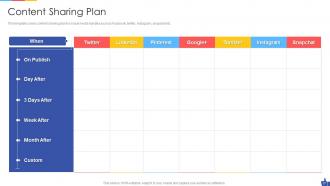
Slide 17: This slide covers content sharing plan for social media handles such as Facebook, twitter, Instagram, snapchat etc.
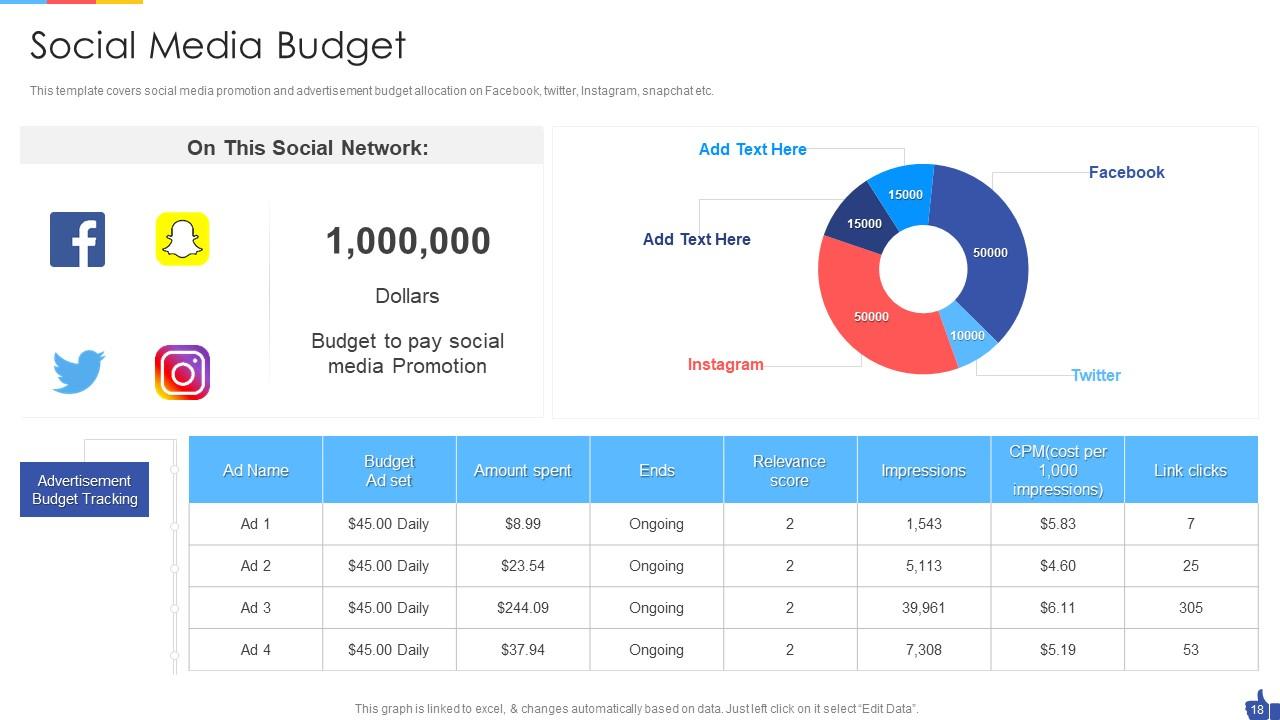
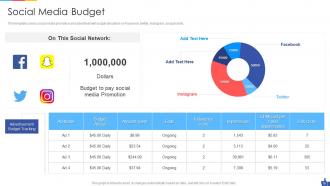
Slide 18: This slide covers social media promotion and advertisement budget allocation on Facebook, twitter, Instagram, snapchat etc.
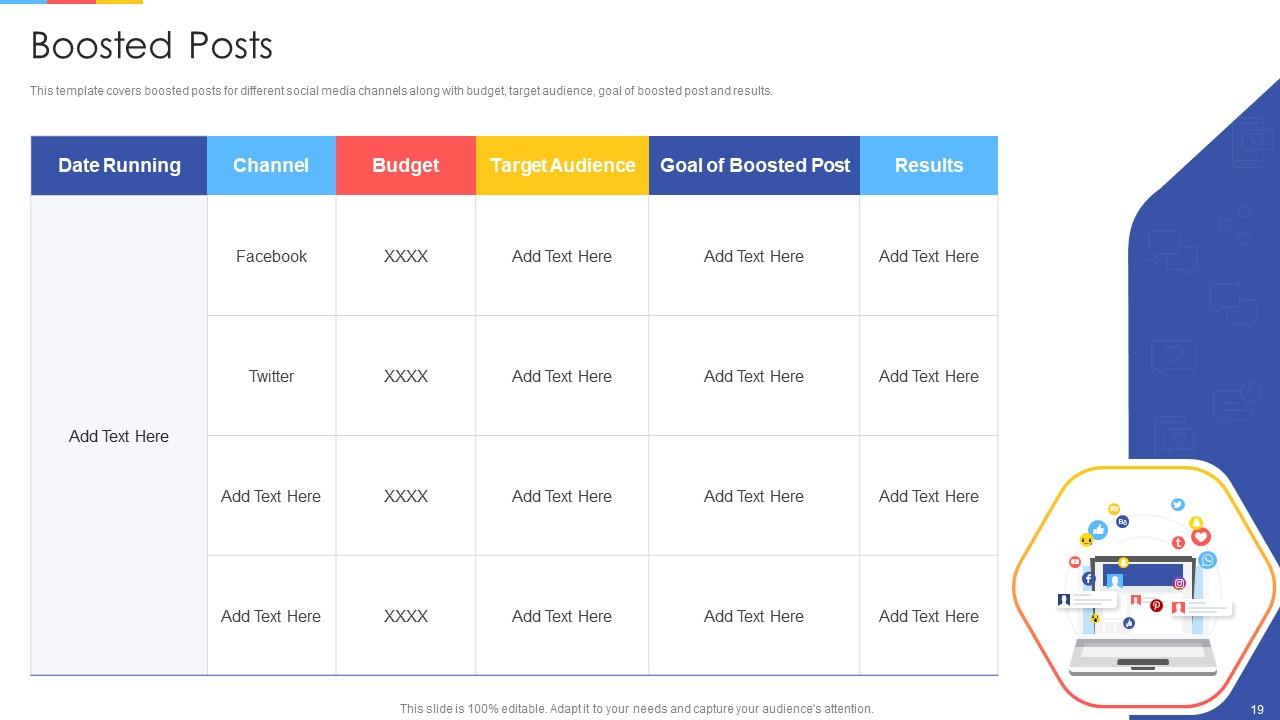
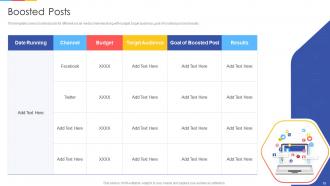
Slide 19: This slide covers boosted posts for different social media channels along with budget, target audience, goal of boosted post and results.
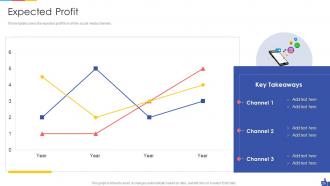
Slide 20: This slide covers the expected profit from all the social media channels.
Slide 21: This slide showcases contact details of the company.
Slide 22: This slide displays Icons for Social Media Marketing Pitch Deck.
Slide 23: This slide is titled as Additional Slides for moving forward.
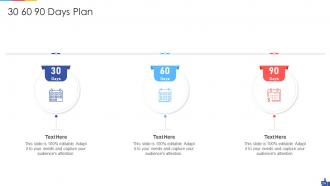
Slide 24: This slide provides 30 60 90 Days Plan with text boxes.
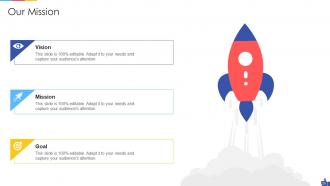
Slide 25: This is Our Mission slide with related imagery and text.
Slide 26: This is Our Team slide with names and designation.
Slide 27: This slide presents Roadmap with additional textboxes.
Slide 28: This is a Timeline slide. Show data related to time intervals here.
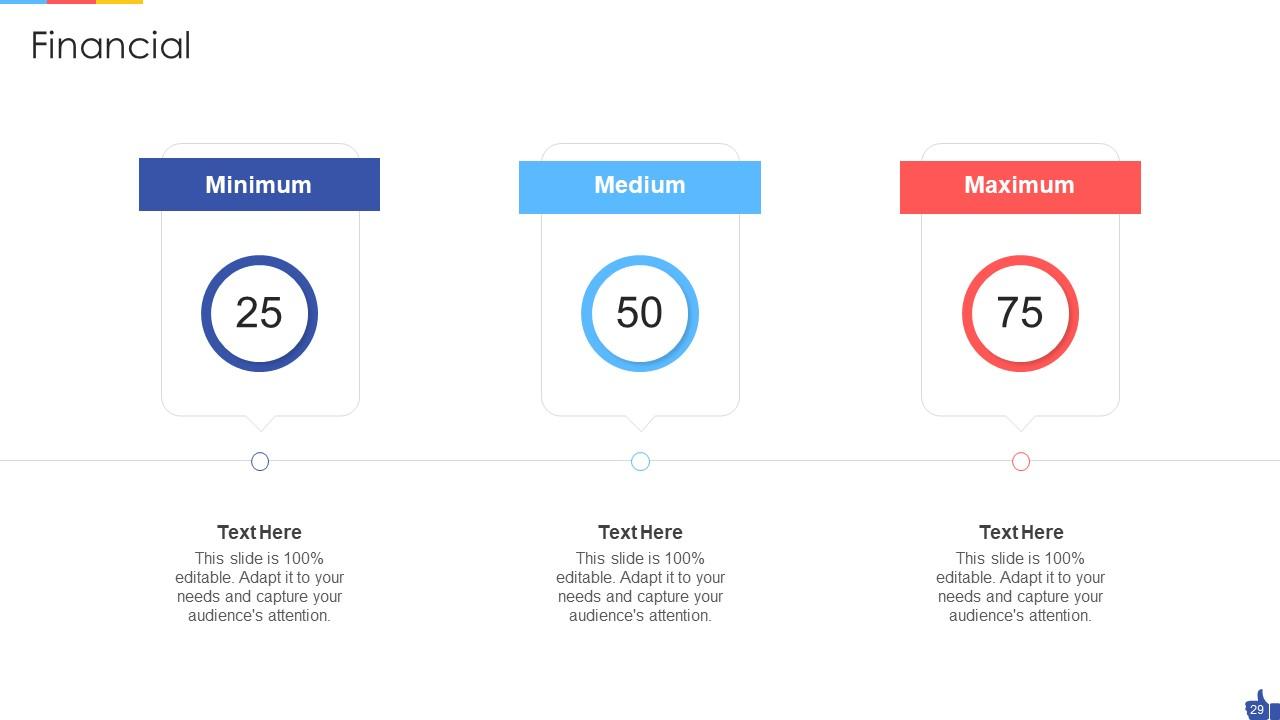
Slide 29: This is a Financial slide. Show your finance related stuff here.
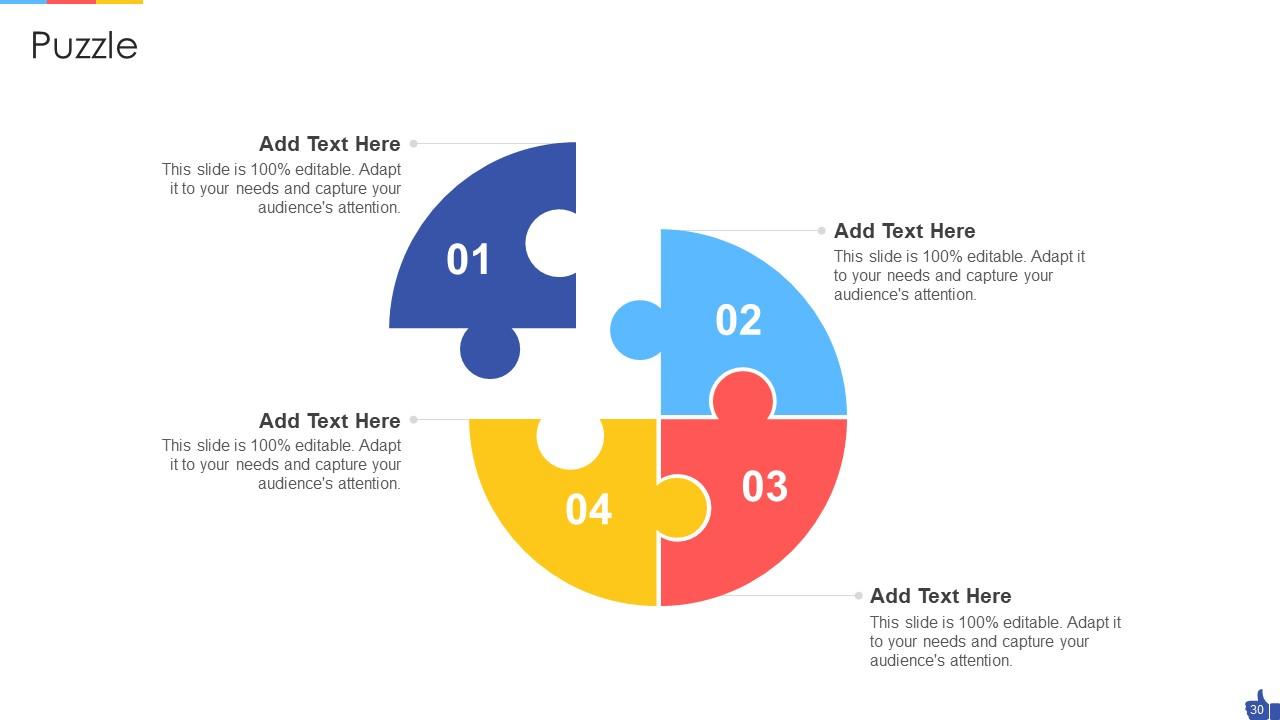
Slide 30: This slide contains Puzzle with related icons and text.
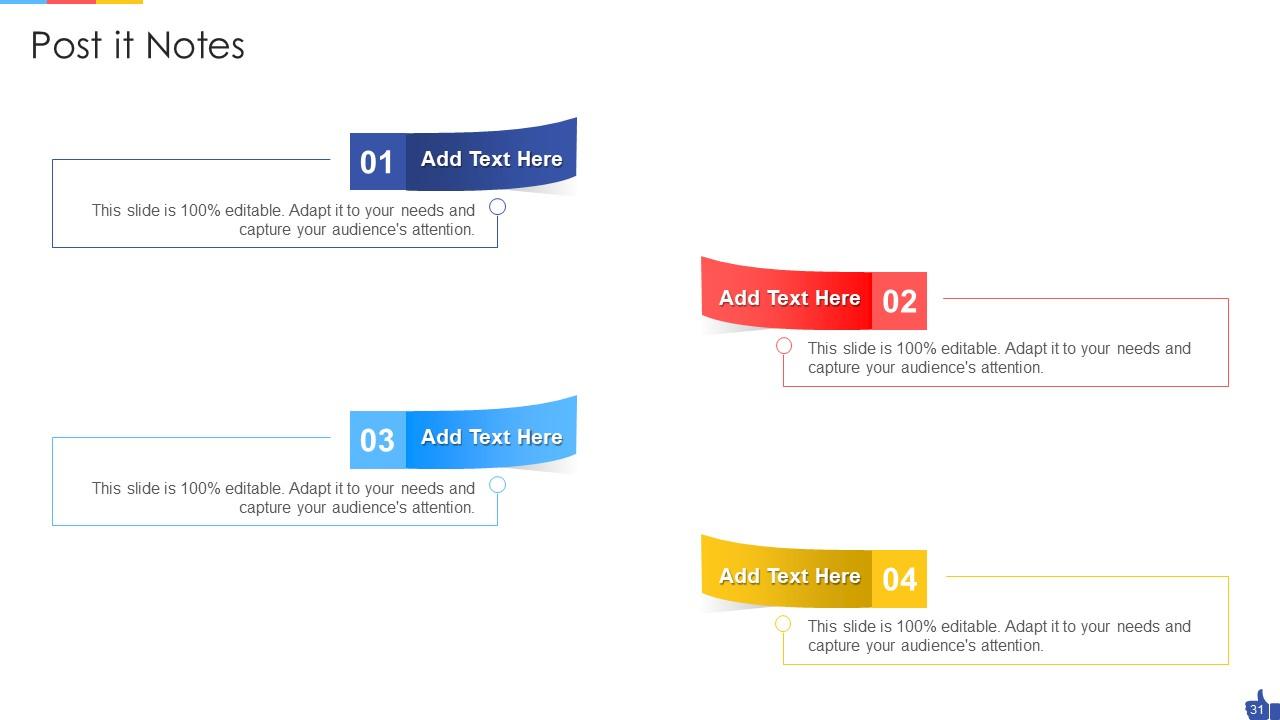
Slide 31: This slide shows Post It Notes. Post your important notes here.
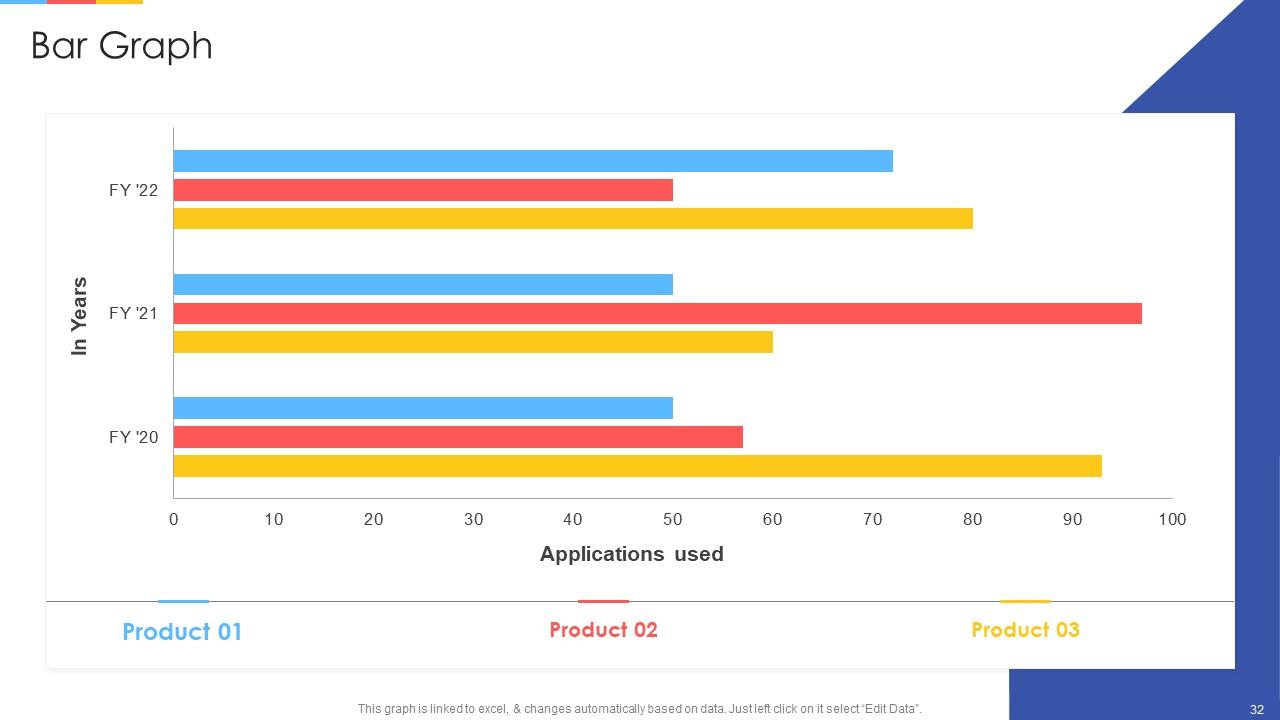
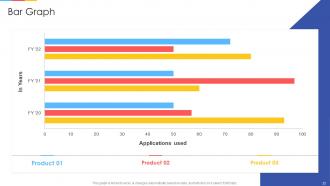
Slide 32: This slide presents Bar chart with two products comparison.
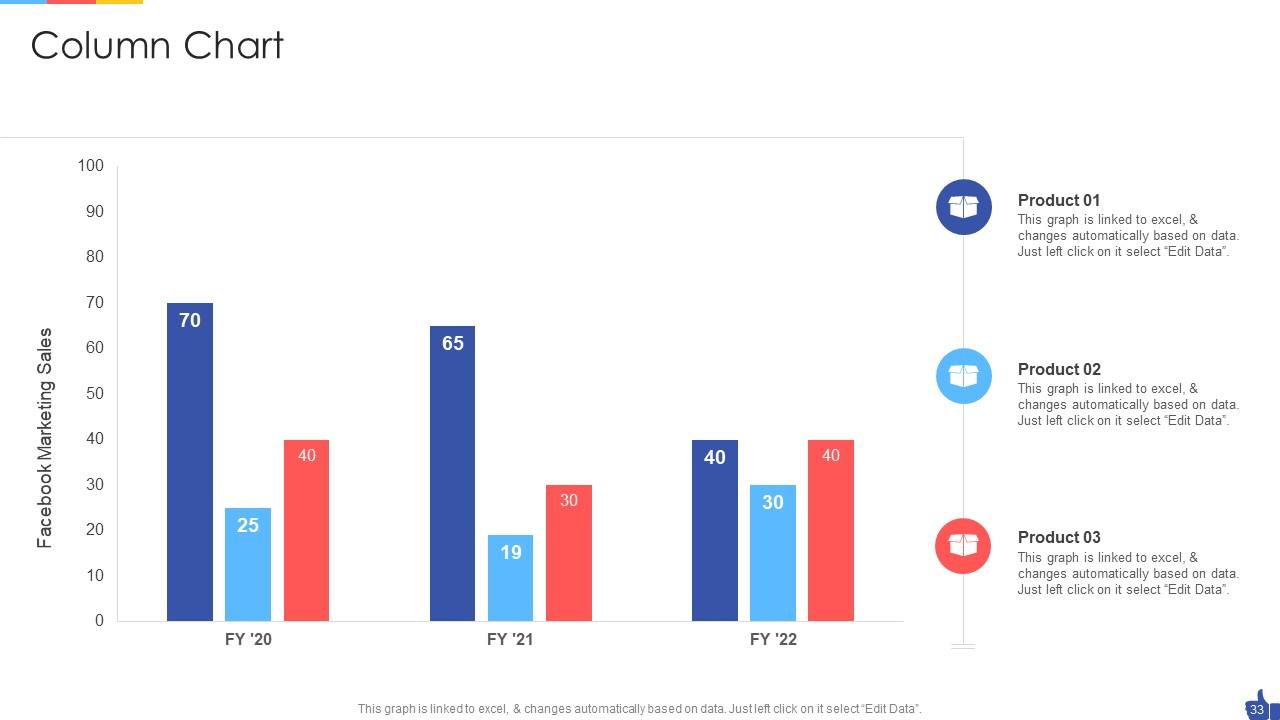
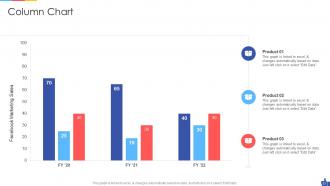
Slide 33: This slide displays Column chart with two products comparison.
Slide 34: This is a Thank You slide with address, contact numbers and email address.

FAQs for Social Media Marketing Pitch

Okay so first thing - figure out who you're actually talking to and what you want from this whole thing. Build your content calendar around that, not the other way around. Pick maybe 2-3 platforms max where your people actually spend time (Instagram might be trendy but if your audience is on LinkedIn, go there instead). Keep your brand voice consistent but don't just post and disappear - actually talk to people when they comment. Oh and track stuff that matters to your bottom line, not just vanity metrics. I learned this the hard way when I was getting tons of likes but zero sales lol.

Forget about likes and followers - they don't pay the bills. First figure out what you're actually trying to do: get sales, leads, or just get your name out there? Then track stuff that matters like conversion rates and how much each customer costs you. Google Analytics is clutch for this, plus whatever built-in stats each platform gives you. Set up UTM codes so you can see which posts actually drive revenue. Honestly, tracking across different platforms is kind of a nightmare, but you gotta start somewhere. The key is picking metrics tied to real money and sticking with them from the beginning.

Honestly, audience segmentation is a game changer for social media. Instead of posting random stuff and hoping it sticks, you can actually target different groups with content they care about. Like, your Gen Z TikTok crowd isn't gonna vibe with the same posts as your middle-aged LinkedIn network - that's just obvious. Break people down by age, interests, how they buy stuff, or how much they engage with your content. The whole point is making people feel like you get them specifically. When you nail this, your engagement goes way up because it doesn't feel like generic marketing spam anymore. Check your analytics first to spot these different groups, then build content around each one.

Honestly, user-generated content is a game changer for brands. Getting customers to post about your stuff and then resharing it? Pure gold. Real people trust other customers way more than fancy marketing - I mean, who doesn't scroll past obvious ads these days? Start simple: repost customer photos with credit. Run hashtag campaigns or photo contests. Just make sure you ask before using someone's content (learned that the hard way once). The trick is actually engaging with what people share, not just grabbing it and running. Make participation super easy and people will do the marketing work for you.

Honestly, bright visuals with good contrast work best since everyone's scrolling on phones anyway. Your colors and fonts should stay consistent - people recognize your stuff faster that way. Canva templates are clutch for this, saves so much time. Video crushes static posts right now, even if it's just text moving around or whatever. Make sure text is readable when it's super small, and throw your logo somewhere subtle. I always test different styles because what I think looks good doesn't always get the most likes, you know? Short clips or simple animations do surprisingly well.

Focus on your brand values and real customer stories instead of just hawking products. People connect when they see themselves in someone else's journey - so share how actual customers solved problems your audience has too. Behind-the-scenes stuff is gold because it makes you feel human, not corporate. Don't be salesy about it though. Structure things with beginning, middle, end. Carousel posts work great for longer stories, or do a video series. Oh and definitely tie it back to what's in it for them - that's honestly the most crucial part.

So definitely watch your click-through rates and conversion rates - those are huge. Cost per click and cost per acquisition too. ROAS is honestly the big one though, tells you if you're actually making money or just lighting cash on fire lol. Don't forget engagement stuff like likes and shares, plus reach so you know how many eyeballs you're getting. Oh and check frequency! Nobody wants to see your ad 47 times. I'd just throw together a quick dashboard in ads manager and peek at it weekly. That way you can kill campaigns that suck before they drain your budget.

So basically, each platform's algorithm looks for totally different stuff. Facebook and Instagram want posts that get people talking and scrolling longer. LinkedIn's all about professional content that gets passed around in work circles. TikTok? Honestly who even knows anymore, but watch time seems huge - like if people actually finish your videos. Twitter's more real-time but still pushes tweets that blow up fast. You can't just copy-paste the same approach everywhere though. What works on one platform will probably flop on another, so you've gotta switch up your style.

Honestly, timing is everything - post when your people are actually scrolling. I'd say jump on trending stuff that fits your brand, but don't force it if it's weird. Hashtags help but like, don't go crazy with 30 of them. The algorithm basically rewards engagement, so ask questions and reply to comments fast (even just dropping an emoji works). Stories and videos usually do way better than regular posts. Oh, and definitely check your analytics to see what's hitting - then just do more of that. Consistency matters too, but quality beats posting random stuff daily.

Okay so first thing - respond fast and publicly acknowledge what they're saying. Shows everyone else you're not ignoring stuff. Then move the real conversation to DMs because honestly, nobody wants to see you arguing in the comments. Stay cool even when they're being totally unreasonable. If you actually messed up, apologize for real and give them an actual solution. Don't delete their comment unless it's like, genuinely abusive - people can tell when you're hiding things. Oh and set up alerts so you catch this stuff early before it becomes a whole thing.

Honestly, AI personalization is where it's at right now - like, the targeting is getting scary good. Short videos are still crushing it obviously. But here's what's interesting: micro-influencers are way more effective than those massive celebrity partnerships everyone used to blow budgets on. Instagram and TikTok's shopping features are pretty seamless now too - people can buy without ever leaving the app. Community building beats just posting into the void. Your followers want to feel like they're actually part of something. Try polls, live Q&As, maybe some user-generated campaigns. Interactive stuff builds real connections instead of just... I dunno, shouting at people?

So influencer marketing is just teaming up with people who already have the followers you want. Way easier than starting from zero on your own accounts. People actually trust recommendations from creators they follow - it feels more real than those obvious ads, you know? Just one part of your whole social strategy though, along with regular posts and paid stuff. Oh and don't get caught up in follower numbers! Find someone whose audience actually matches who you're trying to reach. That's where the magic happens.

Honestly, Hootsuite and Buffer are my go-to for scheduling posts - they'll save you so much time. Canva is absolutely essential for graphics, I'm literally on it every day. If you're doing a lot of Instagram stuff, Later has this visual planner that's perfect for planning your feed layout. Sprout Social costs more but the analytics are way better if that's important to you. Oh and don't sleep on the built-in analytics from each platform, they're actually pretty decent now. I'd start simple though - pick one scheduler plus Canva, then add more tools later when you figure out what else you need.


Look, brand voice consistency is super important - it builds trust and makes you recognizable everywhere. But here's the thing: you don't have to sound like a robot across every platform. Your LinkedIn can be more professional while your TikTok gets playful, as long as your core personality shines through. It's like how you talk differently at work vs. hanging out with friends, but you're still... you, you know? Just write down your main brand traits somewhere and make sure anyone posting for you actually gets it. Oh, and dramatic voice shifts will confuse people - they won't know what to expect from you.

Dude, you can burn through cash SO fast with zero results to show for it. Poor targeting is probably the biggest money pit - I've watched people blow thousands in like a week. Your audience will get tired of seeing the same ads over and over, which kills performance. There's also platform policy stuff to worry about (super annoying but necessary), and honestly? Negative comments can turn your campaign into a total disaster. Oh, and ad fatigue is real - people just tune you out after a while. Start with small budgets, test different approaches, and have a clear goal before you launch anything.

Ratings and Reviews

80% of 100
Review Form
Write a review
Most Relevant Reviews
  1. 80%

    by Duncan Berry

    Best way of representation of the topic.
  2. 80%

    by Darrell Crawford

    Spacious slides, just right to include text.  SlideTeam has also helped us focus on the most important points that need to be highlighted for our clients.

2 Item(s)

per page: