


Social media management process powerpoint presentation slides




Try Before you Buy Download Free Sample Product
 Impress Your
 Audience
 100%
100% Editable
 Save Hours
 of Time


Showcase the right media platform to pitch your product by using our informative Social Media Management Process PowerPoint Presentation Slides. With the aid of this content ready social media key statistics PPT theme, you can explain briefly how to attain customer interest in your products and services. Use digital marketing & advertising presentation template and display the plan to organize the various marketing campaigns. You can illustrate the elements of social media on the basis of reporting, organic marketing, paid, and mobile marketing with the help of social media marketing PowerPoint graphics. Take the assistance of internet marketing PPT visuals and discuss the importance of online marketing over offline marketing. Employ this professionally designed social media management presentation slides to manage your online presence. Hence, download our ready-to-use social media marketing tools PowerPoint deck and design a digital media roadmap that attracts more audience.
People who downloaded this PowerPoint presentation also viewed the following :
Content of this Powerpoint Presentation
Slide 1: This slide introduces Social Media Management Process. State your company name and begin.
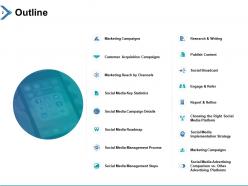
Slide 2: This slide displays the Outline of the presentation.
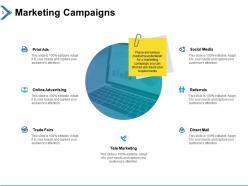
Slide 3: This slide represents Marketing Campaigns such as- Tele Marketing, Print Ads, Online Advertising, Trade Fairs, Social Media, Referrals, Direct Mail.
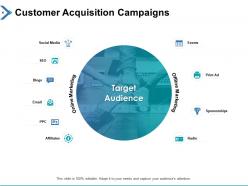
Slide 4: This slide displays Customer Acquisition Campaigns containing- Offline Marketing, Online Marketing, Target, Audience, Social Media, SEO, Blogs, Email, PPC, Affiliates, Events, Print Ad, Sponsorships and Radio etc.
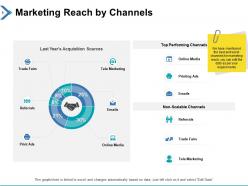
Slide 5: This slide depicts Marketing Reach by Channels. We have mentioned the best and worst channels for marketing reach, you can edit the data as per your requirements.
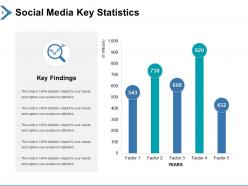
Slide 6: This slide displays the Social Media Key Statistics.
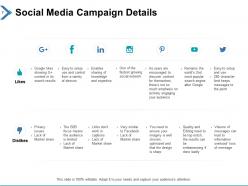
Slide 7: This slide presents Social Media Campaign Details.
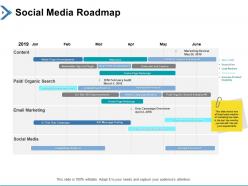
Slide 8: This slide presents Social Media Roadmap. This slide shows how efficient each medium of marketing has been in the last few months, you can edit it as per your requirements
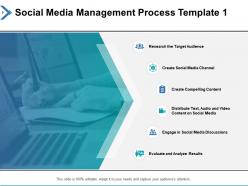
Slide 9: This slide depicts Social Media Management Process containing- Research the Target Audience, Create Social Media Channel, Create Compelling Content, Distribute Text, Audio and Video Content on Social Media, Engage in Social Media Discussions, Evaluate and Analyze Results.
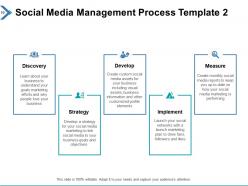
Slide 10: This slide showcases Social Media Management Process containing- Discovery, Strategy, Develop, Implement and Measure.
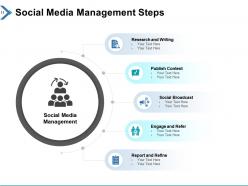
Slide 11: This slide depicts Social Media Management Steps such as- Social Media Management, Research and Writing, Publish Content, Social Broadcast, Engage and Refer and Report and Refine.
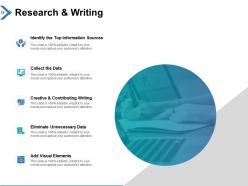
Slide 12: This slide describes Research & Writing with steps.
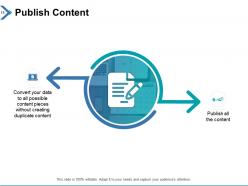
Slide 13: This is Publish Content slide to Publish all the content
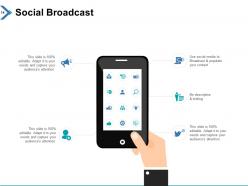
Slide 14: This slide showcases Social Broadcast.
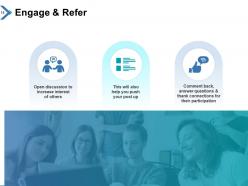
Slide 15: This side displays Engage & Refer. Comment back, answer questions and thank connections for their participation.
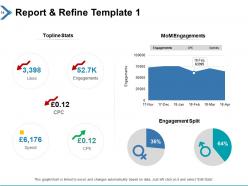
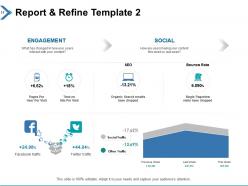
Slide 16: This slide describes Report & Refine Template.
Slide 17: This slide displays Report & Refine showcsing- ENGAGEMENT
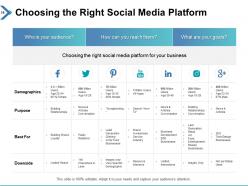
Slide 18: This slide tells about Choosing the Right Social Media Platform.
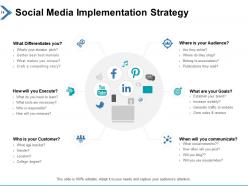
Slide 19: This slide depicts Social Media Implementation Strategy.
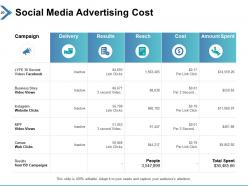
Slide 20: This slide depicts Social Media Advertising Cost.
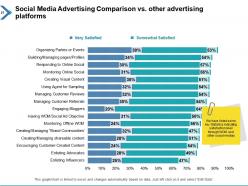
Slide 21: This slide showcases comparison of Social Media Advertising Comparison and other advertising platforms. We have listed some key Statistics indicating satisfaction level through WOM and other social medias
Slide 22: This slide displays 10 coffee Minutes Break.
Slide 23: This slide is titled as Additional Slides for moving forward.
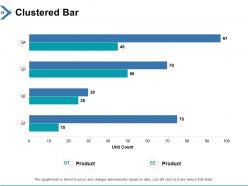
Slide 24: This slide displays Clustered Bar chart with different product comparison.
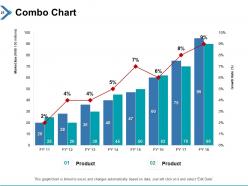
Slide 25: This slide displays Combo Chart with different product comparisons.
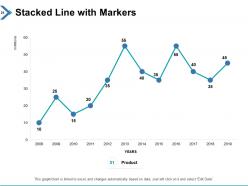
Slide 26: This slide displays Stacked Line with Markers with product comparison.
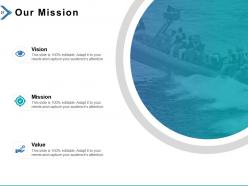
Slide 27: This is Our Mission slide. Showcase vision, mission and value.
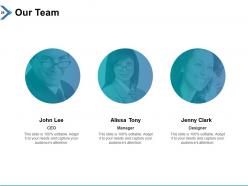
Slide 28: This is Our Team slide with names and designations.
Slide 29: This is About Us slide with company specifications.
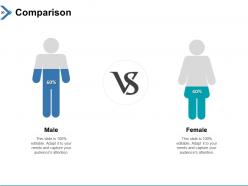
Slide 30: This slide displays Comparison with data in percentage.
Slide 31: This is Puzzle slide with text boxes.
Slide 32: This is Thank You slide with address, contact number, and email address.
Social media management process powerpoint presentation slides with all 32 slides:
Admonish the insolent with our Social Media Management Process Powerpoint Presentation Slides. Counsel them to improve behavior.

FAQs for Social media management process
A comprehensive social media management process includes content strategy development, audience research and segmentation, content creation and curation, scheduling and publishing workflows, and performance analytics tracking. These components work together by streamlining brand messaging, enhancing audience engagement, and delivering measurable ROI, with many organizations finding that structured processes reduce management time while significantly improving their social media effectiveness.
Brands can effectively identify their target audience through demographic analysis, social media analytics, customer surveys, competitor research, and engagement pattern monitoring. These methods enable businesses to understand audience preferences, behaviors, and platform usage across sectors like retail, hospitality, and financial services, ultimately delivering more personalized content and higher conversion rates.
Key metrics include engagement rates, reach and impressions, click-through rates, conversion rates, follower growth, and brand mention sentiment. These analytics enable organizations to measure ROI, optimize content performance, and refine targeting strategies, with many businesses finding that tracking both vanity metrics and conversion-focused data ultimately delivers comprehensive insights for strategic social media optimization.
Businesses should review their social media management process monthly for performance metrics and quarterly for strategic adjustments, with annual comprehensive evaluations for major pivots. This regular assessment enables organizations to optimize content strategies, refine audience engagement tactics, and adapt to platform algorithm changes, ultimately delivering improved ROI and competitive advantage in increasingly dynamic digital landscapes.
**INPUT**: What tools are most effective for scheduling and monitoring social media posts? **OUTPUT**: Effective social media scheduling and monitoring tools include Hootsuite, Buffer, Sprout Social, Later, and CoSchedule, each offering comprehensive dashboard management and analytics capabilities. These platforms streamline content planning by enabling bulk scheduling, cross-platform posting, and real-time engagement tracking, with many organizations finding that automated workflows and detailed performance insights ultimately deliver improved audience reach and significantly enhanced marketing efficiency.
User-generated content can be incorporated through content curation campaigns, branded hashtag initiatives, customer testimonial showcases, review highlights, and community challenges. These approaches streamline content creation while enhancing authenticity, with many brands finding that featuring customer stories, product demonstrations, and experiences ultimately delivers higher engagement rates and stronger community trust.
Social media listening provides crucial insights into customer sentiment, brand perception, competitor activities, and emerging trends that inform strategic decision-making throughout the management process. Through monitoring conversations, mentions, and engagement patterns, organizations can identify potential issues early, discover content opportunities, and refine their messaging strategies, ultimately delivering more targeted campaigns and improved customer relationships.
Businesses create consistent brand voice by developing comprehensive style guides, establishing clear messaging frameworks, implementing content approval processes, and training social media teams on brand standards. Through strategic content calendars and cross-platform templates, organizations streamline voice consistency while adapting tone for platform-specific audiences, ultimately delivering cohesive brand experiences that enhance customer recognition and trust.
Strategies for managing negative feedback include responding promptly with empathy, acknowledging concerns publicly while moving detailed discussions private, and maintaining professional transparency throughout interactions. Through proactive monitoring and established response protocols, organizations across retail, hospitality, and financial services can transform criticism into trust-building opportunities, ultimately strengthening customer relationships and brand reputation.
Social media management for remote teams can be streamlined through centralized content calendars, collaborative planning tools, automated scheduling platforms, and clear workflow protocols. These systems enable distributed teams to coordinate campaigns seamlessly, maintain consistent brand messaging, and track performance metrics in real-time, with many organizations finding that structured processes actually enhance creativity while reducing operational overhead.
Real-time social media engagement best practices include responding within one hour, using personalized rather than generic replies, acknowledging both positive feedback and concerns promptly, and maintaining consistent brand voice across interactions. These approaches streamline customer relationships by building trust, reducing response escalation, and enhancing user experience, with many retail and service companies finding that immediate engagement significantly increases customer loyalty and conversion rates.
Visual content strategies vary significantly across platforms, with Instagram prioritizing high-quality photos and Stories, LinkedIn favoring professional infographics and company updates, TikTok emphasizing short-form videos, and Facebook supporting diverse mixed-media content. These platform-specific approaches enable businesses to optimize engagement by tailoring visual formats to audience expectations, with many organizations finding that strategic visual adaptation across channels ultimately delivers higher reach, better brand recognition, and more effective customer connections.
Legal and ethical considerations for social media management include data privacy compliance, copyright infringement prevention, disclosure of sponsored content, accessibility standards, and crisis response protocols. These frameworks streamline brand protection by ensuring regulatory adherence, minimizing litigation risks, and maintaining consumer trust, with many organizations finding that proactive ethical guidelines ultimately deliver enhanced reputation management and competitive advantage.
Businesses should align social media goals with marketing objectives by establishing shared KPIs, coordinating messaging across channels, integrating content calendars, and ensuring consistent brand voice throughout campaigns. This strategic alignment enables companies to amplify reach, reinforce key messages, and maximize ROI, with many organizations finding that coordinated approaches deliver significantly higher engagement rates and conversion outcomes.
Algorithms significantly impact social media strategies by determining content visibility, audience reach, and engagement rates through complex ranking systems that prioritize relevance, timing, and user behavior patterns. These algorithmic changes require businesses to continuously adapt their content strategies, posting schedules, and engagement tactics, with many brands finding that algorithm-optimized approaches deliver enhanced visibility and stronger customer connections.
No Reviews