


Social media marketing strategic plan template tactics ppt portfolio example file




Try Before you Buy Download Free Sample Product
 Impress Your
 Audience
 100%
100% Editable
 Save Hours
 of Time


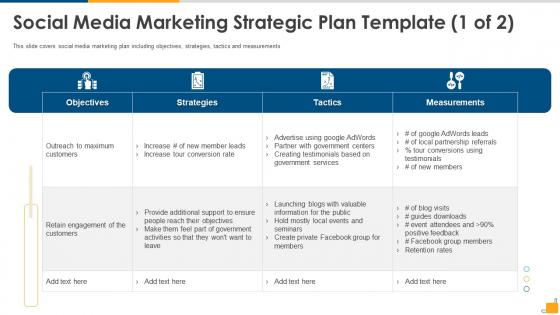
This slide covers social media marketing plan including objectives, strategies, tactics and measurements.
People who downloaded this PowerPoint presentation also viewed the following :
Social media marketing strategic plan template tactics ppt portfolio example file with all 6 slides:
Use our Social Media Marketing Strategic Plan Template Tactics Ppt Portfolio Example File to effectively help you save your valuable time. They are readymade to fit into any presentation structure.
-
Social media marketing strategic plan template tactics ppt portfolio example file
-

Social media marketing strategic plan template tactics ppt portfolio example file
-

Social media marketing strategic plan template tactics ppt portfolio example file
-

Social media marketing strategic plan template tactics ppt portfolio example file
-

Social media marketing strategic plan template tactics ppt portfolio example file
-

Social media marketing strategic plan template tactics ppt portfolio example file
FAQs for Social media marketing strategic plan template tactics ppt
So engagement stuff is what I'd look at first - likes, comments, shares, saves. That shows if people actually care about your content. Then reach and impressions so you know how many eyeballs you're getting. Click-through rates are super important if you want traffic back to your website. Oh and follower count? Honestly kinda overrated now. Quality engagement beats having tons of random followers who don't interact. If you're doing ads, definitely track conversion metrics - cost per click, conversion rate, ROI. But don't go crazy trying to measure everything. Pick like 3-5 that actually match what you're trying to accomplish.
So each platform's totally different, right? LinkedIn's all about job titles and industries since everyone's in work mode there. Facebook has insane demographic targeting - perfect for hitting specific age groups. But Instagram and TikTok? Forget demographics. Focus on interests and behaviors instead because younger people don't fit into those neat little boxes anyway. Twitter's weird but good for jumping on trending stuff. Honestly, just pick one platform first and test different audiences until something clicks. Once you figure out what works, you can apply those lessons elsewhere. Way easier than trying to crack all of them at once.
UGC is seriously like magic for engagement - way better than anything you put out yourself. People actually trust other customers over brands (which, fair enough). When someone posts about your stuff organically, it doesn't feel like an ad at all. Creates this cool ripple effect too where one person sharing gets others to do the same. Make it dead simple for them though - branded hashtags work great, or just ask people to tag you when they use your products. Oh and contests are clutch for getting things rolling if you're just starting out.
Honestly, the biggest thing is keeping your messaging consistent everywhere - same vibe on Instagram as your TV spots. I'd use social to boost your traditional stuff, like creating hashtags for radio ads or posting behind-the-scenes content from photo shoots. Brands mess this up all the time though - their billboard will say one thing while Facebook says something completely different. Such a waste of money. Social's great for real-time conversations with people. Traditional channels? That's where you build credibility and hit those bigger audiences you can't reach online.
Honestly, LinkedIn is where you'll find all the B2B decision-makers actually scrolling and engaging. Twitter's solid for thought leadership stuff too. B2C is totally different though - Facebook and Instagram have the reach plus all those visual features people love. TikTok's algorithm is annoying but if your audience is younger, you kinda have to be there. YouTube works for everything but man, the video production time adds up fast. Here's what I'd do: figure out where your customers actually are first, not where some marketing blog says they should be. Pick maybe 2-3 platforms and test small before dumping your whole budget.
Honestly, algorithms are just fancy bouncers deciding who gets to see your stuff. Instagram's obsessed with Reels and Stories right now - LinkedIn hates when you link out to other sites. Each platform looks at different things like how much people actually engage with your posts and when you're posting. Here's the annoying part though: these things change ALL the time. What crushed it last month? Might be totally dead now. I'd say just focus on making content people actually want to interact with instead of trying to hack the system. Real engagement beats tricks every time.
Respond fast but don't panic - acknowledge it publicly then move the real conversation to DMs. Only delete stuff if it's actually abusive, otherwise you'll look shady. Own your mistakes when you screw up, but if someone's spreading BS, correct them with facts (nicely though). Get your team ready with a game plan so you're not freaking out when drama hits. Honestly, people can spot fake corporate responses immediately, so just be real with them. Oh and set up alerts - catching this stuff early saves you from way bigger headaches later.
So influencer partnerships work because people already trust these creators, right? When they recommend your stuff, it doesn't feel like a pushy ad. Don't get caught up chasing huge follower counts though - you want someone whose audience actually matches who you're trying to reach. Micro-influencers are honestly where it's at. Better engagement rates and they won't drain your budget. The content feels way more natural too since they're using their own voice. I'd start small with niche creators in your space - way better ROI in my experience.
Videos are hands down your best bet - short clips, live streams, that behind-the-scenes stuff people eat up. User-generated content is pure gold since folks trust real customers way more than polished ads (and honestly, who doesn't love free content?). Try interactive stuff like polls and Q&As. People actually engage instead of mindlessly scrolling. Carousel posts work great too - you can tell a whole story instead of cramming everything into one image. I'd test one new format weekly and see what clicks with your crowd.
Honestly, start digging into your analytics instead of just guessing what works. Instagram Insights and Facebook Analytics are actually super helpful - wish someone told me that earlier. Check your engagement rates and see when people are most active on your posts. Different content types perform way differently too, so pay attention to what gets clicks vs what flops. I'd look at this stuff monthly and actually change what you're doing based on the data, not just screenshot the graphs for later (guilty of that myself). Then tweak your posting times and content mix accordingly.
Just be real with people, honestly. Always call out when something's sponsored - nobody likes feeling tricked. Don't oversell your products either, just tell people what they actually do. Also super important: don't be creepy with people's data just because you can see their info. I know those audience insights are tempting but like... boundaries, you know? Skip controversial stuff unless it actually relates to what you stand for. Basically treat your followers like actual humans instead of numbers on a screen. Would you say this to someone's face? If not, don't post it.
Honestly? Stop trying to sell all the time and just be real with people. Tell your actual story - the messy parts too. When you screw something up, own it instead of hiding behind corporate speak. Most brands sound like they're run by marketing bots, which is honestly pretty annoying. Behind-the-scenes stuff works way better than polished ads. Reply to comments like you're talking to actual humans. Customer stories are gold too. Oh, and be transparent about how you make things - people eat that up. Build the relationship first, worry about sales later. Pick one real story about your company and post it this week.
Honestly, don't spam people - I've watched so many accounts tank their engagement that way. Quality over quantity always wins. Most platforms do fine with 3-5 posts weekly, though Instagram can handle daily if your stuff's actually good. Check your analytics for when people are actually scrolling - usually weekday mornings and early evenings work best. Tools like Buffer save you from being on your phone 24/7, which is nice. Oh, and test different posting frequencies! What works for big brands might flop for you. Your audience is probably different anyway.
Dude, stories are everything on social media right now. People scroll past product pics all day, but throw in a real customer story? They actually stop and read. I've seen posts about failures or messy behind-the-scenes stuff get way more engagement than polished promotional content - it's honestly crazy how much people crave authenticity. Those emotional connections are what get people sharing and saving your stuff. Plus it builds trust way better than features lists ever could. Try this: grab one customer success story and turn it into like 3-4 posts showing their whole journey. Works every time.
AI personalization is where it's at right now, plus everyone's obsessed with short videos. TikTok started it but Reels and YouTube Shorts are killing it too. The whole social commerce thing is crazy - people literally buy stuff without leaving the app now. Those checkout flows are so smooth it's almost scary lol. Micro-influencers are beating out celebrities these days, which honestly makes sense since they feel more real. Live streaming for product demos is pretty much expected now. Pick one area to focus on this quarter though - my team tried doing everything at once last year and it was a disaster.
-
Easy to edit slides with easy to understand instructions.
-
Very unique and reliable designs.