

Social Media Strategy Template Pitch Deck Ppt Template




Try Before you Buy Download Free Sample Product
 Impress Your
 Audience
 100%
100% Editable
 Save Hours
 of Time


Social media makes businesses learn so much about the various ways the platform can help them develop their brands. Check out our efficiently designed Social Media Strategy Template Pitch Deck that will provide insight into the social media platforms new approach and how it can market itself to other companies. The social media presentation deck has a simple interface and many photos, making it easy to understand. The storyline of this presentation can be used as a guideline for arranging a deck logically. This entails introducing an issue, a solution, and a firm conclusion and call to action. This deck outline is based on best practices for fundraising pitch slides and is suitable for a B2B marketing deck. Here Problem is defined as Adopting new marketing techniques to target consumers through social media apps, Product Features, statistics for Market User Data, Competition with Similar Social Media Apps, Business Features and Built-in Marketing Tools, Promotion Integration in Marketing Plans, Team and company History, Success Stories and Testimonials lastly, Getting a Business Account. Get access to this insightful pitch deck now.
People who downloaded this PowerPoint presentation also viewed the following :
Content of this Powerpoint Presentation
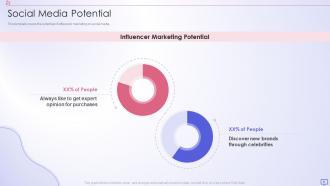
Social media strategy is an aspect of business that stands in parallel with other areas of management, such as operations, HR, and so on. With almost every adult on the planet on social media or knowing another person who does, whatever businesses do on social media to promote or sell their wares has a cascading impact on sales. As part of this, enterprises also hire celebrities and top athletes as part of their social media strategy, with millions of dollars give out as enterprise fees.
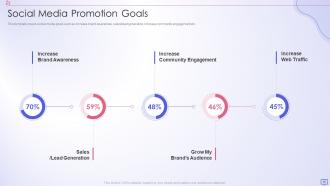
The purpose of a social media plan is very important. Understand it through this exclusive SlideTeam Template on social media strategy plan with purpose and measurements.
For normal-scale businesses, however, mastering social media strategy starts small, and this is where SlideTeam offers its expertise as a solution.
Our pitch deck on social media strategy provides tips and tricks and clears the fundamentals of the relatively new-age field in a clutter-free manner. Even better, each of the templates is 100% editable and customizable, offering you clear visibility on forging a path ahead.
As with all things sales-related, there is a funnel in social media marketing as well. Get this social media strategy plan funnel with key objectives to make your plan work smoothly.
Let’s explore!
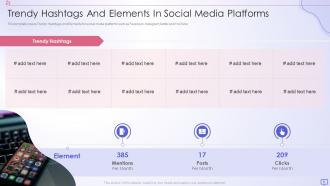
Template 1 Trendy Hashtags and Elements in Social Media Platforms
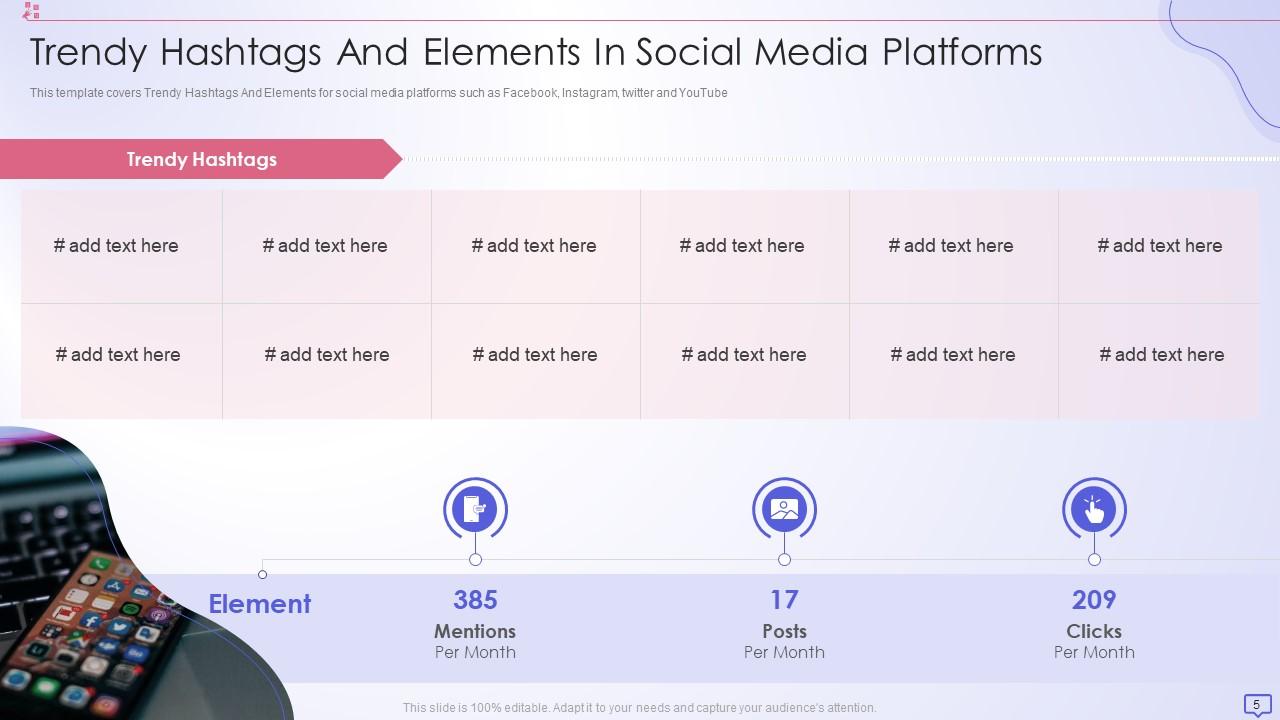
This PPT Template discusses how to build a buzz around your brand using trendy hashtags and Elements for social media platforms such as Facebook, Instagram, Twitter, and YouTube. The way to monitor and understand how these have performed is by using the mentions per month, posts per month, and clicks per month. It is a good, number-based, verifiable way to start your social media strategy.
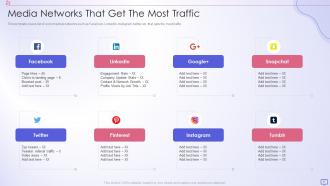
Template 2 Media Networks that Get the Most Traffic
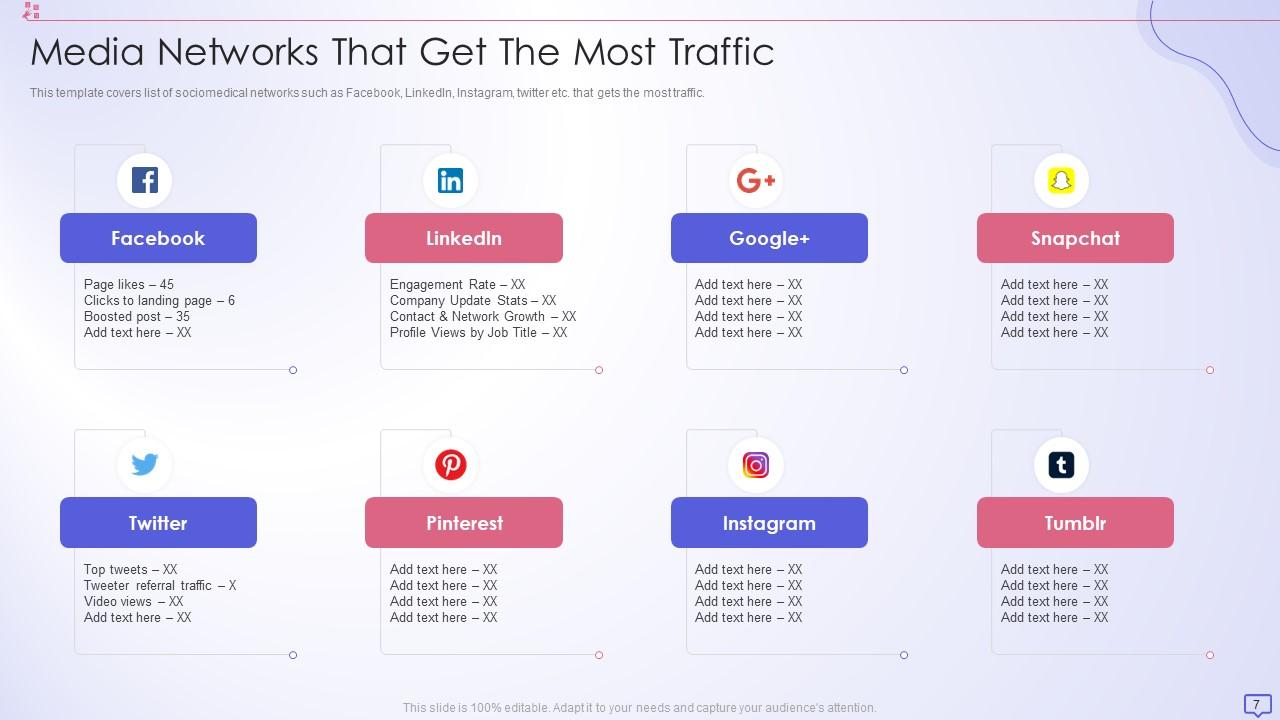
Use the PPT Layout to identify the list of sociomedical networks, such as Facebook, LinkedIn, Instagram, Twitter, etc., that get the most traffic. It also lists the metrics that businesses like yours must track. For instance, if LinkedIn figures in your strategy, then the numbers have to include Engagement Rate, Company Update Stats, Contact & Network Growth, and Profile Views by Job Title.
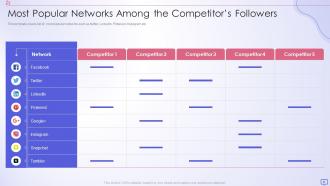
Template 3 Most Popular Networks among the Competitor’s Followers
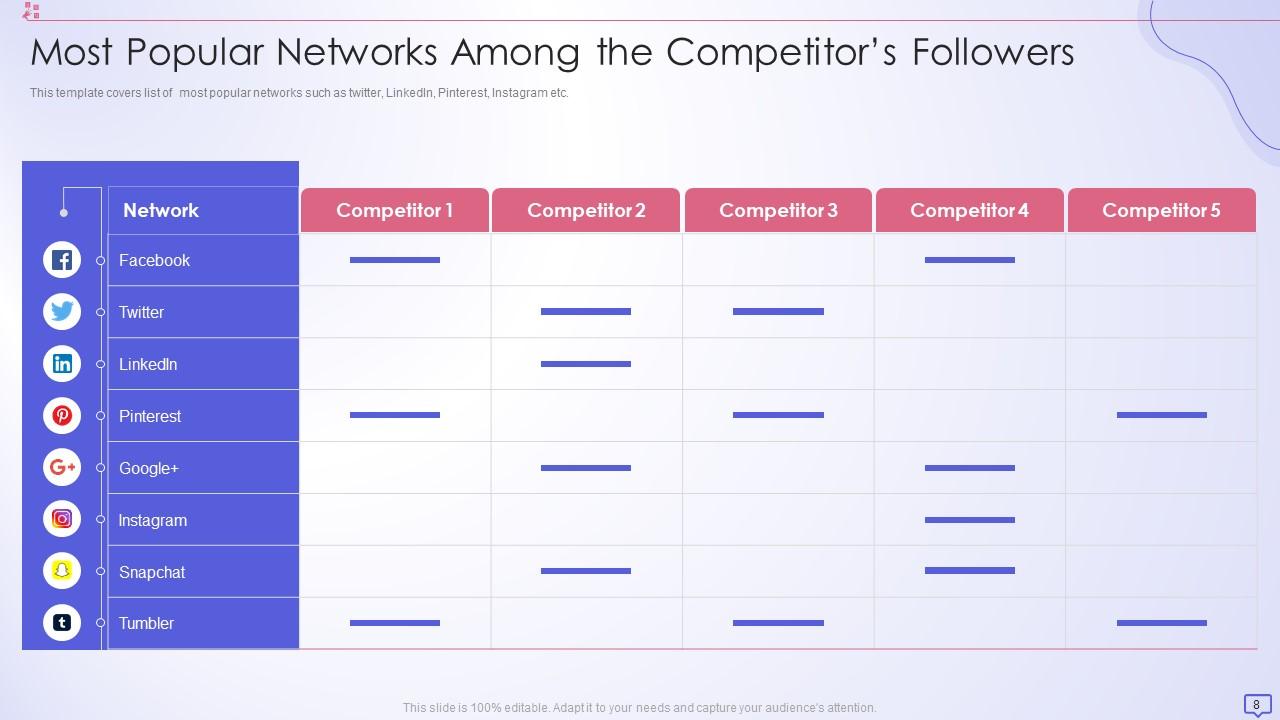
Knowing what your competition is doing is critical to ensuring success. This knowledge must comprise the networks of your competition that get the most traffic and followers. Document all of this here on this PPT Template, which covers the list of most popular networks such as Twitter, LinkedIn, Pinterest, Instagram, etc. Mark the appropriate network to understand where the traffic is going and why.
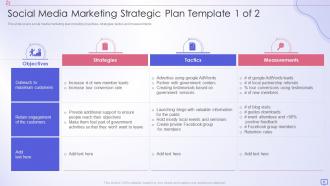
Template 4 Social Media Marketing Strategic Plan Template 1 of 2
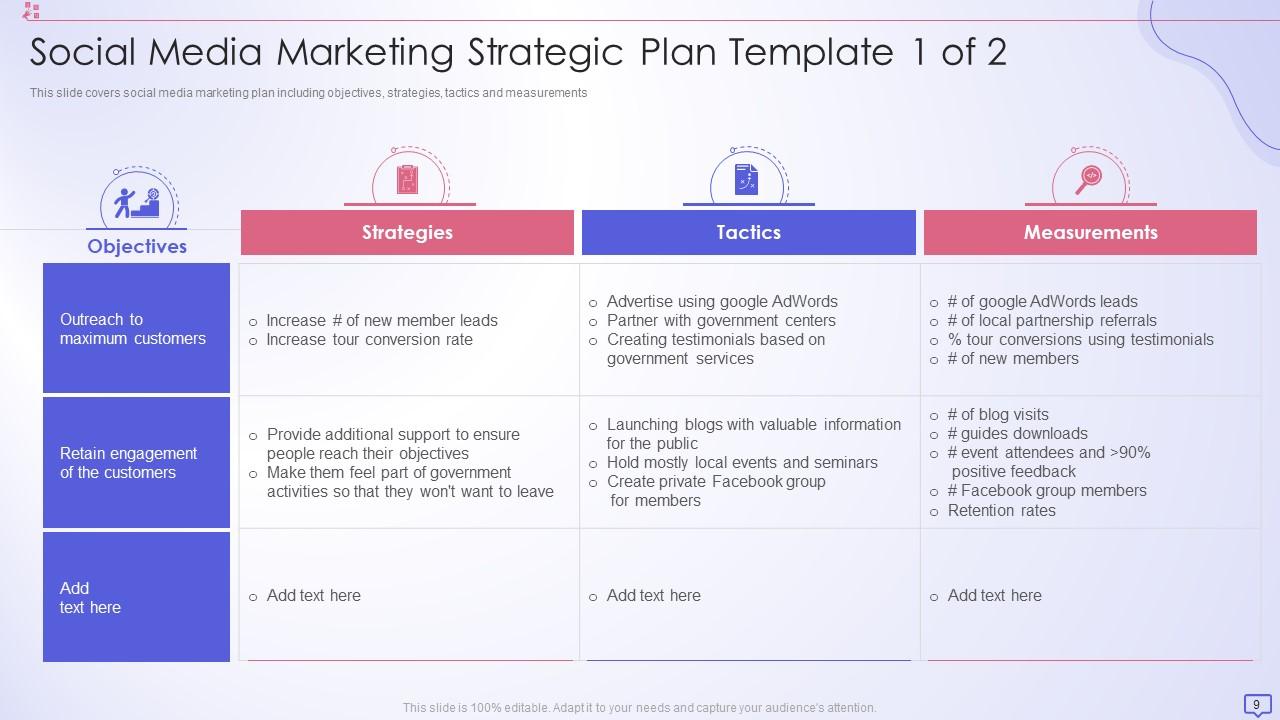
This single slide is crucial to dictating how your social media marketing strategic plan will pan out. This slide covers the social media marketing plan, including objectives, strategies, tactics, and measurements. For instance, the social media strategy could have the objective of reaching out to the maximum number of customers and ensuring that the engagement of these customers is retained. The slide outlines two strategies that you can follow: Increase the number of new member leads and increase the conversion rate. Note that objectives dictate tactics that are subject to measurements to calculate effectiveness.
Template 5 Social Media Marketing Strategic Plan Template 2 of 2
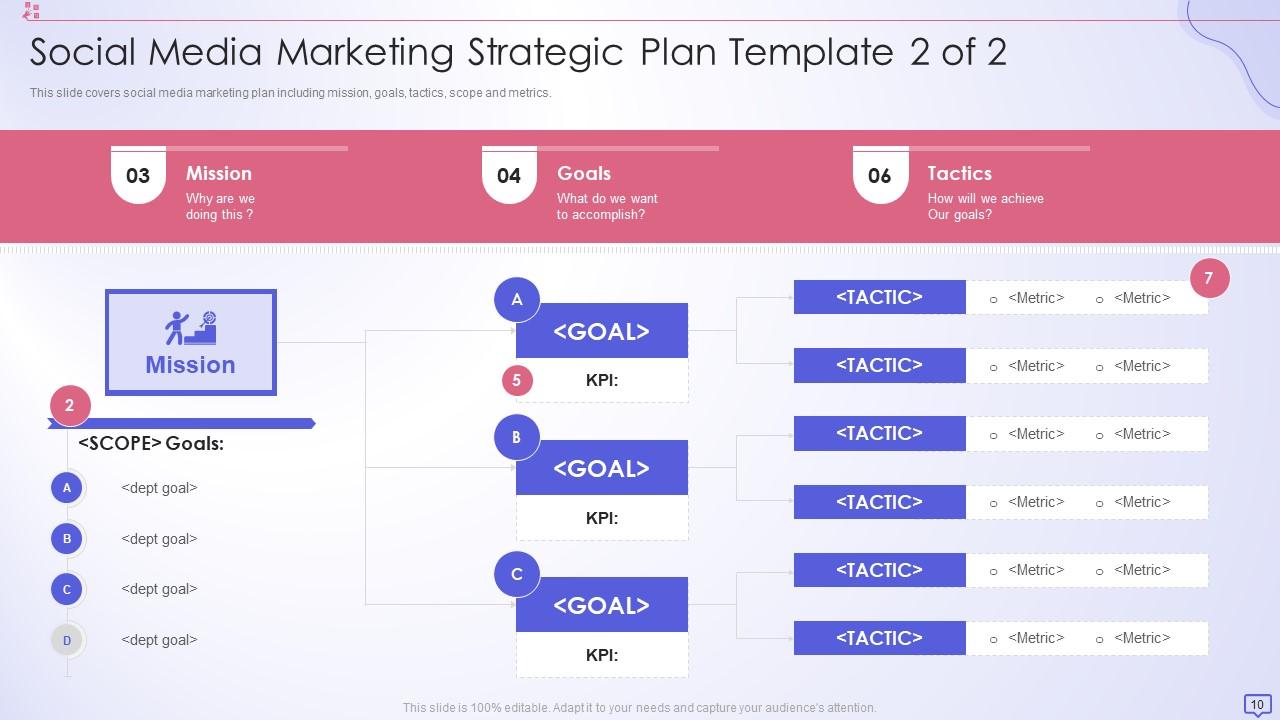
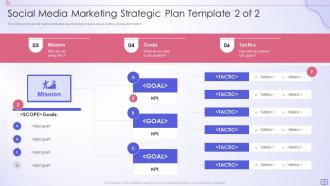
This slide covers the social media marketing plan, including mission, goals, tactics, scope, and metrics. The PPT defines Mission as Why are we doing this? Goals mean What we want to accomplish, and tactics mean the tasks and activities through which we activate goals.
Template 6 Response Time Distribution
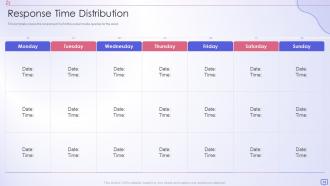
Speed and the right time are critical determiners of the effectiveness of social media marketing. Use this PPT Template to cover the response time for the social media queries for the week with the date and time mentioned. It is crucial as it indicates whether the business is capable of adequate damage control within time.
Template 7 How Often will the Content be Shared?
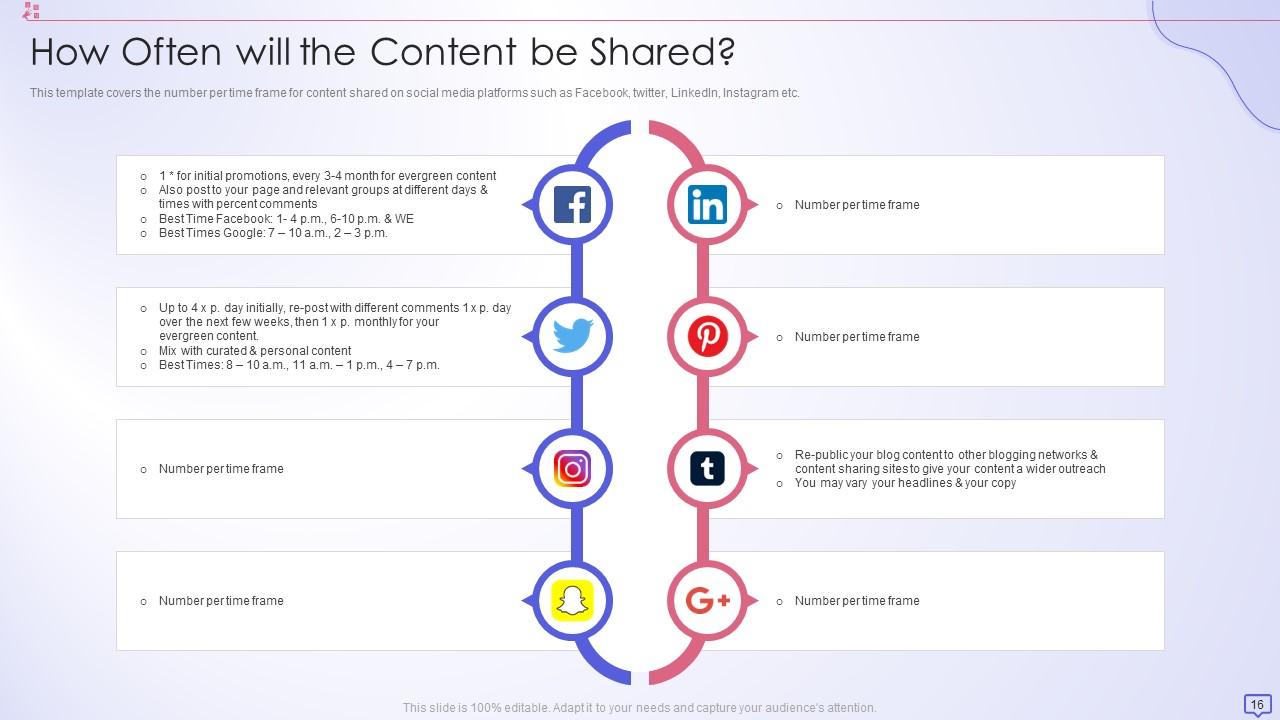
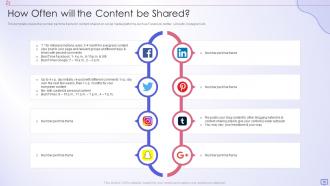
Do you want to understand when communication is most effective on social media? This template covers the number per time frame for the content shared on social media platforms such as Facebook, Twitter, LinkedIn, Instagram, etc. For Facebook, for instance, the number can be up to 4 p. day initially, re-post with different comments 1 x p. day over the next few weeks, then 1 x p. month for your evergreen content. Here, p. stands for the post.
Template 8 Social Media Budget PPT Template
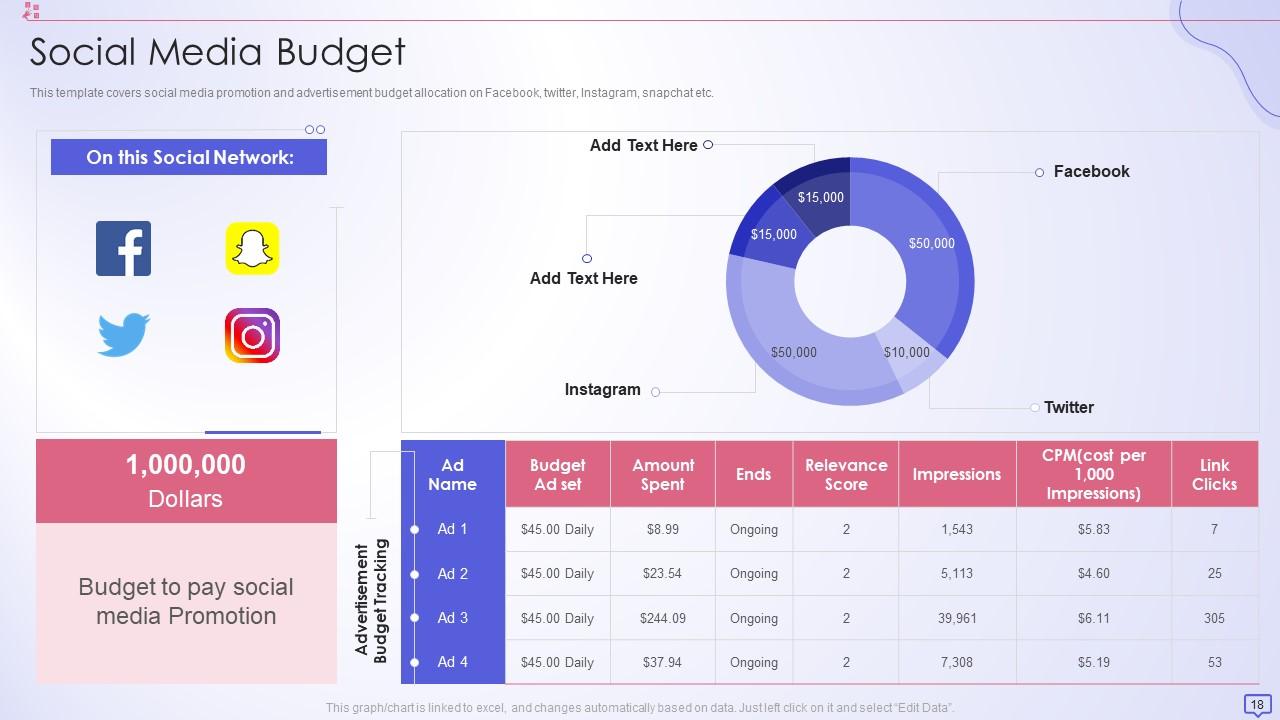
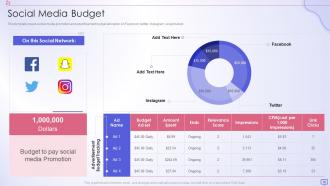
Social media promotion and advertisement budget allocation on Facebook, Twitter, Instagram, Snapchat, etc, are important management decisions. This slide aids in ensuring all these are accurate and correct through its tabular format. It covers the budget to pay for social media promotion, the budget ad set, the amount spent, and when the campaign ends. Impressions, CPM (cost per 1,000 Impressions), Links, and Clicks are essential metrics that indicate its effectiveness.
Template 9 Boosted Posts
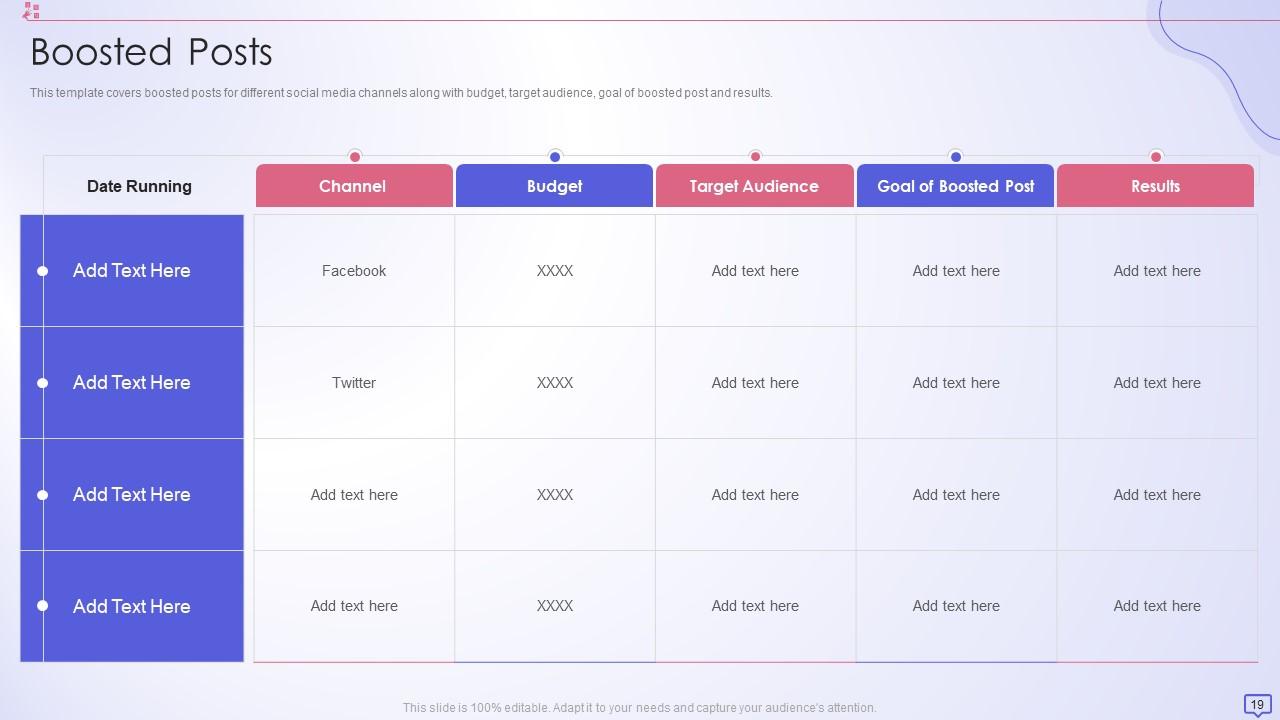
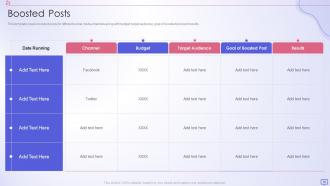
Some posts from your business need extra paid promotion or must be turned into boosted posts across social media channels. The slide lists the process and how to monitor the entire goal of having boosted posts go out from your system. The monitoring includes the budget, target audience, goal of the boosted post, and results.
Template 10 Expected Profit
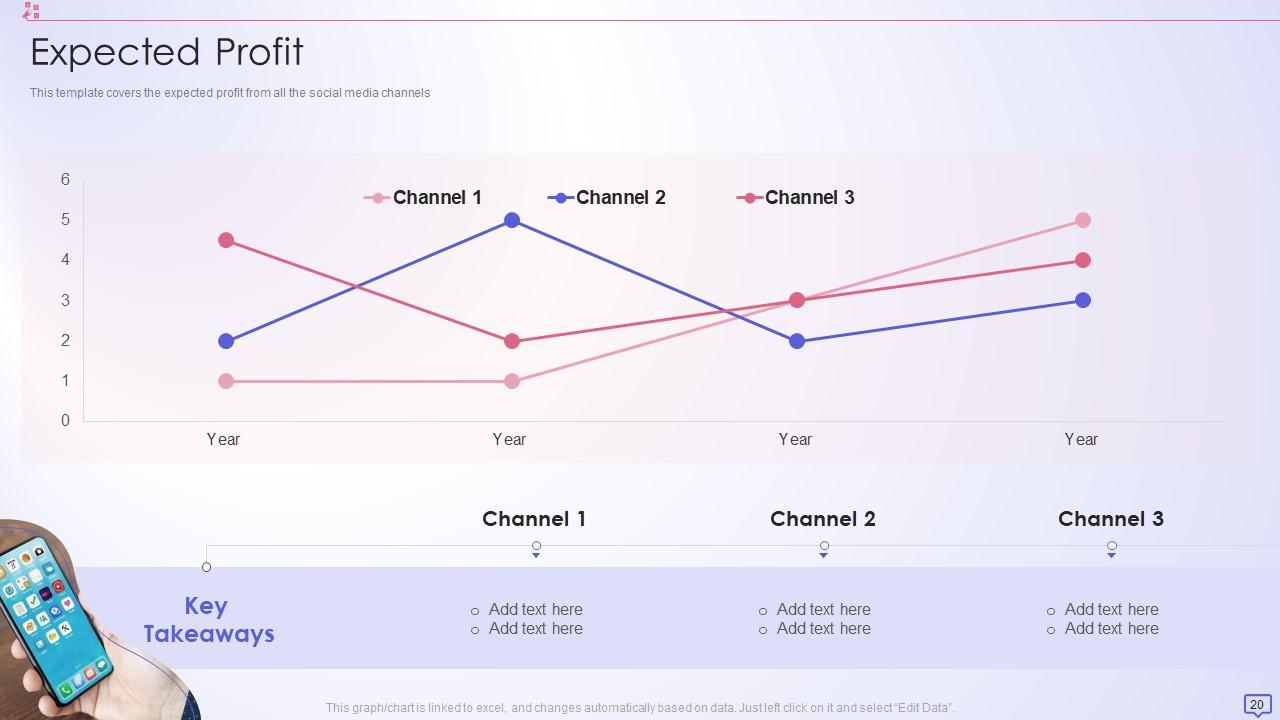
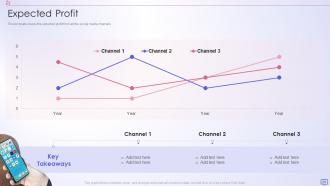
This template covers the expected profit from all social media channels. The idea is also to monitor the critical takeaways across channels through color-coded line graphs. The data is compared year-wise, and the aim is to get as close to the actual expected profit as possible.
*****
SOCIAL MEDIA IS POWERFUL; HAVE A STRATEGY FOR IT
Without a social media strategy pitch deck, businesses could find life tough. It is a necessity to be on social media and take it along if you want to sell your products and services. The best tool to carry along in these endeavors is a pitch deck, and SlideTeam brings it to you readymade and with complete confidence. It is the best solution and plan you will ever get.
PS Understand and keep this PPT Template as part of your library to master the primary goals of social media strategy plan.
Social Media Strategy Template Pitch Deck Ppt Template with all 38 slides:
Use our Social Media Strategy Template Pitch Deck Ppt Template to effectively help you save your valuable time. They are readymade to fit into any presentation structure.





FAQs for Social Media Strategy Template Pitch
So you'll want to nail down your business goals first and tie them to actual numbers you can track. Build out detailed audience personas, then create a content calendar with posting schedules. Brand voice and visual guidelines are huge too. Crisis management protocols are a must - learned that one the hard way lol. Also map out your competitors and figure out platform-specific tactics since Instagram hits way different than LinkedIn. Budget breakdown for paid vs organic is smart, plus leave room for campaign planning and performance check-ins. Honestly, just start with what you're trying to accomplish and work backwards from there.
Okay so first thing - dig into your analytics and figure out who's actually following you. Ages, locations, what they're into, when they're scrolling. Then tailor your content to match what each group vibes with. Gen Z loves that messy, authentic stuff while millennials still lean toward polished posts (though tbh those lines are getting blurrier). Your hashtags and posting schedule should shift based on what the data tells you. Oh and don't forget to test different approaches! Track what actually works for each segment instead of just posting randomly.
For your social media template, definitely track the basics - likes, comments, shares, saves, plus reach and follower growth. Click-through rates to your site matter too. But honestly? Focus on conversions like actual leads or sales, not just vanity numbers. Those don't pay rent! Brand mentions and sentiment are huge - tells you if people actually like your stuff or just tolerate it. Set up a dashboard so you're not doing math every month (learned that one the hard way). Pick maybe 5-7 metrics that connect to real business goals.
Honestly, just make a brand voice guide that everyone on your team can actually use. Write down your tone - are you friendly, professional, whatever? List phrases you always use and ones you'd never say. Then tweak it for each platform while staying true to who you are. Your TikTok posts can be way more casual than LinkedIn, but you're still the same brand underneath. Make sure anyone posting content knows this guide exists (shocking how often people skip this step). Do quick checks every few months to see if you're drifting off-brand. Start simple: pick three words that describe your brand's personality. That's your foundation right there.
Honestly, content calendars are game-changers for social media. You'll stop that panicky "what do I post today??" feeling because everything's planned out. I usually just throw together a basic spreadsheet to start - nothing fancy needed. It helps you mix up your content types instead of posting the same stuff over and over. The best part? You can line everything up with your launches or campaigns ahead of time. No more missing those seasonal moments or accidentally posting three product shots in a row. Trust me, once you start using one you won't go back to winging it.
Start with visual guidelines baked right into your template - brand colors, fonts, photo styles. That way everyone knows what "on-brand" actually looks like. I throw in content ratios too, like 60% photos, 30% graphics, 10% text because let's be real, nobody's reading paragraph posts anymore. Don't forget alt text spots and different image sizes for each platform. Instagram squares look weird on Twitter, trust me. Oh and plan your visuals like actual content, not just pretty afterthoughts. Sounds obvious but most people still treat images like decorations.
Honestly, UGC should be your main thing, not something you throw in randomly. Get a branded hashtag going and bug your customers to post about your stuff. When they do, repost it everywhere (ask first obvs). People eat that shit up - seeing themselves on your page is like crack to them. Grab some monitoring tools so you catch posts even when they don't tag you. Maybe run challenges or themed campaigns that get people naturally sharing. Oh and respond to EVERYTHING you find. I swear, if you just spend like one day a week hunting down and curating this content, your engagement will go nuts.
Honestly, you've gotta have this stuff figured out before the drama starts. Create some basic rules - like what needs an instant reply vs what can wait until morning. Figure out who's handling different types of complaints too. Quick responses are everything, but here's the thing - move those messy conversations to DMs fast. Nobody wants to scroll through your comment section and see you arguing with Karen about shipping times! Just acknowledge their complaint publicly first, then be like "DMing you now to sort this out." Oh, and keep notes on repeat issues. Trust me on that one.
Hootsuite and Sprout Social are solid starting points for tracking competitors' posting schedules and engagement. Honestly, I'm obsessed with just dumping everything into a basic spreadsheet - it makes patterns jump out way clearer than fancy dashboards. Check out their hashtag game, when they're posting, how people respond to different content. Then build your template around beating their weak spots. Schedule posts when they're quiet, set engagement benchmarks based on what you're seeing work. Oh, and definitely add quarterly check-ins to your template. You don't want to analyze once then forget about it for months.
Think of social media ads as boosters for what you're already posting. Look at your organic posts that did really well and throw some ad money behind those first - they've already connected with people. Your ads should sound like you, not some generic brand voice (I see way too many companies that sound totally different in their ads vs regular posts). Budget around 20-30% for promoting stuff. Short sentences work. Longer ones should flow naturally when you read them out loud. Don't just randomly boost things though - pick content that actually ties back to whatever you're trying to accomplish. It's honestly not that complicated once you get the hang of it.
Honestly, just pick your main metrics and check them monthly - engagement, reach, conversions, whatever actually matters. Follower counts are tempting but they're basically useless lol. I'd do a bigger strategy review every three months to see what's really working. Test one thing at a time though - posting times, content types, captions - otherwise you won't know what made the difference. Algorithms change constantly (so annoying), so stay flexible. If something's not working after a few weeks, ditch it fast. Oh and actually put these reviews in your calendar or you'll keep putting them off forever.
Just bake influencer stuff straight into your content calendar when you're planning campaigns. Find people who actually vibe with your brand and have followers that match who you're targeting. Micro-influencers are honestly where it's at - their engagement rates crush the big accounts most of the time. Set aside budget for both paid collabs and free product sends. Don't treat them like walking billboards though, think of them more as content partners. Oh and definitely track specific KPIs for each partnership so you know what's working.
Ok so first thing - get permissions for any user content you're posting. The FTC doesn't mess around with undisclosed sponsorships either, so mark those clearly. GDPR stuff is huge right now for data privacy too. Make sure your visuals work for people with disabilities - honestly this gets overlooked way too much. Also double-check your targeting isn't accidentally excluding protected groups. I'd throw together a basic checklist covering these points. Run it past legal if you've got them. Way better to be paranoid upfront than scrambling later when something goes sideways.
Honestly, AR stuff works really well on Instagram - those face filters everyone uses? Make your own. Product try-ons are huge too if you're selling anything physical. 360-degree videos are solid for showing off events or your office space. VR is cool but still feels pretty niche to me, though virtual showrooms can be worth it. Just match whatever tech you pick to what your audience already does. Like, if they're not even using basic AR features, don't jump into crazy VR experiences. Test some simple filters first, see what hits, then go bigger.
Honestly, just be consistent and actually talk to people like they're real humans. Respond to comments and DMs - don't just post and ghost. I'd set aside like 15 minutes a day just for engaging with responses because that's where the magic happens. Share behind-the-scenes stuff too, maybe some user posts to make people feel included. Ask questions in captions. Do polls or little challenges. The whole "authentic interaction" thing sounds cheesy but it genuinely works better than any growth hack I've tried. Show up regularly and actually care about the conversations happening around your content.
-
I really liked their customized design services. I got my desired template made by their expert team. Thank You!
-
The templates are handy and I can personalize them as per my needs. Glad to be your subscriber!