


Sprint planning scrum backlog grooming and review




Try Before you Buy Download Free Sample Product
 Impress Your
 Audience
 100%
100% Editable
 Save Hours
 of Time


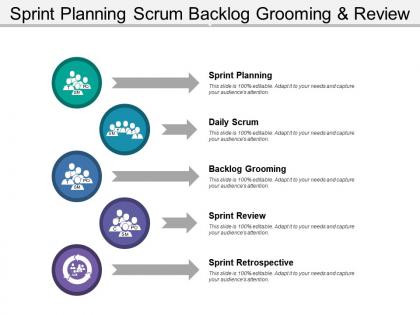
The scrum team relies on backlog grooming and sprint planning. The aim of sprint planning is for everyone to agree on a goal for the upcoming sprint as well as the set of backlog items needed to achieve it. Backlog grooming sessions are an essential aspect of Scrum-based agile software development. The advantages of regular backlog grooming become clear quickly, as development teams can easily access all of the information required to put together a sprint action plan. So, if you're looking for a comprehensive guide on Sprint planning scrum backlog grooming and review, look no further than SlideTeam's extensive set of agile technology PowerPoint templates. With our help, you can be confident in your ability to deliver quality presentations that will wow your audience - whether they're fellow team members or clients. Download our Agile technology ppt templates now and get started.
People who downloaded this PowerPoint presentation also viewed the following :
Sprint planning scrum backlog grooming and review with all 5 slides:
Use our Sprint Planning Scrum Backlog Grooming And Review to effectively help you save your valuable time. They are readymade to fit into any presentation structure.

FAQs for Sprint planning scrum backlog
So basically there's three main people in Scrum. Your Product Owner figures out what to build - they handle the backlog and decide which features matter most. Development Team does the actual coding and organizes themselves however works best. Then there's the Scrum Master who's like... think coach, not boss. They clear roadblocks and keep everyone on track. Honestly the whole thing works pretty smoothly when everyone knows their lane. Oh and definitely nail down these roles early - I've seen teams where people stepped on each other's toes because nobody knew who was supposed to do what. Bit of a mess.
So basically you split everything into these short sprints - like 1-4 weeks each - and you're constantly shipping working code instead of vanishing for half a year. Daily standups keep everyone on the same page and catch problems before they blow up. Each sprint wraps up with actual shippable stuff, which is huge because you can pivot fast when users inevitably want something totally different than what you thought they did. The trick is keeping sprint goals realistic so your team doesn't burn out trying to hit impossible deadlines every time.
So there are four main ceremonies you'll deal with. Sprint Planning starts things off - that's where you figure out what work to actually tackle. Daily standups are supposed to be quick 15-minute syncs on progress and blockers (good luck keeping them that short lol). At the end, Sprint Review is when you demo your completed stuff to stakeholders. Then Sprint Retrospective happens where the team talks through what worked and what was a mess. Honestly, I'd just focus on getting the basics down first. Don't stress about making everything perfect right away - these ceremonies basically just keep your sprint from going completely off the rails.
Honestly, your backlog's gotta stay lean or you'll drown in it. Schedule regular refinement sessions - like 10% of sprint time - where your PO breaks down big stories and adds acceptance criteria. I learned this the hard way when our backlog hit like 50 stories and became completely unmanageable. Keep it to maybe 2-3 sprints of ready work, tops. Any bigger and you're just shuffling cards instead of shipping features. Those refinement sessions are clutch though - start doing them weekly if you aren't already. Trust me on this one.
Planning Poker is probably your best bet - everyone throws down story point cards at once so no one influences each other. Works really well. T-shirt sizing is faster for rough estimates (S, M, L, XL). Fibonacci numbers are popular too since they capture how things get way more uncertain as they get bigger. Breaking stories into hourly tasks sounds logical but it's actually less accurate than relative sizing, weirdly enough. Any consistent scale works though - I've seen teams make up their own. Start with Planning Poker since it gets everyone talking about what effort means for your actual work.
So basically, Scrum artifacts are like your team's shared brain - everyone can see what's happening. The Product Backlog shows what you're building and why. Sprint Backlog tracks your current work. And the Increment? That's proof you actually shipped something useful. They're total lifesavers when someone goes "wait, what are we even doing here?" Keep them visible and actually updated though - not just for show when the manager walks by. Think of it as your project dashboard that anyone can check for status and blockers. Your team needs to use them daily or they're pretty much useless.
Honestly, the hardest part is getting everyone to stop fighting the process. People hate change, you know? Your sprints will get messy with scope creep, and those daily standups turn into boring status updates real quick. Train everyone properly first - seriously, don't skip this step. Define who does what from the start and guard those sprint boundaries like your life depends on it. Oh, and make sure your Product Owner can actually make decisions instead of saying "let me check with my boss" constantly. Use retrospectives to fix what's broken. Start small though - perfection's overrated anyway.
So basically, Definition of Done is like setting ground rules for what "finished" actually means. Your whole team agrees upfront - code review, testing, docs, ready to deploy, whatever. No more of that "wait I thought you were done" back-and-forth that drives everyone crazy. Quality checks happen throughout development instead of everyone panicking at the end. Every story has to hit the same bar before it counts as complete, which honestly makes everything way more predictable. Just make sure it's realistic and somewhere everyone can actually see it. Oh and you'll probably need to update it as your team gets better at stuff.
Yeah totally doable! Just move everything to video calls - though you'll probably need to make meetings a bit longer since remote stuff always takes more time. Digital boards are clutch, we use Jira but Miro works great too. Daily standups become way more important for staying connected (async ones through Slack are honestly a lifesaver if your team spans crazy time zones). Document way more than you think you need to. Oh and start with shorter sprints while everyone gets used to the remote flow - keeps things tight. Over-communicate everything basically.
So your Scrum Master will totally evolve as your team gets the hang of things. At first they're like a teacher - explaining every ceremony, watching the clock during standups, basically babysitting everyone through the process. Takes forever honestly, sometimes up to a year before people really click with it. Once you guys have it down though? They shift into more of a coach role. Less "hey we only have 5 minutes left" and more focused on clearing roadblocks and dealing with organizational drama. The best ones start letting team members run some of the meetings themselves. It's a good sign when that happens.
Oh man, Jira's definitely your best bet for sprint planning - most teams swear by it. Trello's nice if you want something simpler though. Already using Microsoft stuff? Azure DevOps integrates pretty seamlessly. For retrospectives, Miro and Mural are honestly game-changers - way better than those awkward virtual sticky note sessions we used to suffer through. Slack keeps everyone chatting between meetings too. But here's the thing - don't go crazy picking tools with a million features. Your team needs to actually want to use whatever you choose, or it'll just collect digital dust.
Honestly, the biggest thing is making people feel safe to actually speak up instead of just nodding along. I always start with something structured - like Start/Stop/Continue - so it doesn't turn into random venting. Get everyone talking, not just whoever's loudest. Here's what actually works though: pick ONE or maybe two things to fix next sprint. Don't try tackling everything. I've watched so many teams make these huge lists and then... nothing changes. Always give someone ownership of each action item and check back next time. Otherwise you'll just keep having the same conversations every two weeks.
Daily standups are basically your team's quick check-in to stay on the same page and catch problems early. Keep it simple - just cover what you did yesterday, what you're tackling today, and anything blocking you. Stand up if possible, cap it at 15 minutes, and don't let it turn into some detailed project review (save that stuff for later). Honestly, the best part is when people actually jump in to help with blockers instead of just nodding along. Oh, and don't let managers turn it into their personal status update meeting - that's not what it's for.
Yeah totally! It's called Scrumban and honestly it's pretty solid. Keep your standups and retros from Scrum, but ditch the sprint backlog for a Kanban board with WIP limits. The visual flow really helps you catch bottlenecks fast. Plus those regular Scrum check-ins keep everyone on the same page - which let's be real, is always needed. Some teams throw in XP stuff too like pair programming. I'd say just add a Kanban board to whatever you're doing now and see how it works. Way more flexible than pure Scrum.
Honestly, velocity's your best starting point - tracks how many story points your team knocks out each sprint. Burndown charts are clutch too since they show if you're gonna hit your sprint goals or crash and burn. I'd definitely check your sprint goal success rate because what's the point if you're not actually delivering what you promised, right? Lead and cycle time help spot where work gets stuck (bottlenecks are the worst). Don't sleep on team happiness surveys either - miserable developers write crappy code. Start with velocity and burndowns though, they're stupid easy to set up and you'll see patterns immediately.
-
Awesome presentation, really professional and easy to edit.
-
Qualitative and comprehensive slides.
-
Great experience, I would definitely use your services further.
-
Appreciate the research and its presentable format.
-
Very well designed and informative templates.