

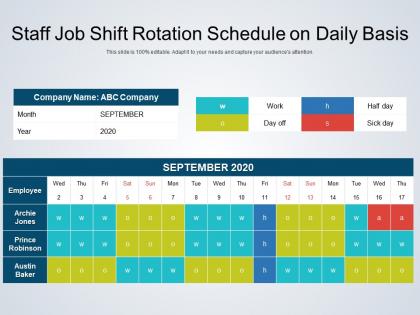
Staff job shift rotation schedule on daily basis




Try Before you Buy Download Free Sample Product
 Impress Your
 Audience
 100%
100% Editable
 Save Hours
 of Time


Our Staff Job Shift Rotation Schedule On Daily Basis are topically designed to provide an attractive backdrop to any subject. Use them to look like a presentation pro.
People who downloaded this PowerPoint presentation also viewed the following :
Staff job shift rotation schedule on daily basis with all 2 slides:
Use our Staff Job Shift Rotation Schedule On Daily Basis to effectively help you save your valuable time. They are readymade to fit into any presentation structure.
FAQs for Staff job shift rotation schedule
So job rotation is actually pretty clutch. Your people pick up way more skills bouncing between different roles, which honestly just makes everyone more useful. Burnout becomes less of an issue too - nobody's grinding the same boring task forever. Cross-department drama tends to chill out because people finally get what others are dealing with daily. You'll spot your future leaders easier and figure out where people actually shine (sometimes it's surprising). Oh and the coverage thing is huge - when Sarah calls out sick, you're not completely screwed because Mike knows her job too.
Look, nobody wants to do the exact same thing every single day - it gets mind-numbing after a while. Rotating people around keeps things interesting because they're picking up new skills and tackling different problems. What's cool is they start seeing how all the departments actually connect, which makes the job feel less like random busy work. Also builds relationships since they're not stuck with the same three people forever. I'd say just make sure you're doing it often enough that people don't get too comfortable... maybe every few months? The novelty factor is what really drives engagement.
Honestly, start with what your people actually want - their career goals and skills they're dying to learn. Figure out which departments need the help most. Timing's everything though. Don't be like me and move someone right before year-end (total disaster). Each role has its own learning curve, so make sure you've got solid mentors lined up. Oh, and definitely track how it's going - get feedback from everyone involved so you can pivot if things aren't working. Some rotations just don't click and that's totally normal.
Honestly, 6-12 months works best for most rotations. Simple stuff? Go with 6 months. Technical roles need the full year though - people actually have to learn something real before you shuffle them around again. I've seen companies do it too fast and it's just a mess. You'll know it's time when someone's like "okay I've figured this out" but they're not totally over it yet. Start small - ask who's interested first instead of forcing everyone into it. My old boss tried to rotate people every 3 months once and nobody knew what they were doing half the time.
Look at engagement scores first - are people actually happier? Retention rates tell you if they're sticking around too. Skills assessments before/after rotations show real learning (though honestly, some people hate taking those tests). Track internal promotions since rotations should build better leaders. Productivity will probably drop at first, but it bounces back. Employee feedback surveys are clutch - sometimes people tell you stuff the numbers miss completely. Don't go crazy tracking everything though. Pick 2-3 things you can actually measure without drowning in data. The qualitative feedback often matters more than you'd think.
Talk to them about the "why" first - how rotation actually helps their careers and keeps things from getting stale. Don't just drop it on them randomly (learned that the hard way). Listen to what they're actually worried about - usually it's looking stupid in a new role or job security stuff. Start with people who volunteer if you can. Their good experiences will do way more convincing than you ever could. Oh, and pair the hesitant ones with someone who's already done rotations successfully. Give them time to wrap their heads around it too.
Honestly, I'd start planning their training path like a month ahead - saves so much headache later. Focus on three main things: technical skills, documenting processes, and pairing them with a mentor. People usually need 2-3 weeks before they stop feeling totally lost in the new role. Role-specific checklists are a lifesaver! Have them shadow someone experienced first. Oh, and prep your managers to give way more feedback than usual during those first weeks. New people are basically feedback sponges at that point. The shadowing thing really does make all the difference though.
Job rotation is honestly such a game changer - you get to try different departments and build skills you'd never pick up otherwise. The networking part is huge too. Like, suddenly you know people across the whole company and actually understand what everyone does (which is weirdly helpful later). Plus it keeps things interesting when your current role starts feeling repetitive. I mean, who wants to do the exact same thing for years? Your resume looks way more impressive afterward too. Definitely jump on any rotation opportunities, even the ones that seem totally random. Sometimes those end up being the best ones.
Look, healthcare and manufacturing are huge on job rotation because people need to see how everything connects. Tech companies are obsessed with it too - they want developers who actually understand the business side. Retail uses it mainly to keep people from getting bored out of their minds (honestly, who wants to fold the same shirts for months?). Finance loves rotating their analysts around so they're not totally clueless about other departments. Consulting's another big one. Just don't rotate people randomly though - figure out which roles would actually benefit from seeing the bigger picture first.
Set learning goals before each rotation kicks off, then review how they did during regular performance cycles. Track what skills they picked up in different roles - that becomes your data for assessing growth. I'd add a "rotation outcomes" section to your review template, makes it way more structured. The whole thing sounds messy but it's actually pretty straightforward once you try it. Otherwise rotations just become random job shuffling instead of real development. Short version: tie the rotation results directly into their annual review scoring. Way better than keeping them separate.
Honestly, leadership makes or breaks these programs - I've seen it go both ways. Your managers can't just say they support it and then do nothing. They need to actually mentor people and create real learning opportunities. The biggest issue? Some get weirdly possessive about their good employees and don't want to "lose" them temporarily. I get it, but it's so shortsighted. You also have to make sure leaders follow through on what they promise participants - otherwise people get burned. My take is get everyone on the same page early and frame it as actual talent development, not just moving people around for no reason.
BambooHR or Workday are solid for automating rotation schedules - way better than drowning in spreadsheets once you hit like 10+ people. They'll track who's doing what, send reminders about transitions, and actually integrate with your performance stuff. My cousin uses Workday at her company and swears by the reporting features. Map out what you're currently doing first, then find software that tackles your biggest time sucks. The automated notifications alone will save you so much back-and-forth with managers. Trust me, you don't want to be manually tracking everyone's skill development across different roles.
Honestly, the biggest mistake is rushing it. Don't rotate people every 3 months - that's just chaos. Plus you can't just force it on everyone without warning. Some people actually like their current role and don't want to move around, which is fine! I'd start with volunteers who are actually interested. Track if it's helping with skills and retention too, otherwise you're just shuffling people for no reason. Oh and definitely get your team on board first - like, actually ask what they think before implementing anything. Build it slowly based on what works.
Job rotation is honestly genius for breaking down those weird silos between departments. Your people become like knowledge carriers - someone goes from marketing to sales and suddenly they get why the sales team always complains about certain campaigns. They bring marketing insights over and pick up sales tricks to share back. Works both ways too. Plus everyone stops making assumptions about what other teams actually do all day (which happens more than you'd think). Just make sure people document their learnings before rotating out, or you'll lose half the benefit.
Yeah, job rotation definitely helps teams work better together. People get way more understanding when they've actually done someone else's job - even for a short time. It breaks down those weird departmental walls that always seem to pop up. Fresh perspectives start flowing around more naturally too, which is honestly pretty cool to watch happen. The tricky part? Don't shuffle people around too quickly or they won't have enough time to actually add value in each spot. But when it works, collaboration gets so much smoother because everyone finally gets what everyone else is dealing with daily.
No Reviews