

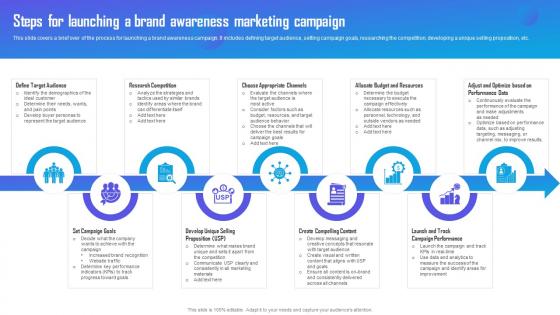
Steps For Launching A Brand Awareness Marketing Campaign Strategy To Boost




Try Before you Buy Download Free Sample Product
 Impress Your
 Audience
 100%
100% Editable
 Save Hours
 of Time


This slide covers a brief over of the process for launching a brand awareness campaign. It includes defining target audience, setting campaign goals, researching the competition, developing a unique selling proposition, etc.
People who downloaded this PowerPoint presentation also viewed the following :
Steps For Launching A Brand Awareness Marketing Campaign Strategy To Boost with all 6 slides:
Use our Steps For Launching A Brand Awareness Marketing Campaign Strategy To Boost to effectively help you save your valuable time. They are readymade to fit into any presentation structure.





FAQs for Steps For Launching A Brand Awareness Marketing Campaign
Honestly, most brands screw up by saying different things across platforms - super confusing for people. You've got to nail consistent messaging everywhere your audience sees you. Pick channels based on where they actually spend time, not just where you think they should be. The storytelling piece is huge too - make it authentic and emotional, not some corporate fluff. Oh, and your visual identity better be tight. I'd start by checking if your brand voice sounds the same on Instagram vs your website vs wherever else. Track it with brand surveys and social listening stuff. Sounds like a lot but it's worth it.
Your visual identity is like your brand's face. People need to recognize you instantly through colors, fonts, logos - all that stuff. McDonald's golden arches? You know it's them without even reading the name. Same with Nike's swoosh. Pretty crazy how our brains work like that. The trick is staying consistent everywhere you show up. Pick maybe 3-5 visual elements that actually match your vibe and personality. Don't just copy what everyone else is doing. Use those same elements on everything - your website, business cards, social posts, whatever. Repetition builds that automatic recognition in people's minds.
Stories make people actually *feel* something about your brand instead of just forgetting another boring ad. Like, when someone connects emotionally, they'll remember you way longer than if you just listed product features. It's honestly night and day. People share good stories too, so you get free word-of-mouth marketing. Your brand needs personality - stories help people see if your values match theirs. Figure out your main "why we exist" story first. Then just work it into your content naturally. Way more effective than shouting specs at people.
Honestly, just pick 2-3 platforms where your people actually are and post regularly there. Don't try to be everywhere - you'll burn out. Behind-the-scenes content and user stuff works way better than constant sales pitches. Instagram and TikTok are crushing it for visual brands right now, but only if that's where your audience hangs out. Be authentic about your brand's vibe. Reply to comments, use hashtags that actually make sense, maybe collab with some influencers in your space. Oh, and consistency beats perfection every time. I'd rather see someone post decent content regularly than amazing stuff once a month.
Track these key things: brand recall surveys to see if people remember you, reach numbers for campaign visibility, and sentiment through social listening (though honestly some of that data can be pretty noisy). I'd also watch your share of voice vs competitors and direct website traffic - that's usually a solid indicator of brand strength. Monthly dashboards work great for spotting trends. Short sentences mixed with longer ones help you catch shifts early and pivot your strategy when needed.
Honestly, influencer collabs work because people trust recommendations from someone they already follow way more than random ads. You're basically borrowing their credibility to reach an audience that's actually engaged - not just scrolling mindlessly past your posts. The trick is finding influencers whose followers match your target customers, not just chasing big numbers. I'd actually start with micro-influencers first - like 10-50K followers but really engaged audiences. They're cheaper too, which is nice when you're testing things out. Way better ROI than throwing money at some celebrity who probably doesn't even know what your product does.
Honestly, social media's your best bet - pick 2-3 platforms where your people actually are and post consistently. Create stuff that actually helps them solve problems, not just "buy my thing" posts. Email marketing's crazy effective too if you can start building a list. Oh, and partnerships with other local businesses? Game changer. You scratch their back, they scratch yours. I probably should've mentioned this first actually. The thing is, brand awareness takes forever to build, so don't expect miracles overnight. Pick one thing, get good at it, then slowly add more. Otherwise you'll just spread yourself too thin and suck at everything.
Honestly, user-generated content is like having customers do your marketing for you. People trust random strangers on Instagram way more than whatever your brand posts – which is kinda wild but totally true. When someone shares a photo using your product, their friends actually pay attention because it feels real. Each post hits a whole new audience through their followers. Reviews work the same way too. I'd definitely start with a hashtag campaign or repost customer photos on your socials. Gets things moving pretty quickly once people see you're actually featuring real customers.
Honestly, customer experience is like your brand's reputation machine. Great experiences get people talking - they'll share on social, tell friends, basically do your marketing for you. Bad experiences? They'll kill loyalty super fast and spread negative word-of-mouth everywhere. The brands I'm actually loyal to all have one thing in common - they consistently make me feel good about choosing them. Positive experiences create these emotional connections that keep customers coming back. My advice? Map out your customer journey and find those annoying friction points you can smooth out. It's really that simple.
So basically, good SEO gets you higher up in search results when people Google stuff related to your business. Search engines start seeing you as legit once you optimize your content with the right keywords and actually create quality pages. Honestly? It's probably the cheapest way to build brand awareness since you're targeting people who already want what you're selling. I'd focus on answering questions your audience is actually asking - that's where you'll see real results. Way better than throwing money at random ads, in my opinion.
Honestly, I'd kick things off with some competitor digging and customer surveys to see where you actually stand. Social media sentiment analysis is pure gold - people spill everything when they think no one's watching lol. Get both the hard numbers (brand recall stuff, social listening tools) and the real talk through focus groups. Oh, and definitely segment by demographics because awareness is all over the map depending on who you're talking to. The boring but crucial part? Set your baseline metrics first so you're not just throwing money into the void later.
Honestly, events and sponsorships are pretty solid for getting your brand in front of people who actually care. Pick stuff that makes sense for your audience though - don't just throw money at whatever's available. There's something about face-to-face interaction that beats random online ads every time. Plus you'll get social media content and maybe some press coverage too. I'd start local first, see what actually works, then go bigger. The whole point is creating those positive vibes when people see your logo on something they're already into. Way more memorable than most marketing tactics.
Instagram and TikTok are solid for brand awareness - huge reach plus you can target pretty specifically. YouTube's amazing too since videos get shared constantly. Honestly? I'd skip Facebook unless you're going after an older crowd. Google Display works well for popping up on sites your audience visits. Oh, and LinkedIn if you're B2B obviously. Don't spread yourself across every platform though - pick 2-3 where your people actually spend time. Master one first, get your messaging right, then branch out. Way better than being mediocre everywhere.
So basically, when people see the same vibe from you everywhere - your Instagram, website, emails, whatever - they start to actually trust you. It's like if you met someone who was totally different every time you hung out... weird, right? But consistent messaging? That's how people get to know what you're about. Repetition builds familiarity, and honestly, familiar feels safe to most people. I'd start with a simple brand voice guide (nothing fancy) that everyone on your team can check before posting stuff. Short sentences work. Then your audience won't get confused about who you are.
Honestly, go where your current crowd isn't hanging out yet. Different social platforms, maybe partner with influencers or collab with brands that complement yours but aren't direct competition. Guest posting works great too - I've seen people blow up from one good podcast appearance. Local event sponsorships can be surprisingly effective if they match your vibe. The trick is making content that actually fits each platform instead of just copying what you already have. Pick one new channel first, see what sticks, then branch out. Sometimes the best growth happens totally by accident anyway.
-
Qualitative and comprehensive slides.
-
“Thank you to the SlideTeam. Your presentations look really skillful and have made my life so much easier.”